
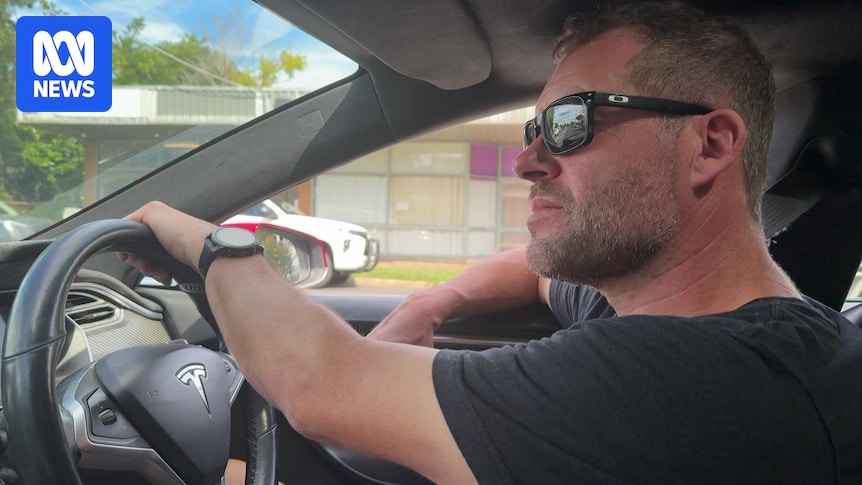
When Andy McCarthy bought an electric vehicle (EV) in 2015, it turned heads in the Latrobe Valley, home to Victoria’s coal-fired power industry.
“You can imagine … the scorn and the ridicule that I went through at the time,” he said.
“Back then I really did think, ‘Gee, am I crazy?'”
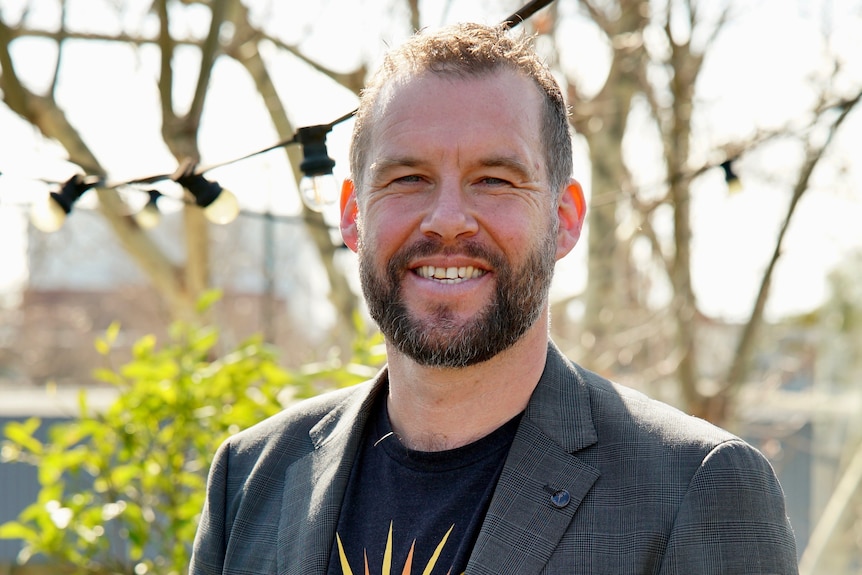
Andy McCarthy says he doesn’t have to worry about fuel prices because he drives an EV. (Supplied: Andy McCarthy)
But as the price of diesel soars above $3.10 a litre across Victoria, more drivers in country areas are making the switch to EVs.
Mr McCarthy, who lives at Mirboo North, about two hours east of Melbourne, is grateful he does not have to think about petrol prices.
“I had to fill up my wife’s car the other day, and I was like, $128?! It was actually the first time I thought about it in years, because I only ever drive my own EV,” Mr McCarthy said.
“You know exactly how much your [charge] is going to cost.”
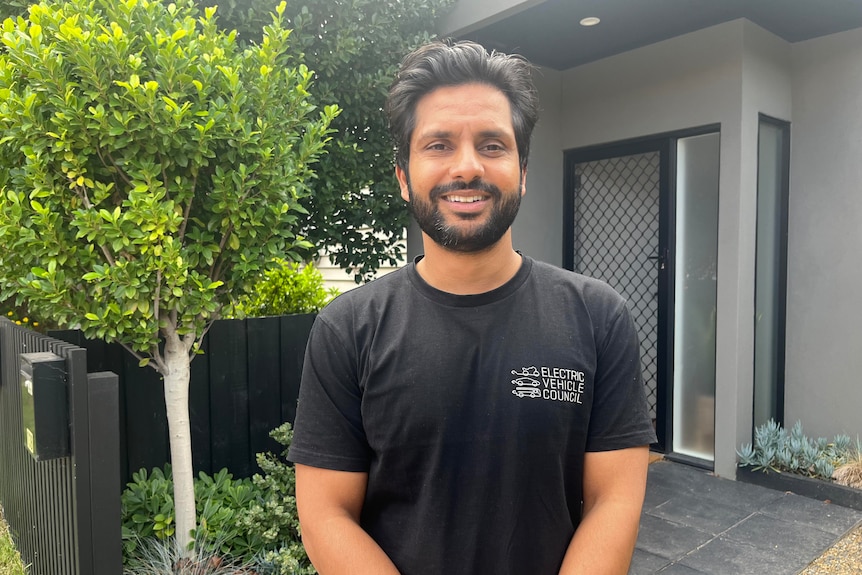
Aman Gaur says there are now more than 150 EV models available in Australia. (ABC: Steve Martin)
EV uptake on the rise
Most new EV owners are in outer suburban areas.
But the Electric Vehicle Council’s head of legal, policy and advocacy, Aman Gaur, said uptake in country towns was rising as more models suited to regional drivers came onto the market.
“As we see more options in utes and medium SUVs grow in the Australian market, we’re seeing an increased share of EVs in regional areas like Ballarat and Gippsland,” he said.
However, Mr Gaur said infrastructure would need to keep pace with demand.
“We do need to see more fast and ultra-fast charging infrastructure installed on our highways and in areas that businesses would naturally go and invest,” he said.
Mr Gaur wants the federal government to retain the electric car discount, a scheme that gives buyers a tax incentive for new and used EVs, which is under review.
“It makes no sense to take away a tax policy that is helping Australians cut the cost of living, makes us more fuel secure and get into more EVs,” Mr Gaur said.
Some regional drivers remain cautious
Some drivers in regional areas remain reluctant to make a switch.
“I’m more of an outdoorsy, off-grid kind of person … it’s not going to suit everyone, as simple as that,” Gippsland man William Austin said.
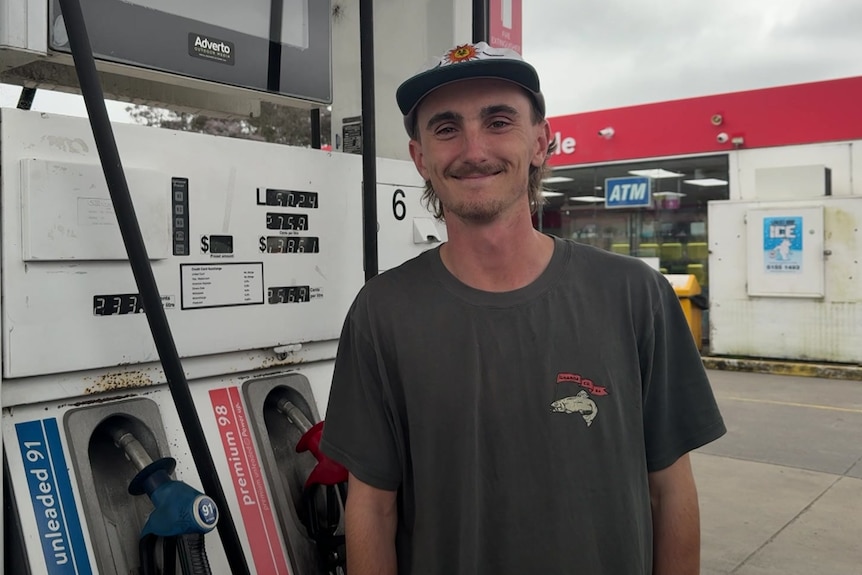
Will Austin says EVs won’t be for everyone. (ABC Gippsland: Lily Kristanto)
“It is an inconvenience for the people on a tight time schedule to stop and charge up.”
Trinity Hood, who lives outside Sale, said electric vehicles were not suitable for some regional conditions.
“I have a lot of kangaroos and everything out at home, so hitting one of those in an electric vehicle, I feel like it would cause more damage than my car personally,” she said.
“If we need to rely more on electric vehicles, we do need more access to charging stations.”
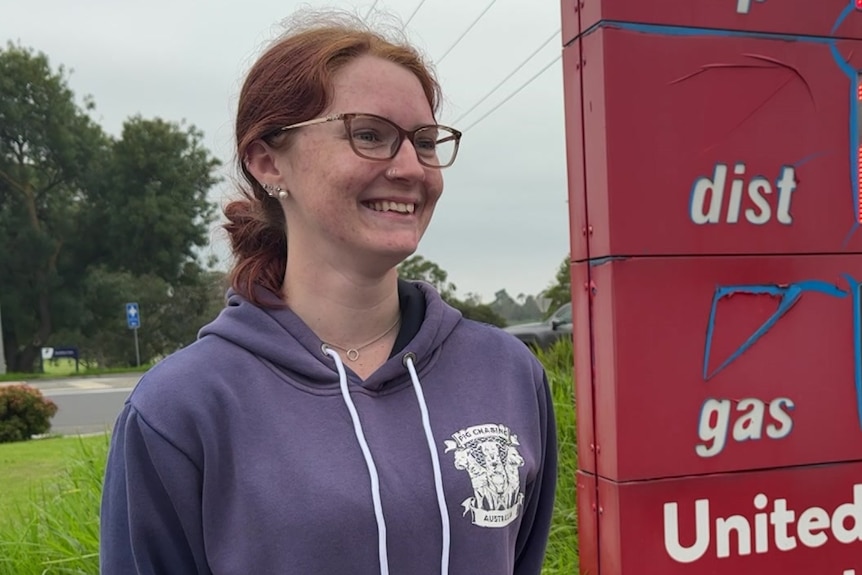
Trinity Hood is concerned EVs might not be safe to drive where she lives. (ABC Gippsland: Lily Kristanto)
‘A really good balance’
Other regional drivers are opting for hybrid electric vehicle models, including plug-in hybrids.
Plug-in hybrid electric vehicles (PHEVs) have both a fuel tank and a rechargeable battery, which can charged by plugging into a power source.
The car will run on electricity until its battery is nearly empty, then switch over to its internal combustion engine.
Moe man Ben Grabau started driving a PHEV last year and said it had been beneficial, particularly with rising fuel prices.
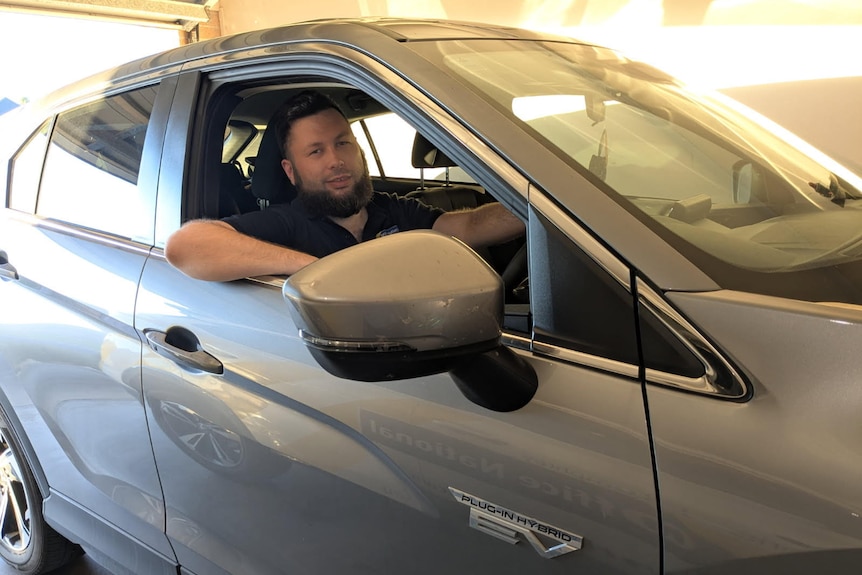
Ben Grabau says plug-in hybrids are a good compromise for regional drivers. (Supplied: Ben Grabau)
“Our fuel bill is probably less than half of what it used to be because there’s enough range in it to pick up the kids and do all that sort of thing without burning any petrol,” he said.
“There’s a lot of times it costs us nothing if we’re charging from solar.”
Mr Grabau said while drivers in regional areas may still rely on petrol for longer trips, the hybrid could offer a practical middle ground.
“I think having the plug-in hybrid is a really good balance … but we are considering going fully electric for the next car that we purchase.”
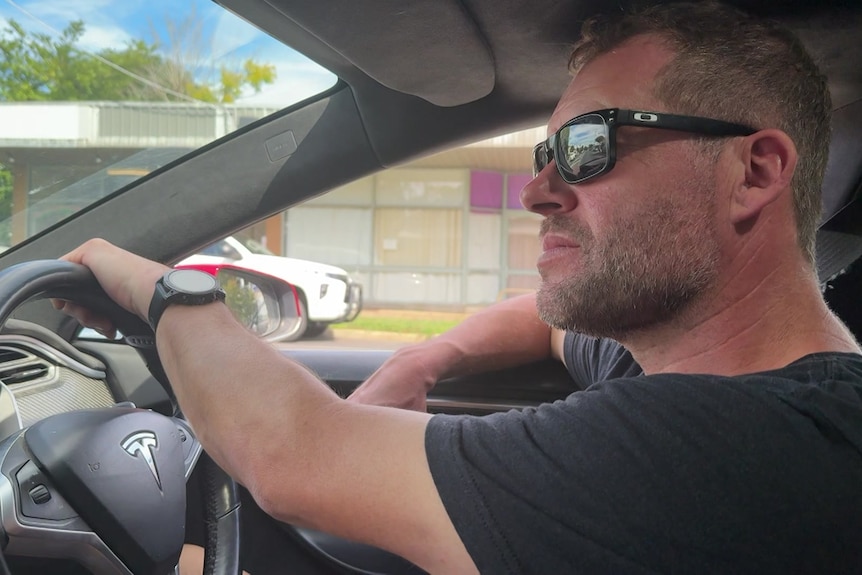
Andy McCarthy says the transition to electric vehicles is well and truly underway. (ABC Gippsland: Lily Kristanto)
Back in Mirboo North, Mr McCarthy said he had “never looked back” since making the switch.
“A lot of people aren’t doing it for sustainability reasons anymore,” he said.
“It’s purely just the cheapest, most convenient, most enjoyable way to get from point A to point B.
“Once we get the infrastructure right … I think this transition just takes care of itself.”