
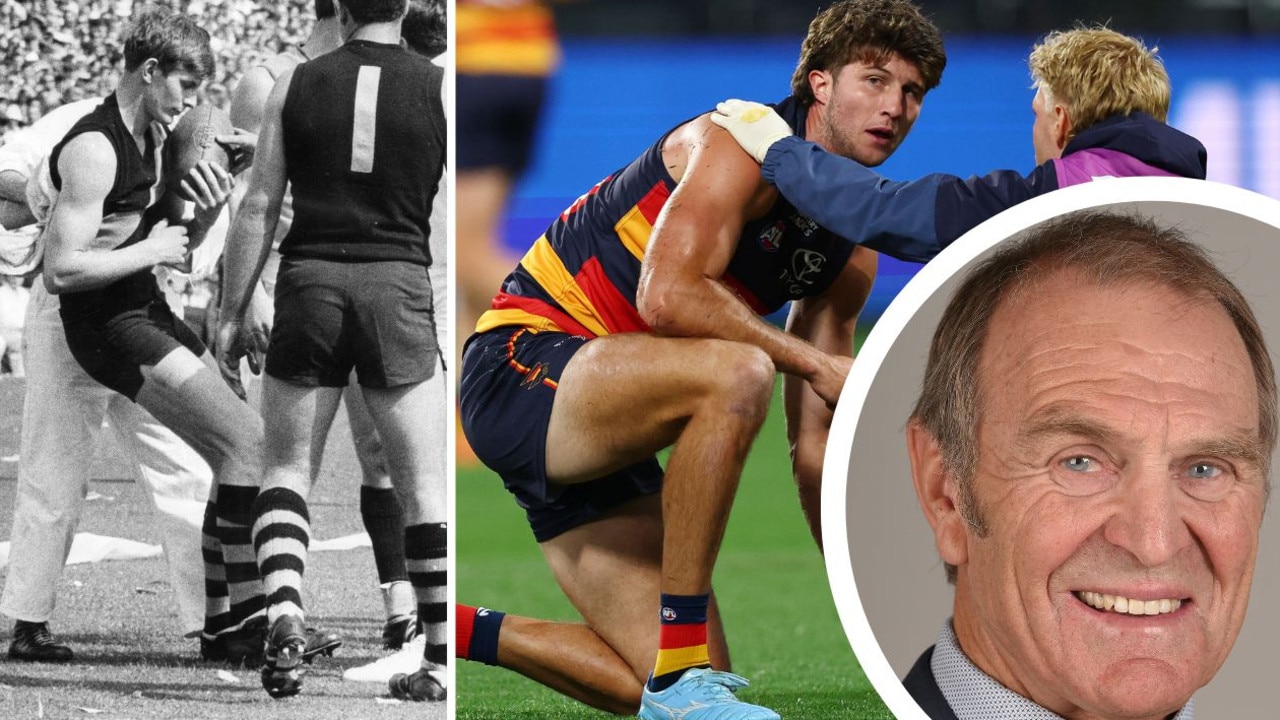
In the 1969 SANFL grand final between Sturt and Glenelg, the Richmond champion Royce Hart was knocked unconscious early in the first quarter.
It was a football accident, although the AFL tribunal might see it differently these days.
That this champion who many years later would be inducted as a Legend into the Australian Football Hall of Fame came to be playing for Glenelg one week after he had played in the winning VFL premiership Richmond team, is one of those stories that have now been consigned to football folklore.
Hart had been conscripted under the National Service Act and was based at Woodside in the Adelaide Hills.
He would fly back to Melbourne every weekend to play for Richmond. Not only did he play in the premiership winning team, he also won the club’s best and fairest award that year.
So how could he play for Glenelg one week later in the SANFL grand final?
He had trained a few times with Glenelg during the season – not often but just a few times to be familiar with some of the players.
But Glenelg saw a condition of the National Service Act that could be exploited.
A soldier could play football for a team in the state in which he was based without needing a clearance.
It was designed to allow soldiers who could be moved interstate without notice to still play competitive football.
It wasn’t intended to bolster the Glenelg team coming into a SANFL grand final after they had been well and truly beaten by Sturt in the second semi-final.
The exact sum that Glenelg paid Hart for that one game, through the generosity of several colluding vice-presidents, has never been fully revealed. But rumour, fable and hearsay has the figure anywhere between $1000 and $10,000.
But he was knocked out. Pushed from behind in a genuine contest, he fell into the knees of oncoming Sturt halfback Trevor Clarke, who in fairness tried to get out of the way.
Hart was out cold. The image of the Glenelg trainers dragging a comatose Hart to his feet highlights everything that was wrong about how concussion was treated in those days. Eventually, after several wafts of smelling salts which were shoved under his nose, he regained consciousness.
Incredibly, he played on (there was no substitute rule in those days) and with credit to his courage, was probably Glenelg’s best player that day.
Nevertheless, the football gods looked down and invoked the powers of sporting justice. Sturt thrashed Glenelg and we never saw Royce Hart again.
That was then, when concussion was treated with indifference.
It was a sign of your masculinity and courage to get up and play on. Maybe you rested for a couple of days afterwards but you always fronted up for next week, regardless of how fuzzy you might still be feeling in the head.
Things seem so much better now. But are they really?
The detection of brain-related head injuries and the protocols for recovery are being increasingly modified, but it doesn’t prevent the injury in the first place.
It just means that more cases are being detected.
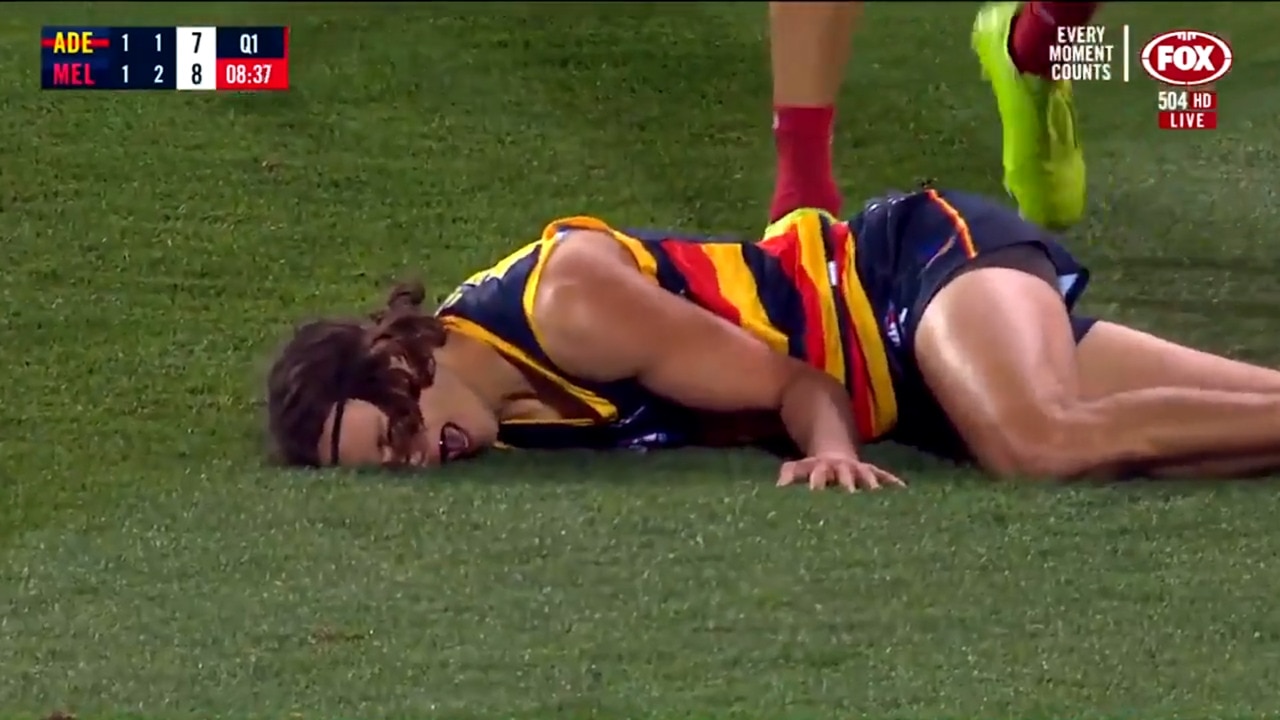
Watching Jordan Butts in the Crows recent match at Kardinia Park being dragged from the field and then in full view of the television audience having to perform a concussion test indicated how serious club medicos are about concussion.
But he passed and went back on, only to suffer delayed symptoms several days later.
As many resources as the AFL are throwing at the problem and as deadly serious as they are about minimising the incidence of concussions and the repercussions, it seems that the problem today is far greater than at any stage in the history of the game.
There is now a long list of ex-player complainants who want compensation for the after-effects of the head knocks they suffered during a playing career in both the VFL and the AFL.
Where Royce Hart’s case would fit into that matrix is interesting.
Would a VFL player suffering concussion, playing in a SANFL team in the same season be able to claim compensation? Do all those ex-VFL players joining a class action against the AFL have the right to sue the AFL?
Reality hit home this week for those with genuine cases as well as those with aspirations to blame the AFL for any lingering effects from head knocks.
The insurance giant Zurich, who operates the AFL’s group insurance program announced that it will no longer cover head trauma.
Can you blame them? It has become an epidemic. But still, the AFL players have been paying over $400 per month through their superannuation schemes to be covered. Zurich has taken the money and has now pulled the cover.
The recent high-profile cases of Angus Brayshaw, Paul Seedsman and Nathan Murphy highlight the complications of the issue.
Unable to achieve a satisfactory outcome in their pursuit of compensation from the league and the insurance company, they took their case to the Australian Financial Complaints Authority (AFCA), an independent arbiter.
Unfortunately the AFCA sided with the insurance company on the basis that while the players could not continue to play without further risk, they still could perform roles within the football clubs.
Technically, it seems sound but comparing the level of pay between on and off-field roles, the decision lacks fairness.
The AFL is increasingly under attack from those who are claiming long-term brain damage from head knocks they received playing football and want to hold the AFL responsible.
Firebrand player advocate, accountant and AFL assailant Peter Jess, has been relentless in his pursuit of the AFL to adequately compensate effected players, improve rehabilitation protocols and to make the game safer.
“The AFL confirmed in its own research that it was the most dangerous team sport for brain trauma in the world. Nowhere do the AFL warn parents of the dangers of AFL participation and brain trauma that flows from that outcome,” he writes.
“A brain trauma is not an if, but a when, from AFL participation.”
Jess is savage. He feels the AFL should be investigated for the breach of duty of care to the players along the lines of the James Hardie asbestos and the Meta scandals.
He’s cynical about the research into mouthguards and helmets minimising head trauma impact.
I’d love Peter Jess in my corner advocating for me but he’s harsh on the AFL, which is allocating increasing resources to the problem.
Besides, it’s hard to believe that Aussie rules is more dangerous than rugby league, American football and even soccer with its repeated head knocks.
But we see these queues now for compensation similar to the public service RSI epidemic of the 1980s.
We were kids when we first picked up a football. We played the game because we fell in love with it. Parents might have been concerned but we couldn’t wait for Saturday.
If they told us it was the most dangerous game in the world, would we have stopped? I doubt it.
The AFL, in light of its continuing reforms and safeguards surely can’t be held responsible for injuries acquired in a contact sport that we played voluntarily and enthusiastically.
And now the average wage of an AFL footballer has escalated to over $400,000, players are going to continue to play – regardless of the risk.
There will come a time when draftees have to sign a waiver exonerating the AFL from any litigation resulting from injuries, specifically head trauma.
Like Royce Hart who got up when he shouldn’t have, they still will play.
Originally published as AFL can’t be held accountable for all concussion fallout, Graham Cornes says
 Graham CornesSports columnist