
Soaring guitar music blares over grainy footage of young people gathered on the opening day of Geelong’s Corio Skate Bowls.
The vision is pixelated and washed out. But for Alistair Miller the memories of that day in 1980 are vivid.
“Everyone was hyped up, amped, super excited and there would have been 200 to 300 people around the bowl to watch the opening demo,” he says.
“It was crazy.”
Hundreds turned out to an event marking the opening of the Corio Bowls in 1980. (Supplied)
During the 1970s, more traditional sports gave way to currents of counterculture.
And in the tough, multicultural and industrial northern suburbs of Geelong, young people needed an outlet.
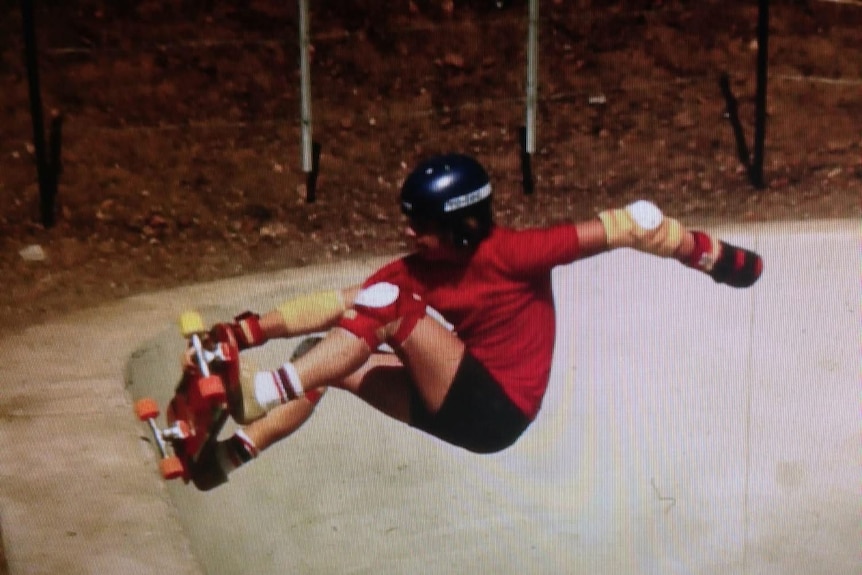
Alistair Miller charging one of the Corio skate bowls as a teen. (ABC News)
Then aged 13, Mr Miller had the perfect solution: skateboarding. With his friends who shared a love of the sport, he started the Corio Skateboard Club.
Club members kept a close eye on the parks that were being built in the US by reading skateboarding magazines.
They yearned for the facilities that young people in America had. So they decided to take action.
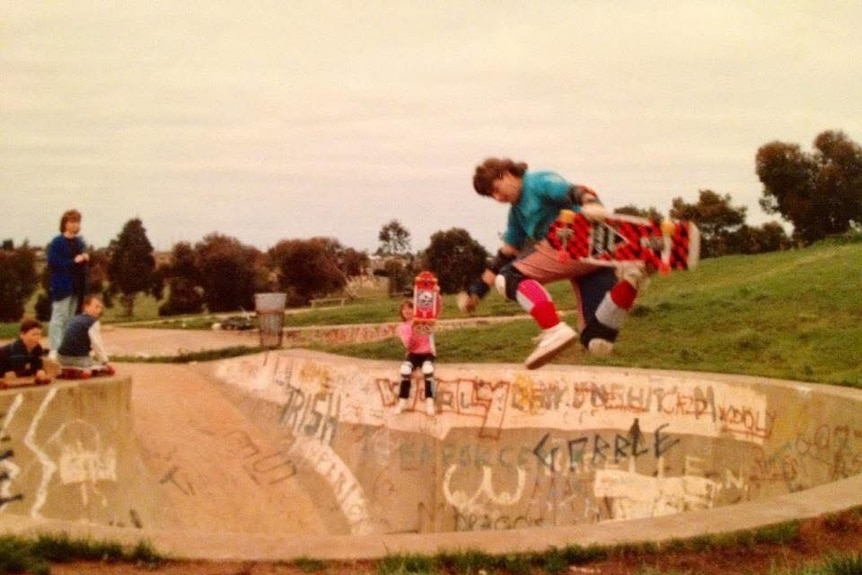
Alistair Miller was a regular at the advanced bowl after it opened in 1980. (Supplied)
Members of the club would set up a table at the nearby Corio Village and ask locals to sign their petition for a new skate park. They gathered 300 signatures over a month and took the petition to council.
To their excitement, the Shire of Corio decided to build the park.
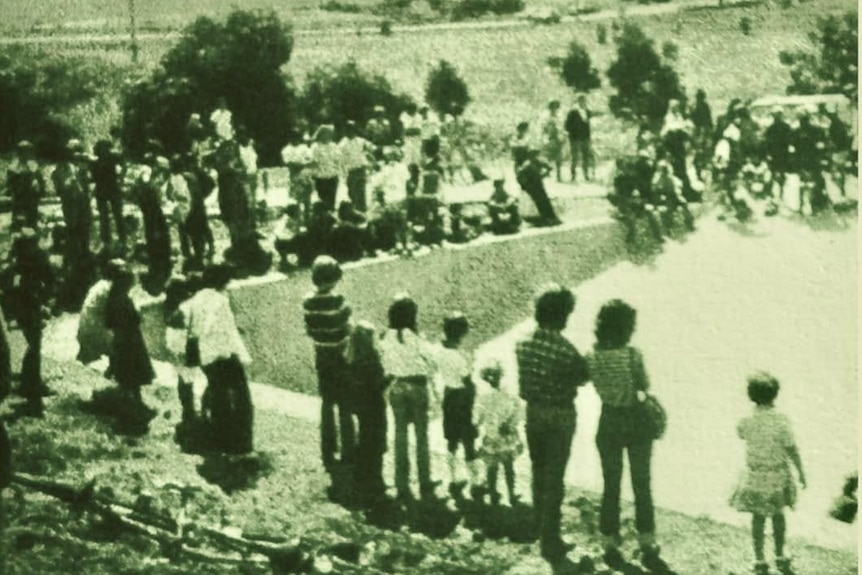
The Corio Bowl officially opened in March 1980. (Supplied: Anthony Aitken)
In a blue-collar area with high rates of public housing, where much of the focus was on jobs and industry, the kids had achieved a victory.
“They were all really hardworking families that didn’t have much but made do with what they had and to get something like this was totally amazing,” Mr Miller says.
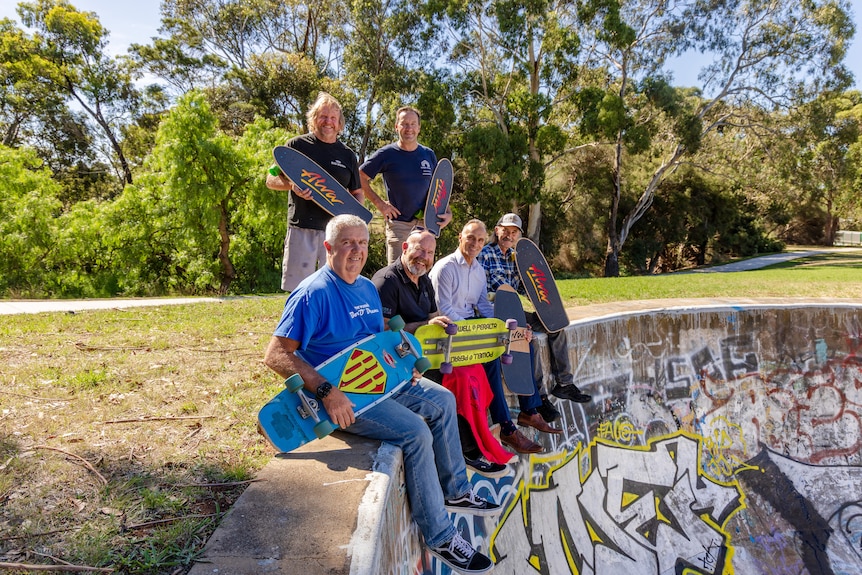
The Corio Skateboard Club members in the present day with Geelong mayor Stretch Kontelj. (ABC News: Jonathon Kendall)
According to Mr Miller, the shire and a local service club agreed to pay $15,000 each to cover the $30,000 project cost.
The bowls that fed a generation of skaters
Nestled in the Fountain of Friendship Park on the banks of Cowies Creek, there are three Corio Bowls. One for beginners, one for intermediate skaters and one for advanced riders.
They make up the first purpose-built public skate park in Victoria and became instantly popular with locals. But there was also outside interest.
“We didn’t realise how good it was until people started coming from all over the place,” Mr Miller says.
“We started seeing people from Melbourne and Melton then interstate — and then some of the skaters we’d see in the magazines.”
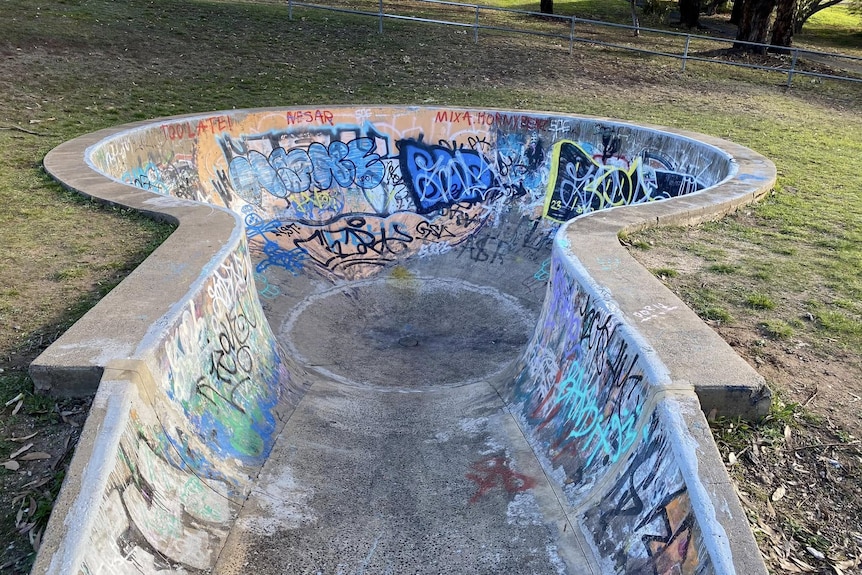
Many did not dare brave the advanced bowl at the Corio Skate Bowl. (ABC News: Jonathon Kendall)
In 1987, perhaps the biggest name in the sport graced the bowls. American skateboarding icon Tony Hawk dropped in on a trip to the Ramp Riots competition in Torquay.
While many professional skaters would come to skate the bowls, for locals they were a valuable place to hang out with friends and connect with skate culture.
“Back in those days the parents would turf you out of the house and say ‘see you back here at dinner time’,” says Geelong Mayor Stretch Kontelj, who grew up a kilometre away.
“This was just our playground, our backyard.”
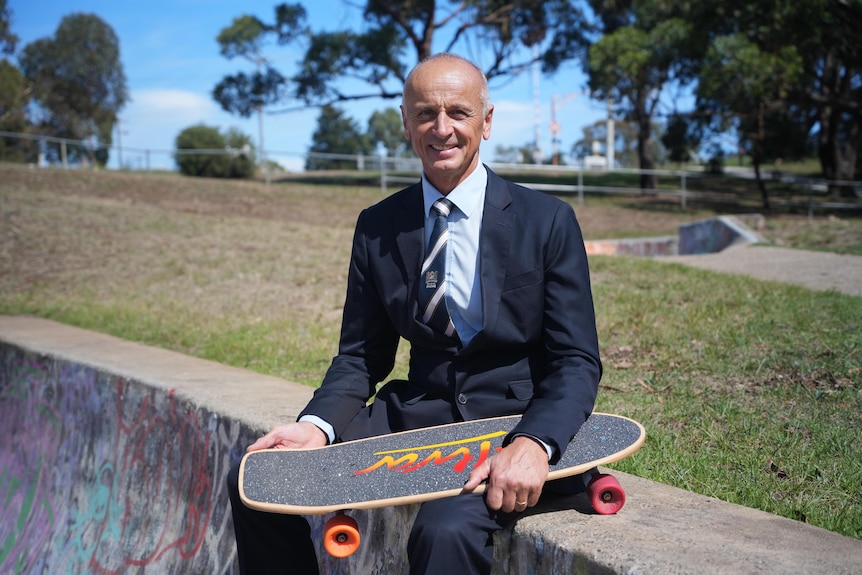
Geelong Mayor Stretch Kontelj is no stranger to the Corio Skate Bowls. (ABC News: Jonathon Kendall)
He knew his limits and usually wouldn’t try his luck in the advanced bowl.
“I did once and nearly broke my knee. You really had to be an expert skater to go into that bowl,” Mr Kontelj says.
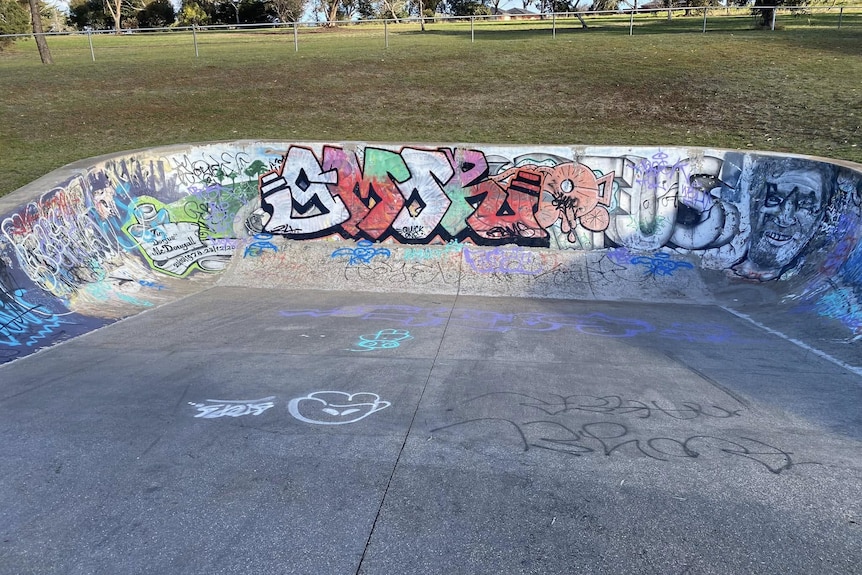
The intermediate bowl is one of three constructed in the late ’70s. (ABC News: Jonathon Kendall)
Donating blood on a cheese grater
The Corio Bowls are not what they used to be. But thanks to moves from the council they are likely to be preserved for the long-term.
The City of Greater Geelong has voted to impose a heritage overlay over the area, giving them extra protection from development, which is something the mayor supports.
“This was identified as one of nine areas of significant heritage. A number of churches have been identified and a milestone marker, but this one is very unique,” says Cr Kontelj.
“I understand it’s one of the oldest skate parks in Australia so to have this protected for future generations is really something.”
But like with any 46-year-old, its age is starting to show. The smooth top layer on the concrete has been worn away, leaving exposed bluestone aggregate.
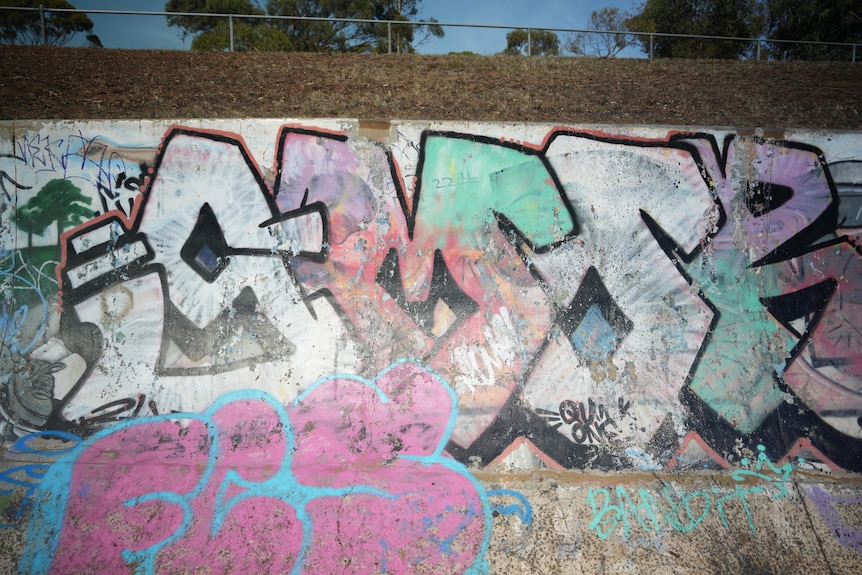
Graffiti features strongly at the decades-old skate bowls.
“If you’re not wearing pads or the protective gear and you hit the bottom, you’re losing skin. It’s just like running your hand over a cheese grater,” Mr Miller says.
He has made many “blood donations” to the park over the years.
And while he has considered pushing for it to be resurfaced, he likes the way the surface has aged naturally.
“It’s not the most fancy skate park, and it’s hard to skate, but it’s a leveller. It makes you work for the tricks.”
While many skaters now opt for smoother modern surfaces like the nearby Northern Skate Park, the Corio Bowls are still used regularly and there has been talk of upgrading them and adding a modern skate park above them.
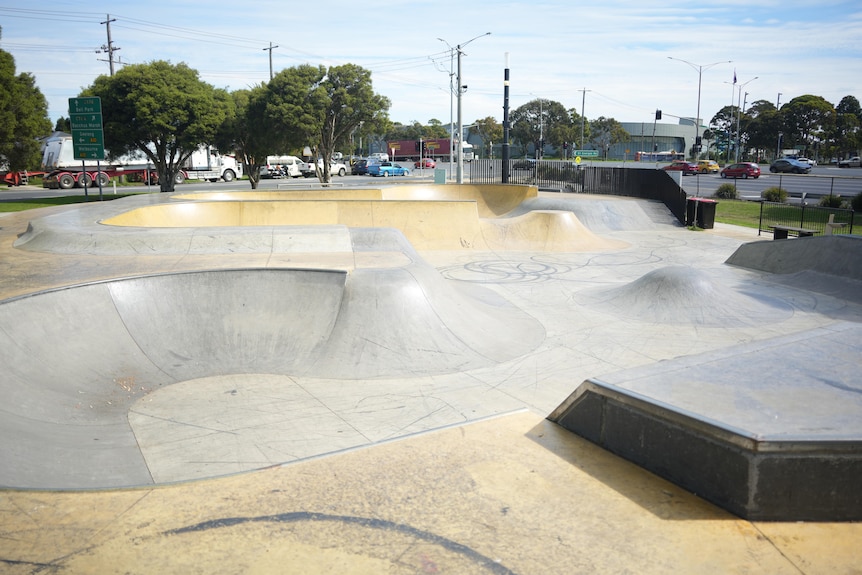
Geelong skaters are more likely to utilise more modern parks like the Northern Skate Park these days. (ABC News: Jonathon Kendall)
While that is a fair way off, the sport’s peak body in Victoria supports heritage protection for the bowls.
“Victoria has been a stronghold for skateboarding in Australia,” says Skateboarding Victoria CEO Tim Preston.
“It really was in the early days, the birthplace of skateboarding in Australia.
“Preserving these historical artefacts is incredibly important to the history of the sport.”
If the Victorian government authorises the heritage overlay, the City of Greater Geelong will take public submissions on the heritage changes.
Any public concerns can be referred to a planning panel for review before the amendment returns to the state government for final approval.
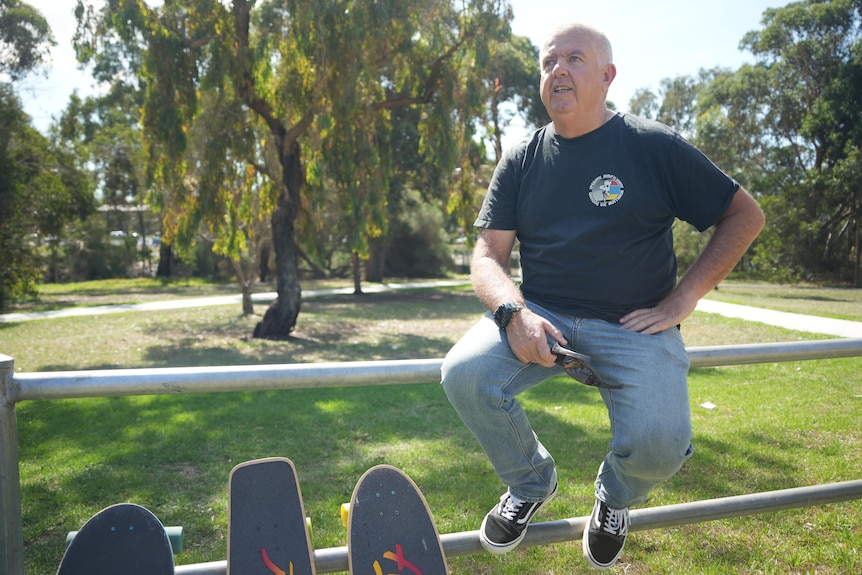
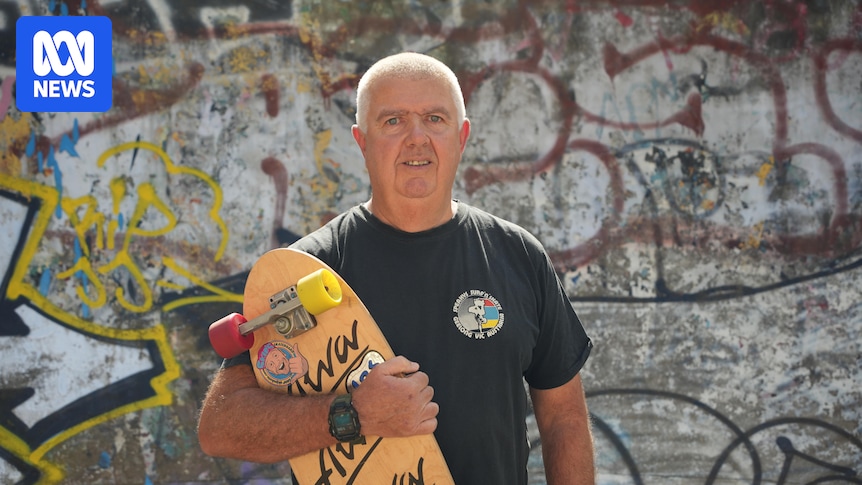
Alistair Miller’s lifelong love of skateboarding was sparked by the Corio Skate Bowl. (ABC News: Jonathon Kendall)
For Alistair Miller, who continues to skate in events around Geelong and further afield, the bowls kicked off a love of skating that has lasted his whole life.
“Skateboarding will give back to you more than you can ever imagine,” he says.
“I would never have thought back then that I’d still be skating when I was 60 years old.”