
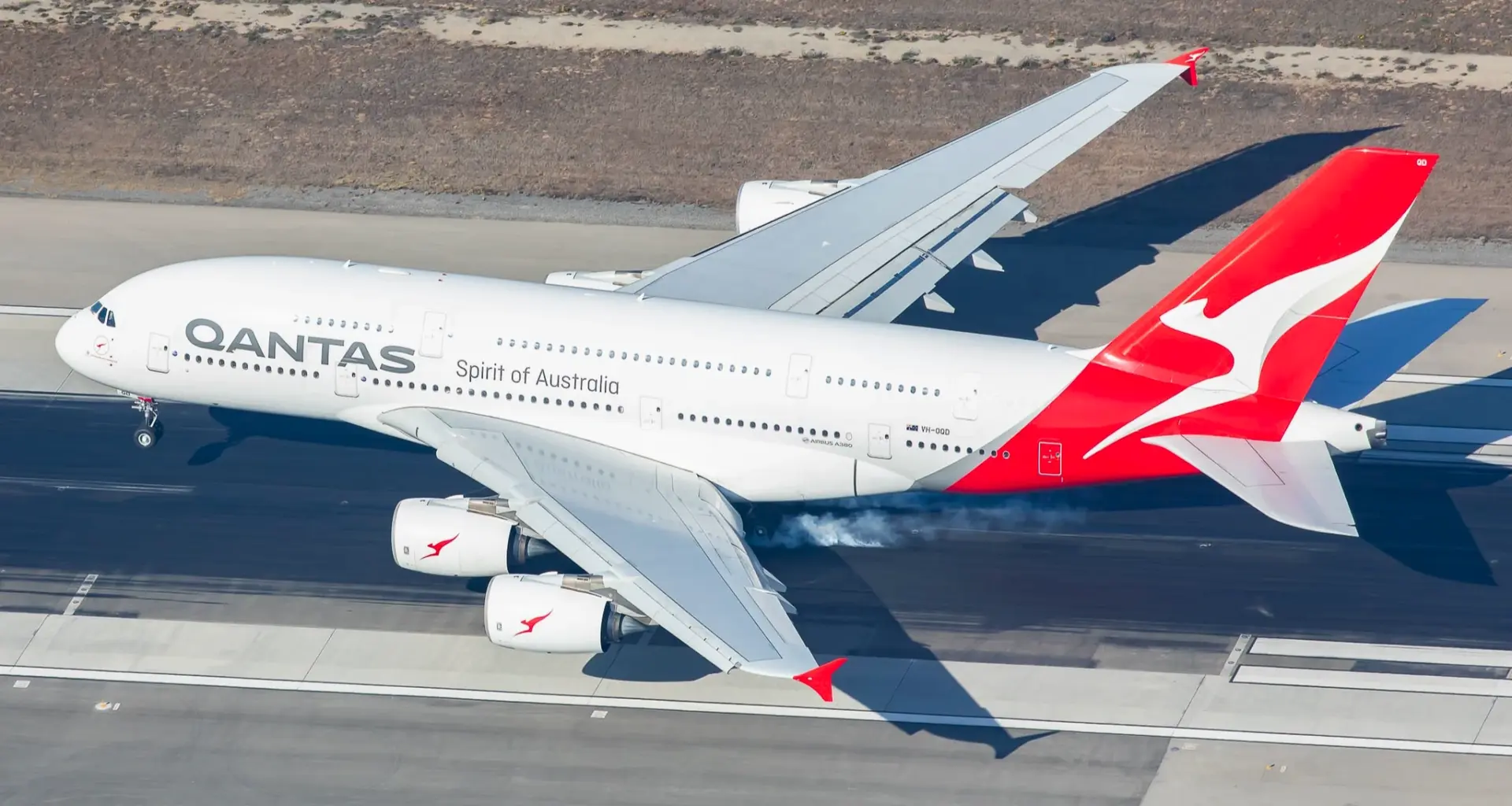
SYDNEY- A Qantas (QF) flight bound for Dallas, Texas, was forced to turn back mid-journey after a medical emergency unfolded on board, prompting a full return to Sydney Kingsford Smith Airport (SYD) just four hours into the flight.
The aircraft, operating as Flight QF7 on the Sydney (SYD) to Dallas Fort Worth International Airport (DFW) route, diverted over the North Fiji Basin before heading back to Sydney. Australian Olympic diver Sam Fricker was among the passengers on board and documented the event on social media.
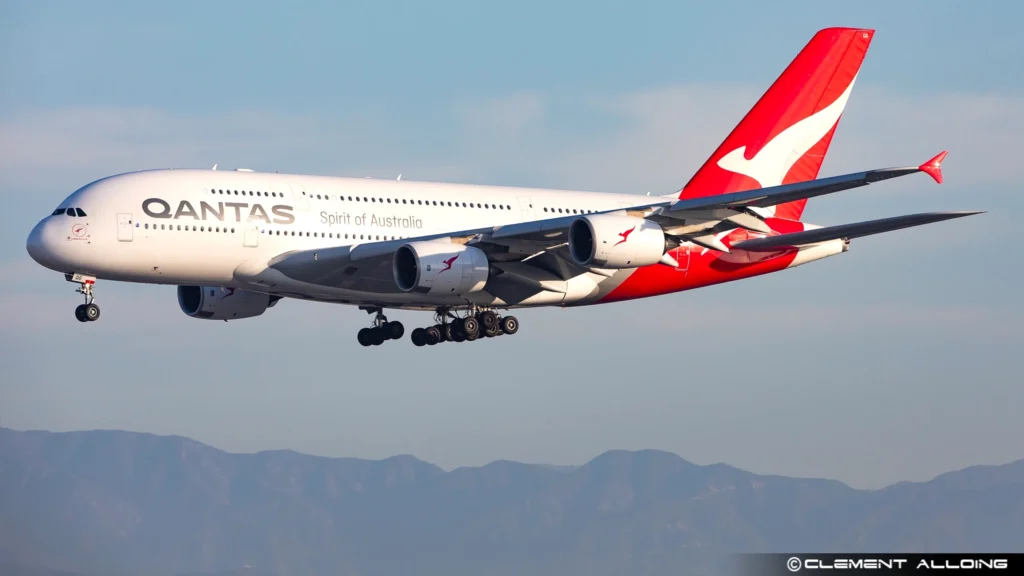 Photo: Clément Alloing
Qantas QF7 Flight Makes U-Turn
Flight QF7 is one of Qantas’s flagship long-haul services, covering approximately 13,804 kilometres between Sydney Airport and Dallas/Fort Worth International Airport. The route typically takes just over 15 hours and departs Sydney daily.
The aircraft involved was an Airbus A380, registration VH-OQH, which turned back near Fiji with ACARS messages confirming a medical emergency on board.
The decision to return to Sydney (SYD) was made as a precaution to ensure the sick passenger could receive medical care as quickly as possible. The flight spent approximately four additional hours in the air returning to Sydney, where it landed safely and was met by emergency services on arrival, News.com.au reported.
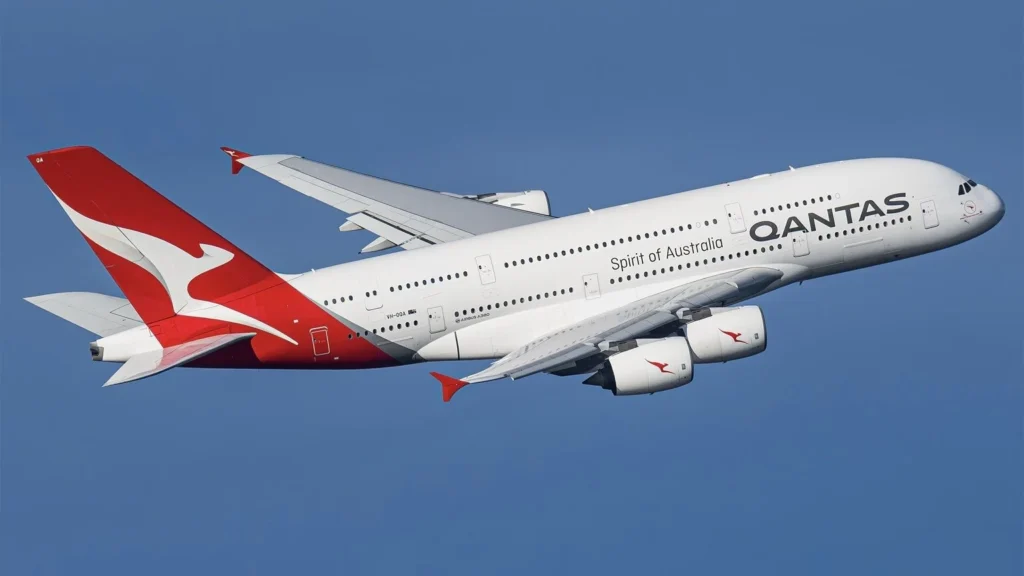 Photo: Shared by Qantas
Sam Fricker is an Australian Olympic diver and social media creator with a significant online following. He was travelling on the flight as part of his journey to the United States to compete.
Writing on Instagram, Fricker described how the situation unfolded and expressed concern for the passenger who required medical attention, noting that the cost of human life outweighs any financial loss, including the expense of dumping fuel over the ocean.
In a separate video clip, Fricker captured the aircraft jettisoning fuel mid-air, a standard aviation safety procedure carried out before landing.
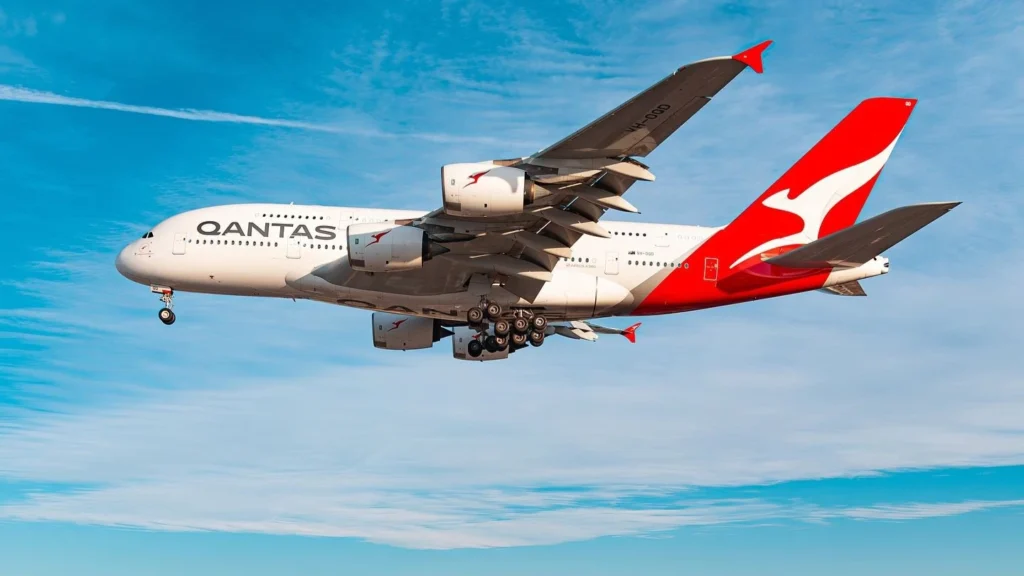 Photo: Cado Photo
Why Aircraft Dump Fuel Before an Emergency Landing
Fuel dumping is a procedure used by aircraft in certain emergencies before a return to the airport shortly after takeoff, or before landing short of the intended destination, to reduce the aircraft’s weight.
Aircraft have two key weight limits: a maximum takeoff weight and a lower maximum structural landing weight.
Long-haul aircraft like the Airbus A380 are invariably equipped with fuel jettison systems. For these large aircraft, attempting a landing without prior fuel dumping can have serious consequences.
A heavy landing places extreme stress on landing gear and brakes, increases approach speeds, and reduces go-around performance.
The A380’s fuel jettison system is designed to quickly reduce the aircraft’s weight in emergency situations, allowing it to safely return to land. It enables the controlled discharge of fuel from specific tanks through nozzles located on the wings, helping achieve the aircraft’s maximum landing weight.
If an aircraft is taking the time to dump fuel before landing, it likely means the issue causing the landing is serious but not immediately critical. In the most urgent emergencies, the priority would be to land immediately without time for fuel dumping.
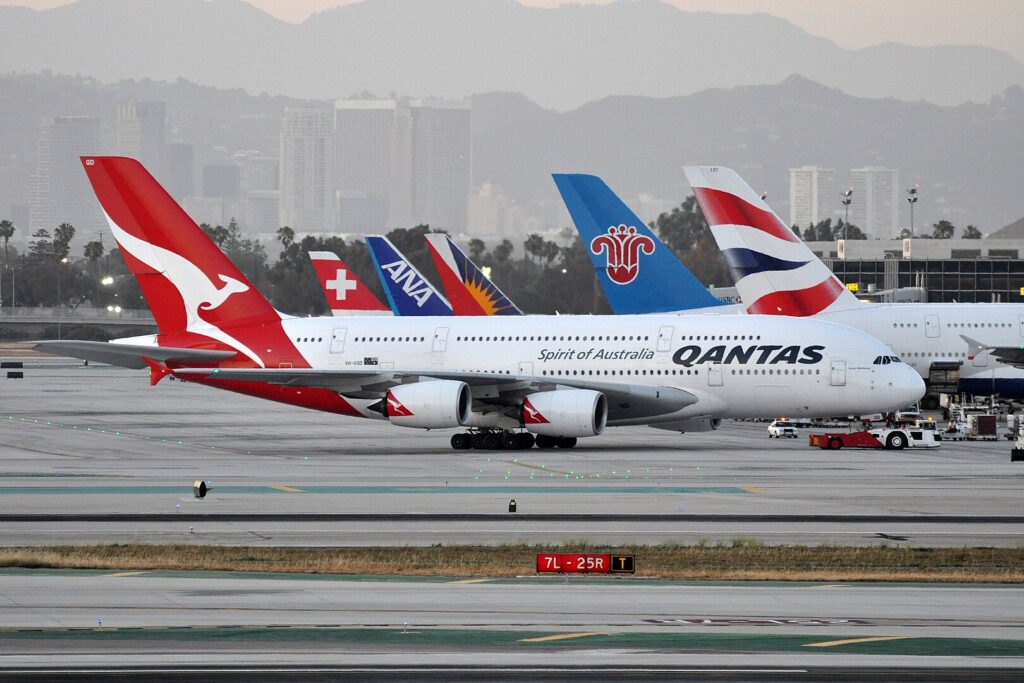 Photo: By Eric Salard – https://www.flickr.com/photos/airlines470/17232473348/, CC BY-SA 2.0, https://commons.wikimedia.org/w/index.php?curid=40059712
Passengers Rebooked as Flight Departs Again for Dallas
After the aircraft landed safely at Sydney Airport (SYD), passengers faced a further two-hour delay on the ground before the flight was ready to depart for a second time.
Qantas planned for the flight to depart again at approximately 8:30 pm, with some complications around catering requiring the crew to remain on board during the turnaround.
The flight eventually departed Sydney (SYD) for a second time just after 9:30 pm AEST, again bound for Dallas Fort Worth International Airport (DFW).
A subsequent departure was also scheduled for 8:40 pm the following day, maintaining the regular flight program for the route.
Stay tuned with us. Further, follow us on social media for the latest updates.
Join us on Telegram Group for the Latest Aviation Updates. Subsequently, follow us on Google News