
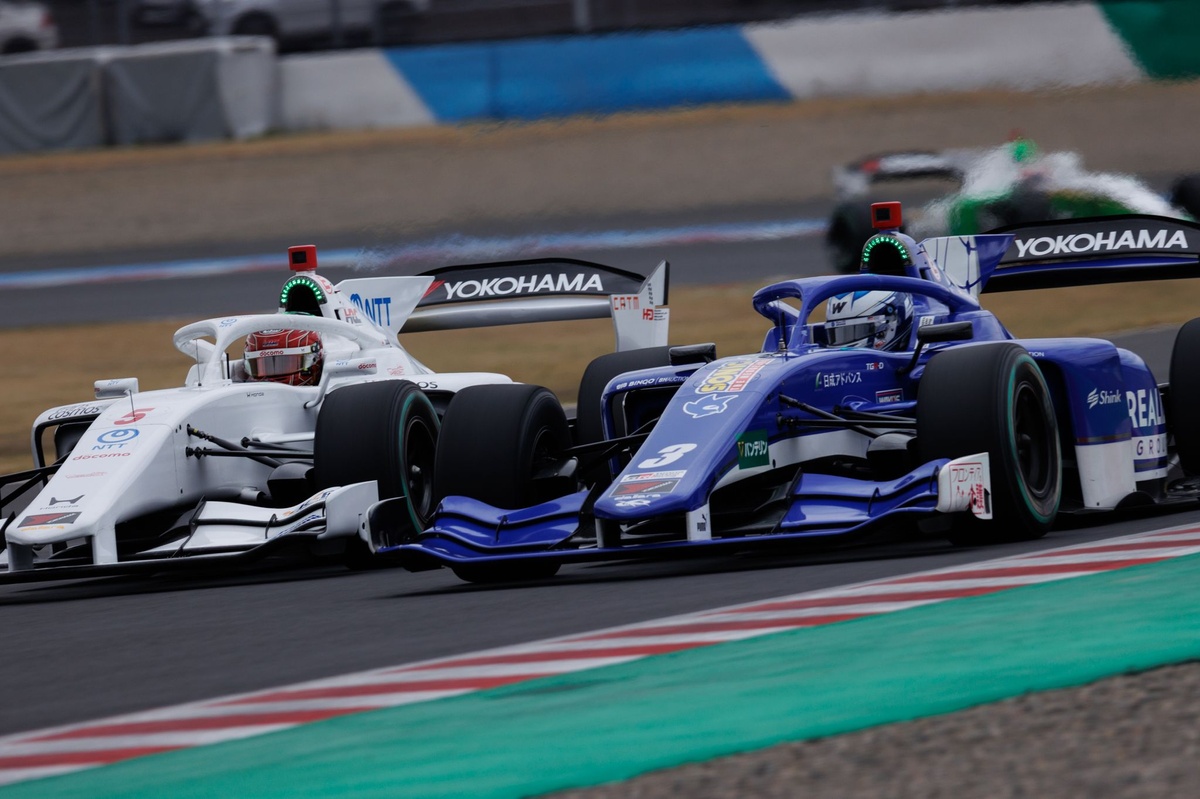
Formula 1’s enforced month-long break provides a rare chance for other major motorsport championships worldwide to get their moment in the sun. In that sense, Super Formula’s curtain-raiser last weekend at Motegi almost couldn’t have been better timed.
Following just a week after F1’s own visit to Japan at Suzuka, a rain-impacted Saturday race that featured little in the way of green-flag action preceded a highly entertaining Sunday encounter that showcased the championship in the best possible light.
Overtakes were not exactly frequent, with genuine passing chances always at a premium at Motegi. But it was certainly strategically intriguing, particularly as early leader Toshiki Oyu’s lack of pace meant he held up the chasing pack and allowed for some unlikely names, principally Nirei Fukuzumi and Luke Browning, to sneak into the top four.
Read Also:
For some, it would have been a welcome antidote to the ‘new’ F1 that has been derided by a segment of the fanbase, as well as numerous drivers, for producing artificial ‘yo-yo’ overtakes, safety concerns aside. But Super Formula also faces its own headaches when it comes to balancing the competing interests of sporting integrity and entertainment.
Featuring identical cars (albeit with two competing engine suppliers in the form of Honda and Toyota), relatively stable tyres and eschewing DRS, Super Formula is often upheld as one of the ‘purer’ forms of motor racing. But the Japanese championship still makes use of the Overtake System (OTS), an IndyCar-style push-to-pass system, to allow drivers to overcome the dirty air effect that plagues almost all single-seater categories.
OTS was first introduced back in 2009 with the arrival of the Swift-built FN09, but it wasn’t until 2019 that the system took on its current form with drivers handed a 100-second allocation of an extra 10kg/h of fuel flow (on top of the standard 90kg/h) to tee up a pass. The allocation was doubled from 100 to 200 seconds for the 2021 season, and the fundamentals of the system have remained the same ever since.
For Ryan Dingle, a veteran Super Formula engineer who is also part of the Toyota World Endurance Championship squad, OTS is a necessary evil given the performance profile of the current SF23 package, and the fact that refuelling and multiple tyre compounds were axed after 2019 means strategic variables are limited compared to other series.
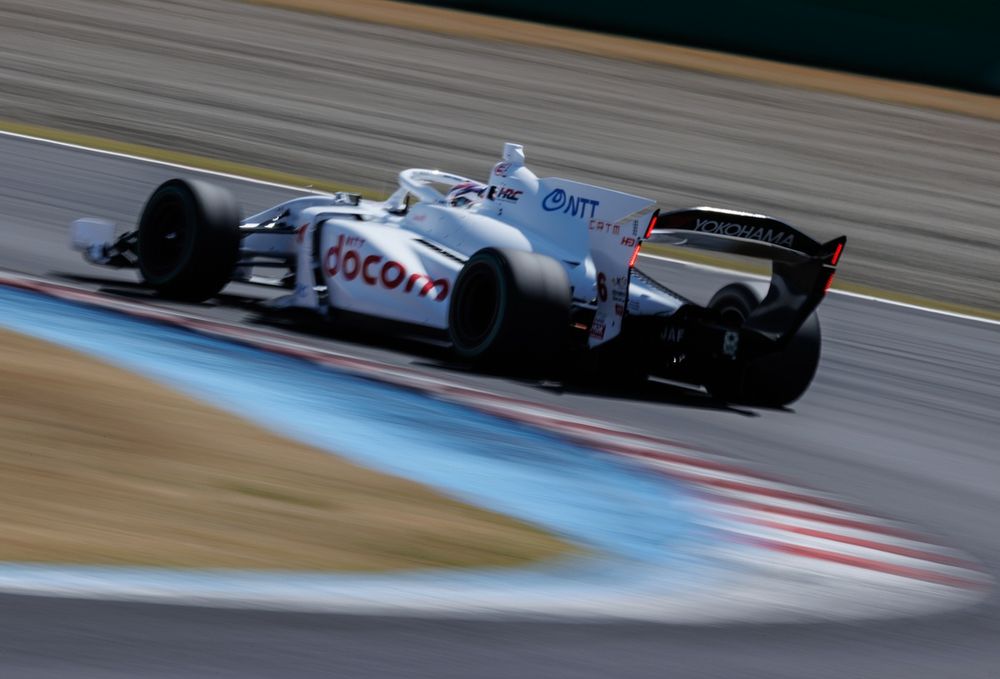
Super Formula has consistently been praised for its exciting racing without relying too much on artificial ways to promote overtaking
Photo by: Masahide Kamio
“The overtakes that are made in Super Formula, the OTS helps because the cars don’t have the same top speed and acceleration as F1, therefore you don’t benefit so much with the slipstream, so you need that extra power to get over the ‘hump’,” Dingle explained.
“F1 has circuits with long straights; here [in Japan] we have Fuji, and you always get great racing at Fuji in any category because you have a straight that’s long enough that you can actually do something with it, and a third sector that makes the tyres go off.
“At places like Autopolis and especially Motegi, the straights just aren’t long enough.”
A common critique of OTS is that drivers have developed a tendency to use it to defend as much as they do to attack, with no restrictions on its use except a mandatory ‘cool-down’ period between each use of the system. Each usage can range from as little as one second to the entire 200-second allocation in one go. It can sometimes lead to stalemate situations where both the attacker and defender use the OTS in unison, nullifying its impact.
Purists would endorse a return to refuelling, as was standard in Super Formula prior to the COVID-19 pandemic, and longer races. But promoter JRP seems wedded to its current format of one-hour races, with double-headers where possible
In an attempt to mitigate this problem, since last year the lights on the cockpit rollhoop no longer flash as they used to. But now, drivers rely less on visual cues and more on information being fed to them by the engineers over the radio, who can see the OTS usage on the official broadcast as well as on the official Super Formula app.
There are no perfect solutions. Some advocate for restrictions on OTS usage for the defending driver, though this would make the system more DRS-like than some would like. Others believe that incentives to use OTS earlier in the race might help the situation, as it is common for drivers to save much of their 200 seconds for the closing stages.
Purists would endorse a return to refuelling, as was standard in Super Formula prior to the COVID-19 pandemic, and longer races. But promoter JRP seems wedded to its current format of one-hour races, with double-headers where possible. And an influx of new teams with no experience of refuelling only makes a return to the old days even harder to imagine.
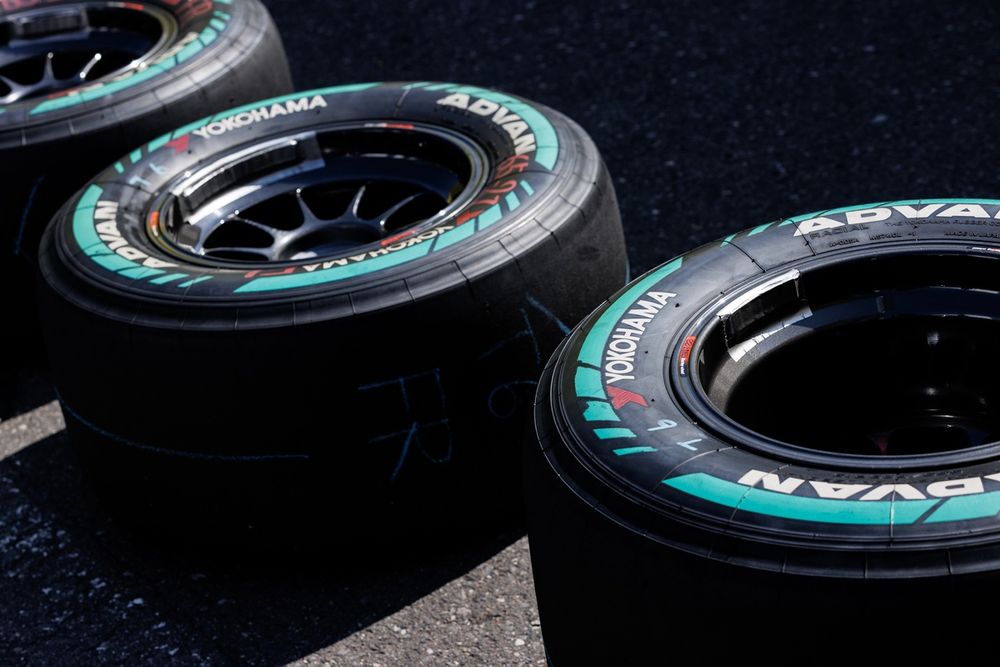
Iwasa feels Super Formula can also learn from F1 by using less robust tyres to generate better pace differences
Photo by: Masahide Kamio
For defending champion Ayumu Iwasa, there is another obvious way to promote overtaking, which is to go down to the path of less robust tyres as used in F1 and its feeder series.
“Honestly, the [Yokohama] tyre is too easy,” said Iwasa. “Having more degradation would create some more gaps in pace between the teams and drivers, which creates a more fun race. I think it’s actually something that Super Formula could learn from F1.
“Also, resurfacing the tracks makes the driveability better and this reduces the challenge. For example, this weekend there was much less degradation than normal. And if you have less deg, there is less opportunity to overtake because the gaps between cars are smaller.”
In any case, the steadily increasing fan interest, as proven by rising fan attendance figures, and extra cars on the grid – this year’s 24-car field is the largest since the early days of the Formula Nippon era – is arguably evidence Super Formula is doing something right.
Sacha Fenestraz has experience not only of the Japanese series but also Formula E, where he spent two seasons, and also performs simulator duties for one of F1’s leading teams. And even if he feels OTS isn’t perfect, he doesn’t have too many complaints about the series.
“I agree with the [F1] drivers, because we had similar issues in Formula E, with people hitting the regen in certain areas where you are deploying, although in F1 the speed differences are much bigger,” said Fenestraz. “It’s a tricky situation.
“Having something to improve overtakes in Super Formula would be good, because at tracks like Motegi and Suzuka, we don’t see that many overtakes. That said, I think Super Formula is the championship that has achieved the best balance.”
Read Also:
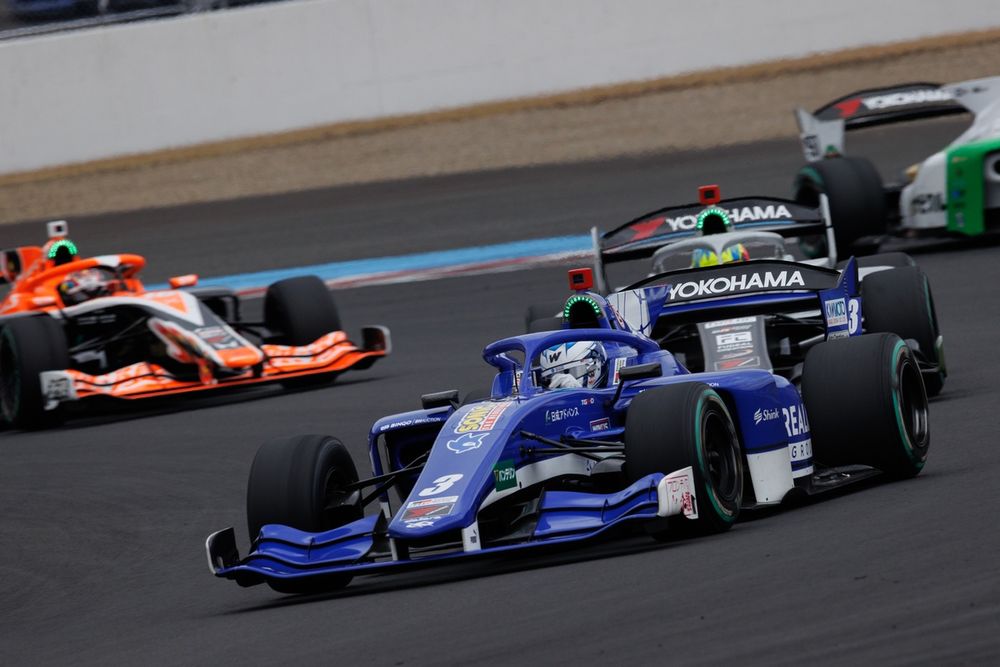
Super Formula continues to be a strong proving ground for future international racers
Photo by: Masahide Kamio
We want to hear from you!
Let us know what you would like to see from us in the future.
– The Autosport.com Team