
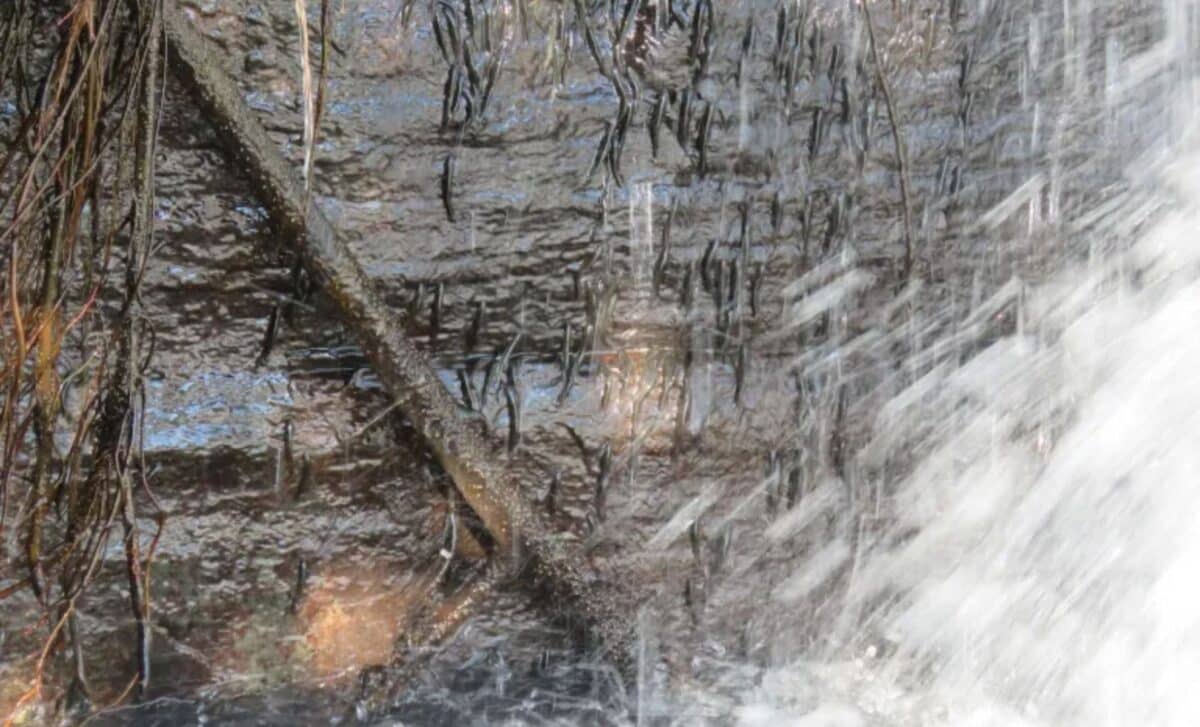
Researchers have filmed tiny shellear fish (Parakneria thysi) climbing up a 15-meter waterfall in the Democratic Republic of the Congo. Measuring just 4 centimeters long, these fish embark on a challenging 10-hour climb up the slippery rocks of Luvilombo Falls. The footage reveals an extraordinary behavior never fully documented before.
This behavior has been known locally for decades, but it wasn’t until 2018 and 2020 that scientists were able to capture it on film. Their ability to climb breaks the usual expectations, making researchers rethink how far these water species can adapt to tough environments.
How These Fishes Defy Gravity
So how do these little fish manage to climb a 15-meter waterfall? They don’t use their mouths like other water dweller, but instead rely on their fins. According to research published in Scientific Reports, the shellear fish have special pelvic and pectoral fins with hook-like projections that allow them to grip the rocks and shimmy their way up. As the authors said:
“The ability of shellears to climb waterfalls has been known anecdotally for over 50 years. The behaviour is documented here for the first time, with supporting cinematographic and photographic evidence.”
The journey isn’t a quick one. Though it takes about 10 hours to reach the top, most of that time is spent resting. They take long breaks along horizontal ledges, regrouping before moving on. In fact, they only spend about 15 minutes of actual movement, taking nine hour-long breaks and some shorter pauses. The climb is slow and steady, yet it proves to be an effective strategy for them.
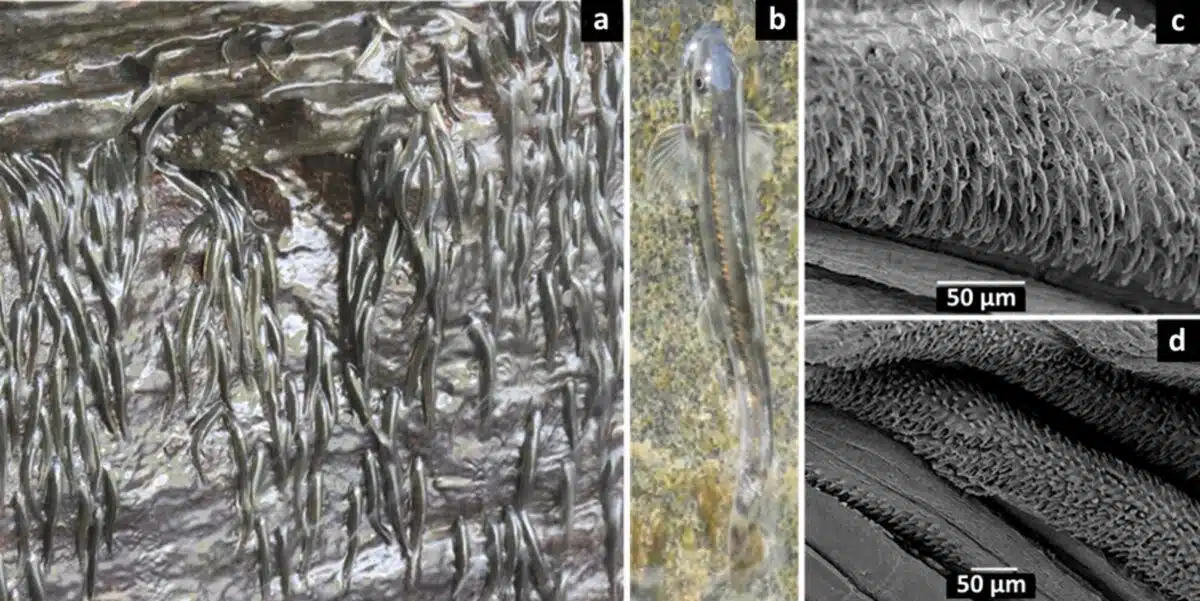 The image shows close-up views of a Parakneria thysi’s specialized structures. Credit: Scientific Reports
When Do They Climb?
The shellear fish start their climb at the tail end of the rainy season, when the water levels in the river drop enough to make the waterfall more climbable.
Researchers have noticed that they prefer to climb in the late afternoon, between 4 and 6 pm, likely to avoid the strongest currents and predators like the silver butter catfish (Schilbe intermedius). The number of fish attempting the climb peaks in mid-April, when water levels are just right, and the climb is believed to help them migrate to new feeding grounds or escape danger.
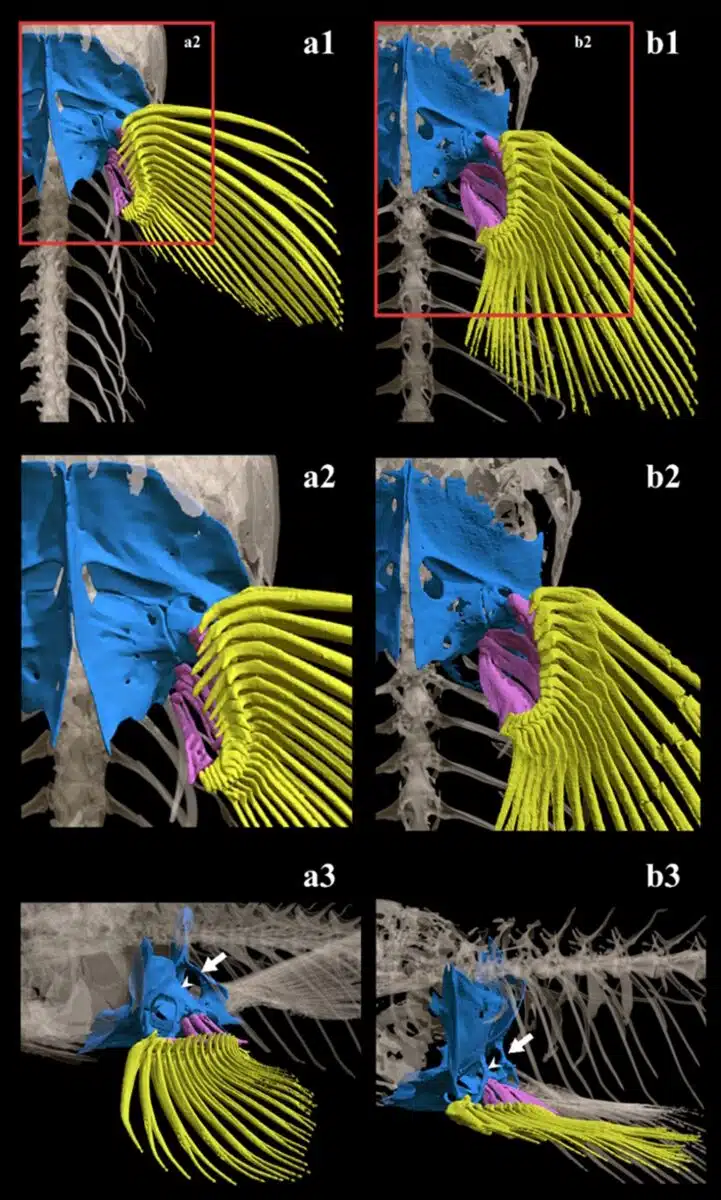 3D model of a Parakneria thysi’s skeleton and fins, with color-coded structures. Credit: Scientific Reports
Interestingly, they tend to climb more in the late afternoon, possibly because the lower water levels make the climb easier and they are less likely to be swept away by heavy currents.
“Moreover, nine main horizontal ledges where fish seem to rest, for example, for about an hour each, have been identified. It would therefore take an individual fish approximately 9 h and 45 min to cover the entire height of the falls. This suggests that the fish could need almost a whole day or night to fully overcome the falls,” added the study team.
What’s Messing with Their Habitat?
While these tiny marine creatures are performing a feat of nature, their habitat is under threat. As explained by IFLScience, illegal fishing practices, including the use of mosquito nets, continue to pose a risk to the shellear population. Though fishing nets are banned in the region, these ones are often caught unintentionally, making them vulnerable.
On top of that, the river is used for irrigation, which can dry up downstream areas and affect the ecosystem.