

Almost two years ago, Prime Minister Anthony Albanese declared that violence against women was a national crisis.
But new data from the Australian Bureau of Statistics indicates the scale of the problem remains significant.
Family and domestic violence support services:
If you need help immediately, call emergency services on Triple Zero.
Women’s Crisis Line: 1800 811 811Men’s Referral Service: 1300 766 491The Kids Helpline: 24-hour support on 1800 55 1800Lifeline: 131 114
Last year, the number of family and domestic violence offenders processed by police in Australia rose by 8 per cent — the highest recorded rate since national family and domestic data was first published in 2019.
While experts say increased awareness around the problem is contributing to increased reporting, it does not diminish the fact that police processed 97,800 offenders last year, 78 per cent of whom were male.
In Ballarat, the Victorian government is trialling a more aggressive approach to tackling the national problem.

Australia has recorded the largest annual increase in family and domestic violence offences in six years. (ABC News)
‘A national blueprint’
Respect Ballarat was launched in response to the high-profile deaths of three women in close succession in Ballarat two years ago.
The Victorian government committed $9.8 million over four years to fund the initiative, which focuses on prevention and early intervention.
Rather than responding after violence occurs, the program aims to address the conditions that enable it.
It uses what organisers describe as a “saturation model” — delivering consistent messaging about respect and gender equality across schools, workplaces, sporting clubs and the wider community.

Respect Ballarat was established in response to the deaths of three Ballarat women. (ABC News)
Most recently, Respect Ballarat announced 11 grant recipients to deliver year-long programs to tackle the causes of gendered violence at its roots.
The grants include almost $100,000 to support new families to build respectful relationships, almost $100,000 for a “Respect Round” in a local football netball league, and $200,000 for two programs for the construction and trade industries.
Other recent initiatives include a forum on hyper-masculinity hosted by the first openly bi-sexual AFL player, Mitch Brown, a What Kind of Man Do You Want to Be? campaign promoting a move away from unhealthy ideas of male success, and a workshop on how to be an “upstander”, not a bystander, when witnessing disrespect to women.

The What Kind of Man Do You Want to Be? campaign encourages men to reflect on the social pressures. (ABC News: Laura Mayers)
What do the latest figures show?
In Ballarat, for the year ending December 2025, there were 2,953 recorded family violence incidents, slightly up on 2,926 incidents the previous year.
There was also an increase in the number of women seeking help from violence support services.
Respect Ballarat chief executive Helen Bolton said the figures were “concerning” but came in the wake of three high-profile deaths of women in Ballarat two years ago.
“There was an increase in police recorded family violence incidents and high rates of sexual offences [in the 2024-2025 period] but what we know that occurred during that time was … the three [deaths],” Ms Bolton said.
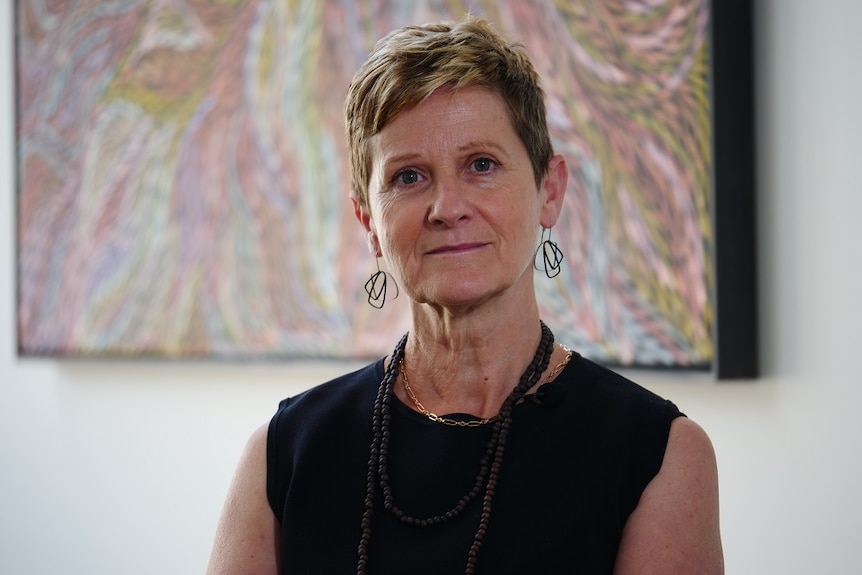
Helen Bolton says changing societal attitudes towards women requires a long-term commitment. (ABC News: Steven Schubert)
“If we see a sustained investment in prevention work in Ballarat, or in any region, we know that help-seeking statistics — including reports to police, or calls to support services — will increase before they go down as people begin to understand more and identify violent relationships.
“Changing attitudes and behaviours is long-term work, and we sadly won’t see a reduction overnight.”Calls for long-term funding
The federal Labor government has invested $9.8 million over four years to Respect Ballarat.
But Ms Bolton warns it will take longer than four years to achieve the kind of generational change the program hopes to deliver.
“What we need a long-term approach to addressing gendered violence,” Ms Bolton said.
“Ballarat cannot do it alone.”
Ms Bolton said there were efforts to secure long-term funding through philanthropic support and government funding.
“[International evidence] indicated that to drive down rates of violence you needed concentrated effort over a 10-year period, so that’s what we’re hoping to be able to achieve,” she said.
Can the model be implemented nationally?
Domestic, Sexual and Family Violence Commissioner Micaela Cronin said Respect Ballarat could provide lessons for the rest of the country.
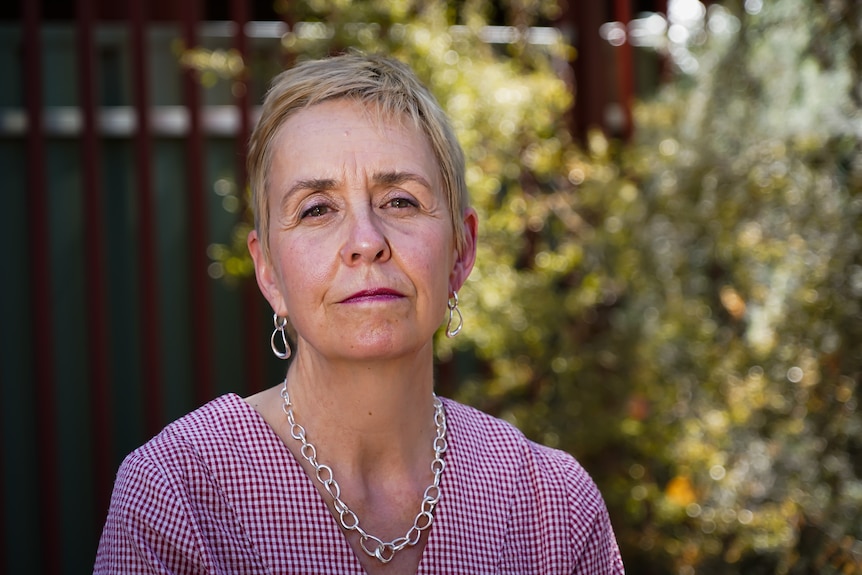
Micaela Cronin says there are consistent recommendations that need to be implemented urgently. (ABC News: Xavier Martin)
“The model is already providing important insights into what whole-of-community approaches can look like, including informing the South Australian Royal Commission into Domestic, Family and Sexual Violence,” Ms Cronin said.
Sexual assault support lines:
The commissioner previously described efforts to eliminate violence as frequently fragmented and not following recommendations from inquiries into the issue.
Ms Cronin said prevention was one of the keys to eliminating domestic, family and sexual violence.
“Prevention must begin in childhood — we must have a razor‑sharp and united focus on addressing children’s and young people’s needs,” she said.
In her 2025 report into domestic, sexual and family violence, Ms Cronin raised concerns not enough was being done to address violence against women.
“The gap between what we know needs to be done and what – and most critically how – we are implementing at scale has never been more apparent,” she wrote.
Ash Milne is the program manager of WRISC Family Violence Support, a not-for-profit organisation supporting women and children affected by family violence across the Central Highlands region of Victoria.
Ms Milne said a one-size-fits-all approach would miss the local context and demographics of a particular area, but the tenets of Respect Ballarat could be applied nationally.
“The core principles — prevention, early intervention, genuine collaboration, and sustained funding — absolutely should be embedded statewide and nationally,” she said.
Ms Milne said while prevention and early intervention were essential to reducing family violence, there were problems beyond the scope of programs like Respect Ballarat, and more support was needed.
“[Early intervention and prevention] approaches do not lessen the immediate and ongoing demand on response systems already supporting victim‑survivors,” Ms Milne said.
“Frontline services, police, courts, health, and housing systems are responding to high and complex demand now, and continued investment in the strength, coordination, and capacity of these response systems is critical to ensuring safety and effective support.”