
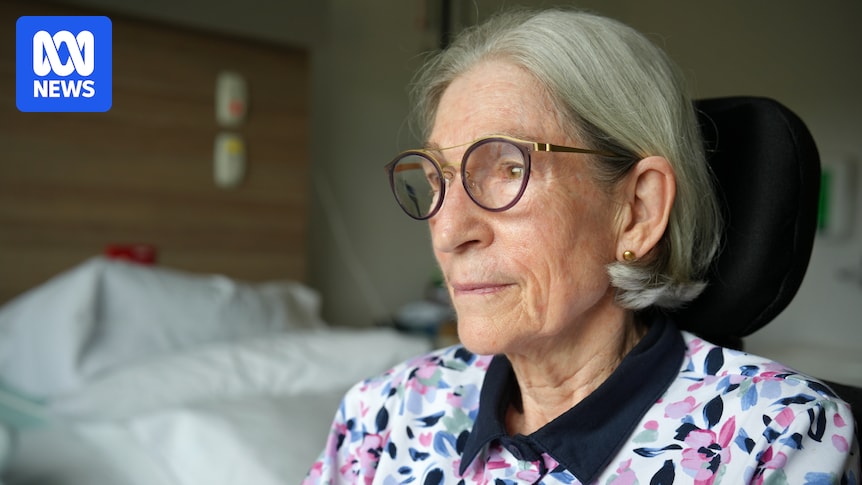
Mary Wansey has spent 19 bleak months stranded in a Canberra hospital room while she waits for a place in aged care.
“We’ve fallen into a black hole,” she said.
“It just seems it doesn’t matter what we do or where we apply.”
In August 2024, a misdiagnosed tumour destroyed the 84-year-old’s spinal cord at T4, causing paralysis from the armpits down.
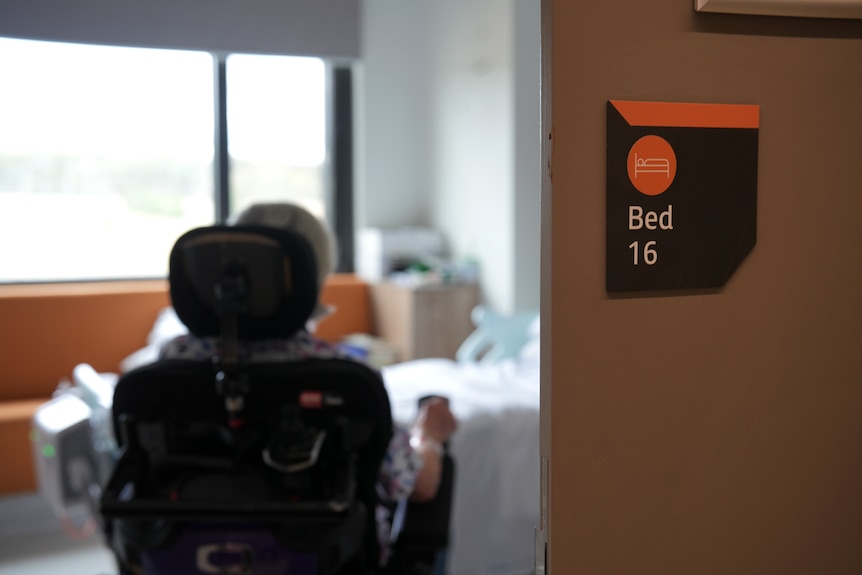
Mary Wansey has spent 19 months in a hospital room while she waits for a place in aged care. (ABC News: Lily Nothling)
“It just happened overnight — by morning, I was paralysed,” she said.
“It was devastating, absolutely devastating.”
The otherwise active, healthy and social woman who had carefully planned her twilight years was suddenly facing a very different future.
“Life in hospital every day is monotonous, and it’s sad,” Mrs Wansey said.
People aged over 65 who acquire a disability aren’t eligible for support from the National Disability Insurance Scheme.
Instead, they are supposed to be supported by the aged care sector.
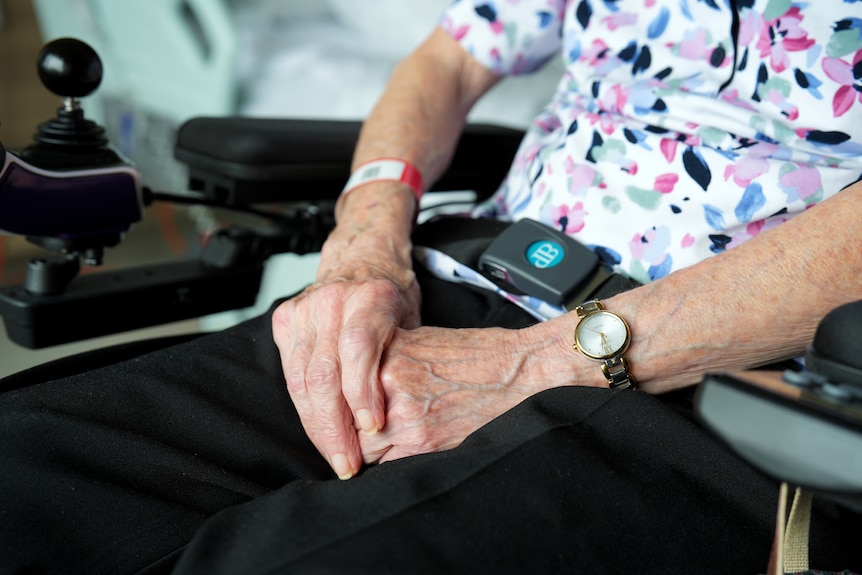
Mary Wansey says life stuck in hospital is monotonous and sad. (ABC News: Lily Nothling)
Mrs Wansey’s family has lost track of the number of applications they have lodged with aged care providers as they search for a local facility that will accept her.
“I can’t understand it, because the cost of keeping me in the hospital I think is a lot more than it would cost to keep me in an aged care facility,” she said.
“I’m not really treated as a person … I’m just some thing, like a little pawn that’s just being tossed around.”
Mrs Wansey’s daughter, Emma Mason, has watched her mother’s mental health deteriorate as she languishes in hospital.
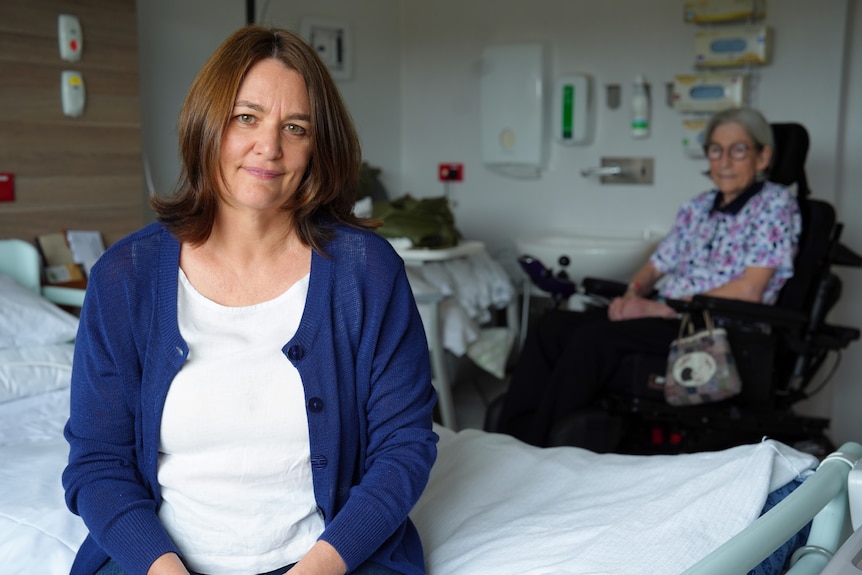
Emma Mason says her family has lost track of the number of applications they’ve lodged to find an aged care facility that will accept her mother. (ABC News: Lily Nothling)
“The overwhelming feeling for us is a sense of powerlessness and a sense of disbelief that anyone could find themself in this situation,” Ms Mason said.
“For as long as providers are able to make a determination about who they’ll take and who they won’t take, the chances of her getting a place anywhere actually feels impossible.”Patients cherry picked amid bed shortage
Mrs Wansey’s case is an extreme example of what is commonly called “bed block”, but her experience is far from isolated.
National figures revealed in a recent report by the states and territories showed there were more than 3,000 aged care patients stuck in hospital beds.
In the nation’s capital, Canberra Health Services said 69 patients were waiting for a residential aged care home placement.

Corey Irlam says aged care operators being able to select which patients to accept is a core issue. (ABC News: Andrew Whitington)
Council on the Ageing acting CEO Corey Irlam said it was “not uncommon” for the advocacy body to hear outlying cases where people were stuck for “two or three years” waiting for a suitable provider.
He said a core issue was aged care operators being able to “cherry pick” which patients to accept, based on their wealth or clinical profile.
“Is there any obligation on a provider to take everyone? No, there’s not. And that’s the problem,” Mr Irlam said.
At the crux of the challenge is a persistent national aged care bed shortage, made more serious as Australia grapples with an ageing population.
“They estimate somewhere around 10,000 new beds per year for the next 10 years — an extra 100,000 beds — need to come online,” Mr Irlam said.
“That’s a lot of age care facilities when you think about the average number of beds per nursing home is about 70.”
‘Undignified and dehumanising’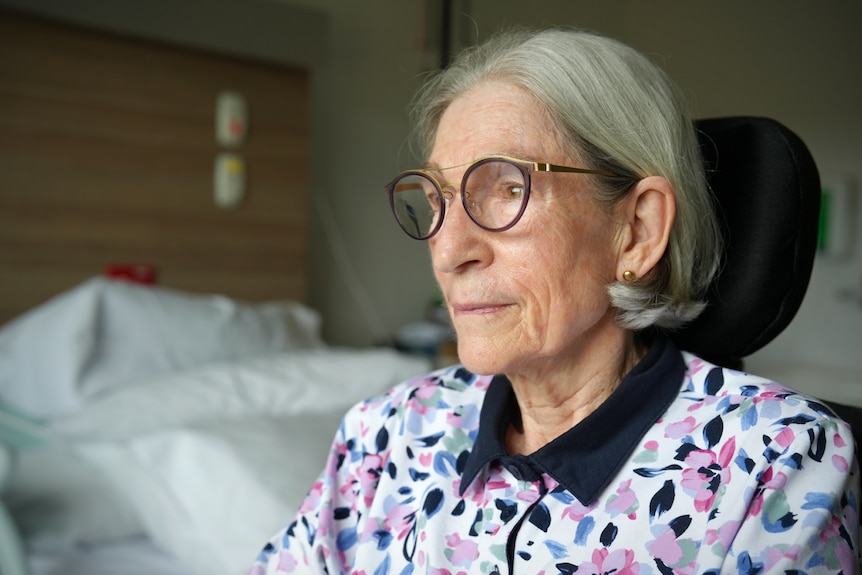
Mary Wansey says the smaller room offered to her at Arcare Aranda did not meet her accessibility needs. (ABC News: Lily Nothling)
In September 2025, Mrs Wansey was given a bed at Canberra’s newly opened Arcare Aranda on a short-term respite agreement.
She was declined a permanent place due to the complexity of her care needs, a position her family challenges.
An in-principle agreement to extend Mrs Wansey’s stay for another six months was contingent on her moving to a smaller room, which she said did not meet her accessibility needs.
“I wouldn’t have been safe in that room — I couldn’t have moved,” she said.
“Day to day, I’d have to clean my teeth in the shower and just spit wherever I was, over me.”
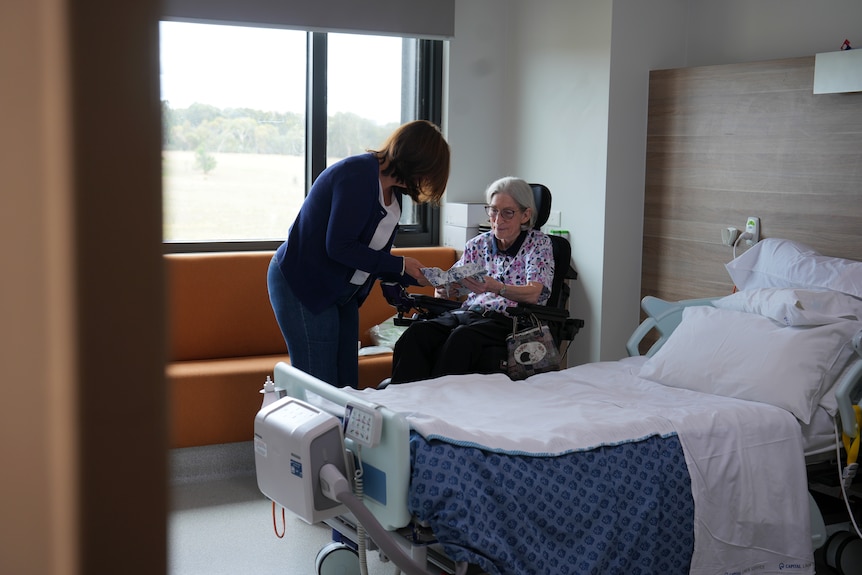
The proposal to move Mary Wansey to a smaller room prompted her to return to hospital. (ABC News: Lily Nothling)
That scenario — which Mrs Wansey’s family described as “undignified and dehumanising” — ultimately prompted her to return to hospital in November 2025.
While the facility said it was a voluntary discharge, Mrs Wansey’s family said they were coerced.
Their complaint to the Aged Care Quality and Safety Commission has been finalised without any adverse findings against Arcare Aranda, but the family is appealing that decision.
Arcare has been contacted for comment.
Hopes fading
Mary Wansey’s husband Jim, who suffers from cognitive impairment, is now also a patient at the same Canberra hospital after breaking his leg last year. (Supplied: Mary Wansey)
The experience has further undermined Mrs Wansey’s confidence that she will ever find a permanent aged care placement.
Her husband Jim, who suffers from cognitive impairment, is now also a patient at the same Canberra hospital after breaking his leg last year.
“My biggest fear is that he will be placed and I won’t ever be with him again,” Mrs Wansey said.
“Until it gets across that we’re actually people and that we need to finish our lives with dignity … it’s horrifying and it’s very frightening not knowing what’s in the future.”
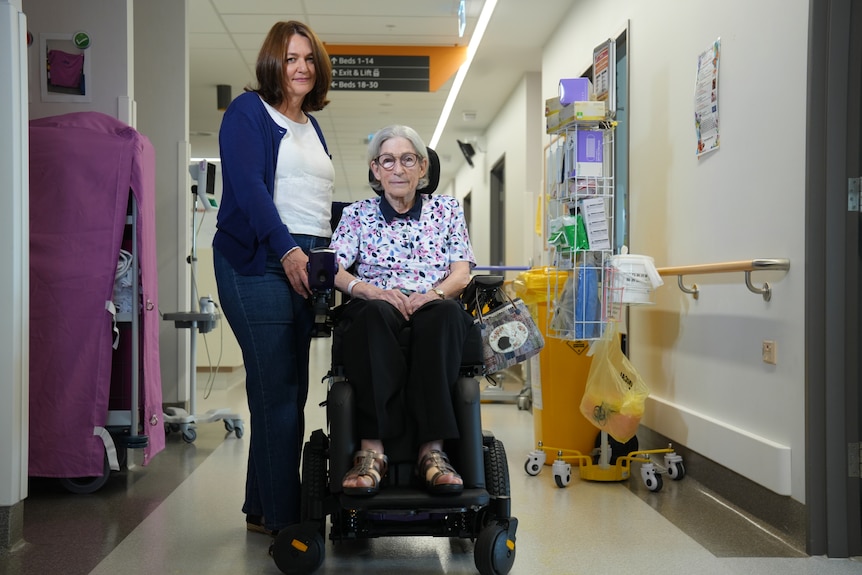
Emma Mason says she’s appalled by how the aged care system has allowed her mother to fall through the cracks. (ABC News: Lily Nothling)
Ms Mason said she was appalled by the aged care system that allowed her mother to fall through the cracks.
“I don’t understand how it’s acceptable” she said.
“I don’t understand how no one can do anything about this.
“And I don’t understand how we’ve just had a royal commission to fix the issues in the aged care system and yet we are finding ourselves in this position.”