
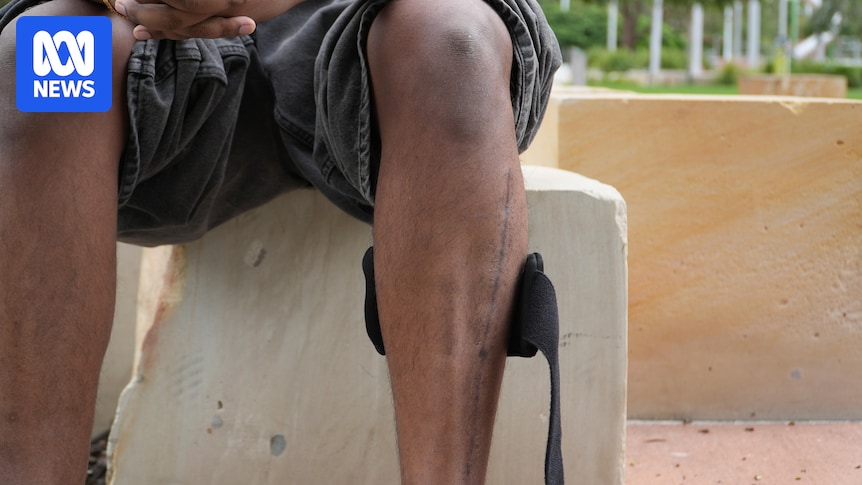
An Australian Navy candidate says he nearly lost his leg following delays in diagnosis and treatment of his emergency condition by two Perth hospitals.
Jack* was suffering from compartment syndrome — which occurs when excessive pressure builds up inside a muscle — when he presented at the Armadale Health Service emergency department with excruciating pain in August last year.
The condition can lead to permanent muscle and neurovascular damage or even amputation if not treated immediately.
An internal investigation showed the 21-year-old was sent home that night and not diagnosed until he returned to the hospital four days later.
It took a further 24 hours to complete the surgery he urgently required at Royal Perth Hospital.
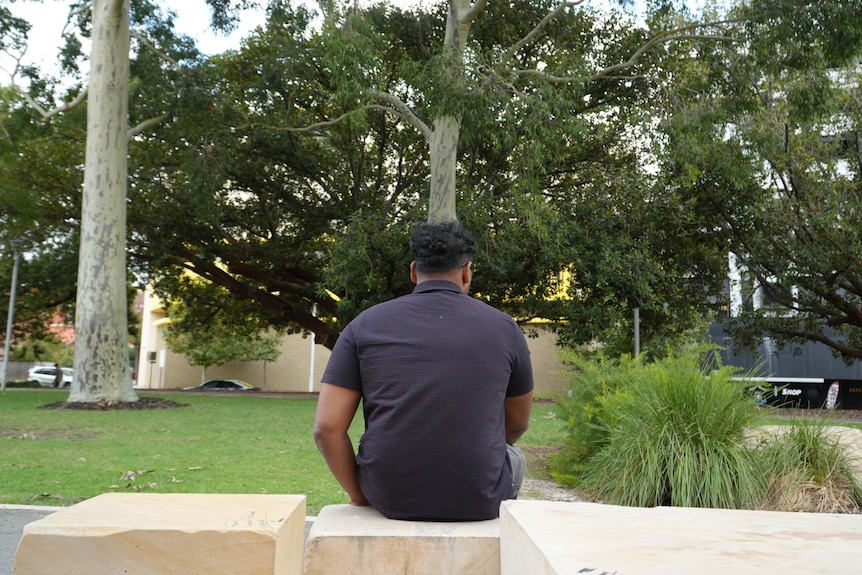
Jack was not diagnosed with compartment syndrome until he returned to hospital four days after first going. (ABC News: Daryna Zadvirna)
Jack has been unable to continue with his recruitment as a Navy submarine engineer and is now considering taking legal action.
Pain score 10/10
Jack was running late to a soccer match and tripped up the stairs on the day he was injured.
He recalls being almost unable to walk when he got to the ED that Friday afternoon.
“There was numbness and a tingling in my toes, and then it felt like pressure was building up,” he said.
“I described it as like a balloon that was under my skin.”
He claimed the nurse who examined him was dismissive of his pain and made him feel like he was overreacting.
Jack’s pain score was “10/10” according to the SAC 1 clinical incident investigation report, seen by the ABC.
WA’s ailing health system turns to AI in bid to free up doctors, nurses
It found an assessment and observation guideline, which requires clinicians to consider the patient’s pain score, was not adhered to.
“He did not exhibit observable behaviours typically associated with acute distress, which may have contributed to an underestimation of the severity of his symptoms by clinical staff,” the report said.
It said Jack’s “respectful, reserved and stoic demeanour may have influenced the way he expressed and communicated pain”.
‘Severe harm’
Jack was not examined by a doctor or a physiotherapist during his first visit to the ED.
But the report claimed “the clinical management of the first presentation is unlikely to have changed” due to the rarity and unusual presentation of his condition.
When he was discharged, he was told to ice his leg and see a GP “for further review if symptoms not resolved in 3-4 days”.
The report suggested Jack adhering to that advice too “literally” contributed to the delay in his returning to the ED and treatment.
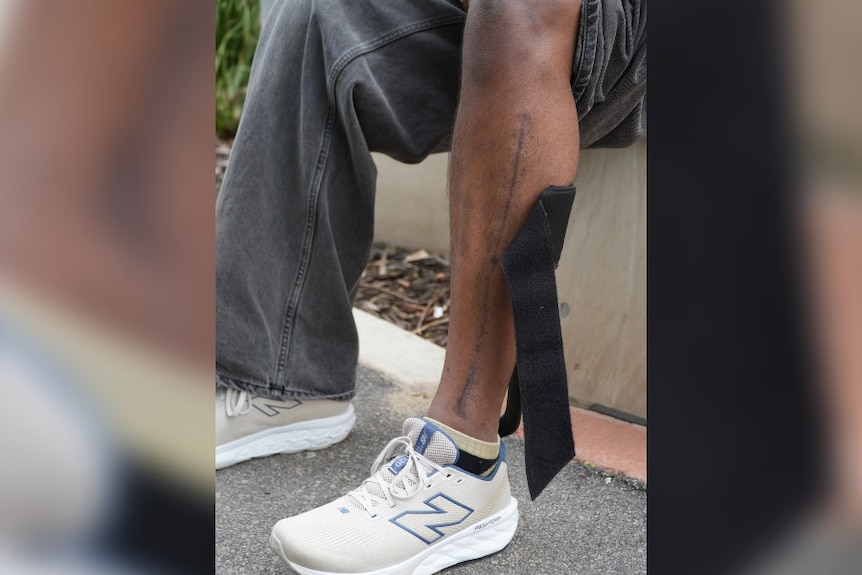
Jack says the damage to his leg could have been avoided if hospital staff had “followed protocol”.
(ABC News: Daryna Zadvirna)
The review panel determined “cultural factors” affected how discharge advice was interpreted and understood by Jack, who is of Indian background.
“The patient … is from a cultural background where medical professionals are highly respected and medical advice followed unquestioningly,” the report said.
Jack said he could not see his doctor over the weekend but returned to the ED on the following Tuesday with an urgent GP referral indicating he had compartment syndrome.
The report found doctors at Armadale Health Service encountered “significant difficulties” in getting him accepted for treatment at Royal Perth Hospital.
“The requirement for additional imaging contributed to further delay in transfer and access to specialist assessment and management,” the SAC 1 review said.
It concluded these factors “collectively contributed” to the “severe harm” he experienced.
Hospital apologises
Jack underwent two further surgeries and had a large chunk of his calf muscle removed.
“It could have been avoided, or at least a lot less bad, if they had, like, just listened to me a bit more and … actually followed protocol,” he said.
An East Metropolitan Health Service spokesperson told the ABC the case had undergone a thorough clinical review.
Scathing review finds aging WA hospitals reliant on ‘reactive maintenance’
“We apologise for the distress caused,” the spokesperson said in a statement.
“East Metropolitan Health Service is committed to acting on the findings of clinical reviews to ensure our hospitals continue to improve and provide high-quality care to our community.”
Suresh Rajan has supported Jack’s family through the complaint process and has connected them with lawyers.
He said every ED needed a patient advocate familiar with the system to liaise with clinicians and attempt to escalate a case if the patient did not feel adequately heard.
Mr Rajan told the ABC he had made a submission to fund the incentive in the upcoming state budget.
** Jack (a pseudonym) has asked to remain anonymous to avoid stigma from speaking out.