
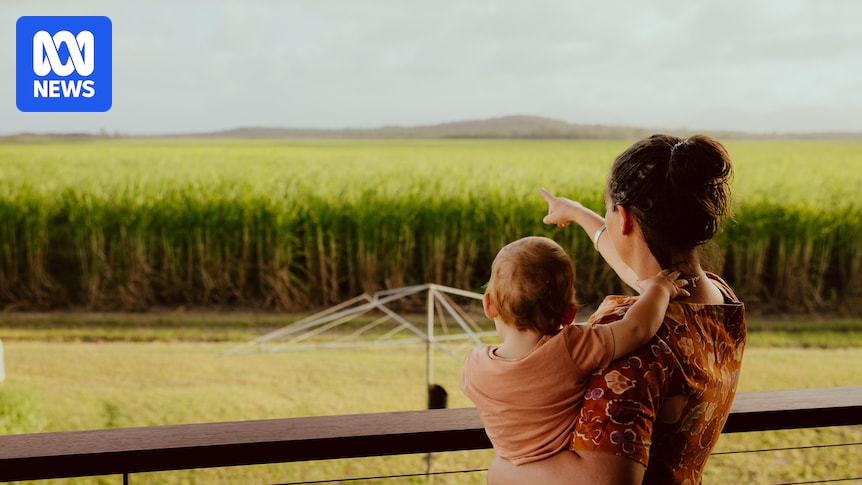
Farmers in North Queensland want a say in how renewable energy companies negotiate with councils, amid concerns poorly designed agreements could have long-term impacts on agricultural land and rural communities.
In July 2025, the Queensland government introduced laws requiring projects over 1 megawatt to complete a social impact assessment and negotiate a community benefit agreement (CBA) with councils before approval.
Whitsunday Regional Council is now working to develop its own CBA policy to ensure communities share the benefits of renewable energy projects.

Alysha Lee believes wind and solar farm projects should be kept at least 3 kilometres from property boundaries. (Supplied: Darren Lee)
Sugarcane farmers Alysha and Darren Lee, from the Crystalbrook area in the Whitsundays, said the council must get the policy right from the start.
The couple is among more than 4,000 people to sign a petition opposing the current location of Alinta Energy’s proposed Mt Challenger Wind Farm, which is planned near cane and cattle country between Proserpine and Bowen.
Ms Lee believes a strong and transparent council policy involving wind and solar farm projects must include a mandatory distancing of at least 3km from property boundaries, and that renewable energy companies provide decommissioning funds before projects begin.
“We need strategic mapping around where these projects should and shouldn’t go, and there should be proper safeguards in place before anything gets approved,” she said.
CBAs are designed to ensure communities receive tangible benefits such as funding for roads and community infrastructure from major renewable energy projects, while also helping councils respond to local impacts.
But for some residents, the bigger issue is whether those agreements can genuinely offset impacts if a project is in the wrong location to begin with.
Pressure building in renewable energy zones
Ms Lee said she knew of at least five renewable energy projects proposed for the Crystalbrook and Kelsey Creek area, which was “a lot of pressure to put on one community”, even before projects had been approved.
“The stress and the time commitment of this process have become a full-time job already,” she said.
“It threatens our property values, our livelihoods, our farming practices, and creates real uncertainty about our future — and for my children, who might want to look at moving into farming themselves.”
She said many residents were not opposed to renewable energy, but wanted projects placed in more appropriate locations.

Paul Hanlon says community consultation would be central to shaping the policy. (Supplied: Whitsunday Regional Council)
Council says community input will be central
Whitsunday Regional Council is now developing its own CBA policy, which will guide how it negotiates future agreements with renewable energy proponents.
The council’s manager of investment attraction and growth, Paul Hanlon, said the policy was still in development and community consultation would be central to shaping it.
“We don’t have a set timeframe at this stage,” Mr Hanlon said.
“Getting this right starts with listening. We want to hear from industry, community and all levels of government to understand the full range of perspectives before finalising any policy.”
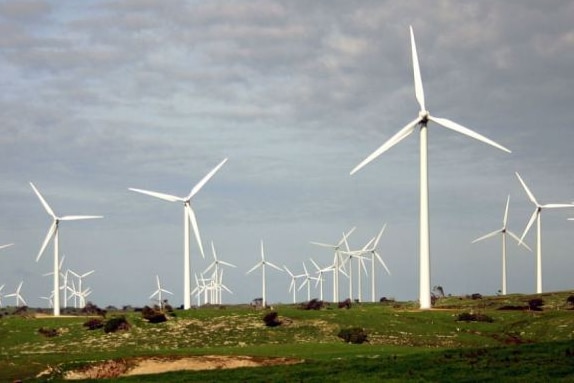
Community benefit agreements are legally binding between a local government and renewable energy companies. (ABC: Stuart Stansfield)
Mr Hanlon said councils were increasingly being asked to navigate complex land use, infrastructure and social questions as renewable energy proposals expanded into regional Australia.
“Agriculture is a critical industry for our region, and it’s important that any future policy appropriately balances land use and protects long-term economic value,” he said.Councils provide support on policy creation
Isaac Regional Council is a neighbour to the Whitsundays council and adopted a CBA policy in September.
The Isaac council has already created a guide for two renewable energy projects in its region.
Mayor Kelly Vea Vea said the policy created a clear and transparent framework so companies and the council both knew what was expected.
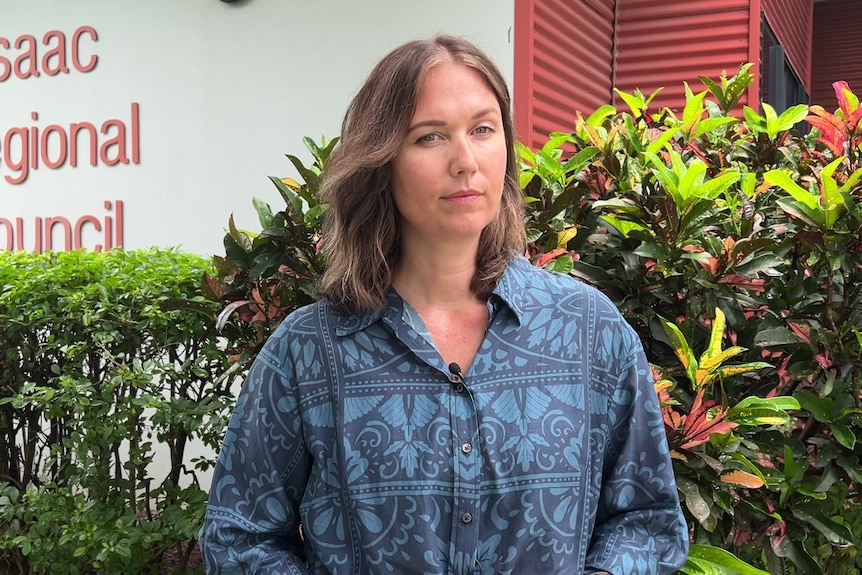
Kelly Vea Vea says Isaac council has already created a guide for two renewable energy projects. (ABC News: Jenae Madden)
Mr Hanlon said Whitsunday Regional Council had been learning from Isaac council as well as Western Downs Council “about what has worked well and where the challenges have arisen”.
“But every region is different, so while we can learn from others, the final policy needs to reflect the unique needs of the Whitsundays,” he said.
For the Lees, the hope is that local knowledge and community concerns are not treated as an afterthought by their local council, as they wait to hear when the formal consultation process will start.