
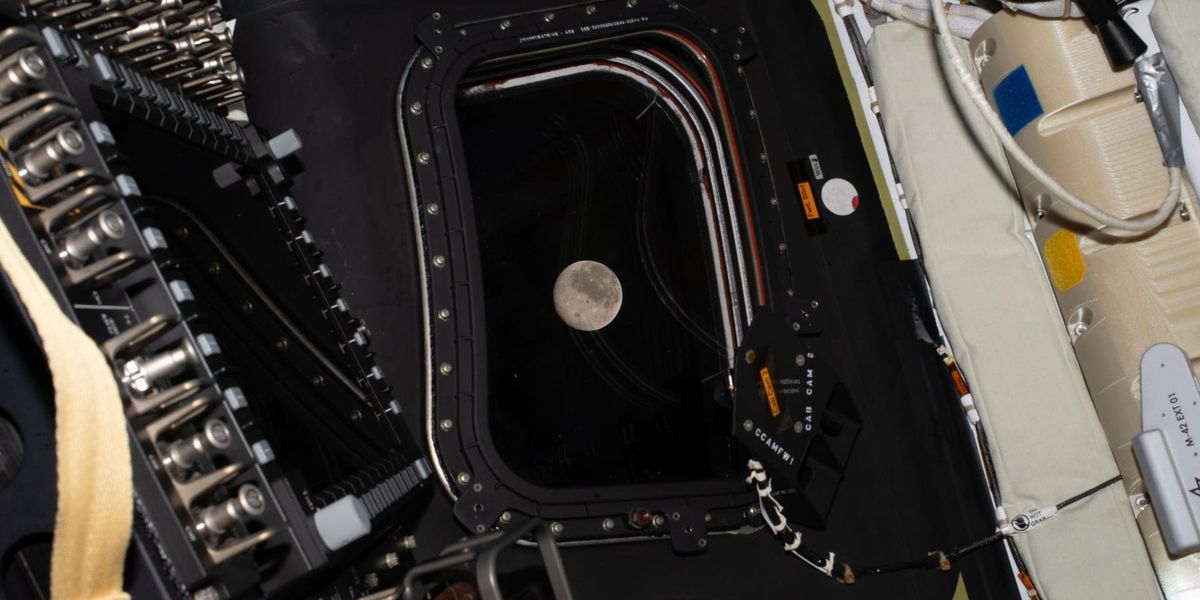
Nasa lost contact with the Artemis II capsule on Monday night after it rounded the dark side of the Moon.
Just hours after setting the record for the furthest distance a human has ever flown from Earth, the Orion module was cut off entirely.
Forty minutes later, as expected, the spacecraft reestablished connection with mission control.
While on the far side, Orion’s onboard computers carried out an engine burn to bend it onto its return arc back home.
During this time, the radio and laser signals that allow communication between the spacecraft and Houston were blocked by the Moon itself.
Engineers on the ground faced a nervous wait for the team of four to make contact once again.
Then, just before half past midnight, they received a message from astronaut Christina Koch: “Houston, Integrity, comm check… It is so great to hear from Earth again.”
Pilot Victor Glover said before the cut-off: “To all of you down there, we love you from the Moon.”
“Houston copies, we’ll see you on the other side,” a scientist at Nasa said in response.
Mr Glover replied: “We will see you on the other side,” before silence set in.
Canadian astronaut Jeremy Hansen sent a message to his family down back on our planet, including his wife Catherine and his son Devon.
“I just wanted to let them know how much fun we’re having out here,” he said. “It’s extraordinary to be on the far side of the moon right now. Just see it hanging out there looking back at the Earth.
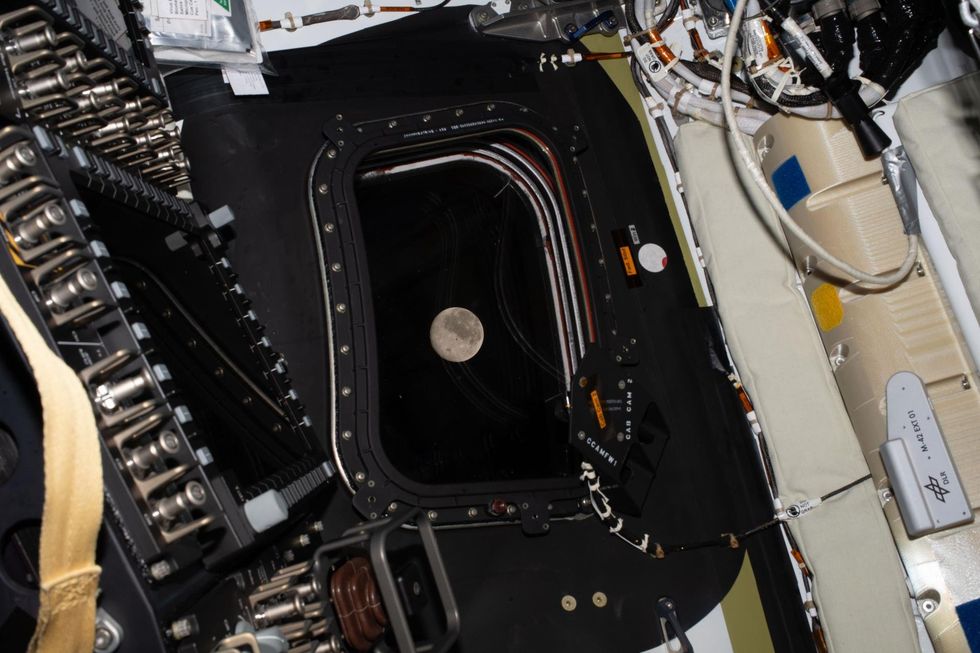
The Artemis II capsule rounded the dark side of the Moon on Monday morning
|
NASA
“Just wanted to say hi to all you guys, love you guys and we’ll be heading back your way shortly.”
While cut off from mission control, the team – Mr Glover, Mr Hansen, Ms Koch and Reid Wiseman – were the first people in history to lay eyes on parts of the Moon’s dark side.
They took photos and studied the Moon’s geology from above, “reading the rocks” and picking out features like cliffs, craters and frozen lava flows – and photographed them in ultra‑high detail.
The team also studied “impact flashes” – tiny bursts of light released when small space rocks slam into the Moon.
Images alongside laser and camera data from the Orion module itself will help geologists piece together how the Moon’s crust was formed over billions of years.
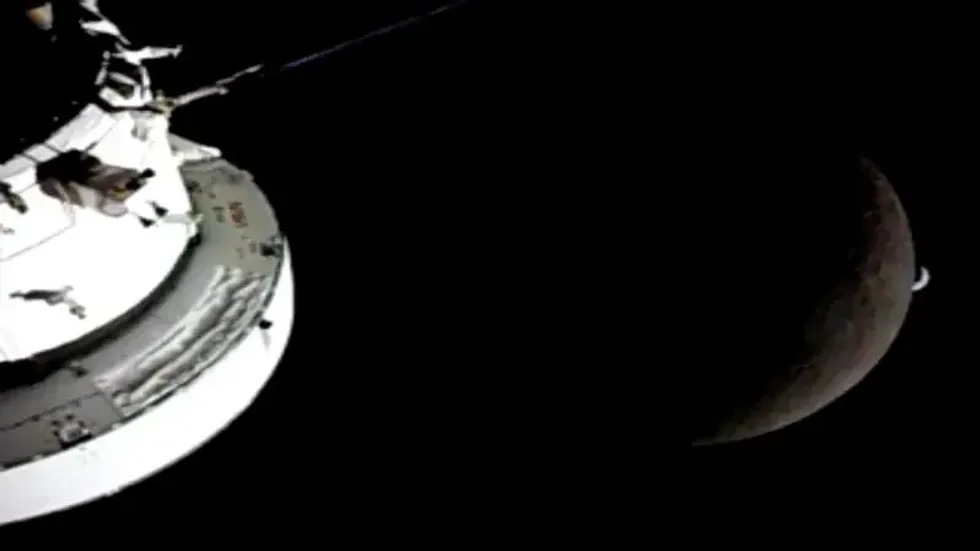
Footage from Nasa’s live-stream showed the final glimpse of Earth from the other side of the Moon
|
NASA
The team may even have experienced a repeat of a mysterious phenomenon last heard in 1969.
Astronauts on Nasa’s Apollo 10 mission said they heard mysterious “music” on the far side of the Moon.
In footage released just a few years ago, Eugene Cernan and John Young can be heard saying: “You hear that? That whistling sound?”
Another astronaut says: “That sure is weird music.”
The trio could hear an “outer space-type” droning noise when they travelled around the far side of the Moon – and said they were worried nobody would believe them.
Michael Collins, the pilot of Apollo 11, said he also heard the noises when flying around the dark side of the Moon – but was told by engineers that it was just radio interference.
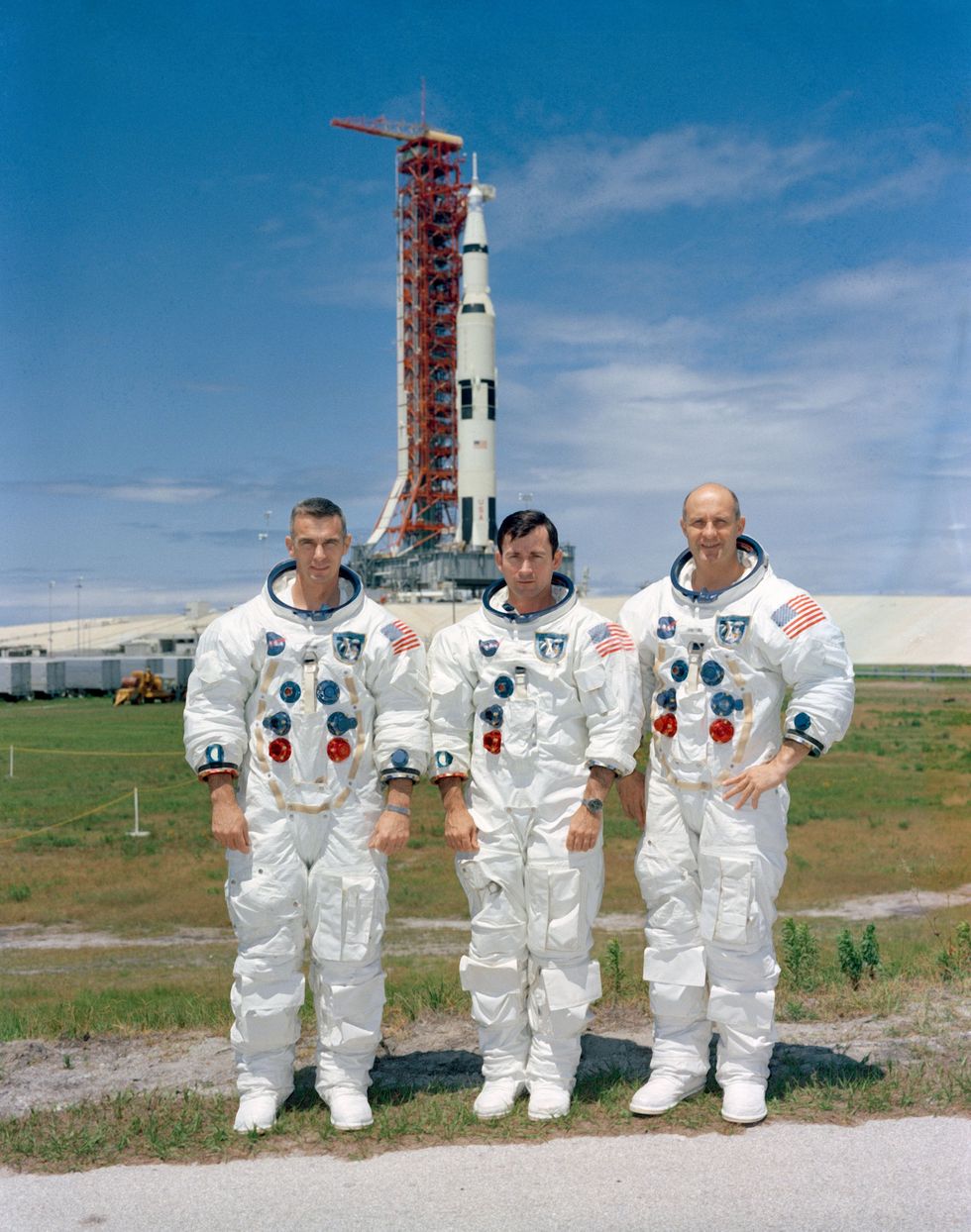
Astronauts on Nasa’s Apollo 10 mission said they heard mysterious ‘music’ on the far side of the Moon
|
NASA
Danish astronaut Per Wimmer told GB News on Monday the loss of contact was “very simple” to explain.
The spacecraft will be “hiding” behind the moon, so there will be no direct line of sight to Earth – and therefore radio communications “simply cannot occur”, Mr Wimmer said.
“This is completely expected. We saw the same thing during Apollo 8. That is 40 minutes, 45 minutes of respite that the astronauts are going to get – and no doubt will be looking forward to.”
He also pointed out that plans are in place to put satellites around the Moon.
These can effectively reflect the signals from a lunar capsule when it is unreachable on the Moon’s far side – putting it back in constant contact with mission control.