
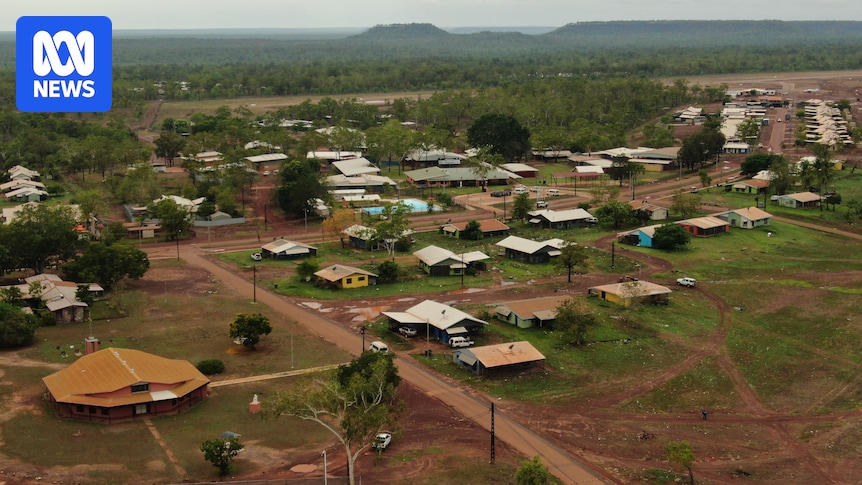
Rolling telecommunications outages in the Top End community of Wadeye over the past nine weeks have left residents largely unable to make calls or access the internet, with locals saying the lack of services is making them feel unsafe.
Telstra is the sole telecommunications service provider in Wadeye, but since early February, the community’s approximately 2,000 residents have been largely unable to access its services.
The outages have left locals in the Northern Territory’s largest remote community unable to make calls on either mobile or landline phones or access the internet, affecting their ability to transfer money and top up prepaid power meters.
The telecommunications giant has attributed the intermittent outages to “ongoing and extreme” flooding in the Daly River region, which it says has damaged several pieces of its critical infrastructure near the Father Leary Bridge in Daly River and in Palumpa and Wadeye.
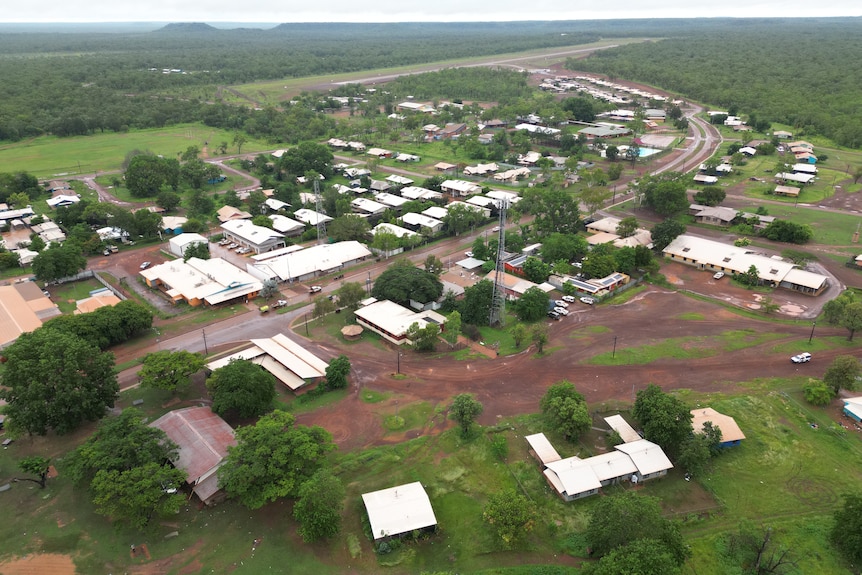
Telstra says the rolling outages in Wadeye are due to flood damage to critical infrastructure. (ABC News: Hamish Harty)
Over the past nine weeks, Telstra has repeatedly said its technicians were unable to access the affected sites due to flooding.
During this time, the company has maintained that its satellite services have been unaffected, meaning residents are still able to call Triple Zero (000).
“Whilst we have resources on stand-by to be dispatched as soon as feasibly possible, the community and our site are currently underwater with no avenue for access either via road or air,” Telstra regional engagement manager Ryan Bettens said in a statement last Wednesday.
“As soon as we can access our site, we will begin restorative activities.”
On Friday, Telstra said its technicians had accessed the site and restored power using a fuel-powered generator; however, residents say, since then, mobile coverage has still been dropping in and out, leaving them frustrated.
Wadeye resident Rebecca Bunduck said that with locals unable to make calls, residents were afraid of what could happen if coverage was not restored soon.
Despite Telstra’s assurance that satellite services were unaffected, she said she had not been able to call police or ambulance services.
“We don’t feel safe walking around without [any] service,” she said.Loading…
Ms Bunduck said just two weeks ago, she was unable to call for help for her sister-in-law when she suffered the early stages of kidney failure.
“We couldn’t call [the] ambulance because [there was] no Telstra service”, she said.
Instead, she said she had to bundle her sick relative into a work van and drive her to the clinic to receive urgent help.
The woman was later airlifted to Darwin for emergency treatment.
“She [could have] died in the bus, but we took her to the clinic real quick,” Ms Bunduck said.
‘Not good enough’: Telstra response slammed
Wadeye’s Thamurrurr Development Corporation has slammed Telstra’s response to the ongoing outages in Wadeye as “not good enough”.
Deputy chief executive Tracey Leo said the corporation was calling on Telstra to deploy mobile satellite towers into the community until service was properly restored.
“I think if this was happening in an urban area or a major city centre, this would not be tolerated for more than two days”, she said.
“Telstra needs to be held to account here.”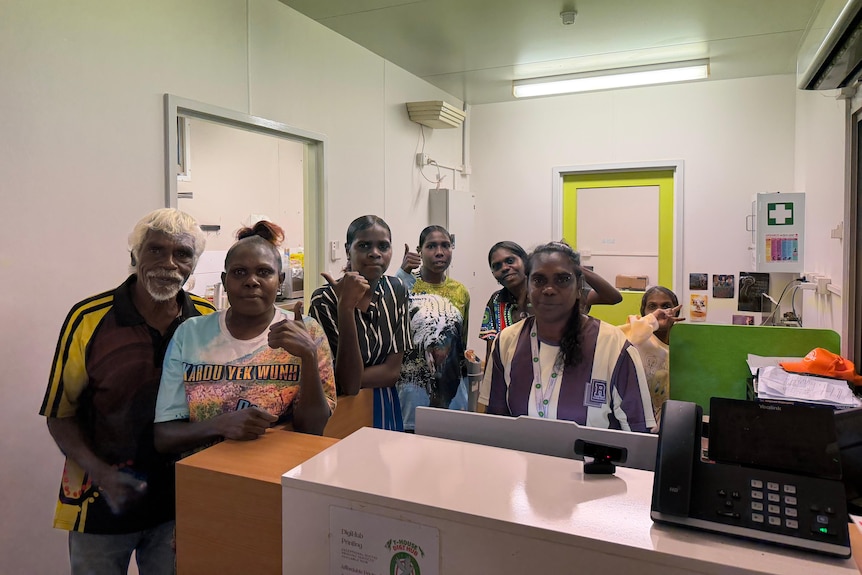
Thamarrurr Development Corporation has set up a makeshift digital hub giving community members access to their Starlink. (Supplied: Thamarrurr Development Corporation)
Without access to the internet and mobile services, Ms Leo said the “pressure cooker situation” of escalating crime and violence in Wadeye, which has been rocked by unrest in recent months, could drive staff away.
“People are not able to call emergency services when they need help,” she said.
“Wadeye can be volatile at times, but knowing that you can access help is what keeps people here.”
“Once you remove that, and] people can’t get help when things escalate, that’s a really terrifying situation.”
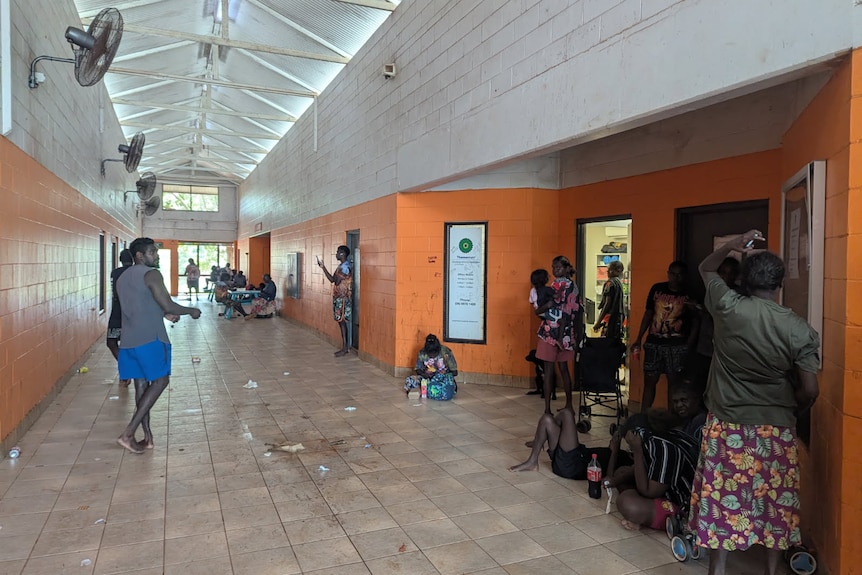
Thamarrurr Development Corporation says it has been a frustrating time for the community. (Supplied: Thamarrurr Development Corporation)
Corporation chair Mark Tunmuck-Smith said it had been a “frustrating” time for the community, with the outages leaving many residents unable to contact their family and friends or complete simple tasks.
“Without Telstra coverage, [it’s] impacting communication [and] finances, like transferring money, ringing emergency [services when] they need help,” he said.
In a statement, a spokesperson for the federal Communications Department said staff had “engaged with Telstra on its response to communications outages in Wadeye in February”.
“Natural disaster events such as flooding can make access to sites difficult,” they said.
“While no infrastructure is completely immune to natural disasters, the Australian government recognises how vital communications services are to remote communities, particularly during an emergency.
“We expect telcos to work with communities to restore service as quickly as they can in the event of any outage.”
Concerns over Starlink subscriptions
Ms Bunduck normally tops up her Telstra prepaid SIM card with a maximum of $39 each month, but since the outages, she has resorted to subscribing to satellite service Starlink.
Owned by SpaceX, the provider uses a constellation of about 9,000 low-orbiting spacecraft to provide high-speed internet, even to those in remote areas.
While the mother-of-three signed up to the provider under an introductory offer of $19 for the first month, she said she was worried about how she would pay for it when the subscription fee rose to $139 a month.
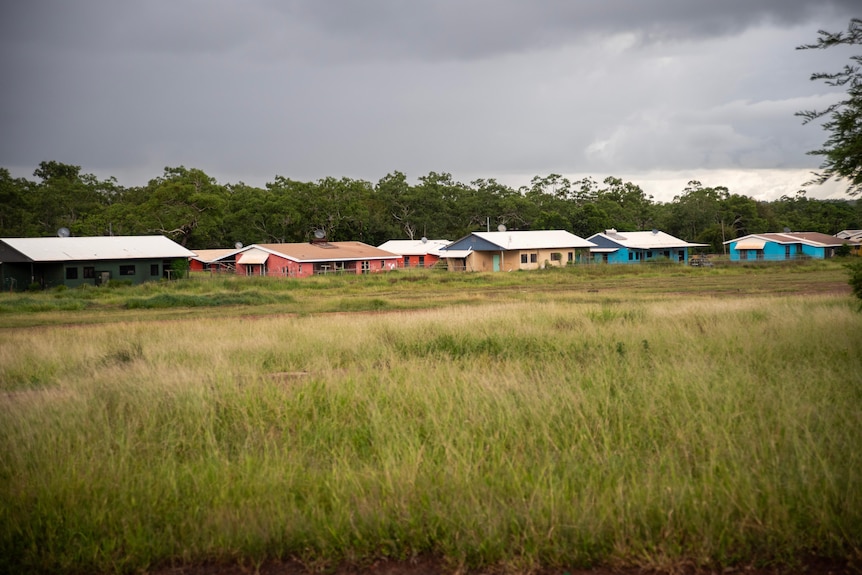
Thamurrerr Development Corporation says as many as 10 homes in Wadeye have started on Starlink plans. (ABC News: Roxanne Fitzgerald)
The Thamurrerr Development Corporation believes Ms Bunduck’s household is one of at least 10 in the community that had switched to Starlink since the outages began.
Ms Leo credited Starlink with being the corporation’s “saving grace”, but said she was concerned vulnerable people “are not across and don’t understand that there’s been an initial reduced start-up fee”, which would later rise.
“That’s really apparent when we talk to them. They really don’t have an understanding that this bill is going to be coming out every month in the future”, she said.
“That’s going to create another level of stress when … the subscription fees are coming out of accounts that they can’t afford.”
Starlink has been contacted for comment.
Attempting to help the community to stay connected, the not-for-profit Thamurrerr Development Corporation has opened a digital hub allowing residents to use its Starlink between 8am and 5pm every day.
The corporation said locals were using the service to complete daily tasks such as transferring money, topping up their prepaid power metres, and calling their loved ones.