
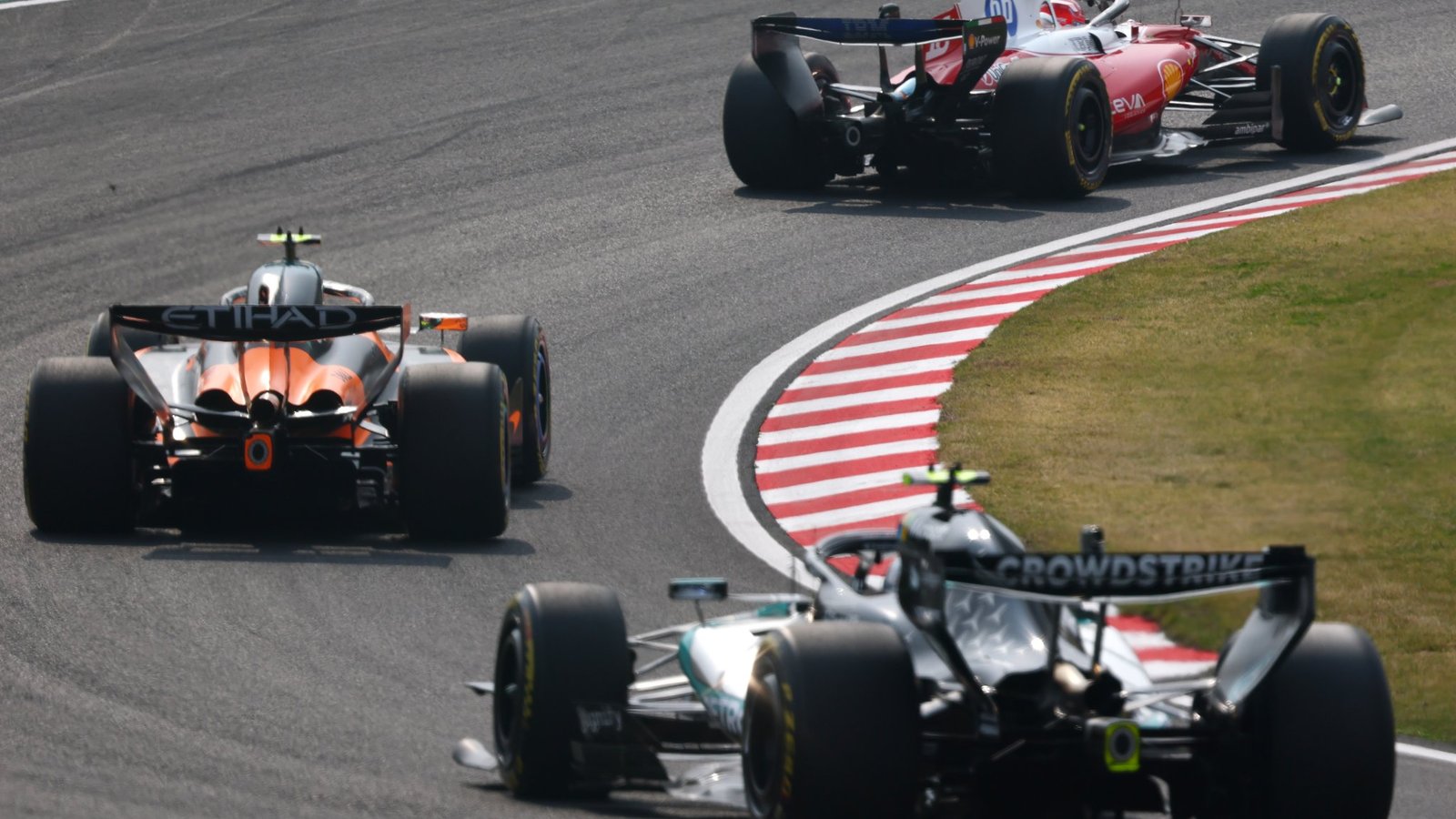
Thursday 9 April will see an eagerly awaited FIA meeting that should trigger tweaks to the Formula 1 regulations and potentially change the shape of the racing in 2026.
However, we shouldn’t expect much in the way of definitive news this week, as this is only the first step in the process.
Led by the FIA’s Nikolas Tombazis, it will be a virtual gathering of team and power unit technical representatives who will discuss options for improvements that have emerged from the evidence collected in testing and over the first three races.
After further evaluation, concrete decisions will be made 11 days later on 20 April, when team principals will meet with the FIA and F1 CEO Stefano Domenicali. Anything agreed then will be as usual be subject to World Motor Sport Council approval, with the first changes potentially before being introduced as early as the Miami Grand Prix, where track action kicks off just 11 days after that meeting.
The consensus in recent weeks has been that we needed to see a sample of different circuits in order for everyone to get a proper understanding of how the 2026 regulations are working.
Article continues below ADVERTISEMENT
Article continues below ADVERTISEMENT
We’ve now had two tests and three race weekends, and the unscheduled gap in the schedule after the loss of the Bahrain and Saudi Arabian events has created a handy breathing space and an opportunity for everyone to assess the data gathered at those five venues.
It is apparent now that there is some momentum for change, and that parties who might previously have been opposed are now more open to tweaks given the dissatisfaction expressed by drivers and fans with some elements of the rules, and specifically how they work in qualifying.
Meanwhile, Oliver Bearman’s crash while following Franco Colapinto in the Japanese GP provided hard evidence of the specific risks inherent in closing speeds as drivers deploying energy come across those who are harvesting and losing speed.
Safety trumps everything else in F1, and how to reduce the possibility of such differentials occurring will be a key element of this week’s discussions. Once safety is in the equation progress is more likely as it becomes untenable for a team or power unit supplier to oppose any changes related to closing speeds in order to defend its competitive position.
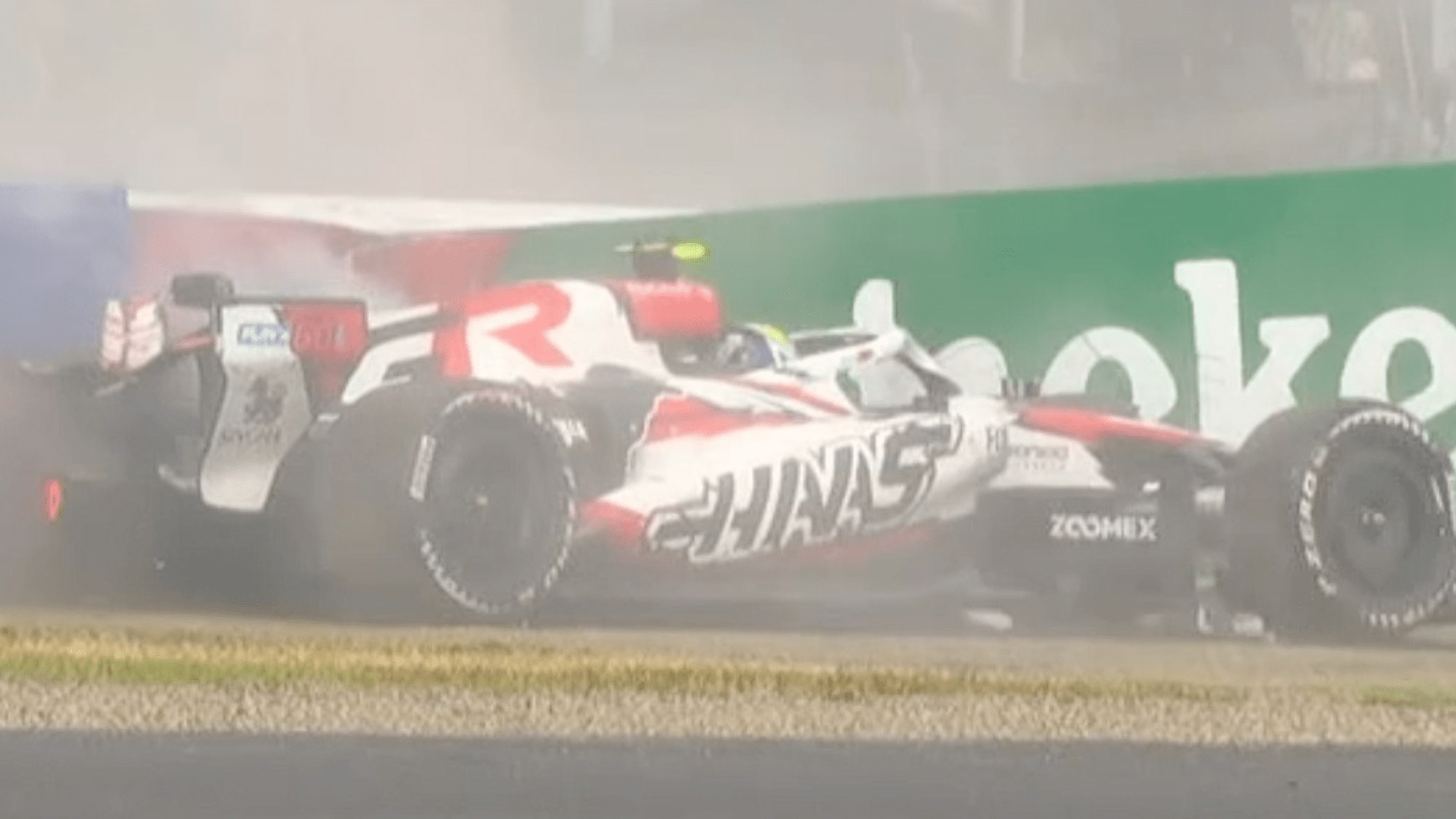
Bearman suffered a huge crash at Suzuka
Article continues below ADVERTISEMENT
Article continues below ADVERTISEMENT
Rules tweaks needed on safety grounds, but can’t be knee-jerk
However, any rule tweaks will still have to be arrived at through proper analysis, as Bearman’s Haas team boss Ayao Komatsu noted.
“We’ve really got to be careful about sporting versus safety,” he said after the Suzuka race. “We shouldn’t be using safety as an excuse, but at the same time, safety should be obviously paramount. But you’ve just got to be very careful looking at. creating enough of a data set.
“We’ve done three events. We had one incident, and then I don’t know what the solution is just yet, but we just have to be calm, and discuss it all together as the F1 community, which I’m happy actually we’re doing it – every time we have meeting with all the TPs, with FIA and F1 nobody is really pushing for sporting advantage. So as an F1 community I think we are discussing in the right manner.”
The Suzuka incident put a sharp focus on the closing speeds issue, but it was already a subject of discussion, as McLaren boss Andrea Stella acknowledged.
“I think this situation when you know that the closing speed can be as big as can happen with a car lifting or being in a super clip and the other car is having deployment, it is not a surprise,” he noted.
Article continues below ADVERTISEMENT
Article continues below ADVERTISEMENT
“We said that already in testing. It is in the agenda of the FIA in terms of the aspects of this 2026 regulations that should be improved. We don’t want to wait for things to happen to put actions in place.
“Oliver, luckily it seemed like he got out of it with just some bruises, but nothing too major. We have a responsibility to put in place the actions that, especially from a safety point of view that should be implemented.”
The Bearman incident certainly caught the attention of drivers, including GPDA director Carlos Sainz. He’s talked previously about how sketchy the opening laps in particular can be as cars are harvesting or deploying in different places.
“When you listen only to the teams, they think the racing is okay because maybe they’re having fun watching it on the TV,” said the Spaniard. “But from a driver’s standpoint, when you are racing each other, and you realise that there can be 50 kph
speed delta, that’s actually not racing.
“There’s no category, I think, in the world where you have these kinds of closing speeds, because that’s when big accidents can happen, because it catches you by surprise. I really hope they listen to us and they focus on the feedback we’ve given
them, rather than only listening to the teams.
Article continues below ADVERTISEMENT
Article continues below ADVERTISEMENT
“And they come up with a plan for Miami that improves the situation, and a plan also for the medium-term future of these regulations. Keep improving it, even if you cannot improve everything for Miami, do another good step in Miami, and then a big step for next year.”
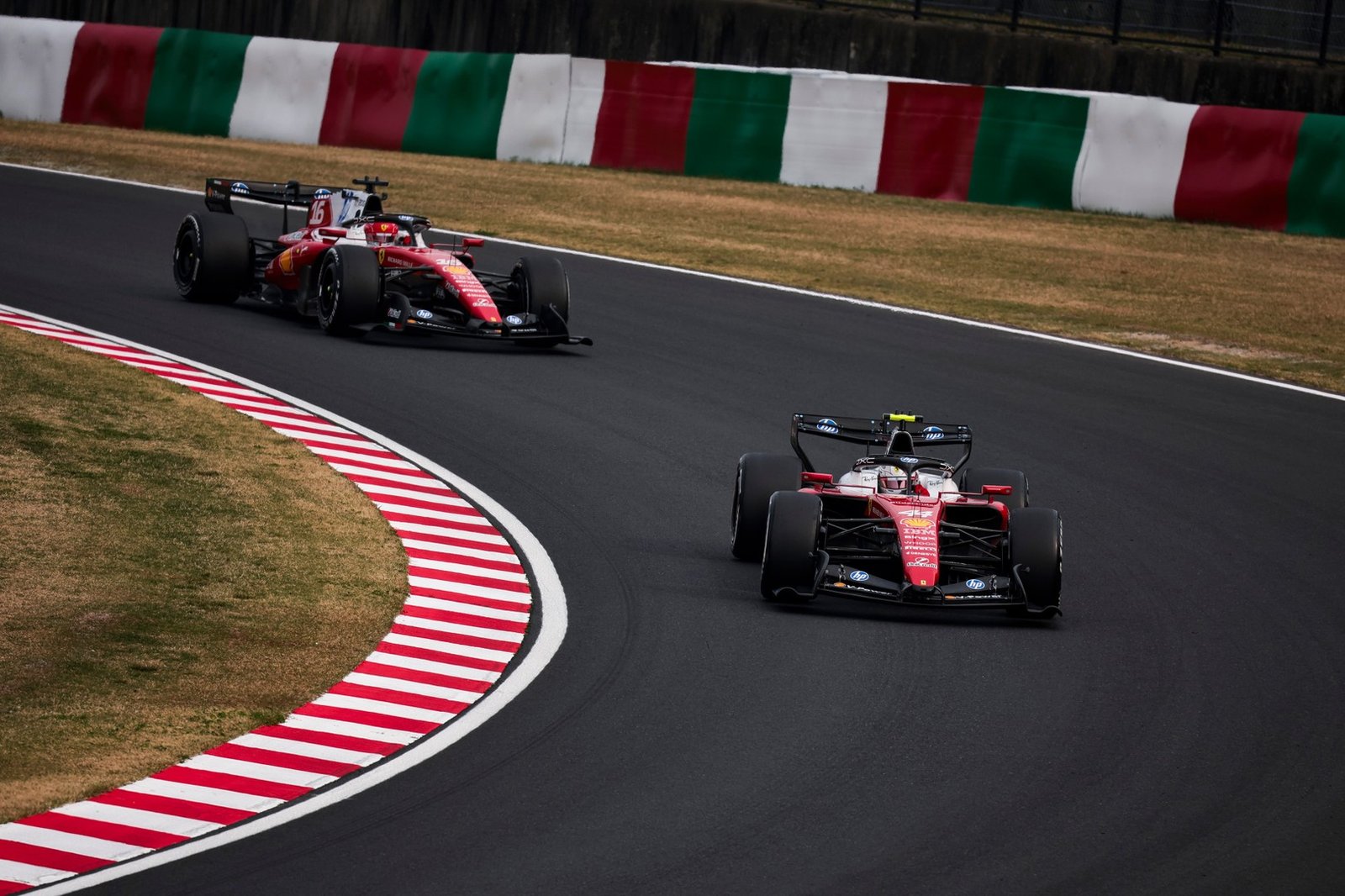
Leclerc claimed Ferrari’s third podium of the season in Japan
Superclipping changes not as straightforward as it seems
One of the key discussion points this week will be to increase the power of superclipping from 250kW to 350kW to reduce the current reliance on lifting and coasting at the end of straights, although the reality may be more complex.
“I think we have to look at the data,” said Stella. “Teams should share information in terms of what was going on Colapinto’s car and Oliver’s car. In general the reason of adding a 350 super clip is that we would like to avoid drivers having to do a lift and coast, because if there’s a lift and coast, there’s an even bigger speed differential with the car that is following. It’s a case that should be studied with a certain level of analytical approach.
“I don’t think a simple solution exists, but we have the expertise, the engineers. There’s the variables to put in place, some actions. And I think this will be something that will be looked at in the meetings that will happen during the break between FIA, the teams, and F1. This should jump at the top of the agenda.
Article continues below ADVERTISEMENT
Article continues below ADVERTISEMENT
“Difficult for me to say we should do this in a simple way, because it may be a combination of things that are required, and not a simple one.”
As Stella suggests the safety aspect has to be at the top of the agenda, but there’s plenty more to discuss, notably how to make qualifying a more representative and traditional show of flat-out performance, and less of a test of juggling energy management.
The last-minute tweak made by the FIA and agreed with the other key parties for Suzuka – when the maximum permitted energy recharge for qualifying was reduced from 9.0 MJ to 8.0 MJ – showed that there is a willingness for experimentation, and a move to a lower limit is another discussion point.
It remains to be seen how much genuine progress will be made in this month’s two key gatherings, and thus what can be introduced either immediately for Miami, or possibly a little later in the season if teams and PU suppliers need time to adjust.
The bigger picture could be more comprehensive changes for 2027 – and getting agreement on those might not be so straightforward.
Article continues below ADVERTISEMENT
Article continues below ADVERTISEMENT
Subscribe to our F1 Newsletter