
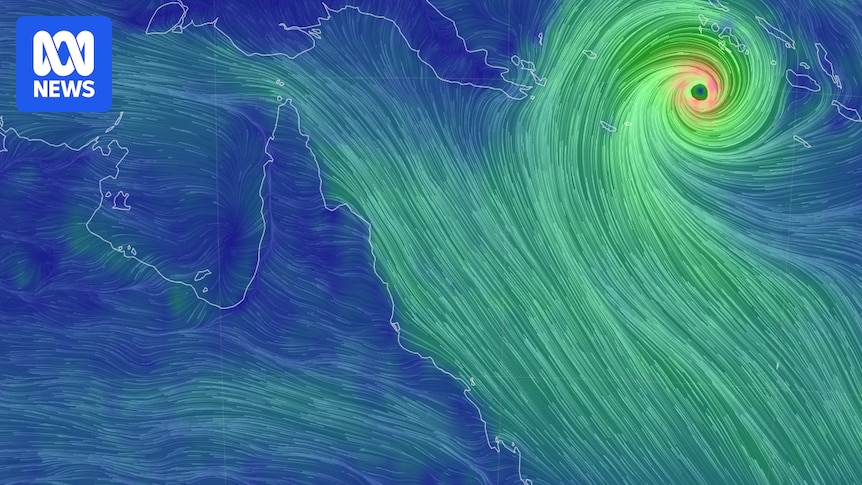
The Bureau of Meteorology (BOM) says the impacts of Severe Tropical Cyclone Maila, which is looming about 1,300 kilometres off Queensland, will be largely confined to the Far North.
The category five cyclone is expected to weaken as it passes over Papua New Guinea before heading towards Cape York Pennisula, where it is expected to make landfall late on Sunday, bringing strong winds and heavy rainfall.
Senior forecaster Liam Smart said Severe Tropical Cyclone Maila would not be as intense as Tropical Cyclone Narelle, which reached category five before battering the Cape York Peninsula last month.
“[They’re] two quite different cyclones,” he said.
“Maila is a lot bigger than Narelle and probably not going to be as strong.”
Tourism operators who lost bookings due to ex-Tropical Cyclone Narelle are urging visitors not to cancel their plans.
Intensity changing as cyclone moves
This morning, Maila was about 980km east of Port Moresby, in Papua New Guinea, with wind gusts of up to 295km/h.
Mr Smart said the system may lose intensity as it moves west over PNG’s mountain ranges and into the cooler Coral Sea.
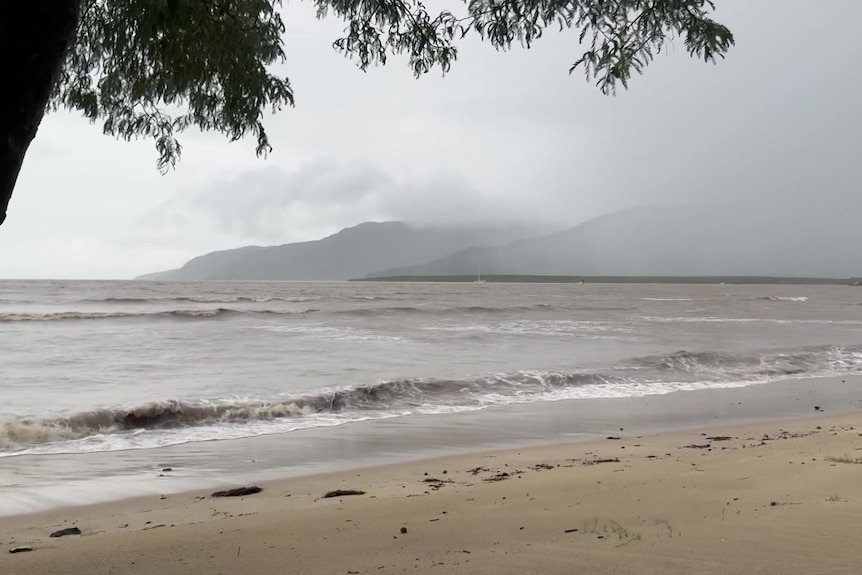
Ex-Tropical Cyclone Narelle made landfall in March. (ABC News)
“There’s a bit of uncertainty as to where the cyclone will cross,” he said.
“We’re expecting somewhere between, say, Cooktown and the tip of the peninsula but, as the time gets a little bit closer, we’ll be able to pinpoint that location more.”
Mr Smart said rainfall associated with Severe Tropical Cyclone Maila should “be relatively confined to the Far North area”.
“But there is potential for some extra rainfall as some easterly winds start pushing on the coast after the cyclone has crossed into potentially the north tropical coast area,” he said.
Severe weather turns tourists away
Hundreds of kilometres south of where Severe Tropical Cyclone Maila is forecast to make landfall, Port Douglas tourism operator Jason Heffernan is asking visitors not to abandon their travel plans.
He said the biggest challenge during cyclone warnings was misinformation or misunderstandings about Queensland’s size.
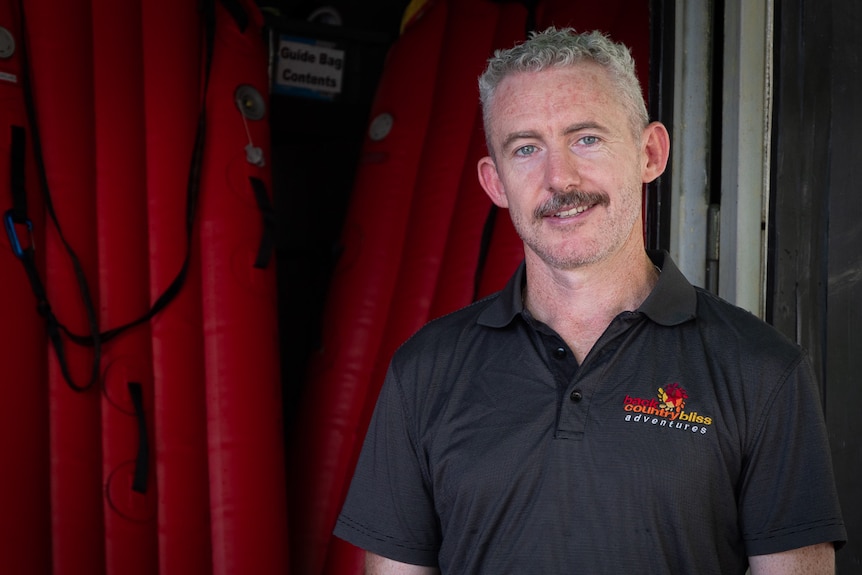
Jason Heffernan says tourists should proceed with their plans despite the cyclone. (ABC Far North: Brendan Mounter)
“A lot of people down south think that as soon as you see a cyclone in the Coral Sea, Cairns and Port Douglas are being hit,” Mr Heffernan said.
“But in reality, it’s the same distance as Melbourne to Canberra.”
Port Douglas experienced heavy rain and strong winds during Tropical Cyclone Narelle last month, but Mr Heffernan said many tourists unnecessarily cancelled their trips after those conditions subsided.
“We definitely do see people nervous, wanting to cancel their entire holiday plans, and generally it’s just not required,” he said.
“The rainforest needs the rain, and so if you come here after the wet or just on the wet, the rainforest is going to be green.
“I just hope that people maybe saw that the last cyclone, Narelle — which this one seems to be following almost a similar path — didn’t affect us at all.”
More cyclones than average
The tropical cyclone season runs from November to the end of April.
BOM senior climatologist Zhi-Weng Chua said there had been 10 tropical cyclones in the Australian region this season, six of which reached category three or higher.
“The average number of cyclones that make landfall is three to four and we’ve had six so far,” he said.
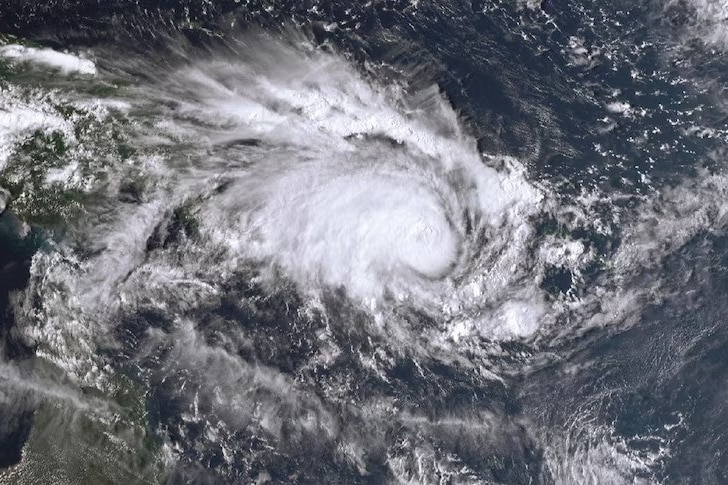
Cyclone Maila is expected to be the seventh cyclone to make landfall in Australia this season. (Supplied: Bureau of Meteorology)
Severe Tropical Cyclone Maila will be the seventh severe tropical cyclone to make landfall in the Australian region should it cross Far North Queensland this weekend.
“Having 10 tropical cyclones so far and likely to have 11, that would be tracking at least slightly above average,” Mr Chua said.
The weather outlook for the rest of Queensland will be settled and mostly sunny this week, with some isolated showers north of Mackay today.
Some showers are also expected north of Gladstone in Central Queensland tomorrow, with scattered showers between Ingham and Cooktown in the Far North.
Above-average temperatures are forecast for central and southern Queensland.