
Disclaimer: I wrote this piece watching my son’s under-9s training session with a beautiful Sydney sunset in the background.
So, this is a glass half full column on topics where glass half empty writers would take a very different approach.
As another busy day settled on football360.com.au HQ, we had a website led by Australian football legend Robbie Slater on his mate Graham Arnold, who is the owner of one of the greatest accomplishments in the history of the sport in this country.
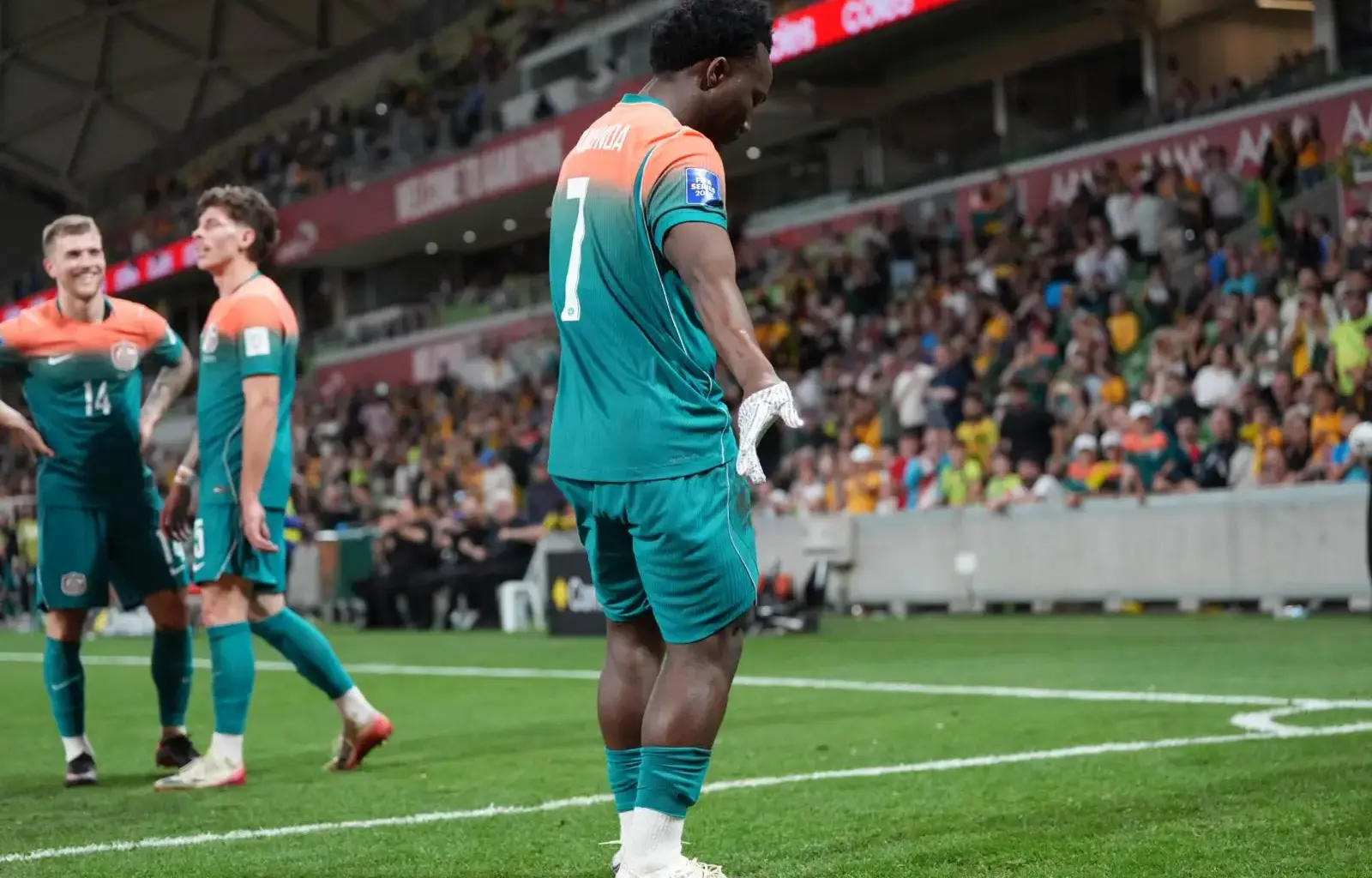
The day started waking up to a Nestory Irankunda backflip played out in front of a global audience and Mohamed Toure, who you think will be his World Cup sidekick, setting up two goals in the English Championship as well.
It’s one of the reasons football360.com.au came to be, exactly six months today. There are too many phenomenal Australian football stories, almost every day, and far beyond the amount of real estate to tell them in the current landscape, be it column inches, website leads or TV coverage slots. And then there’s the why, the how, the who, the what next that doesn’t see the light of day…
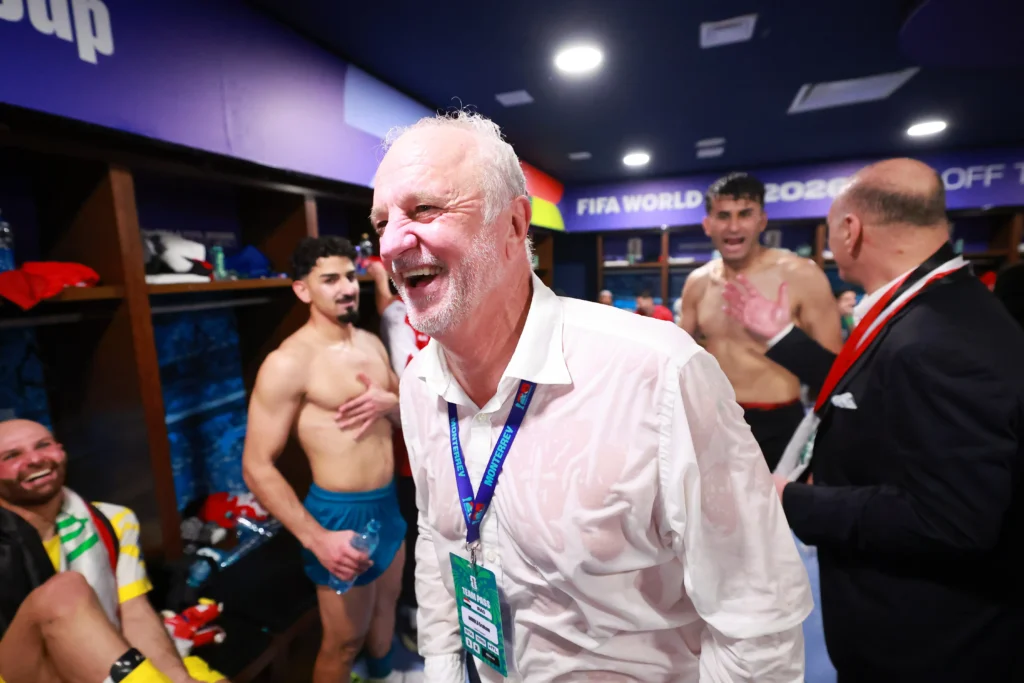 Graham Arnold enjoying the win over Bolivia with Iraq. Photo: Getty Images
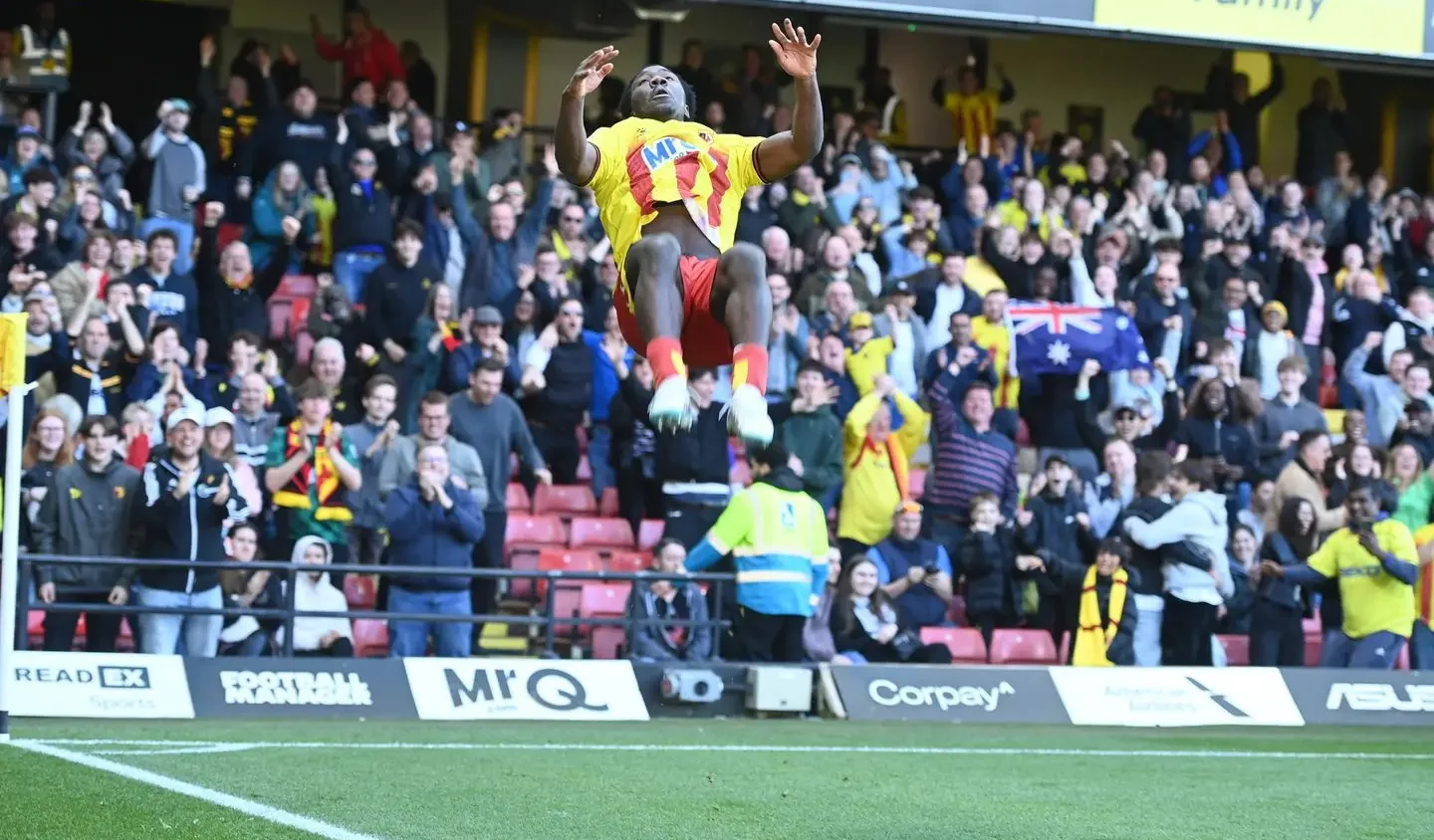

Irankunda drops EPIC celebration after Watford goal
The last week has also emphasised why a platform and brand like ours is so essential to the sport. The game needs oxygen to be talked about and discussed outside its own four walls. Not saying we are the solution, but we are part of it.
And there is, let’s call it, an opportunity. Others would call it a problem.
Sitting at Stadium Australia a week ago, with just 23,798 fans, with just under 17,000 attending at AAMI Park a few days later, was disappointing. It is incongruous to the sense of opportunity and thrill this young brigade provides.
Times have changed and it isn’t 2006. A drought hasn’t been broken; the 95,000 that went to the MCG to see Josip Skoko’s strike against Greece was a special moment in time. It isn’t right to compare it to that. It’s time to look forward. Respect tradition. Embrace our history. But start embracing a love of the group of players who represent the very best of Australia to build ourselves back up to a point where there’s a similar affinity to this current group of players.
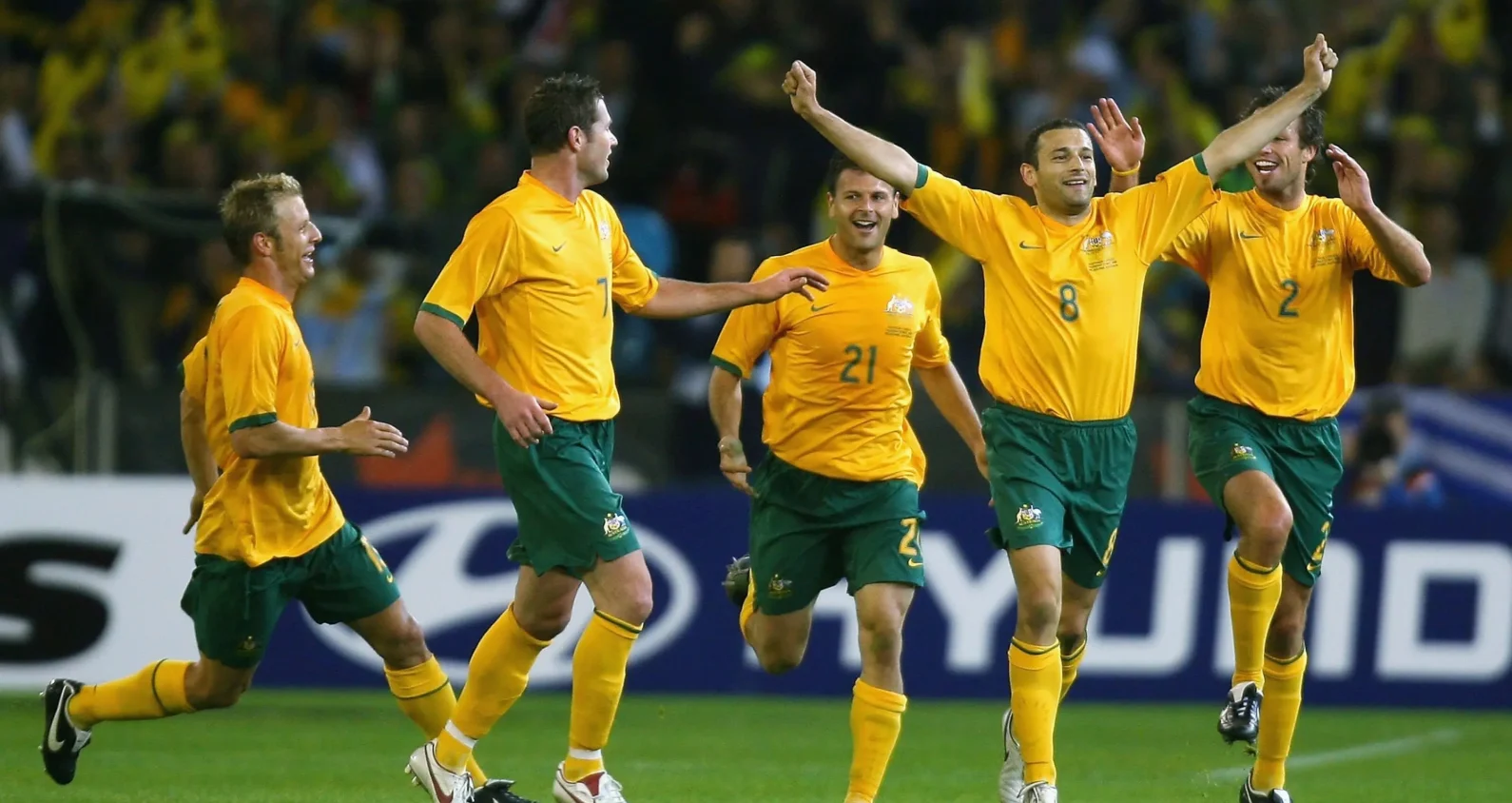
Josip Skoko recalls his wonderstrike in 2006
For the first time, probably since Tim Cahill, we have a poster boy for the national team who can deliver on and off the park and has the ability to transcend both football and mainstream, local and international – and has the humility and personality to seemingly thrive with that role.
Nestory Irankunda is generating that much social media attention that he will go to the World Cup front and centre of most general World Cup previews – the kid who can score from anywhere, and when he does, will break out a Michael Jackson dance move.
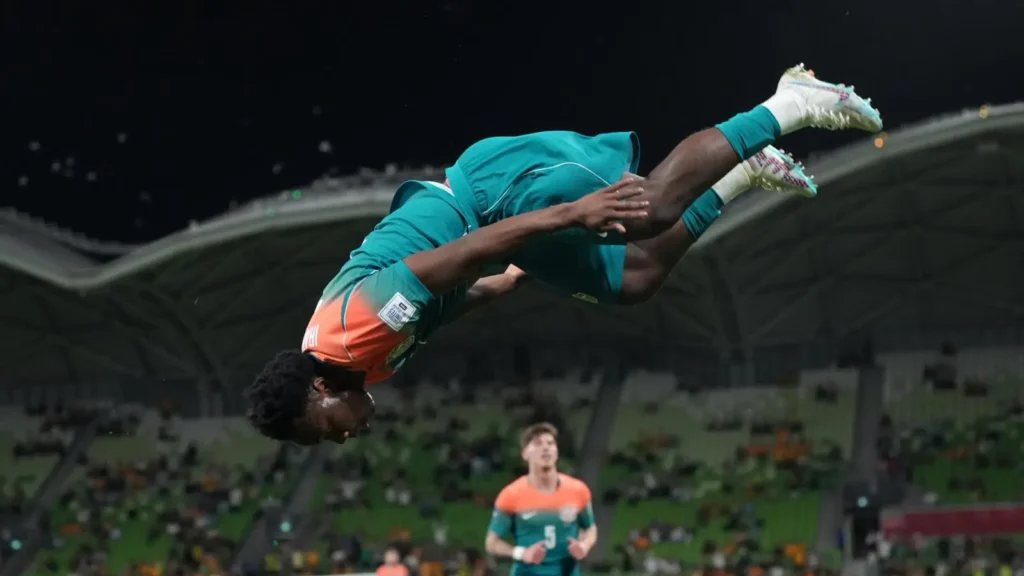 Nestory Irankunda celebrates in spectacular style. Photo: Ann Odong.
But he represents so much more than that. This team represents the best of Australia. Like Mohamed Toure, and with Jason Geria and Awer Mabil as their elder statesmen, they represent a modern Australian journey, role models to a community of what can be achieved with talent and hard work. They are humble. Real. They talk a language our kids speak. They stick around after matches and talk with the kids too. They’re the future and they’re the stars you can build an identity around that transcends the one-hit wonder that a World Cup news cycle provides.
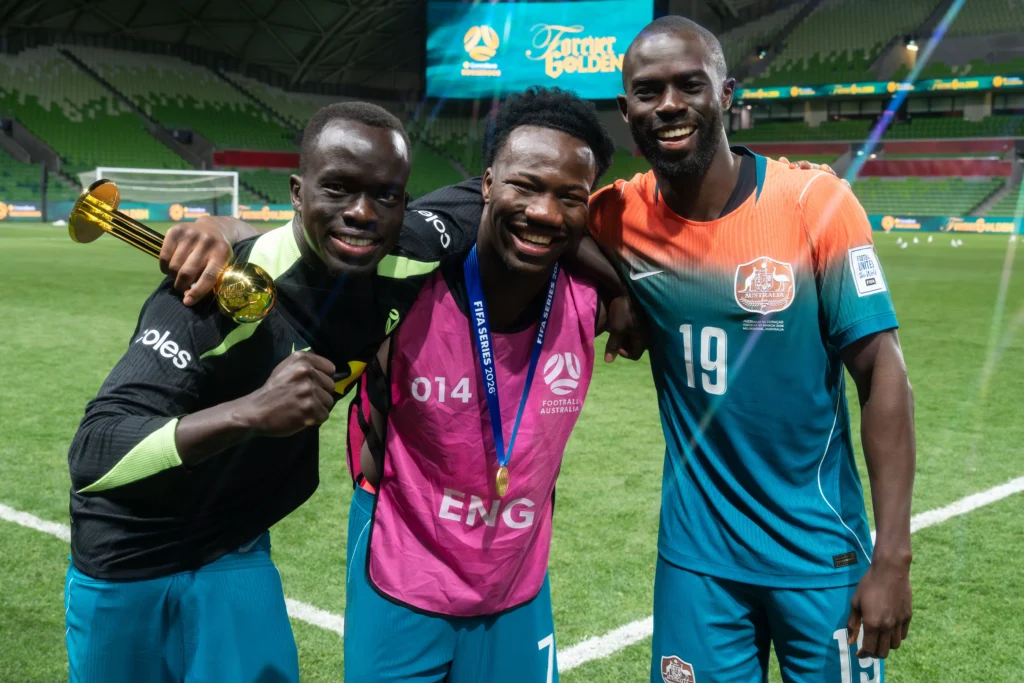 Awer Mabil, Nestory Irankunda and Jason Geria. Photo: Ann Odong
From back to front, this is a Socceroos side to get around. The captain who is still playing in La Liga; the talisman who is a captain in the Bundesliga; the Serie A central defender, the Eredivisie wingback, the promotion chasing playmaker, the son of a cherished former captain, the third generation Socceroo, the teenager who has taken MLS by storm straight out of the A-League or the diminutive midfielder about to make history in Scotland. (That’s Mat Ryan, Jackson Irvine, Alessandro Circati, Jordan Bos, Riley McGree, Paul Okon Engstler, Alexander Robertson, Lewis Herrington and Cammy Devlin, for those playing at home.)
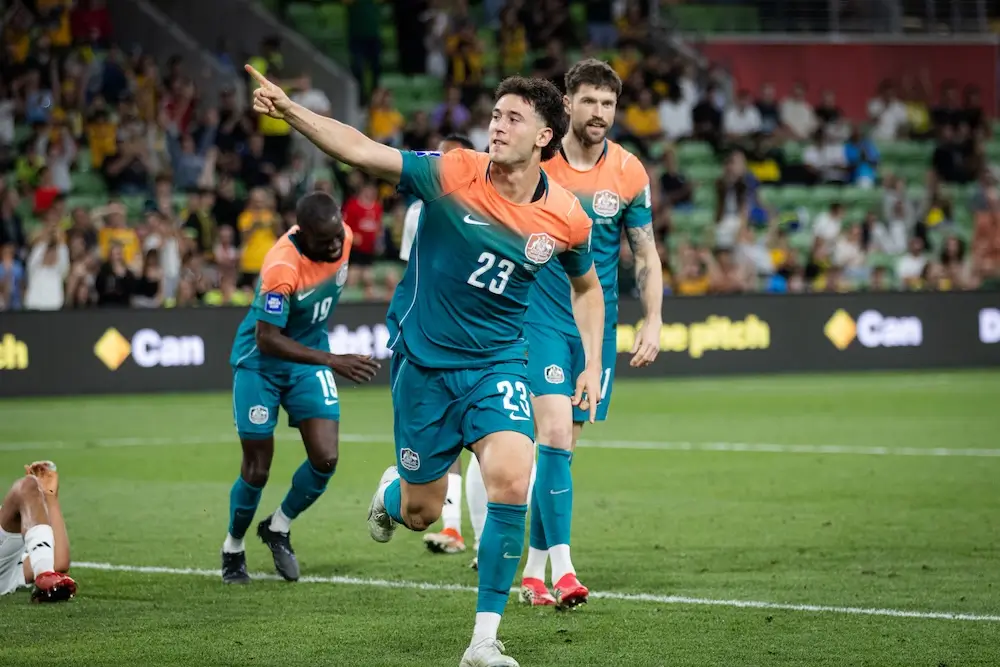 Alessandro Circati. Photo: Lucas Petrou
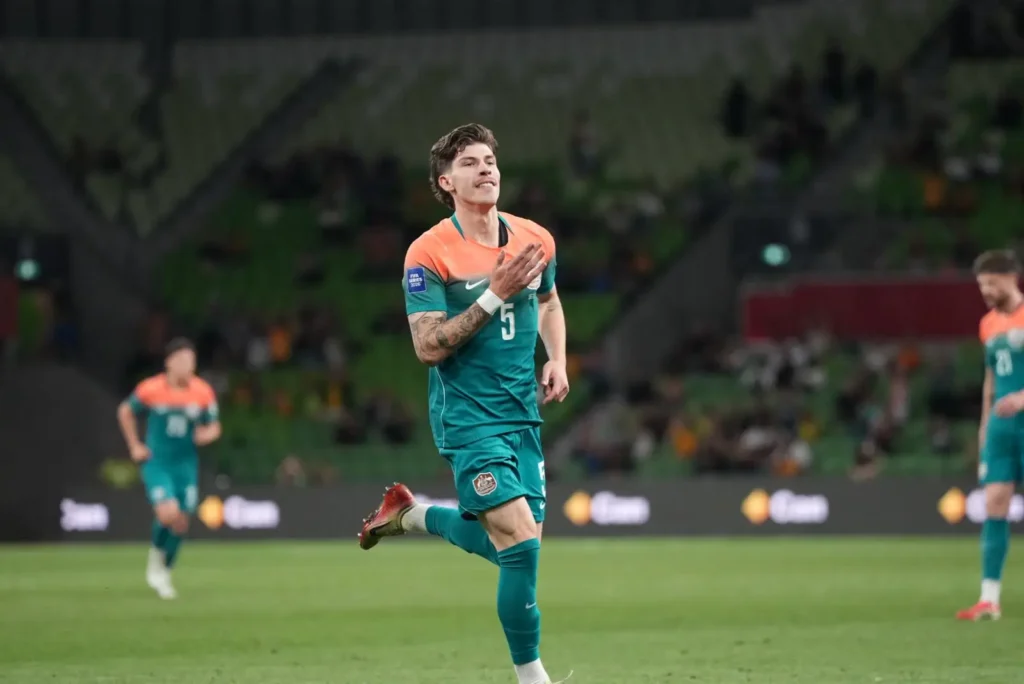 Jordan Bos. Photo: Ann Odong
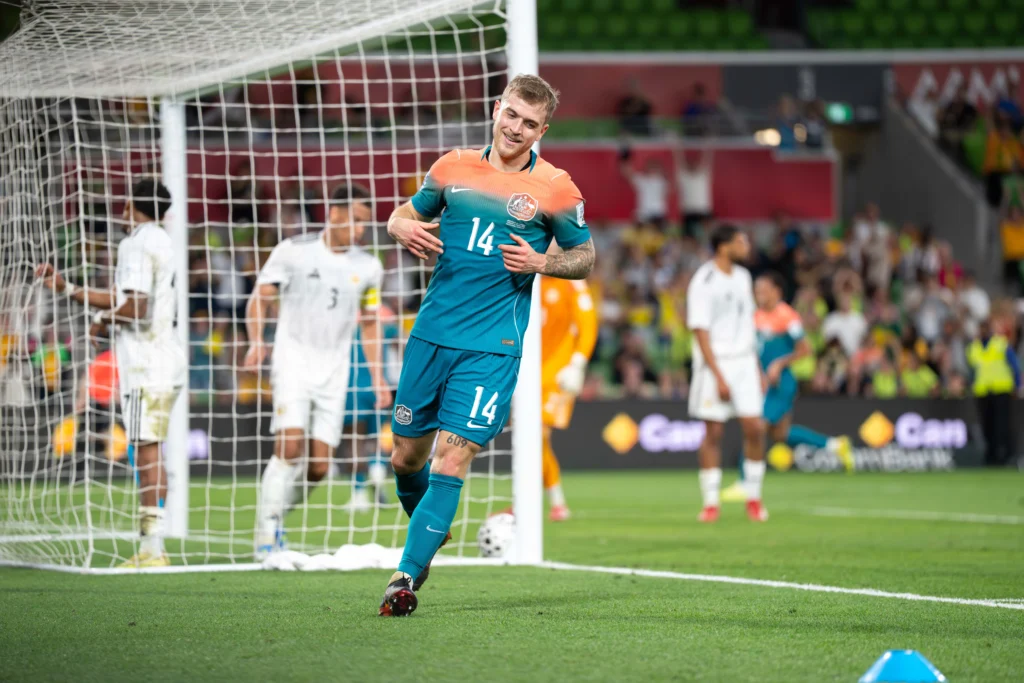 Riley McGree. Photo: Ann Odong
Get in now and watch the potential journeys of Circati, Bos, McGree, Toure and Irankunda as they stand on the cusp of potentially being our next, belated wave of Premier League stars.
We know that catapults you to the box office, but let’s not rely on the silver bullet. There’s enough there in each of these players to build a narrative around a cohort Australia can love. Let a successful World Cup or transfer produce a transformative extra layer of interest, rather than the only way to capture the nation’s imagination.
And one man who is saying all the right things is the one who can connect both generations. Tony Popovic, when in front of the press as Socceroos boss, has been the statesman the game needs – open, expansive, interesting, passionate.
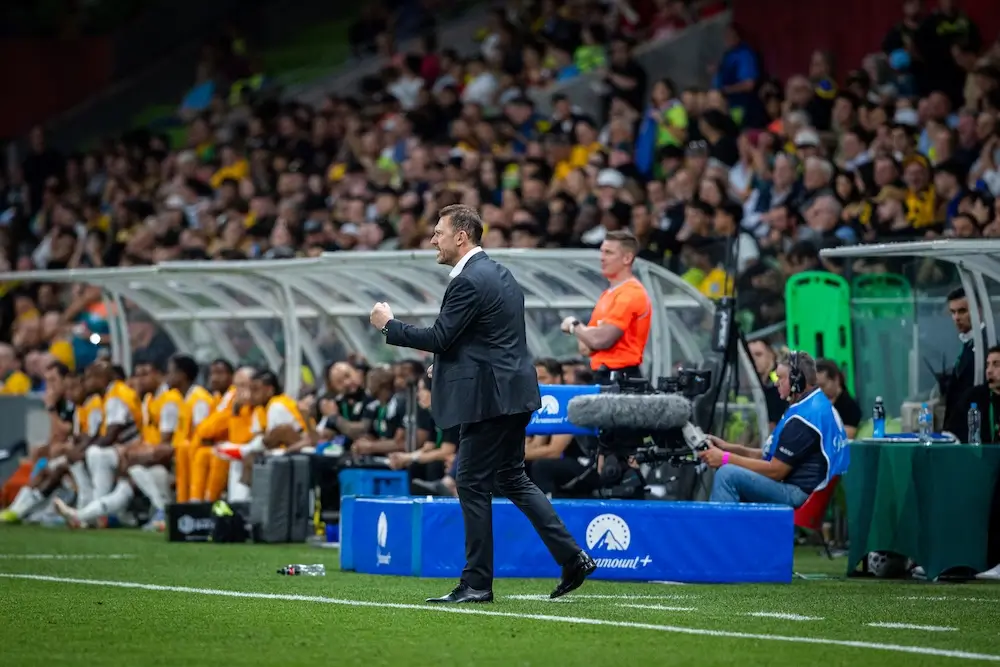 Tony Popovic. Photo: Lucas Petrou
It is going to take time but these are stories to embrace, celebrate and be told in a digitally savvy way in 2026, talking to the next generation of fans who want to emulate these new young stars. They just need to get to know them.
While a straw poll in the street might struggle to name a Socceroos XI now, that ought to be different the next time they play at home, after the World Cup – and unlike in 2022, through all sorts of extraneous, self induced circumstances, the game needs to be calm and savvy enough to build on them.
We have seen with the Matildas what happens when you work hard to build a profile not just of individuals but also a team a nation connects with.
While criticism of the Matildas crowds was a little hyperbolic – and also not fair given the Socceroos’ crowds and the contextually record-breaking Asian Cup crowds in a cost of living crisis, with three matches in Perth in the space of a few weeks – the cold, hard facts are lesser fixtures had been selling out until this year.
But, the recent Asian Cup is a reminder that our sport can never rest on its laurels, and stop driving connections, building heroes, telling stories that capture the imagination and working hard. The beauty is? There’s a never ending list to choose from.
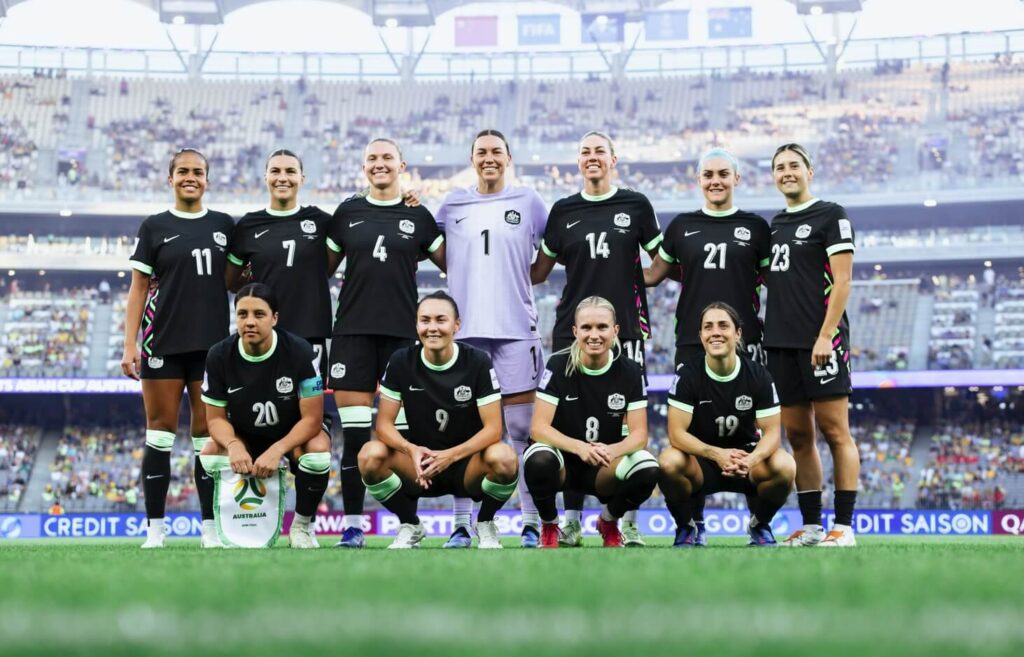 The Matildas starting line-up for the Asian Cup semi-final against China. Photo: Ranin Kousari / The Women’s Game.
The next reality check we will get is in the A-League Men and A-League Women, where there is no greater evidence of the paradox between the highs of Arnie and Irankunda – both formerly of the A-League – and the fact there was only one A-League Men’s crowd on the weekend (Adelaide on Friday night) with more than 10,000 fans, as the season reaches its climax.
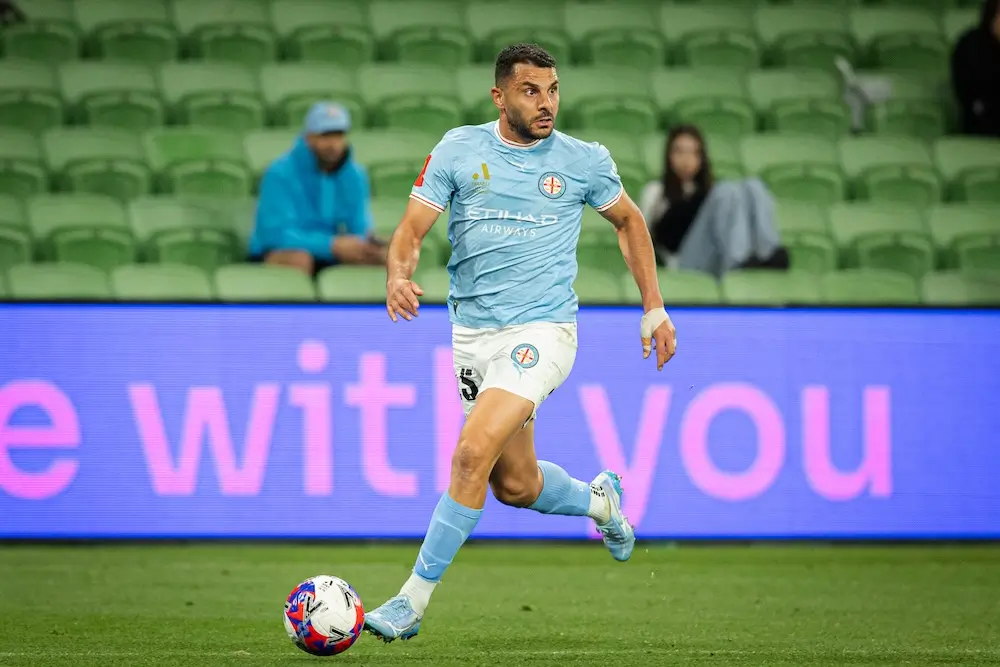 Empty seats has been a theme of this A-League season. Photo: Lucas Petrou
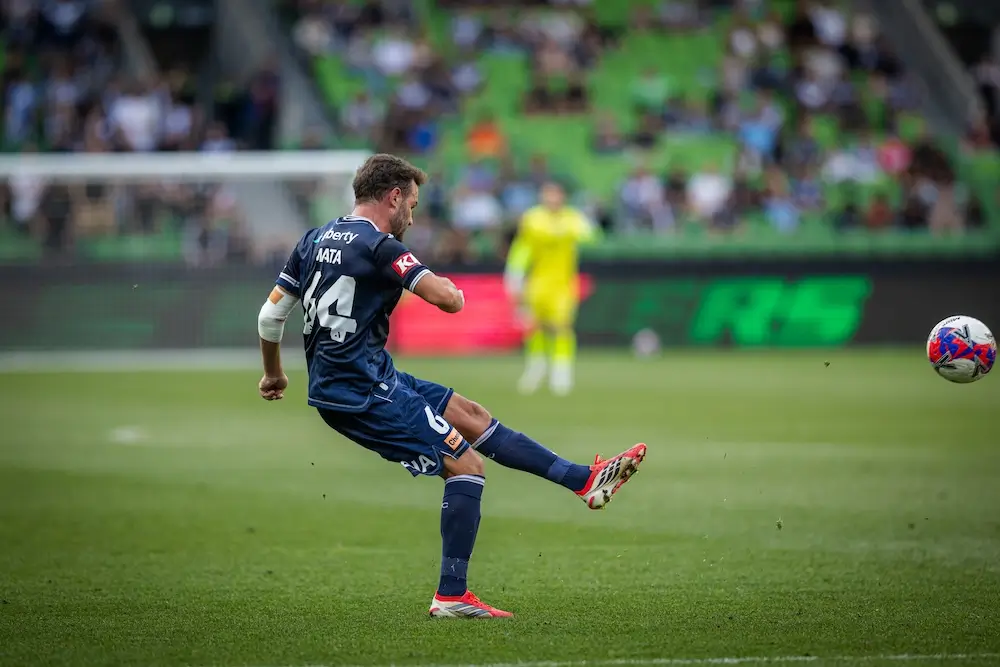 Juan Mata playing in the A-League. Photo: Lucas Petrou
That analysis is a book on its own, the outcome of years of mismanagement and one that needs serious reflection as this season plays out.
But, one thing the local league will always benefit from, with a rare dose of sensible management, is being able to ride off the coat tails of a healthy Socceroos narrative.
With these youngsters, it is hard not to get excited to at least hope, if not think, that opportunity, not a problem, beckons.