
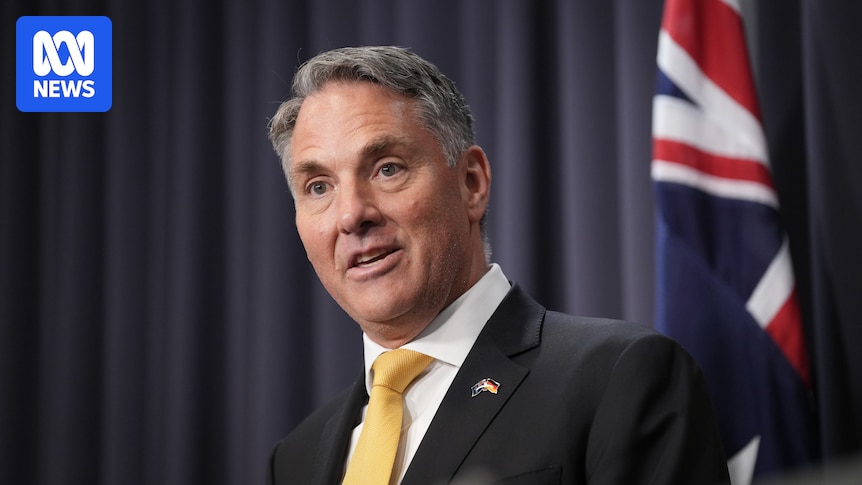
Ongoing discussions are taking place about how to ensure the Strait of Hormuz remains open as a ceasefire takes hold, and what role Australia might play, Defence Minister Richard Marles says.
Mr Marles is visiting Japan for talks with Japanese counterparts on regional security and ongoing fuel supplies to Australia as the global economy is rocked by shortages.
The United States, Israel and Iran have agreed to a two-week ceasefire that will include the reopening of the critical Strait of Hormuz shipping lane.
Iran war live updates: For the latest news on the Middle East crisis, read our blog
Australia was one of more than 30 countries to sign a United Kingdom-led joint statement offering to help secure the strait, and last week took part in diplomatic talks on steps that could be taken to that end.
Australia has also been involved in talks about what action might be taken at a military level, but has made no further commitments on additional military assistance.
In an interview with the ABC while visiting Japan, Mr Marles said talks about how to keep the vital waterway open would continue throughout the ceasefire.
“That’s a conversation that we will have,” he said.
What we know about the US-Iran ceasefire deal
“And it’s going to be a function of exactly what does play out now in respect of this ceasefire, what happens beyond the two weeks.
“And also how the UK, France and those countries which have been leading these conversations are seeing any potential effort to maintain the Straits of Hormuz being open.”
An Australian E-7 Wedgetail surveillance plane is already in the region, having been deployed for defensive assistance to the United Arab Emirates for four weeks.
The plane is expected to remain throughout the ceasefire.
Mr Marles said he was not “going to speculate” on whether Australia would contribute more defence assets, like warships.
Energy crisis will have a ‘long tail’
Analysts have warned the reopening of the Strait of Hormuz may bring a short-term reprieve to the global fuel crunch, but the impacts of the disruption will be ongoing.
Mr Marles said while the government “takes heart” from the ceasefire, he acknowledged the energy crisis would have “a reasonably long tail”.
He said he had discussed fuel and energy supplies during his Tokyo meetings.
Japan is a major oil refiner in the region, but it only supplies 6.8 per cent of Australia’s diesel and 0.7 per cent of its petrol.
It has offered assurances of continuing that supply, but Mr Marles would not be drawn on whether it could supply more, in exchange for increased gas supplies from Australia.
“We are focused on fulfilling all the obligations and contractual requirements that we have in being that reliable provider of both gas and coal to Japan, and that’ll happen,” he said.
“We will keep the partnership going and make sure that we are reliable partners to each other.”
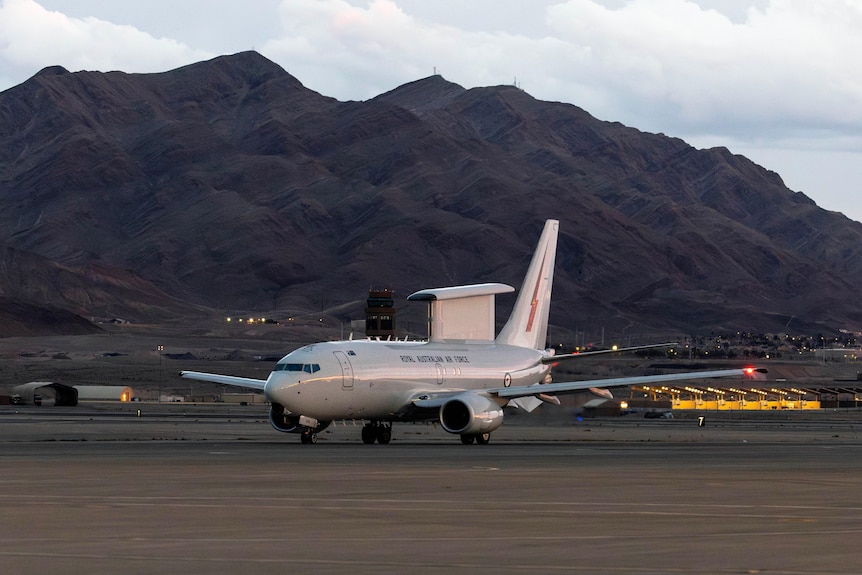
An Australian E-7 Wedgetail is expected to remain stationed in the region throughout the ceasefire. (Supplied: Australian Defence Force)
Prime Minister Anthony Albanese is travelling to Singapore to shore up supplies from there.
Australia’s other major supplier is South Korea.
When asked if there would be similar agreements with Seoul as there had been with Japan and Singapore, Mr Marles said “all the circumstances are different”.
“I’m not going to go into the specifics of that, but we are very much about being a reliable provider,” he told the ABC.
Asia has been particularly exposed to the fuel crisis, as it imports about 60 per cent of its oil from the Middle East.
Mr Marles said “countries in the region are seeking to work together”.
“The time is challenging, but there is an enormous amount of goodwill to try and move through this together.”
Loading’Rules-based order’ vital for smaller countries
Mr Marles’s brief visit to Japan centred on a meeting with his defence counterpart Shinjiro Koizumi, with the two discussing the situation in the Middle East and regional security.
“In today’s world, the Australia-Japan relationship is really genuinely more important than it’s ever been,” Mr Marles said.
There have been concerns that the war in Iran and a distracted White House could create instability in the Indo-Pacific.
Mr Marles said the United States remained a reliable ally in the region.
He would not say if US President Donald Trump’s recent comments threatening “a whole civilisation will die tonight” undermined arguments about the importance of a global “rules-based order”.
While being “far from perfect”, he said it had “achieved a lot”.
“The rules-based order gives countries like Australia, middle powers, smaller countries, agency,” he said.
“That agency is denied if we simply live in a world that is defined by power and might.”
He said that was a view Japan “very much shares”.
Loading…