
In 1967, the words of Oakland’s Black Panther Party co-founder Huey P Newton reverberated around the globe: “Rewriting unjust laws is a basic human right and fundamental obligation.”
Warning: Aboriginal and Torres Strait Island readers are advised this article contains the names and images of people who have died.
In Sydney’s Redfern, the founders of Australia’s Black Power movement took notice.
What they did next would forever alter the lives of First Nations people.
More than 50 years later, their legacy lives on — not only through the invaluable community services they created, but in descendants, like Mykel, who carry the torch for a new generation.
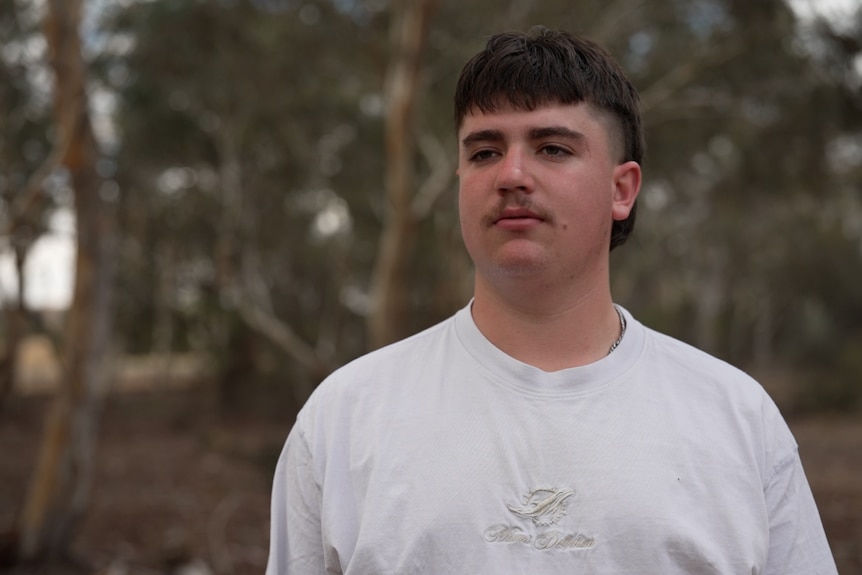
Mykel, a relative of Paul and Isabel Coe, wants to continue their fight for Indigenous rights. (ABC News: Leah White)
Police harassment and the moment of reckoning
Redfern was a major centre of First Nations activism in the 60s and early 70s.
More than 20,000 Indigenous Australians moved to Sydney following the abolishment of the Aborigines Protection Board in 1969 and the gradual closure of the reserve system.
They came to the city, seeking opportunity and community.
Most of them made their way to Redfern — a suburb then categorised by the city’s social service as a “slum”.
Housing was old and dilapidated, and overcrowding was common after the mass influx.
Racism made finding work hard, and in the exceptions, it was often manually gruelling and underpaid.
Police brutality was also rampant.
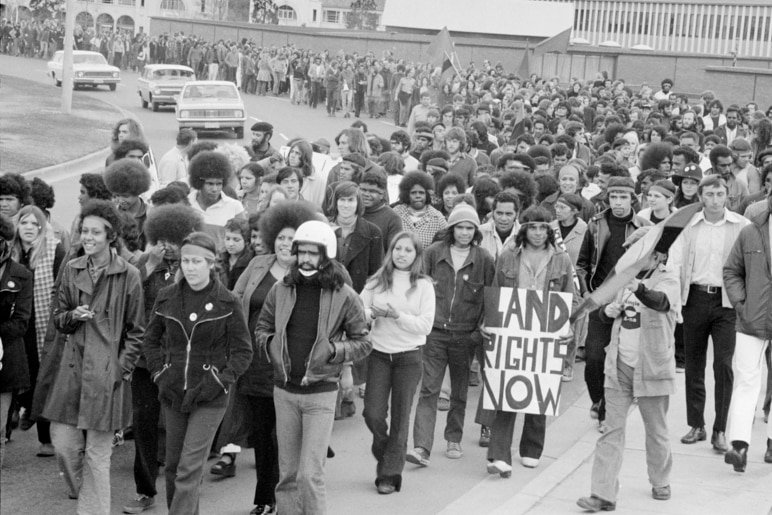
Gary Foley (wearing helmet) during a later Aboriginal Embassy supporters’ march in 1972. (Supplied: Mitchell Library/ State Library of New South Wales/ Courtesy of SEARCH Foundation)
“The one thing everybody in Redfern had in common was poverty,” Gumbaynggirr historian and activist Gary Foley recalls.
“The other thing … was we were all subject to a campaign of police harassment and brutality that was happening on the streets constantly.”
It was among these tensions Dr Foley first met Black Power co-founder Paul Coe.
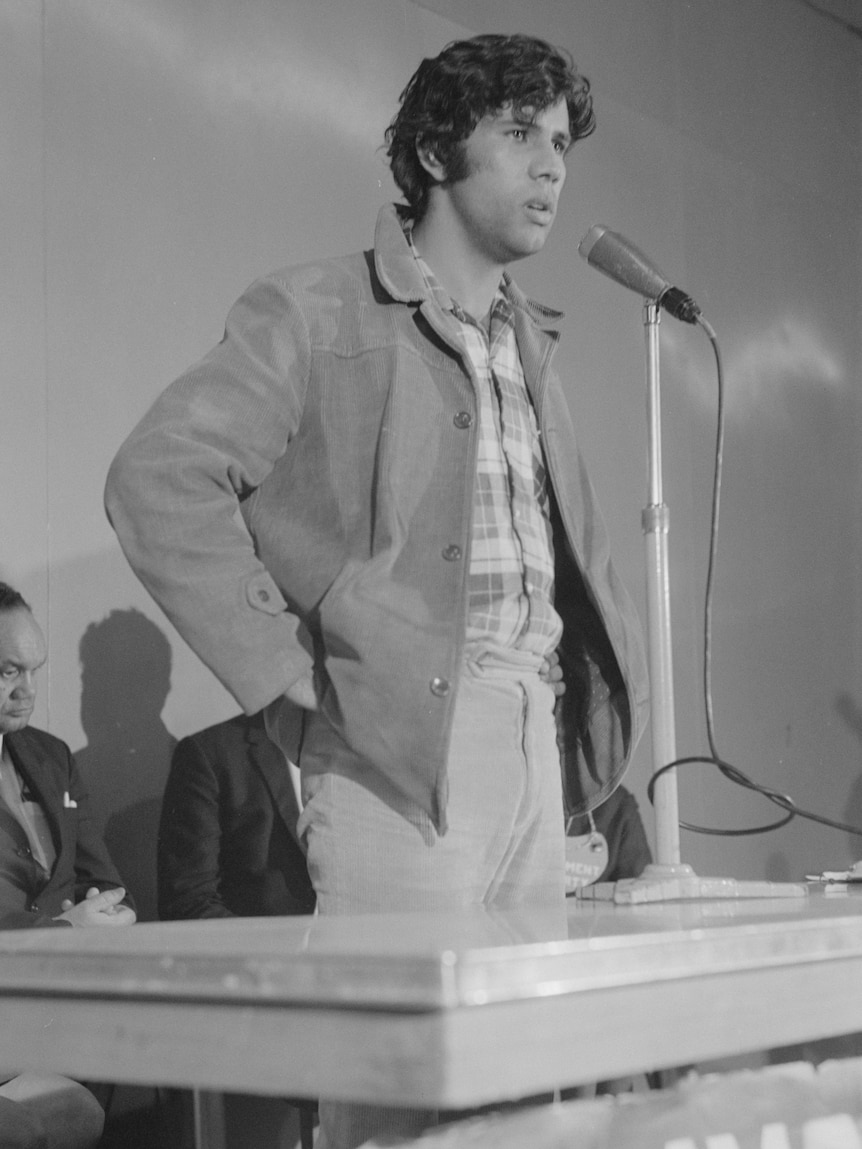
A young Paul Coe speaking in 1970. (Supplied: Mitchell Library/ State Library of New South Wales/ Courtesy SEARCH Foundation)
Mr Coe and his sister, Isabel Coe, had grown up on Wiradjuri Country near Cowra.
Mr Coe told Dr Foley that, since his move to Sydney, a relative had been shot by police.
Dr Foley had recently faced a “pretty severe bashing” at the hands of police.
It was enough, they decided.
“Talking to Paul, we naively decided we wanted to do something about these coppers,” Dr Foley remembers.
The activists formed a small group that copied Black Panther tactics and began recording information about police harassment and raids.
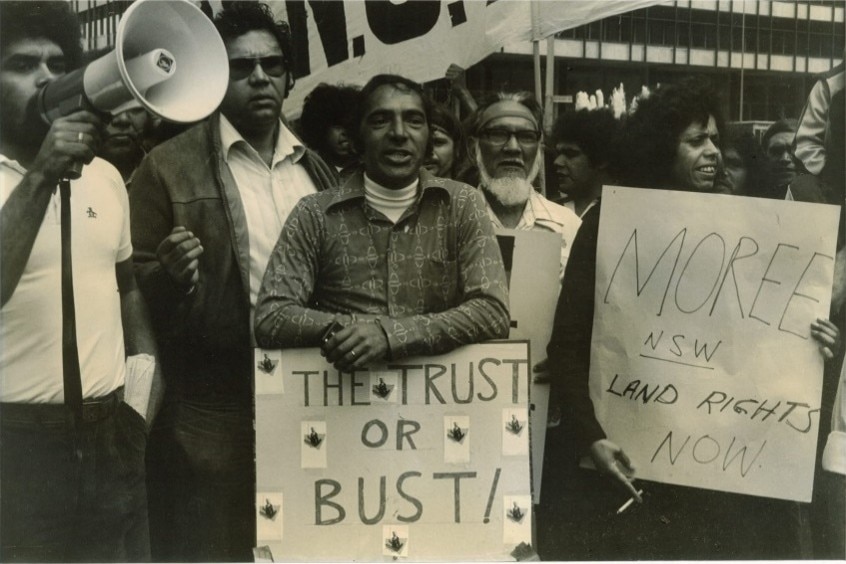
The movement also evolved to focus on land rights. Here, Lyall Munro Jr, Paul Coe, Vic Simms and Linda Coe protest. (Supplied: Elaine Pelot Syron)
“We set up our own surveillance operation on the police, and we gathered a massive amount of information,” Dr Foley says.
Mr Coe was the University of NSW’s first Indigenous law student at the time.
He asked faculty dean Hal Wootten to help them with the next steps, but, eventually, it was himself who suggested a solution.
“Paul said to [Hal Wootten], ‘I’ve read that in America, certain African American communities have set up these free shopfront legal aid centres. Why can’t we do that here?'” Dr Foley recalls.
“And Hal Wootten proceeded to tell Paul and me and Gary (Williams) a dozen reasons why it couldn’t be done in Australia.
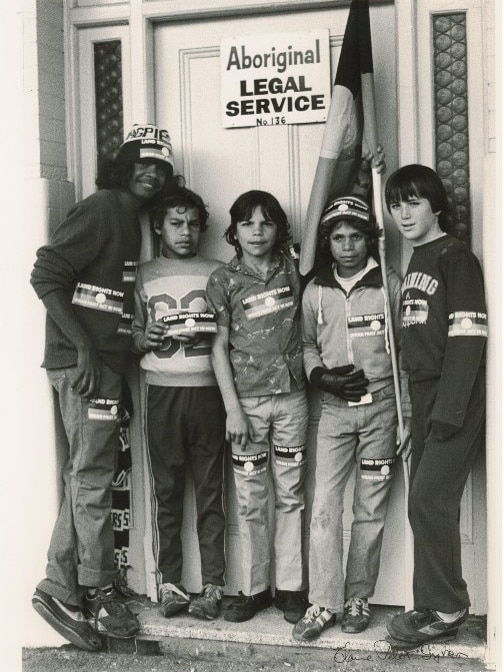
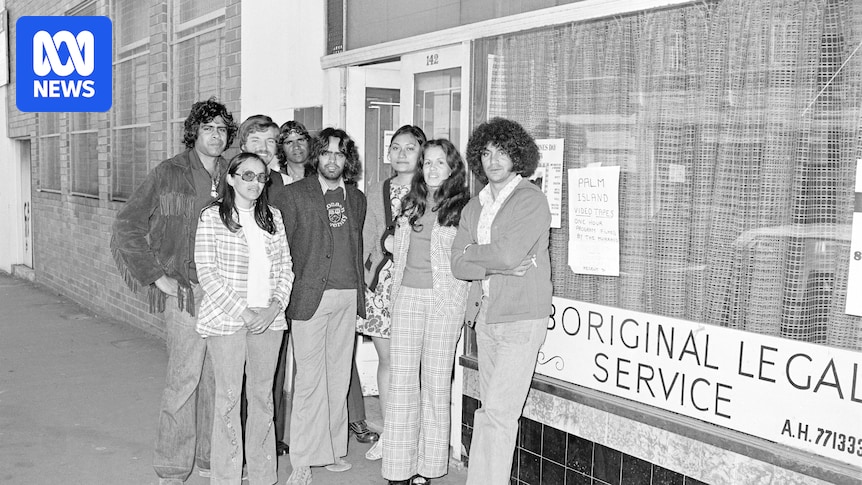
Children stand in front of the Aboriginal Legal Service in its early days. (Supplied: Elaine Pelot Syron)
“Six weeks later, we opened the doors of the Redfern Aboriginal Legal Service and introduced free shopfront legal aid to Australia.
“We were the first to do that in Australia.”
The impact was immediate.
“The police realised that they could no longer just arbitrarily arrest people and sling them in jail on trumped-up charges,” Dr Foley says.
“For the first time, Aboriginal people, when they got arrested, when they went to court, they were being represented, and that had an impact.”
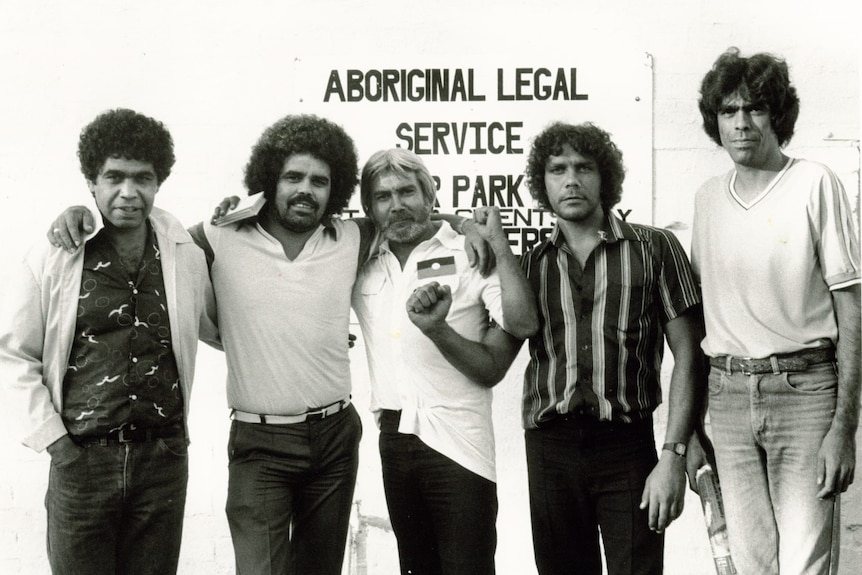
Indigenous activists Arnold Williams, Lyall Munro Jr, Cecil Patten, Kenny Weldon and Dan Munro also played a role in the beginning of the service. (Supplied: Elaine Pelot Syron)
Mr Coe’s aunty, Shirley Smith (Mum Shirl) and others soon spearheaded the Aboriginal Medical Service in a similar fashion.
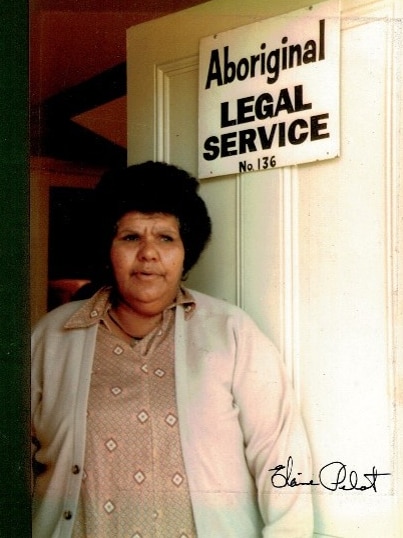
Mum Shirl also played a pivotal role in establishing the Foundation for Aboriginal Affairs, the Aboriginal Children’s Service and the Aboriginal Housing Company. (Supplied: Elaine Pelot Syron)
Also initially shot down by naysayers, the activists paid them no mind.
“Within six weeks, we opened the doors of the first free shopfront medical service in Australia,” Dr Foley recalls.
In time, a mobile caravan feeding local children became Murawina — the first fully Indigenous-run preschool in Australia.
Both the Aboriginal Legal Service and Aboriginal Medical Service eventually became federally funded organisations nationwide.
To this day, the Aboriginal Legal Service remains Australia’s cornerstone of free, culturally appropriate legal advice.
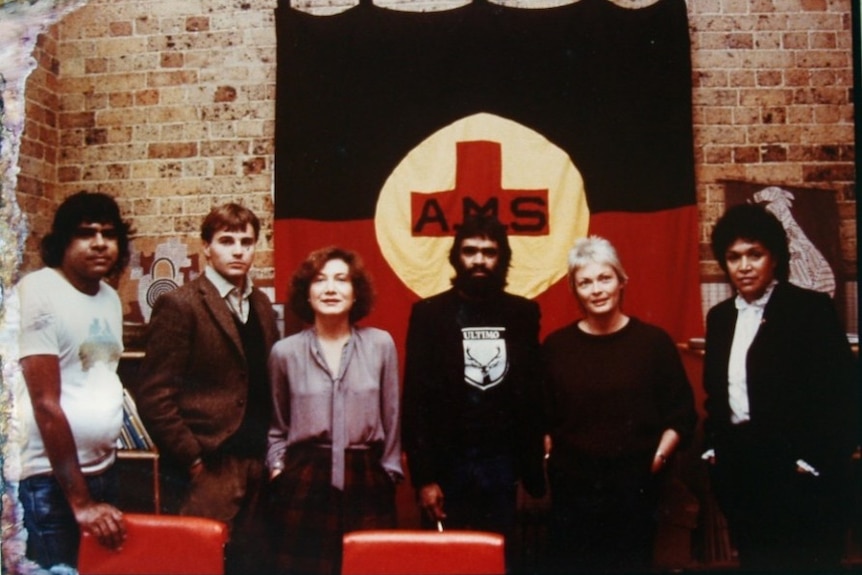
Gary Williams (far left), Gary Foley (centre) and Naomi Meyers (far right) pictured in the medical service’s early days. (Supplied: Elaine Pelot Syron)
Dr Foley says the Coe siblings played a crucial role in building such momentum behind the movement.
“Paul, when I first met him, was an incredibly charismatic orator,” he says.
“It was Coe’s charisma that attracted a lot of the early crew into our little collective.
“And almost immediately, that included Isabel because she was Paul’s sister, and Billy Craigie was Isabel’s partner.
“I became aware of her very quickly because she was a very strong person in herself.”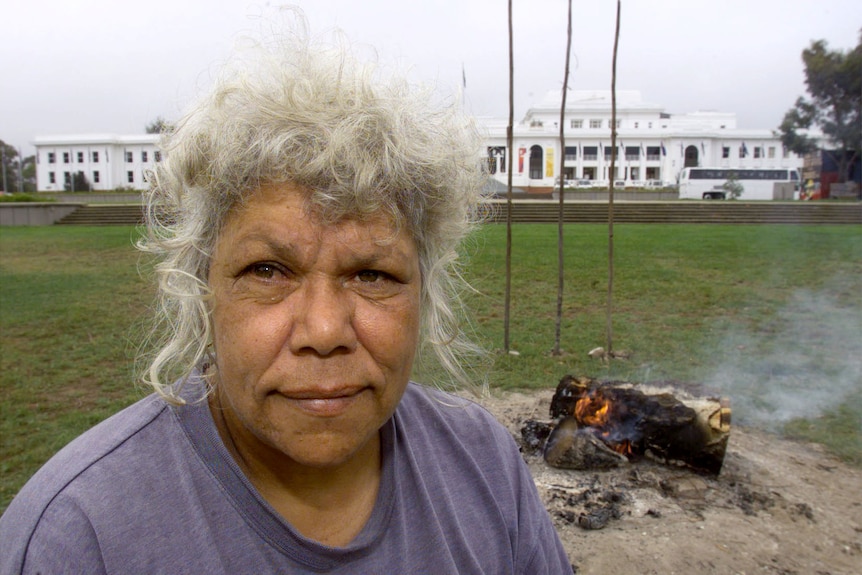
Isabel Coe, pictured in 2000, calling for a boycott to the Sydney 2000 Olympics “if things don’t improve here in Redfern”. (Reuters: File)
Symbol of First Nations sovereignty
Black Power had changed Redfern and beyond, but the movement’s Tent Embassy would bring Indigenous land rights to an international stage.
On January 25, 1972, the McMahon government announced a new system that rejected granting independent ownership of traditional land to First Nations people.
The next day, four members of the collective — armed with only a beach umbrella and a sign with the slogan “Aboriginal Embassy” — made their way to the then-Parliamentary Lawn.
More stories about young Australians
The Coes, Dr Foley, and other Black Power members soon joined them.
Fifty-four years later, the Aboriginal Tent Embassy remains — a symbol of an enduring fight for Indigenous sovereignty in Australia.
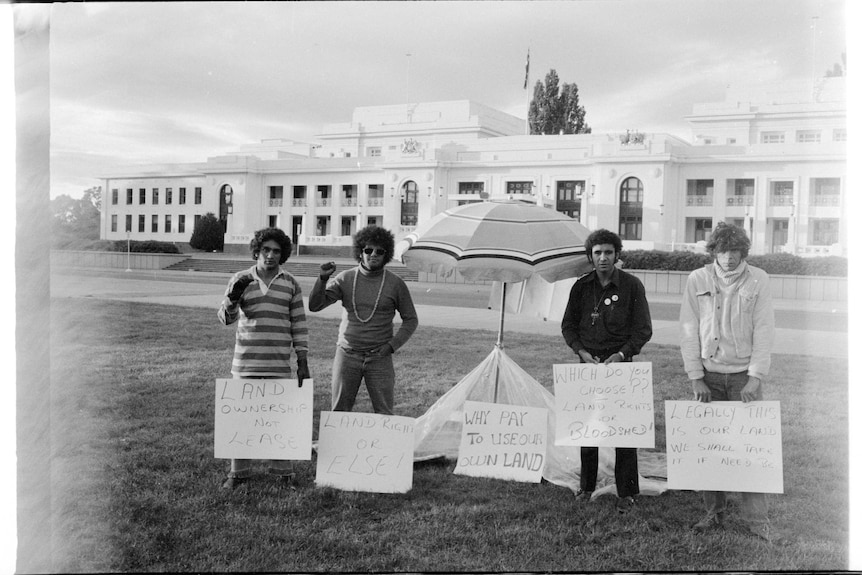
The embassy’s four original members Billy Craigie, Bert Williams, Michael Anderson and Tony Coorey. (Supplied: Mitchell Library/ State Library of New South Wales/ Courtesy SEARCH Foundation)
The embassy convinced Labor and Gough Whitlam to break ranks with a bipartisan assimilation policy in favour of self-determination, marking the first time since federation that one of the two major political parties had scrapped the policy.
“We knew that we had the government on the run,” Dr Foley says.
“That was a big feeling for a bunch of nobodies.
“We started off with just the three of us in the beginning, me, Coe, Williams, but the little collective that we created there changed the course of Australian history.”
In the years since the 70s, the embassy has, at times, courted controversy from both Indigenous and non-Indigenous people.
But it has stood firm despite being threatened with violence and closure a number of times.
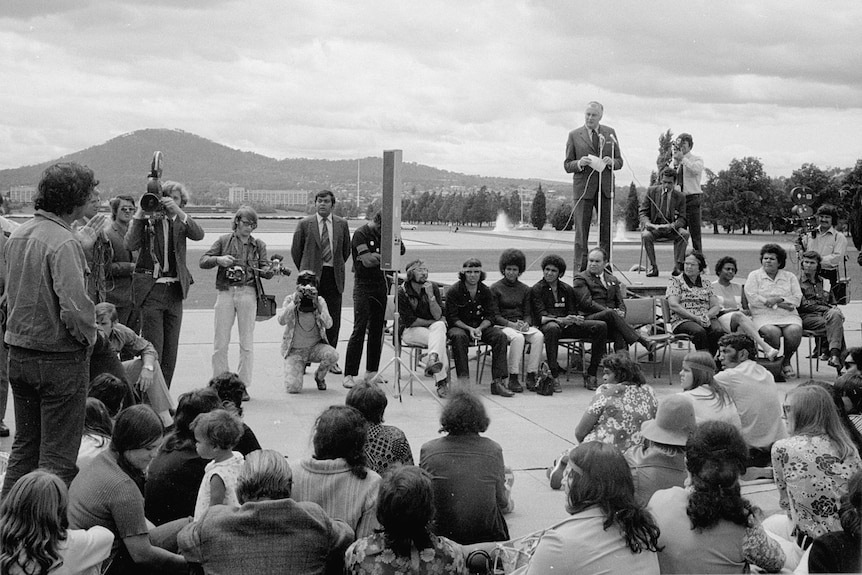
Paul Coe (standing, left) questions Gough Whitlam and the bipartisan assimilation policy. (Wikimedia Commons: The Tribune / State Library of New South Wales and the SEARCH Foundation/Creative Commons licence)
In the 90s, this was largely due to Isabel Coe.
She took the lead when the embassy faced rumours the federal government wanted to remove the protest site.
“Well, we’ve been sitting here for 27 years, and we’re going to continue to stay here,” Ms Coe said at the time.
“We’re here in sovereignty, we have never signed a treaty, we have never relinquished sovereignty to our country, and that’s what this Aboriginal Tent Embassy is all about, and that’s why they want to remove us.”
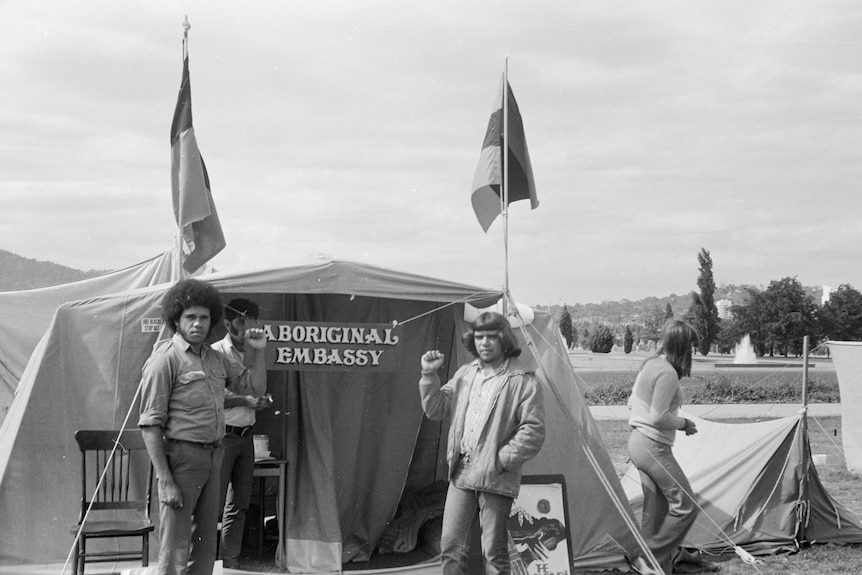
Sam Watson and Bruce Morris outside the Aboriginal Tent Embassy in the 70s. (Supplied: Mitchell Library/ State Library of New South Wales/ Courtesy of SEARCH Foundation)
A new fight
Today, a younger generation keeps the spirit of Black Power alive.
How a beach umbrella inspired half a century of Indigenous protest
Mykel — a proud Wiradjuri, Gamilaroi and Bigambul man and relative of the Coe siblings — understands the issues facing his community have progressed but still looks to the legacy of the pair.
“They’ve paved down a really great foundation for me to build upon,” he says.
The teenager grew up in Condobolin, a town south-west of Dubbo, which he dubs Condo.
He takes inspiration from the Coes’ regional NSW roots and hopes to improve outcomes for regional First Nations communities.
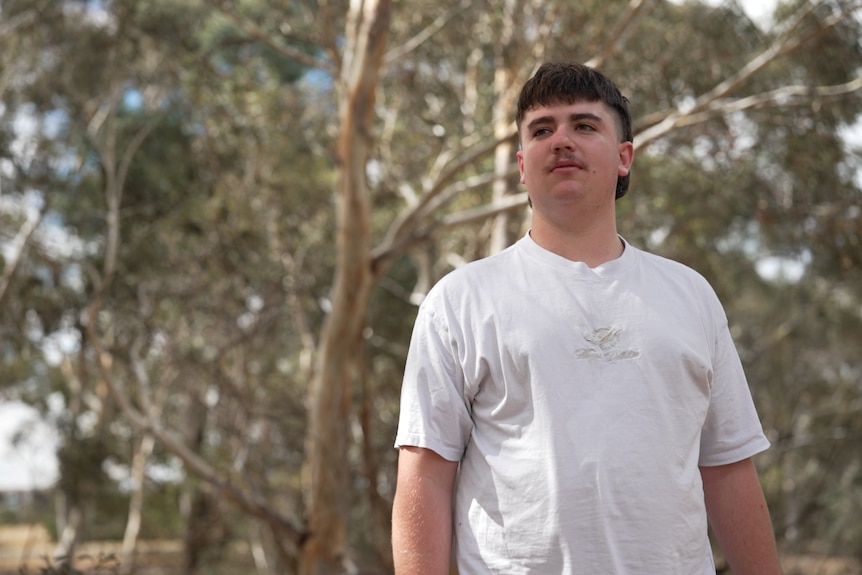
Mykel wants to see resources for Indigenous rural communities improved. (ABC News: Leah White)
Mykel believes Condo — though tight-knit and supportive —struggles with drug and alcohol abuse.
He says the problem is partly to do with boredom: “The most exciting thing seems to be who’s performing at the pub on the weekend.”
But also points to limited support in rural areas.
“I think especially rural and regional resources trying to support Indigenous people seem to be lacking,” he says.
The most recent inquiry into NSW rural health outcomes confirmed as much, acknowledging a lack of affordable and culturally appropriate healthcare.
As of 2024, recommendations to fix cultural barriers to telehealth and increasing Indigenous healthcare workers remained outstanding.
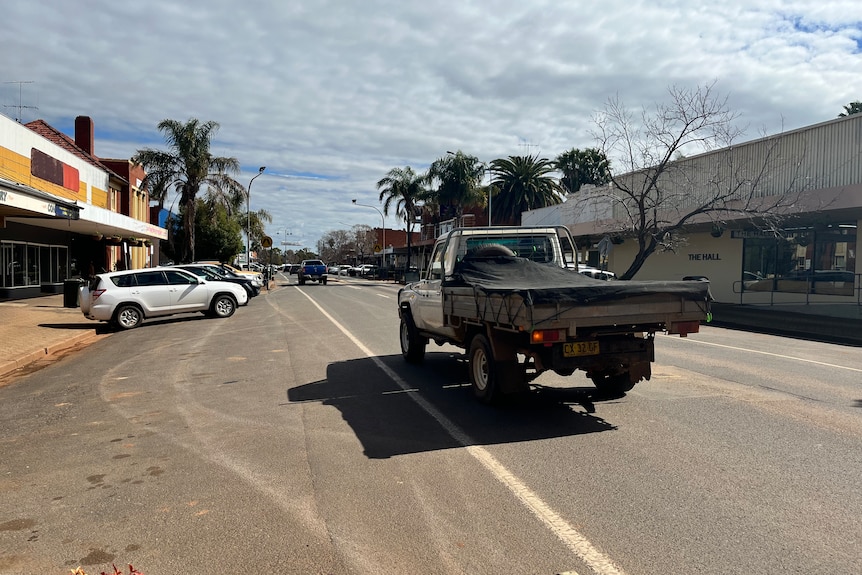
Mykel says there are limited opportunities outside of footy or farming in Condobolin. (ABC Central West: Joanna Woodburn)
‘It’s our legacy’
Though Mykel heard “bits and pieces” of his family history, a year 11 history assignment put the Coes into a new light.
“I think at first it was a bit surreal,” he says.
“Like maybe I tried to play it up a little bit, that maybe they mightn’t have done all that or something.”
Since then, they’ve become his aspiration — if at times subconsciously.
He is studying law, just like his Uncle Paul.
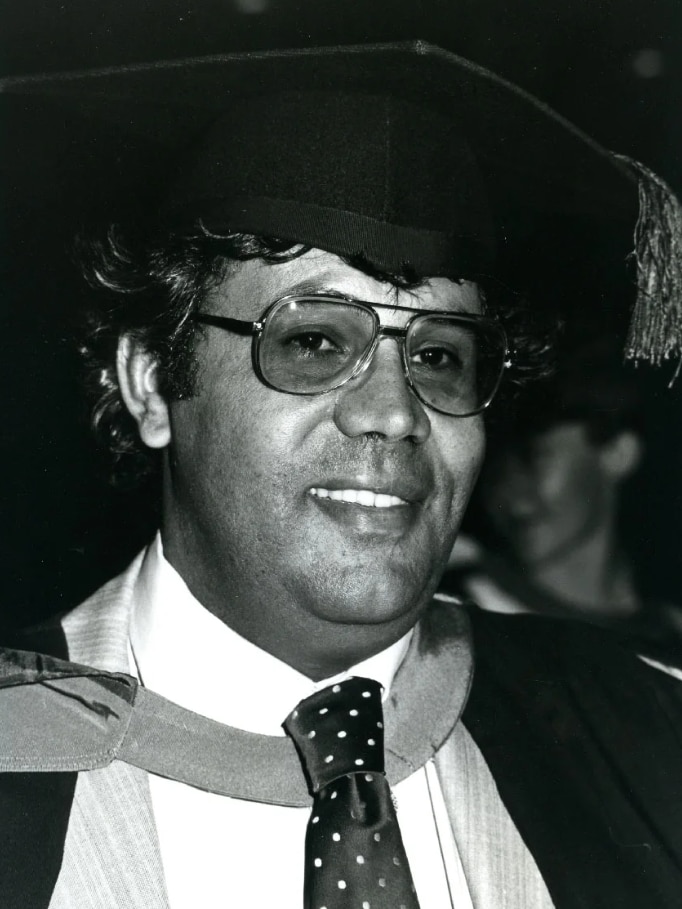
Paul Coe became one of Australia’s first Indigenous barristers. (Supplied: UNSW Archives)
His interest in legal justice started before he even learnt of Mr Coe’s foundational High Court case, seeking legal recognition that Indigenous people had never ceded sovereignty.
“Our familial connections were so strong that I didn’t even know that I was doing it,” Mykel says.
“It just seems like a lot of what I’m doing, whether consciously or subconsciously, always relates back to Uncle Paul and Aunty Isabel.”
He believes the law can pave a better future for his community.
The legacy of the Aboriginal Legal Service is proof.
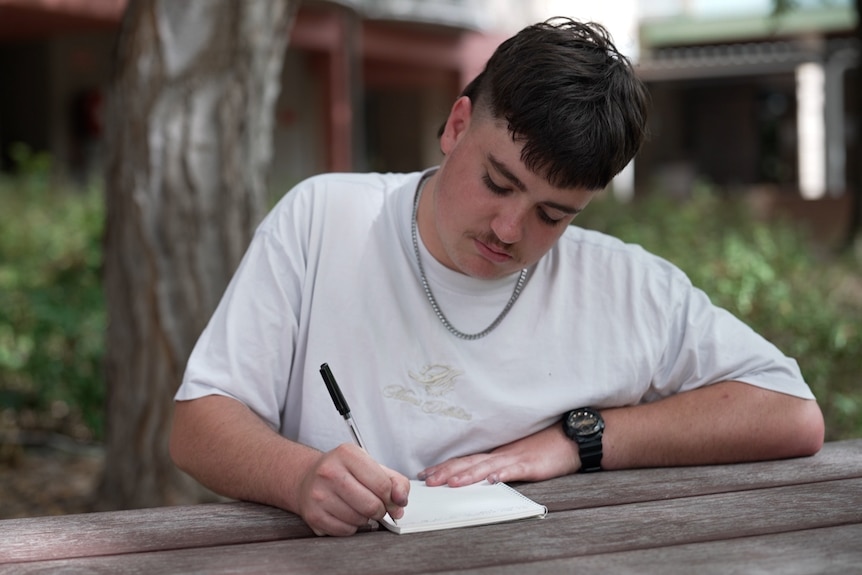
“I always write something down or I’ll think about something and then there’ll be a correlation to Uncle Paul and Aunty Isabel.” (ABC News: Leah White)
And like the movement before him, he believes some laws still need to be rewritten.
“The law has always seemed to be something that went against Indigenous people,” he says.
“It started off with Terra Nullius … then the Australian Constitution, which wasn’t changed until the 1967 referendum.
‘[It] needs to be re-amended from what it originally was to accommodate not just Aboriginal people, not just Australian people, but both together.”
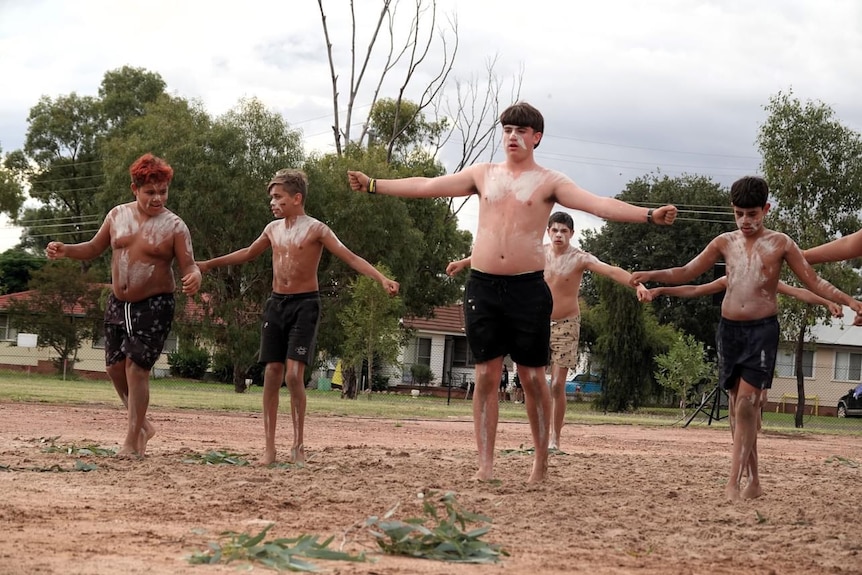
Mykel during the 2025 Condobolin SkyFest, on Wiradjuri Country. (Supplied: Mykel)
Through boarding school, he is also reclaiming his heritage.
He started dancing and learnt Wiradjuri.
The Wiradjuri culture that empowered the Coes has also become his source of strength.
“It showed me that this is what our old people fought for, not for us to be going around partying every weekend,” he says.
“This is powerful. It’s our legacy.
“We wasn’t handed grog and yarndi (cannabis).
“We were handed our stories, our dances, our language.”
The ABC’s Heywire competition is open to all regional Australians aged between 16 and 22.
The annual competition provides a platform for the younger generation, in pockets of Australia that rarely see the spotlight, to “tell it like it is”.
If you are aged between 16 and 22 and would like to find out more about the ABC Heywire Competition, go to the ABC Heywire website.