
Why does all of our Middle East news come out of Jerusalem? It feels like we only get the Israeli version of the story as their restrictions on media reporting and antagonism towards journalists reporting on their actions is widely reported. I find it difficult to trust anything you report because I worry that everything you write has to go through their censors before we see it. Surely there is any other place in the region where you could report from? Or can you promise us that your reporting is not interfered with? — Angela
Hi Angela,
Thanks for sharing your concerns. But I’m sure it won’t surprise you that I’m not going to buy into the conspiracies that somehow our reporting is censored because of where our bureau physically is.
I’ve written multiple times about how the Israeli censorship system works — particularly during times of war, such as with Iran.
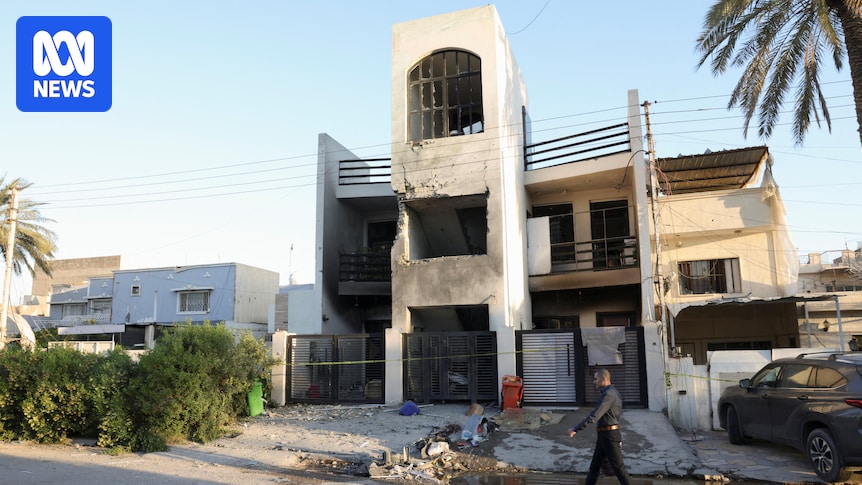
There was a hell of a lot of AI slop being shared on social media about Tel Aviv being levelled in Iranian missile attacks. Yes, some missiles got through and destroyed buildings and killed Israelis.
But the city was still standing. Still, journalists like myself faced a deluge of criticism for shielding the world from what was happening on the ground.
We weren’t. It wasn’t true.
We are not allowed to report, from the ground, if an Israeli military site was hit for example. But if my colleagues in Australia can get that information, they could. It would form part of our coverage.
I do not run reports through the IDF. No media does.
I’m not getting clearance from them when I leave the bureau to go and stand outside a building which has been hit. No media does.
The suggestion that we only dish out Israeli talking points is absurd. Take a look at our reporting in the West Bank on violence by Israeli settlers illegally occupying the land there.
Or for that matter, our reporting on the ground in Lebanon on the humanitarian catastrophe hitting the country as a result of Israel’s attacks against claimed Hezbollah sites — including the killing of a 10-year-old girl, and the maiming of her sisters in an unannounced strike.
I doubt the IDF would be happy with our framing of those stories. And it’s not our job to please them.
We do put questions to the IDF as part of our journalism.
For all the faults, and the antagonism against journalists (which is getting worse and worse), Israel is actually still one of the easier places for journalists to operate in the region.
The lack of news out of the Gulf, other than repetition of official government statements, gives you an indication of those restrictions.
On the issue of telling the Israeli side of the equation — members of our audience may not like what Israel is saying, or agree with what it is saying. But, I believe it is important to include their comments in our reporting.
I want you, and other members of our audience, to see the Israeli justification for its actions. That’s about keeping you informed of what’s going on.
The ABC operates out of Jerusalem, and has done for a long time, as it sits at the heart of one of the most difficult issues in this region.
The view you see every night on the TV news from the roof of the bureau is of occupied East Jerusalem. The ‘armistice line’ is almost at the end of the driveway.
From the roof, we can physically see the wall constructed between Jerusalem and the occupied West Bank. We’re reminded of the story every day.
We work with trusted Palestinian colleagues to bring you the news from Gaza and the West Bank. We have staff helping us tell the stories in places like Lebanon, in the event I’m not physically on the ground there too.
During this war, the ABC has had reporters on the ground and filed reports from right across the region: Jerusalem, Tel Aviv, Haifa in northern Israel, Amman, Beirut, Sidon in southern Lebanon, Erbil in northern Iraq, Dubai and Abu Dhabi. We’ve also filed reports in the last week from the occupied West Bank, and are working with our trusted colleagues in Gaza too.