
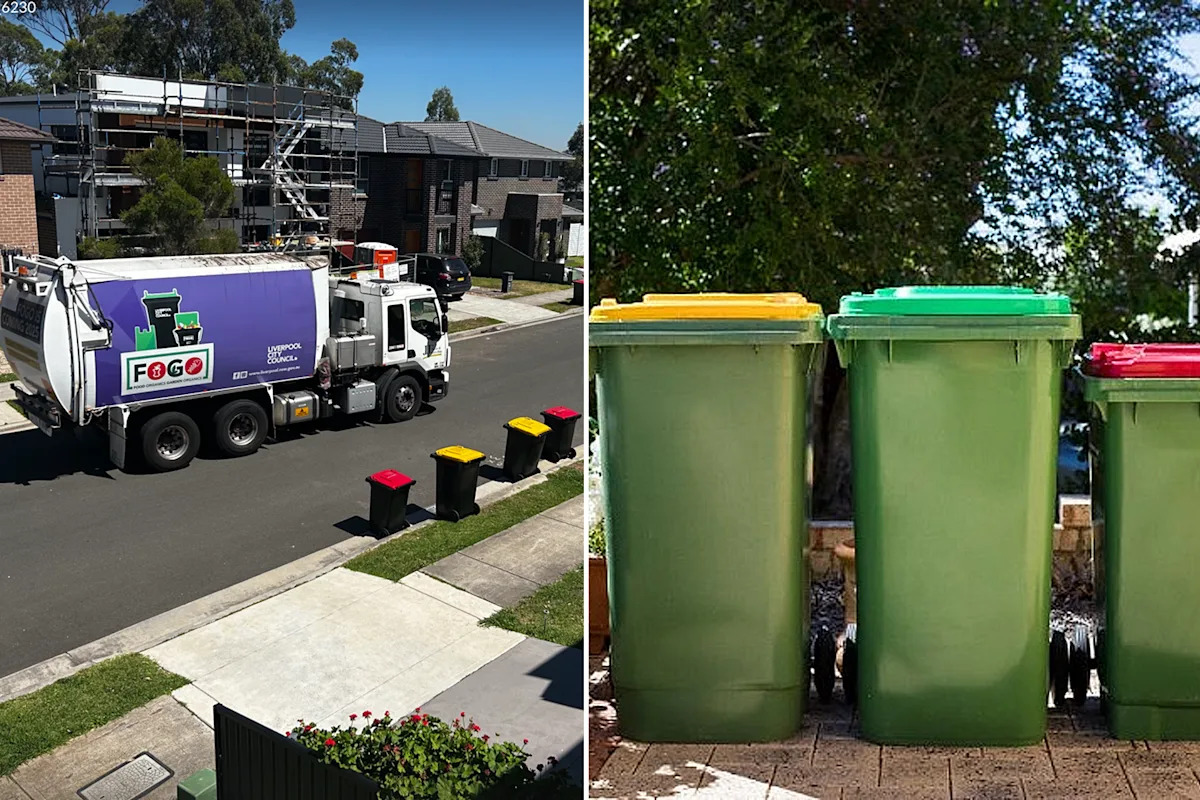
They’ve been a staple in many Australian households for years now, but in some parts of the country’s west, questions are being asked about whether FOGO bins are working as intended.
The controversial green-lidded bins for organic food and garden waste are intended to ease pressure on rapidly shrinking landfill space nationwide — but the rollout hasn’t come without its share of backlash.
In Bunbury, south of Perth in Western Australia, councillors are debating whether households should revert to the two-bin system, 10 years after the third FOGO bin was introduced.
The City of Bunbury was the first to adopt FOGO bins in the state a decade ago.
Do you have a story about waste collection? Contact newsroomau@yahoonews.com
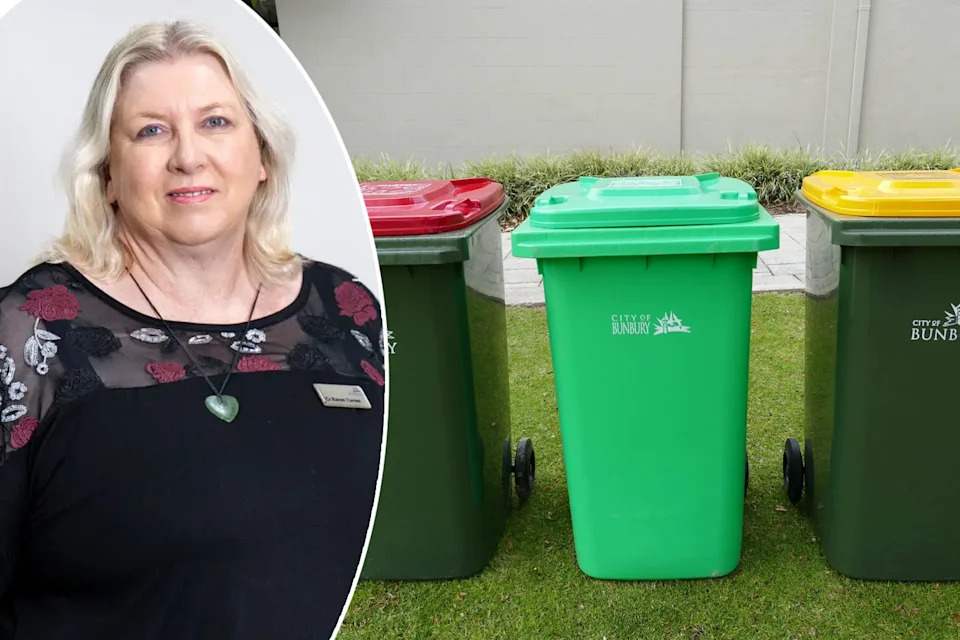
Bunbury Councillor Karen Turner urged colleagues to abandon FOGO altogether. Source: WA government/City of Bunbury
But this week, councillors voted to investigate their viability, with one branding the system “a failure”, the ABC reported.
The FOGO system in the South West has been under mounting strain since late 2024, after the collapse of local processing left thousands of kilograms of rotting waste being diverted to landfill each month.
In February, the state government stepped in with a $4.5 million lifeline, offering a $95-per-tonne rebate to transport the waste to Perth instead.
Despite the millions funnelled into the scheme just months ago, it may now be on its last legs.
Councillor Karen Turner urged colleagues to abandon FOGO altogether.
“FOGO has failed… we shouldn’t continue a failing strategy,” she said, the ABC reported.
“We tried, we failed, and the right thing to do is stop.”
The council ultimately rejected Turner’s call, instead agreeing to explore the possibility of trucking the waste 200 kilometres to Perth.
In Perth, some residents have also recently spoken out about the bins.
Kim Amer has been campaigning against the change for several months.
She lives within the City of Rockingham LGA and spoke to Yahoo News about how the change had a direct impact on her red bins.
“We started FOGO this year, which is fine — most people adapted after time to that,” Kim said.
“The problem is the red bin general waste. They reduced us to a 140-litre bin and a fortnightly pick-up, and it has caused so much stress among families and literally everyone.”
Kim said residents can’t fit their rubbish into the smaller-sized bins, “but worse”, it has also brought “an absolute influx of blowflies, maggots and crows”.
While broad adoption remains high, Kim’s story isn’t unique.
Though many report satisfaction with the bins.
Yahoo News polled more than 2,000 people about how they found their FOGO bins.
A total of 32 per cent, the majority, said they “like” theirs, while 19 per cent admitted they don’t use them.
Back in Bunbury, Mayor Jaysen Miguel said a decision on FOGO’s future would need to be made within months, pointing to rising costs as a key pressure.
He said the city must remain mindful of its budget and urged the state government to provide further support.
“The city has been an early adopter of FOGO — something we’re proud of,” he said.
Miguel said while community backing for FOGO remained strong, it was not unconditional.
“Given there has been rising fuel cost at any time, the cost is expected to be up.”
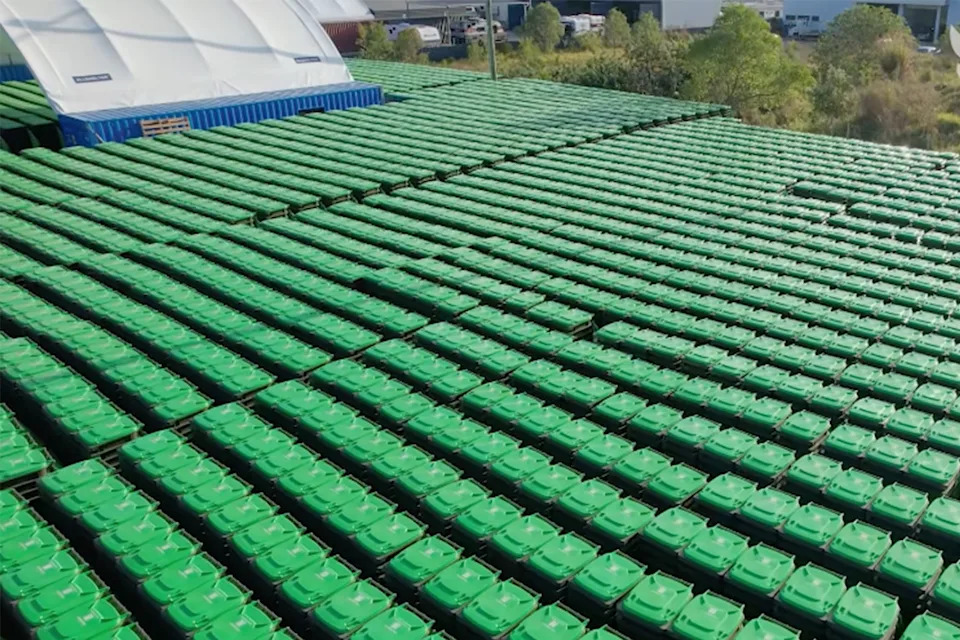
FOGO bins have now been rolled out broadly across the country. Source: City of Moreton Bay.
Australia and the FOGO bin system
Despite the growing pains, waste and sustainability experts continue to argue that FOGO is essential.
Food and organic waste makes up a huge share of household rubbish in Australia, often around 30–40 per cent.
When that material ends up in landfill, it breaks down without oxygen and produces methane, a greenhouse gas far more potent than carbon dioxide.
Diverting it into composting systems dramatically cuts emissions and returns nutrients to the soil.
That’s why state governments — not just in Western Australia, but in places like Victoria and New South Wales — are pushing hard to standardise FOGO systems.
Some have even set deadlines to make them mandatory.
The problem is that building the infrastructure to support FOGO, processing facilities, transport logistics, and contamination control takes time and money.
And as Bunbury’s situation shows, if one part of that chain fails, the whole system can wobble.
Still, advocates say setbacks are part of the transition, not a reason to abandon it.
Do you have a story tip? Email: newsroomau@yahoonews.com.
You can also follow us on Facebook, Instagram, TikTok, Twitter and YouTube.