
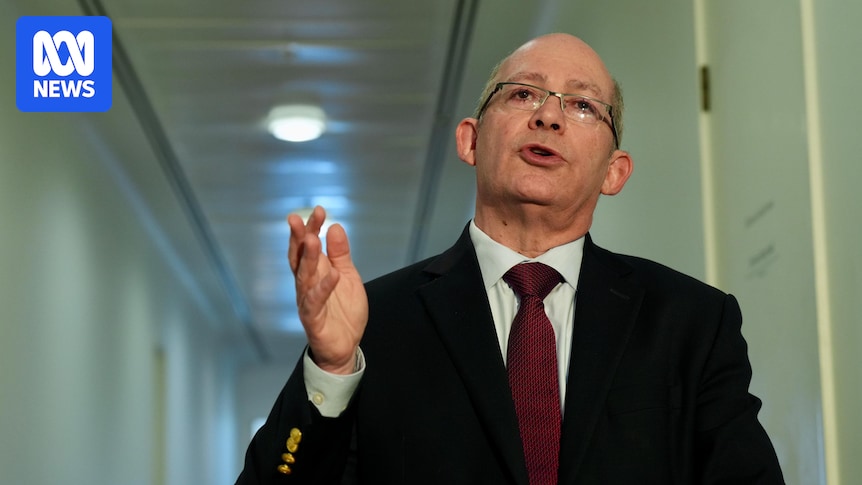
Israel’s ambassador to Australia concedes his country did not expect Iran to close the Strait of Hormuz when it decided to go to war.
Hillel Newman said Israel planned for all scenarios but did not assume Iran would choke off global energy supplies.
Iran war live updates: For the latest news on the Middle East crisis, read our blog
The closure of the strait has caused a surge in global oil prices, putting pressure on US President Donald Trump, who announced a ceasefire earlier in the week.
Speaking on the ABC’s Insiders: On Background Podcast, the ambassador admitted Israel was surprised by the scope of Iran’s response, not the fact that it responded.
“We would assume that Iran would not affect the global community and the supply chains of energy for the entire world because of their predicament,” Dr Newman said.
“That is the problem of a rogue state.”
Iran’s closure of the Strait of Hormuz has caused significant disruptions to global fuel supply chains. (ABC News: Matthew Roberts)
Dr Newman said Israel tried to take all scenarios into consideration, including worst-case scenarios such as the potential for Iran to already have nuclear warfare.
But he admitted Iran’s closure of the vital waterway was “not part of our planning”.
“You hope and pray that an entity like Iran, even a rogue entity like Iran, will not do what is worst for them and for the international community,” he said.
Israel also did not expect Iran to carry out retaliation attacks on certain Gulf countries.
“Not against their friends. They even launched rockets against their friends like Oman and Qatar — countries that don’t have any diplomatic relations with Israel,” Dr Newman said.
Enriched uranium ‘needs to be addressed’
A key objective for the United States and Israel at the start of the war was preventing Iran from developing a nuclear weapon.
Mr Trump said he agreed to a ceasefire because the US had already achieved its military objective.
But Iran is thought to still have 440 kilograms of highly enriched uranium stockpiled underground.
Dr Newman acknowledged there was enriched uranium that “needs to be addressed” but said that did not have to be through military operation.
“It’s a ceasefire in order to give a chance for peaceful talks and attain the objectives,” he said.
“If we don’t attain the objectives through peaceful talks, sadly we may have to go back to a military campaign.”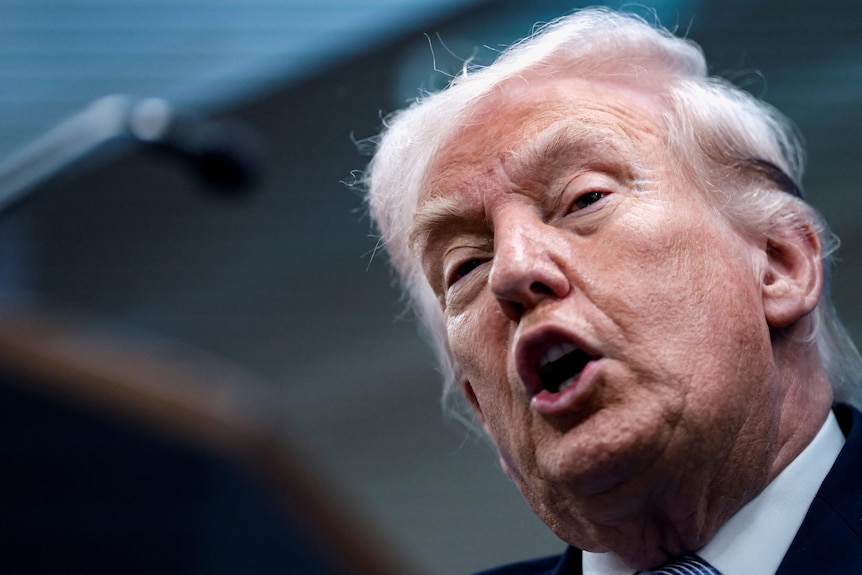
Donald Trump has agreed to suspend US attacks on Iran for two weeks. (Reuters: Evelyn Hockstein)
Ambassador says Israel seeks peace in the region
The day after the ceasefire was announced, Israel launched a wave of strikes in Lebanon against Hezbollah — that officials in Lebanon say killed more than 300 people.
Israeli Prime Minister Benjamin Netanyahu and the White House said Lebanon was not part of the ceasefire, but that was contradicted by Pakistan, which brokered the deal, and Iran.
Mr Trump said Mr Netanyahu had since agreed during a phone call to “low-key it” in Lebanon.
Dr Newman said Israel’s decision to “lower the profile” was not just a matter of being asked by the US president.
“Israel itself wants to solve these issues in direct talks,” he said.
“We have offered our hand in peace with Lebanon many times. The problem is the radicals.
“If we manage to disarm Hezbollah, we are opening an option, a real option, of peace between Israel and Lebanon.”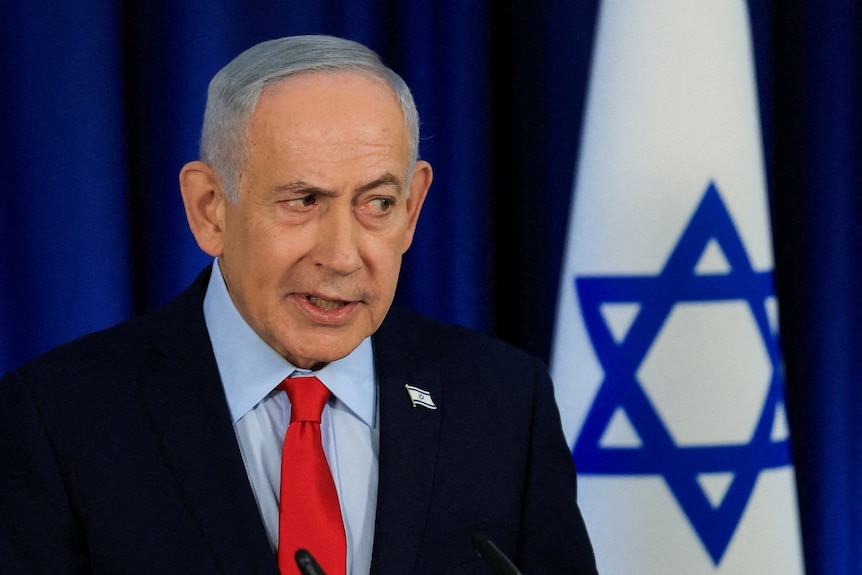
Benjamin Netanyahu has faced criticism from some Israeli politicians over the war. (Reuters: Ronen Zvulun)
Israeli politicians, on both the left and right of Mr Netanyahu, have been highly critical of how the Iran war has played out.
Dr Newman acknowledged the Israeli government had suffered when it came to public opinion, but he said sometimes condemnations had to be endured “in order to protect your people”.
“Israel will come out stronger because the moderates will be strengthened,” he said.
“Iran, which is the leader of the pack of the extremists, will be weakened. That will open options for peace in the entire Middle East.”
Loading…