
Nine days, one hour, 32 minutes and 15 seconds. A journey deeper into space than ever before, and a rapt Earth watching on. This is how four astronauts made history.
Many were astounded by the launch.
The fly-by broke records.
The photos were stunning.
So far, everything has gone to plan.
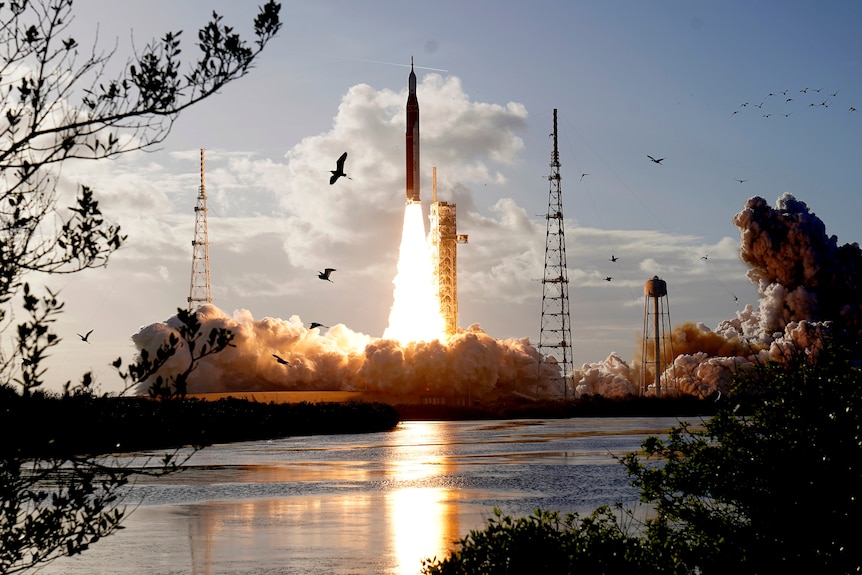 NASA’s Artemis II moon rocket lifts off from the Kennedy Space Center.(AP: Chris O’Meara)
The mission travelled 400,000 kilometres from Earth, deeper into space than anyone had flown before.
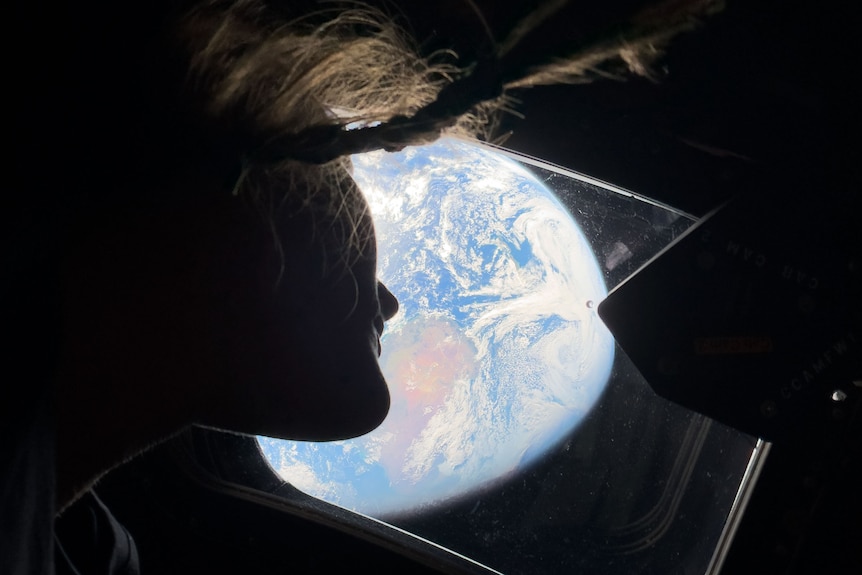 Christina Koch peers out of one of main cabin windows, looking back at Earth.(NASA via AP)
The Artemis II flight travelled a total of 1,117,515km across two Earth orbits and a climactic lunar fly-by. It was the debut crewed test flight in a series of Artemis missions aiming to return astronauts to the lunar surface.
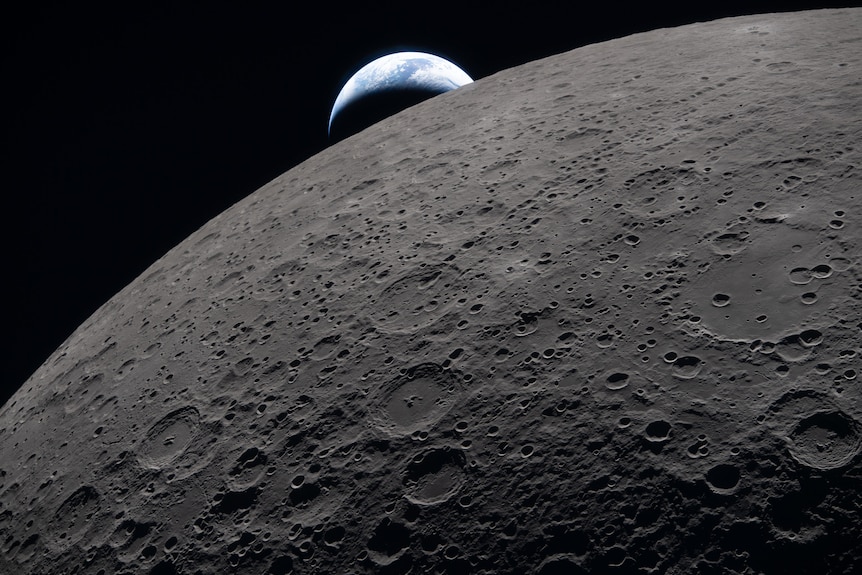 A setting Earth, three minutes before the Orion spacecraft went behind the Moon and lost contact with Earth for 40 minutes.(NASA)
The crew saw scenes no human had witnessed as they swept around the dark side of the Moon, observing a total solar eclipse from deep space.
“It is blowing my mind what you can see with the naked eye from the Moon right now,” astronaut Jeremy Hansen radioed back to Earth.
“It is just unbelievable.”
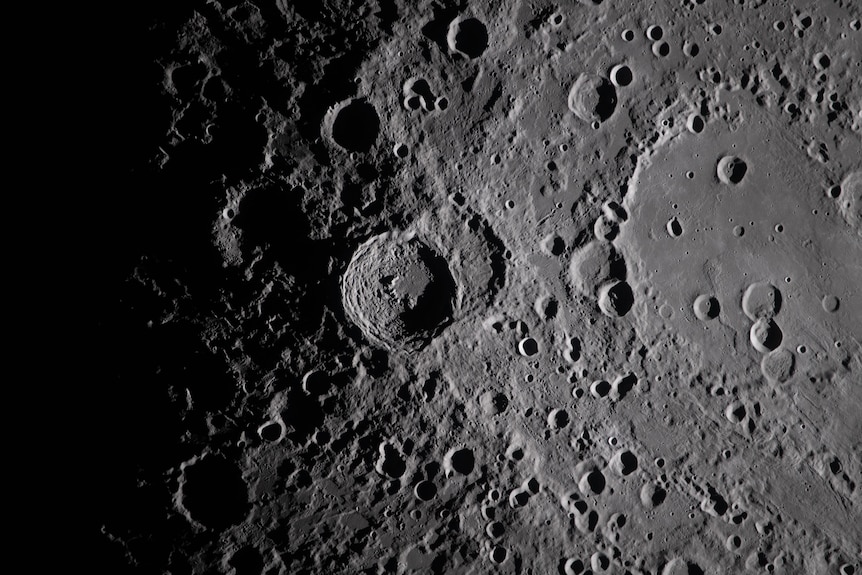 A close-up view taken by the Artemis II crew of Vavilov Crater.(NASA)
As they reached the milestone of travelling further into space than anyone had done before, they suggested names for two lunar craters — one for their spacecraft, Integrity, and one for mission commander Reid Wiseman’s late wife, Carroll.
“It’s a bright spot on the Moon. And we would like to call it Carroll,” Hansen said.
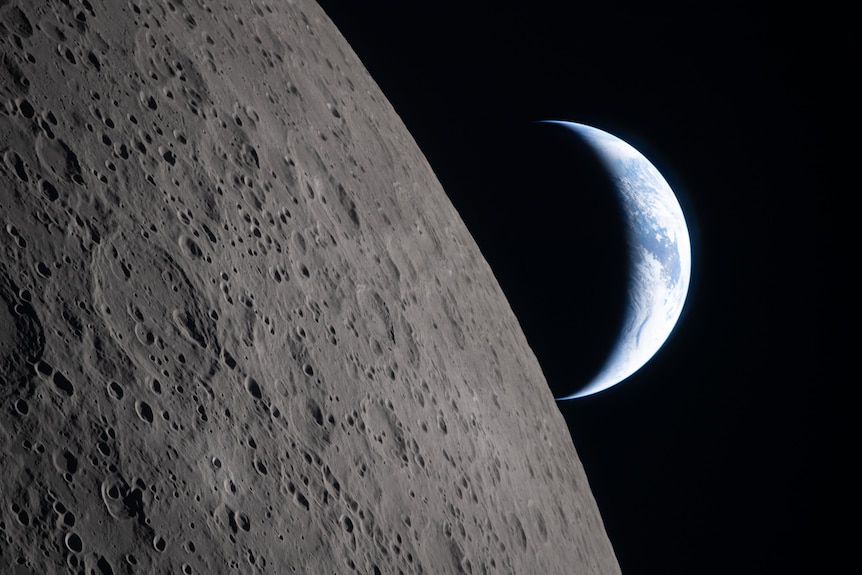 Artemis II sent back never before seen images of the moon as they passed by.(Supplied: NASA)Inside the descent
In many respects, the hardest part of the Artemis II mission was the final few hours.
Because while things can always go wrong in space, the journey home is incredibly perilous.
Loading…
The first critical event was the crew module separating from the service module.
This was about 20 minutes before the Orion reached the upper atmosphere.
A few minutes later, it was time for the crew module’s raise burn.
This was to adjust Orion’s final trajectory, fine-tuning its flight path towards Earth.
Then came a series of roll manoeuvres to safely distance the module from departing hardware.
Next came the entry interface stage — where the module made its first contact with Earth’s upper atmosphere.
At this point, everything was going to plan.
And that meant going into a six-minute communications blackout as plasma formed around the capsule and blocked its radio frequencies.
It was tense.
People around the world collectively held their breath until NASA regained contact with the crew.
Six minutes later, communications were back online.
We heard NASA confirm the trajectory was “perfect”.
Moments later, Wiseman made radio contact.
Heat shield holds up
Prior to the landing, some were worried about how the spacecraft’s heat shield would hold up.
The shield was designed to protect the bottom of the spacecraft from the intense heat — about 3,000 degrees Celsius — that it would be exposed to when re-entering Earth’s atmosphere.
It’s made up of 186 blocks of a material called Avcoat, and is designed to burn in a controlled way to stop the area underneath from getting too hot.
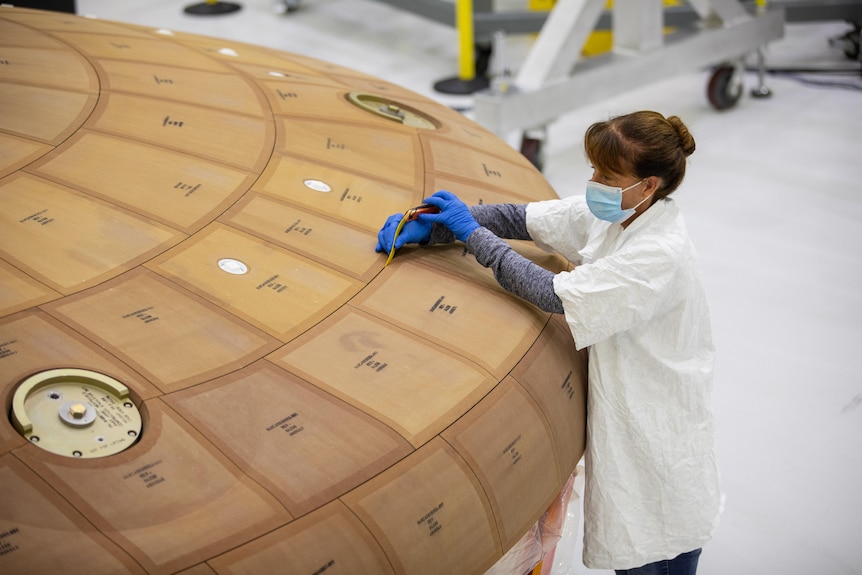 Darlene Beville inspects the avcoat block bonding on the Artemis II heat shield on July 2, 2020.(NASA: Isaac Watson)
Avcoat has been used in heat shields before. In the Apollo missions, the material was applied in one large piece. But for Artemis missions, it was applied in dozens of blocks.
In 2022, engineers found more than a hundred cracks and craters on the Artemis I mission’s heat shield.
Here’s how it looked after making the journey back down to Earth — but keep in mind that it was designed to burn up.
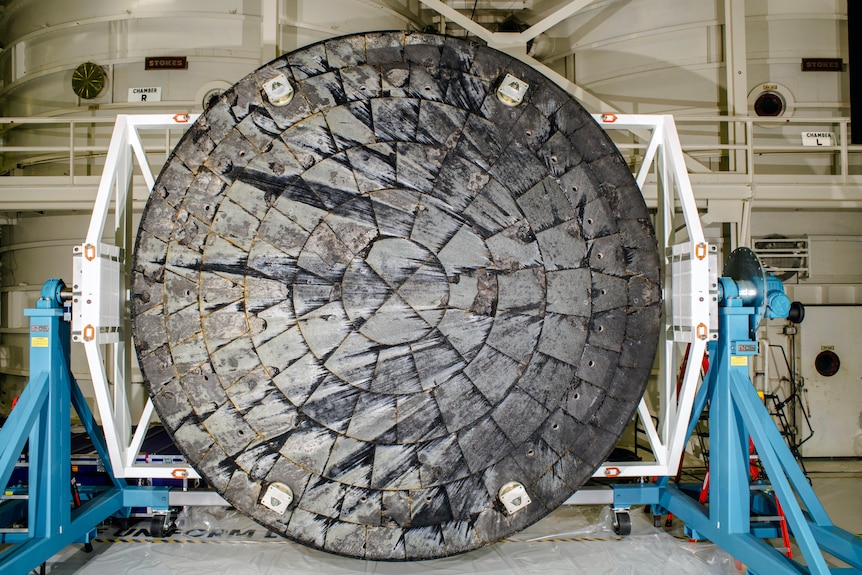 How the Artemis I test flight’s heat shield looked after returning to Earth. (Supplied: NASA)
It doesn’t look good, but it wasn’t catastrophic. The test flight had no crew aboard, but NASA said that if people were inside the capsule, they would have been safe.
That didn’t allay the fears of some in the space community, who sounded the alarm before the launch.
But after an investigation, NASA insisted the heat shield was safe.
“Extensive data from the investigation has given engineers confidence the heat shield for Artemis II can be used to safely fly the mission’s crew around the Moon and back,” a NASA update said in 2024.
All four astronauts agreed.
Loading…
And it clearly did its job today.
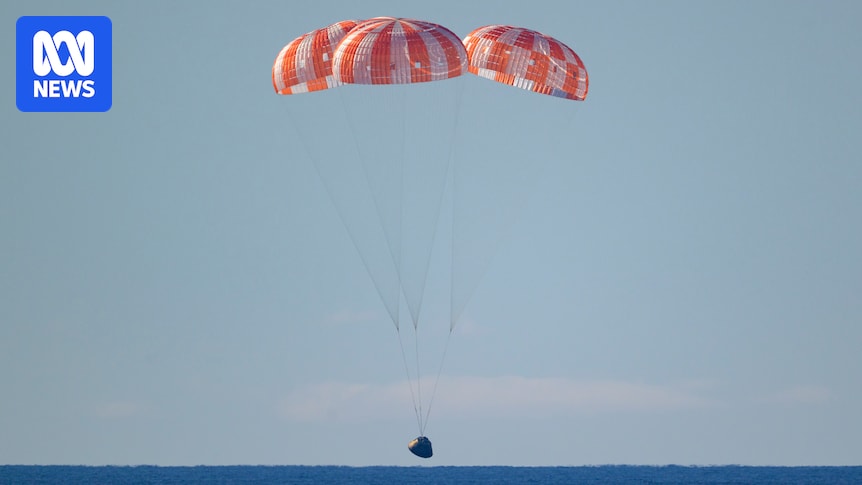
After nine days and a tense few hours, the Artemis II capsule and its four-member crew landed safely in the Pacific Ocean in a splashdown described as “a perfect bullseye” by NASA commentator Rob Navias moments after.
And splashdown
NASA’s Orion capsule, dubbed Integrity, parachuted gently into calm seas off the Southern California coast shortly after 5:07pm Pacific Time (10:07 AEST).
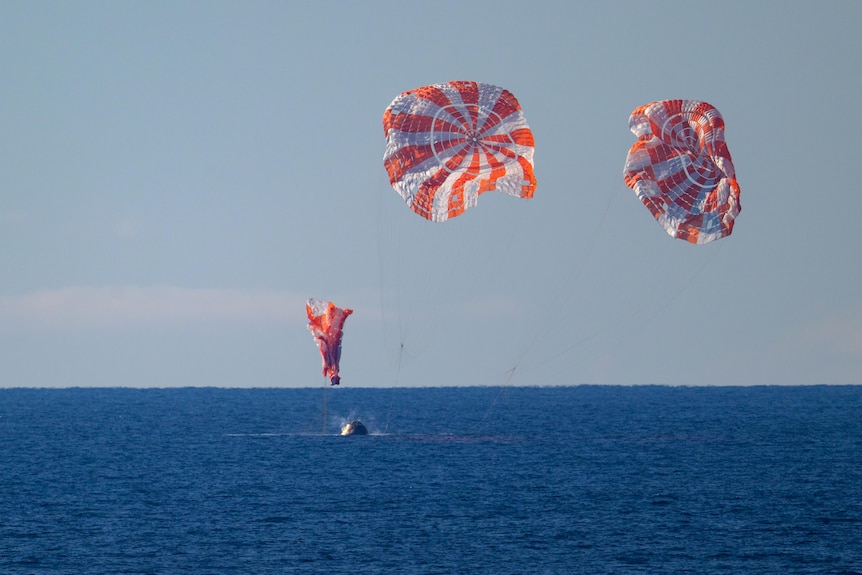 NASA’s Orion spacecraft splashes down in the Pacific.(NASA: Bill Ingalls)
Inside were the four astronauts whose journey marked the first human voyage to the vicinity of the Moon in more half a century.
NASA reported that a navy medical officer who briefly checked the astronauts aboard the capsule found them all to be healthy.
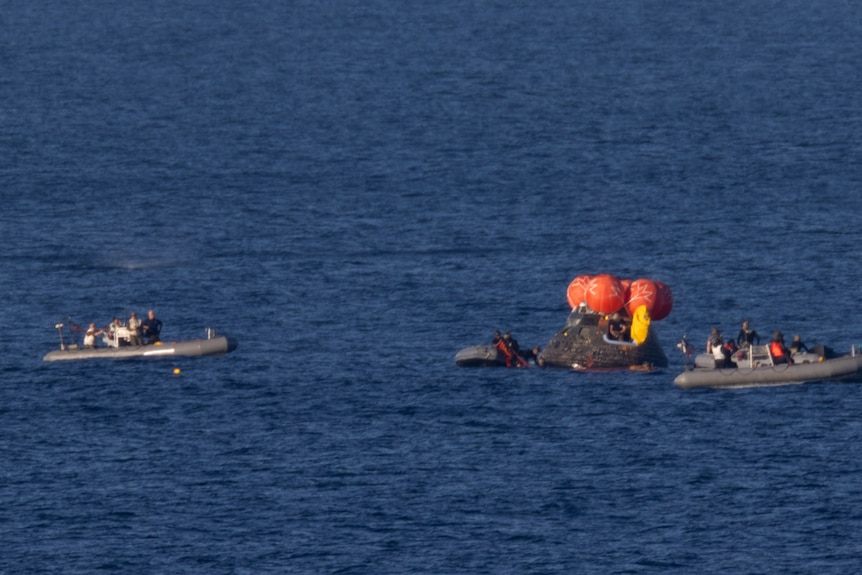 Recovery teams approach NASA’s Orion spacecraft after landing.(NASA: Joel Kowsky)
“We are stable one — four green crew members,” the mission commander radioed just after splashdown, signalling the capsule was steady and that all four astronauts were in good shape.
Spirits were high as the Artemis II crew bobbed up and down in the ocean.
“They were already out of their seats, having a good time, waiting for us to open the hatch,” Artemis II landing and recovery director Liliana Villarreal said.
It took NASA and US Navy recovery teams less than two hours to secure the floating capsule and retrieve the four crew members — US astronauts Wiseman, 50, Victor Glover, 49, and Christina Koch, 47, along with Canadian astronaut Hansen, 50.
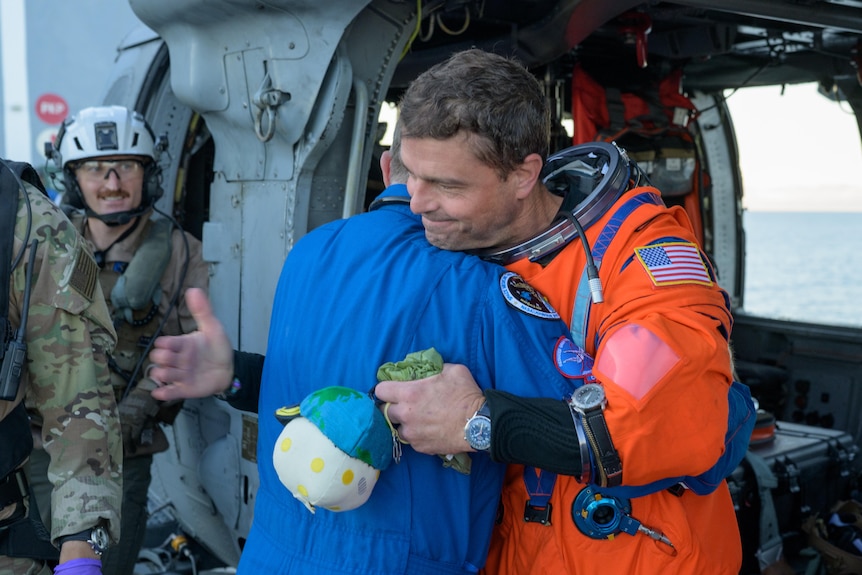 Astronaut Reid Wiseman hugs NASA Flight Surgeon Richard Scheuring after landing back to Earth.(NASA: Bill Ingalls)
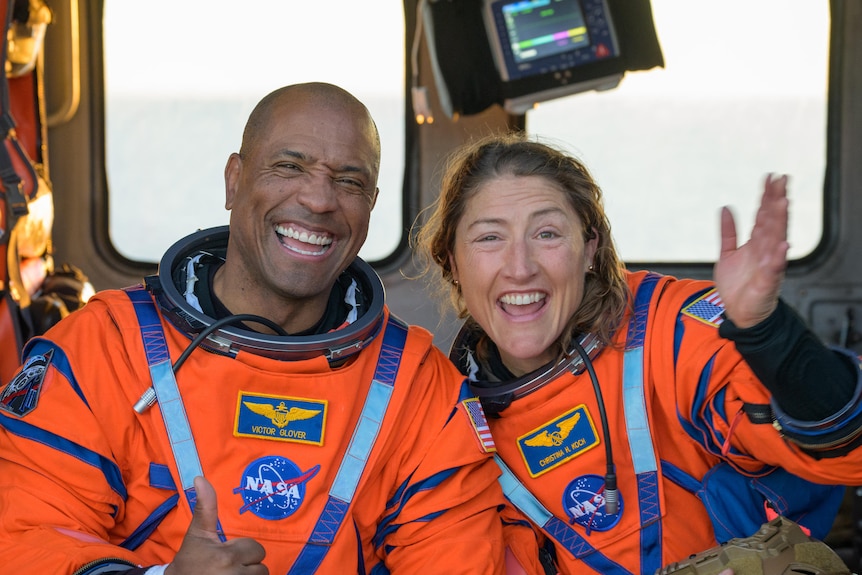 Artemis II pilot Victor Glover and mission specialist Christina Koch after they were extracted from their Orion spacecraft.(NASA: Bill Ingalls)
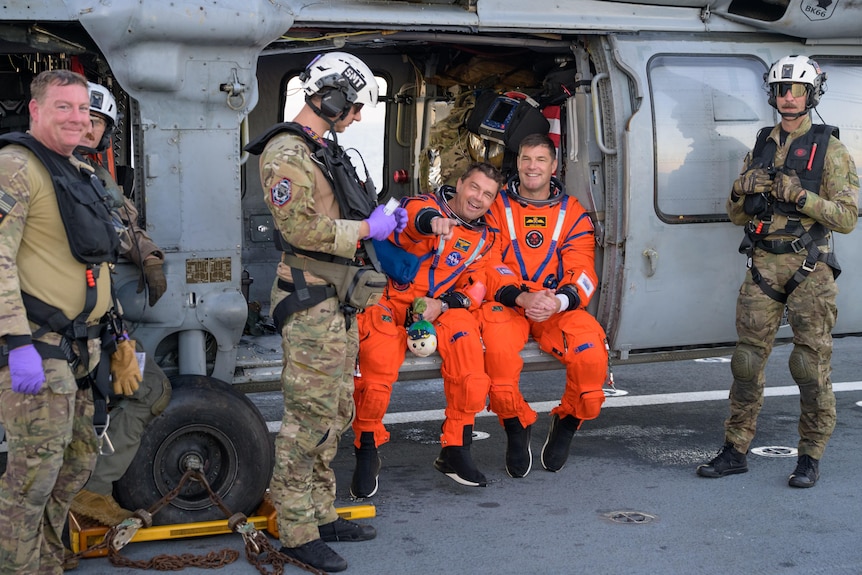 Artemis II commander Reid Wiseman and mission specialist Jeremy Hansen.(NASA: Bill Ingalls)
After coming out of the hatch, the crew spent a few minutes on an inflatable life raft before being winched into helicopters and flown to the nearby USS John P Murtha.
“You could just see that they were so ecstatic to be home,” Ms Villarreal said.
The astronauts appeared to be steady on their feet, walking from the helicopters on the ship’s flight deck to the medical bay for health assessments.
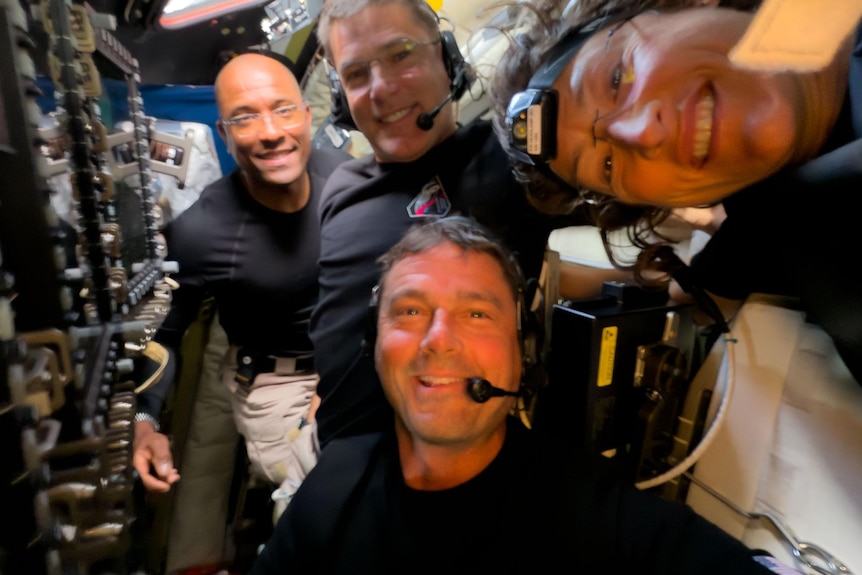 Midway through their lunar observation period, Reid Wiseman, Victor Glover, Christina Koch, and Jeremy Hansen pause for a selfie.(Supplied: NASA)
While they travelled further into space than any human before, the rest of us on Earth watched on — their discoveries and selfies the perfect distraction in a relentlessly depressing news cycle.
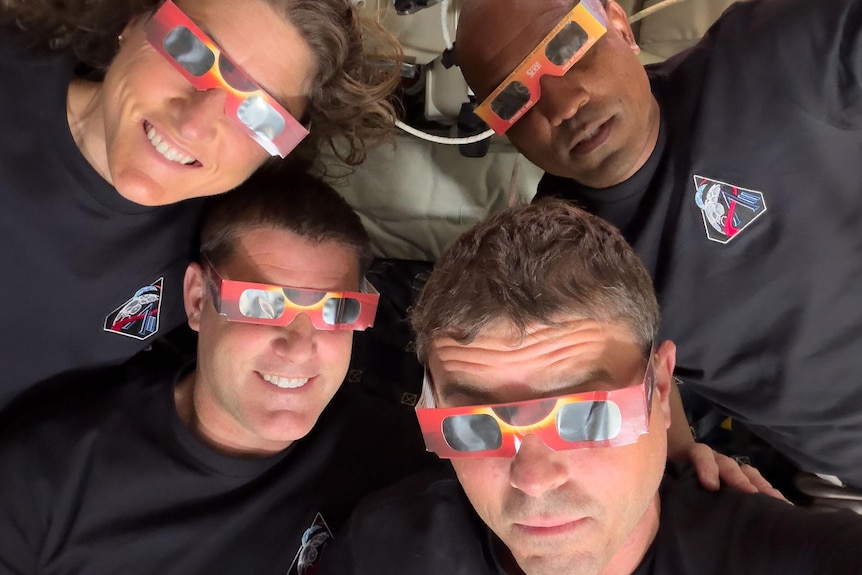 The Artemis II crew uses eclipse viewers during their lunar flyby — another first. (Supplied: NASA)
This tight-knit team won a legion of fans as they relayed their voyage back to Earth.
Nine days, one hour, 32 minutes and 15 seconds in space. Mission complete.
But this is just the start. Artemis II was the first crewed test flight in a series of missions that aim to return astronauts to the Moon’s surface, starting in 2028.
The Artemis program is redirecting NASA’s human spaceflight programs beyond low-Earth orbit after decades focused on space shuttles and the International Space Station.
The ultimate goal is to establish a presence on the Moon as a stepping stone to eventual human exploration of Mars.
with Wires