
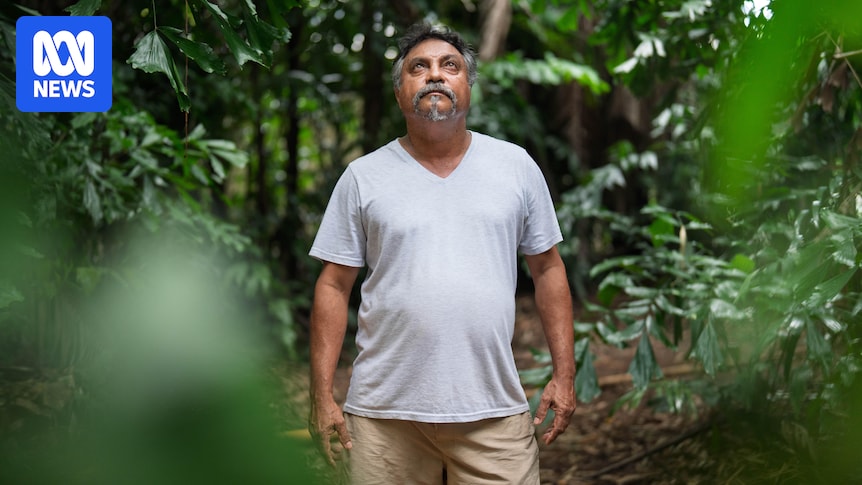
On a dry season day in 2019, Fred Hunter lay on the ground in the heart of Kakadu National Park covered in blood and fuel, when he felt something biting his leg.
The ranger had been up in a helicopter conducting feral animal control near Gunlom Falls when the motor cut out, sending Mr Hunter, the pilot and another ranger Ian Conroy plummeting to the ground.
“We were chasing horses and the helicopter went from full revs to idle, and in a matter of seconds we went straight down into the ground,” he said.
“One of the rotors was snapped in half — it actually went through the motor and sliced straight through the cabin, sliced one of our rifles in half while we hit the ground.”
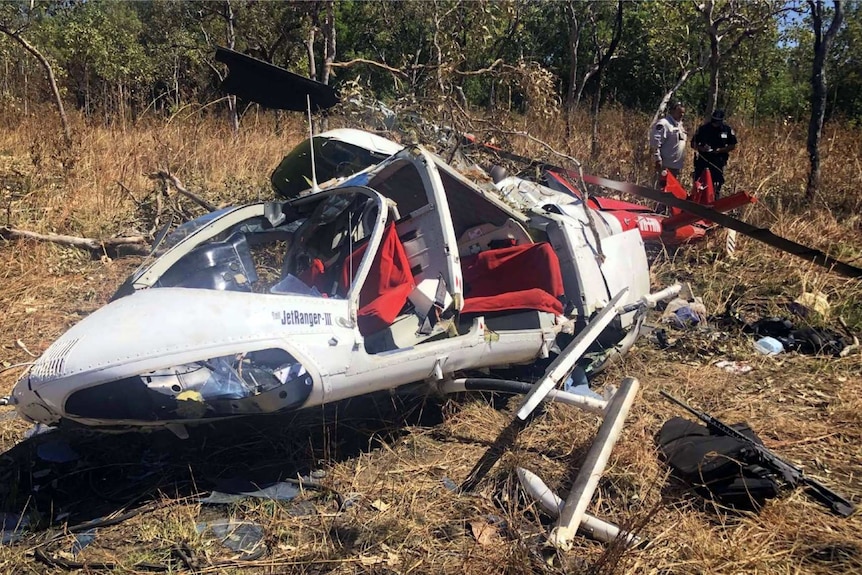
The helicopter that Fred Hunter was conducting feral animal controls from crashed on May 21, 2019. (Supplied: NT Police)
Just over an hour after receiving the call for help, CareFlight arrived and winched medics down to the scene to assess and treat the men.
That was when Mr Hunter’s leg began to sting.
“I said ‘get those scissors and cut my trousers off, I can feel something biting me’,” he said.
“And when he did that [we saw] meat ants were inside my leg.
“The skin was all peeled back all the way up to my groin, my whole calf muscle was exposed.”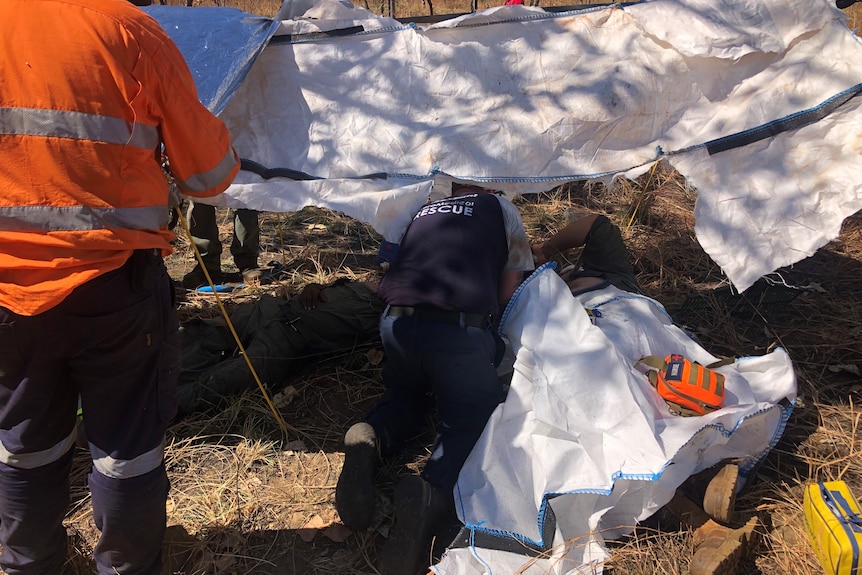
CareFlight staff tended to the injuries of the chopper crash victims. (Supplied: CareFlight)
Mr Hunter and the other men were flown to Darwin and, although badly injured, all three survived the crash.
Mr Hunter was among many CareFlight patients who praised the service this week as the organisation celebrated its 20th anniversary in the Northern Territory.
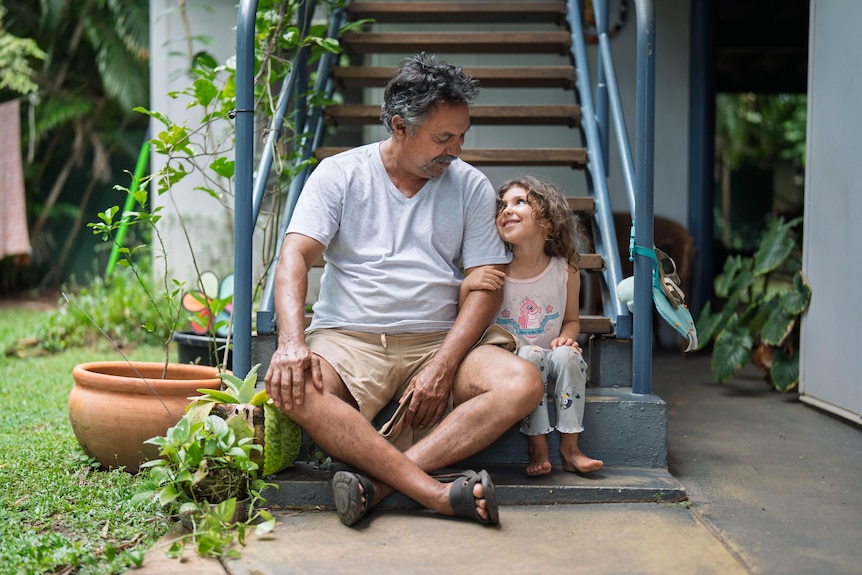
Fred Hunter reflects on the 2019 helicopter crash, as he sits with his young daughter who was born after the incident. (ABC News: Marcus Kennedy)
CareFlight general manager and former flight nurse Jodie Mills Mitchell said the service had flown more than 100,000 missions in the Northern Territory, and this week’s celebration had been a chance to reflect on their patients, including Mr Hunter.
“The anniversary really filled my cup,” Ms Mills Mitchell said.
“That CareFlight has become a verb in the NT — people say they have been CareFlighted — tells me we’re a really big part of the community.”From chopper crash to chopper rescue
Ms Mills Mitchell said medical staff in remote communities often tell her they breathe a sigh of relief when they hear CareFlight overhead — but that was more complicated when the patients they were retrieving had just been in a chopper crash.
“It would be nerve-wracking to be winched up anyway — that in itself would be quite confronting, let alone all the other unknowns,” she said.
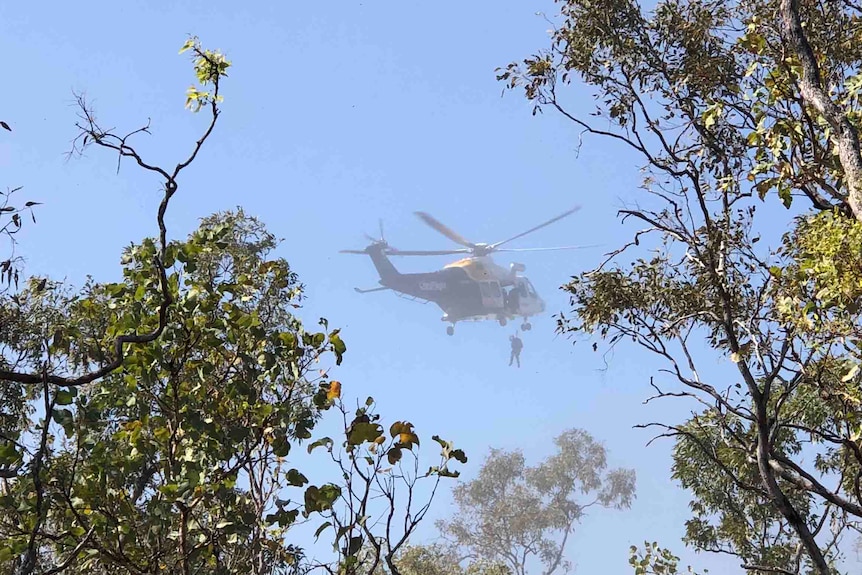
CareFlight winched the rangers injured in the 2019 crash to safety. (Supplied: CareFlight)
Mr Hunter, who was a Kakadu ranger for 38 years, was in the front passenger seat of the helicopter before it crashed, acting as the spotter during a routine cull of feral horses in the national park.
When they crashed, Mr Hunter was knocked unconscious, and when he came to, he was covered in blood, the pilot’s head was in his lap and the motor was on top of them.
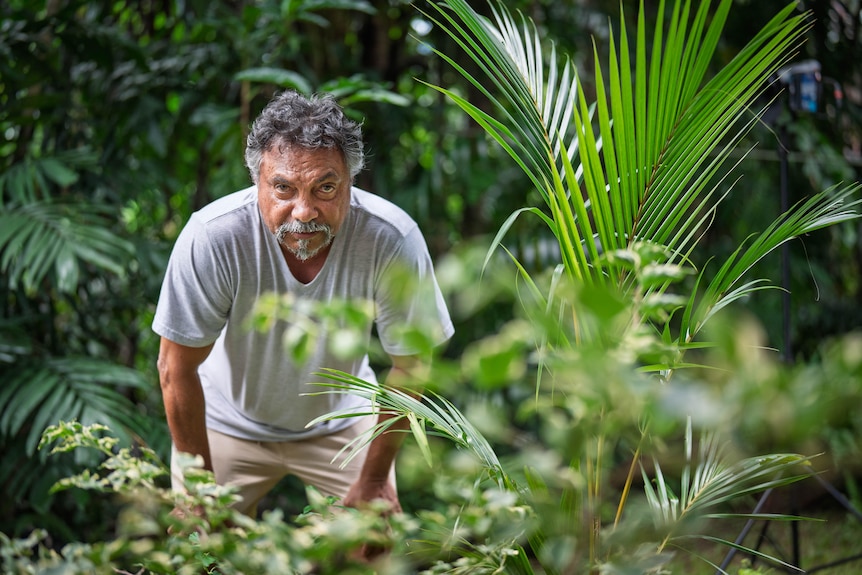
Fred Hunter said when he gained consciousness after the crash, he then managed to pull the pilot from the wreckage. (ABC News: Marcus Kennedy)
He said he was able to pull himself out of the wreckage, set off an EPIRB and call a mayday through to park headquarters.
The other ranger, Mr Conroy, was trapped in the wreckage and unable to be moved by Mr Hunter alone. But Mr Hunter said he managed to pull the injured pilot from the chopper.
“Then I laid down on the ground and my legs, my back seized up and I couldn’t move,” he said.
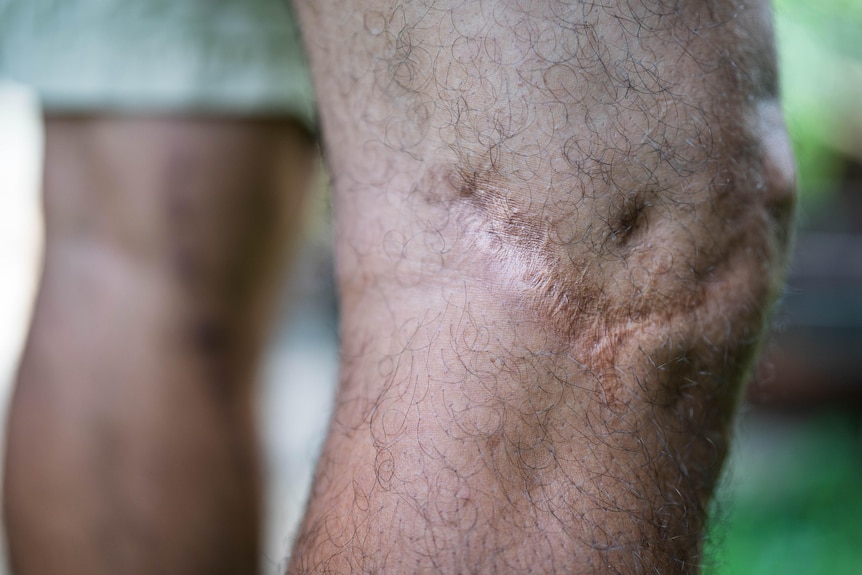
Fred Hunter has a scar on his knee from the injury he received during the 2019 chopper crash. (ABC News: Marcus Kennedy)
Mr Hunter said although he had spent a lot of time in helicopters as part of his job, that had become much harder in the immediate aftermath of the crash.
“I’d just come down in one and next thing I was going back up in one,” he said.
“When I was being winched up, it was a surreal feeling looking up and watching the chopper and the blades, and there was a moment where I was really, really scared.”
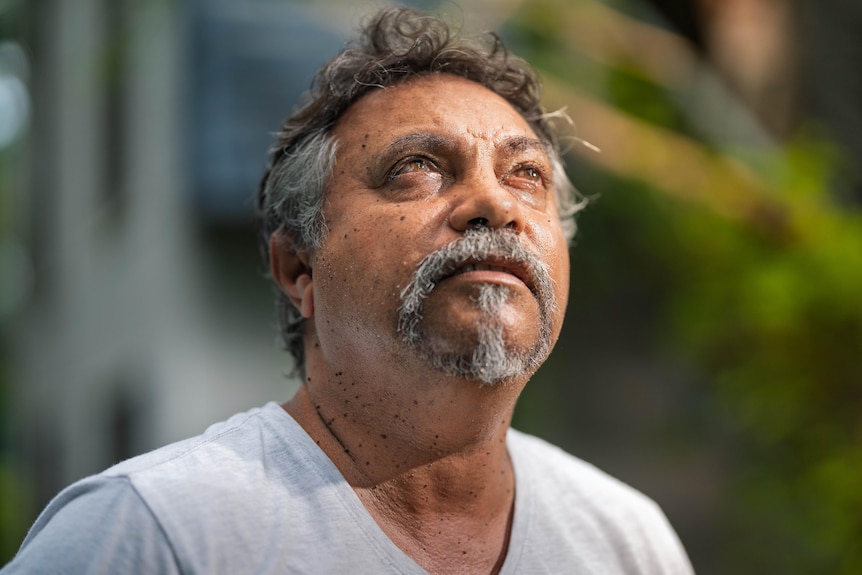
Fred Hunter said it was a surreal experience to go from being in a helicopter crash to being rescued by a helicopter. (ABC News: Marcus Kennedy)
On the aeromedical service’s 20-year anniversary, Mr Hunter said CareFlight was a critical service in remote communities across the Northern Territory.
“Arnhem Land is very remote and it’s important there is a service to pick people up,” he said.
“In my case, their response was amazing.”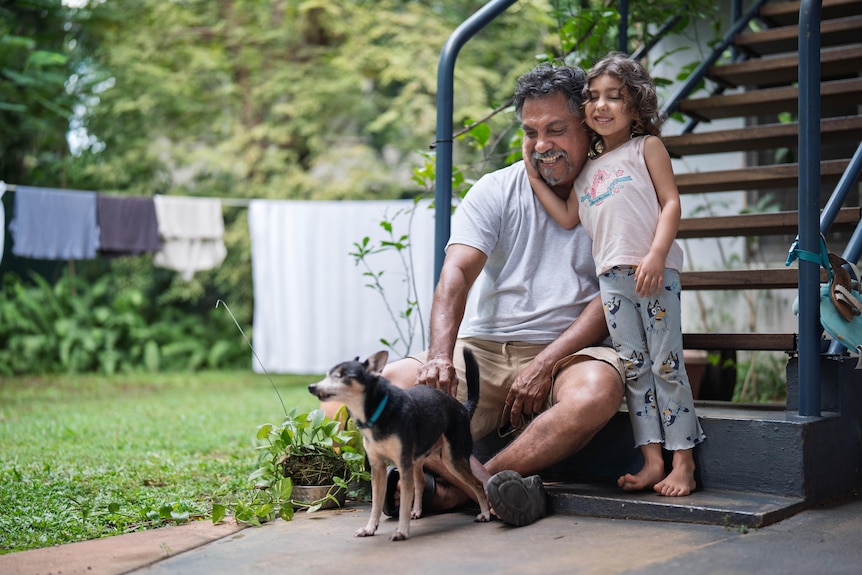
Fred Hunter says he’s grateful for the help he received from CareFlight on the day of the helicopter crash. (ABC News: Marcus Kennedy)