
For weeks, Israel has been intensifying its deadly strikes across Lebanon, and the United States has had little to say about it.
While the US has actively defended Israel’s bombardment of Gaza, and it led the joint attacks in Iran, Lebanon has not appeared to be an American priority as of late.
But the US now finds itself with little choice but to pay attention.
Iran war live updates: For the latest news on the Middle East crisis, read our blog
On Wednesday, Israel launched 100 strikes across Lebanon in just 10 minutes, one of the largest mass killings in the country since the end of the civil war in 1990.
The bombing operation — eerily labelled Operation Eternal Darkness — targeted heavily populated residential areas, including in central Beirut, putting innocent civilians under attack without warning.
At least 357 people were killed and 1,223 injured, according to Lebanese authorities, with many more believed missing or buried under the rubble.
Israel said it targeted Hezbollah, so we went to the site of a strike
Israel claimed the strikes were targeting terrorists, as it repeatedly said throughout its war on Gaza, where a UN Commission of Inquiry ruled it had been committing genocide.
The US has historically accepted Israel’s justification — most recently under the faithful Trump and Biden administrations.
In this case, Israel said it hit non-Hezbollah strongholds because members of the militant group had been moving around.
But these attacks also happened in the context of a critical ceasefire that Pakistan, the intermediary, said would include Lebanon.
Now, Israel’s attacks have placed an already-fragile ceasefire under strain, forcing Washington to recalibrate its relative silence on Lebanon.
Trump’s view
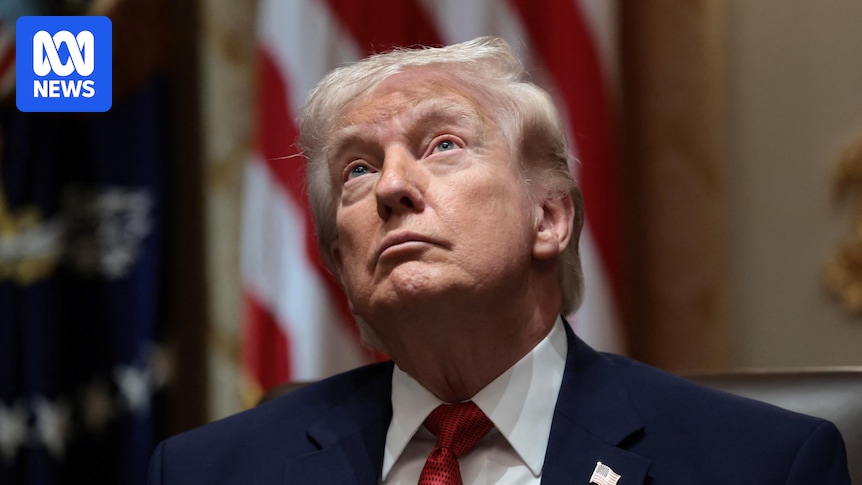
Last month, US President Donald Trump responded to questions about Israel’s strikes in Lebanon by saying it had been “explained” to him by a “very substantial … wealthy person whose parents live in Lebanon” that the attacks were simply happening “where Hezbollah is”.
He labelled Hezbollah “a big problem” but expressed no concern for civilian casualties of Israeli attacks. Instead, he remarked that people in Lebanon “get used to” the bombing, as they do in Ukraine.
“You would think they wouldn’t live in Ukraine, but they do,” he said. “I don’t know if I would do that, but they live there. They live in Lebanon.”
Loading…
While Trump had largely been refraining from talking about Lebanon, the response was indicative of US support for Israel’s intentions there.
Israel has since been explicit in saying it wants to occupy the south of the country.
In recent weeks, the Trump administration further sought to keep the issue at arm’s length by dodging questions about whether the US was providing support for Israel’s actions.
“That’s not something I’m in a position to comment on,” press secretary Karoline Leavitt said at a recent briefing. Asked if Trump was concerned that a million people had been displaced in Lebanon, she said it was something “that would concern the president”.
Loading…’Flying American planes and dropping American bombs’
US military aid and its diplomatic backing have always been vital to Israel’s campaigns in Lebanon, as they have in Gaza.
“They’re flying American planes and dropping American bombs most of the time,” US program director at the International Crisis Group, Michael Wahid Hanna, told the ABC.
The two allies are so deeply loyal and closely aligned, not even international condemnation, scarce as it may be, can stand in the way. But Washington has mechanisms to pressure allies like Israel when their actions diverge from US interests, Mr Hanna said.
“There’s no such thing as an Israel at war that is detached from America and the American arms industry,” he said.
Emergency responders work at the site of an Israeli strike in Al-Mazraa in Beirut. (Reuters: Yara Nardi)
When the US has actually used its influence, it has been to make some highly specific requests.
Earlier this year, the US ambassador to Lebanon, Michel Issa, said Washington asked Israel “as a favour” to specifically “spare the Christian villages” in southern Lebanon. Israel gave no guarantee.
That revelation came weeks before The New York Times reported that Israeli military officials were privately urging Christian and Druze communities in the south to expel Shiite Muslim residents sheltering among them.
Loading
For now, US levers look like Vice-President JD Vance suggesting Israel would “check themselves a little bit in Lebanon” or Trump asking Israel to scale back the attacks, days after dismissing them as “a separate skirmish” to the Iran war.
Overall, Mr Hanna said, the US remained aligned with Israeli policy on Lebanon, with Washington “aggressively pushing” for Hezbollah disarmament and urging the Lebanese state to take steps it may be unable to take without potentially triggering a civil war.
“It is not a huge priority at the moment for them [the US] to be using their influence to dial back aspects of the Israeli military campaign, even if they’ve tried to get some assurances about specific communities.”
Another complicating factor, Mr Hanna said, was that the “diplomatic arm of the United States is withered”.
“This isn’t an environment in which there are very many empowered US diplomats out there working to push forward US policy in the region,” he said.
“The diplomacy around this [ceasefire] was frenzied, chaotic, very messy. Prompted in part by the president’s self-imposed deadline and chilling threats about what would come next.
“And so there was a real imperative to get a deal and, on the US side at least, a lack of professional diplomats on the other end of that.”
‘Withered’ diplomacy
Israeli Prime Minister Benjamin Netanyahu has now signalled that peace talks with Lebanon will begin as soon as possible.
It appears to be an attempt to keep the US satisfied, even if briefly, and allow it to secure its own peace deal with Iran.
Netanyahu approved peace talks with Lebanon after Trump had a “tense” phone call with him on Thursday, CNN reported, citing an Israeli source.
After the call, Netanyahu had the impression that if he did not call for peace talks, Trump might simply declare a Lebanon ceasefire, CNN reported.
There are still more than a million people displaced by Israel’s operations in Lebanon.
The overall death toll since the start of March, according to the Lebanese health ministry, has risen above 1,900, and more than 6,300 have been wounded.
Even if Lebanon is brought into the ceasefire, there will still be a question mark over whether the killing stops. Historically, such truces often do not hold.
In 2024, the US was heavily involved in brokering the earlier Israel-Hezbollah ceasefire — an agreement Israel went on to violate thousands of times, according to peacekeepers in the south of Lebanon.
“Despite the ceasefire, Israel continues to strike Lebanese territory almost daily,” a UN expert group reported last October.
Mr Hanna said Israel’s recent attacks seemed to intend to “scupper broader progress”, or “at the very least demonstrate that Israel is going to continue its war on Lebanon, regardless of anybody else’s intentions”.
The peace talks between the US and Iran are set to start this weekend, with Vance in Pakistan leading the US delegation.
But Iran has said the talks will not progress unless Lebanon is covered by the ceasefire.
So Lebanon is now central to American priorities in the Middle East, including the reopening of the Strait of Hormuz.
It has given Trump a new incentive to factor Lebanon into his thinking.
Loading…