
Moneywise and Yahoo Finance LLC may earn commission or revenue through links in the content below.
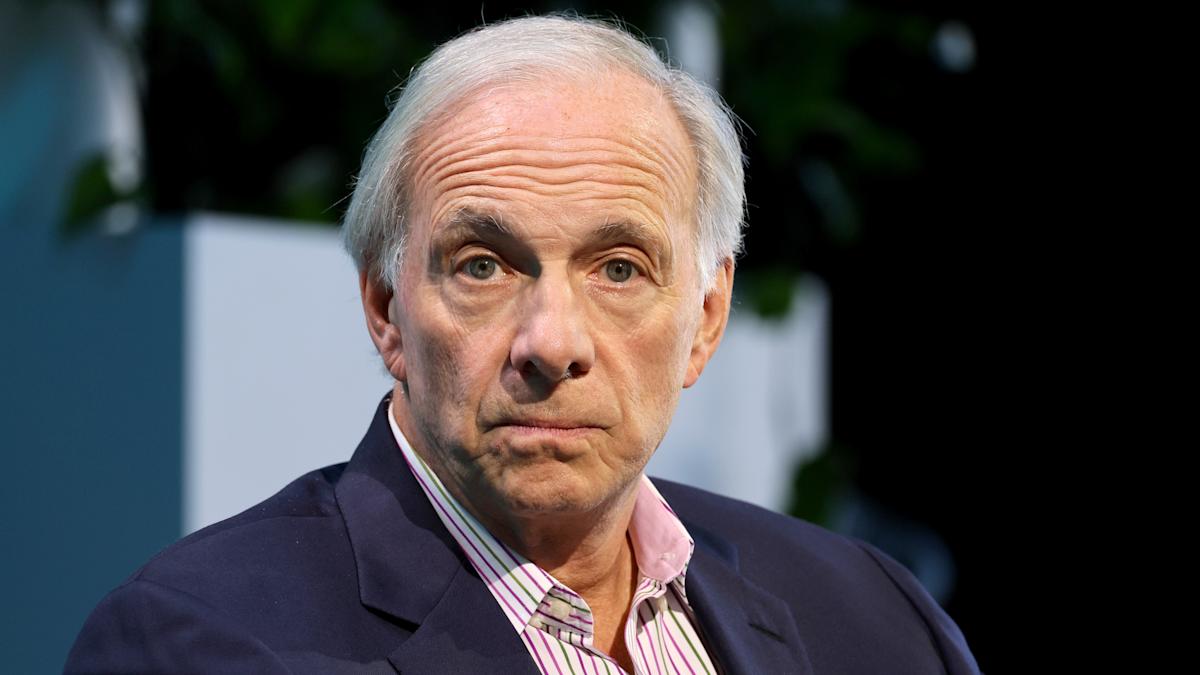
In the wake of the World Economic Forum in Davos, Switzerland, billionaire and founder of Bridgewater Associates, Ray Dalio, sounded a global fire alarm, and it’s starting to look like he was right.
The short version? The old economic world order is gone, and it’s likely not coming back any time soon.
“Let’s not be naive, ok, and say: Oh, we’re breaking the rule-based system,” Dalio said in an interview with Fortune at the WEF (1). “It’s gone. It’s going.”
Dalio was referring to the current global balance of power between nations, which has hinged on relatively predictable U.S. foreign policy.
However, since March 18, all eyes have turned to Iran.
Due to the war, the price of gas has risen about 80 cents per gallon, put down to the limited supply caused by the near-closure of the Strait of Hormuz (2). CNN reported in early April that in a speech to the press, the President threatened to bring Iran “back to the stone ages, where they belong (3)”.
This could indicate another lengthy conflict in the Middle East, but it’s only the latest in a series of echoing foreign policy maneuvers spanning the last year. For instance, in April 2025, the S&P 500 had one of the largest dips in its history, driven by U.S. “reciprocal” tariffs (4). The remainder of 2025 saw threats against Greenland’s sovereignty, regular verbal sparring over NATO targets and further shifts in the ongoing Ukrainian War.
Now, with gas at over $4 a gallon on average, many everyday Americans and Wall Street investors are worried about the economic impacts the new energy crisis has triggered.
Essentially, wars suck up time and capital while eroding trust. Purchasing debt from a nation actively engaged in a war, for example, could be a bad bet, according to Dalio.
And this isn’t the first time Dalio has warned about a shaky grasp on the current global world order. In an interview in late 2025 on Leaders with Francine Lacqua (5), Dalio was confronted with a blunt question: “Could we be close to another world war?”
He didn’t hesitate. “We are in wars,” Dalio replied. “There is a financial money war, there’s a technology war, there’s geopolitical wars, and there are more military wars.”
Then came his more unsettling assessment: The U.S. itself isn’t immune.
“We have a civil war of some sort, which is developing in the United States and elsewhere, where there are irreconcilable differences,” Dalio said.
Here’s how things break down on the home front.
Political opinion in America is sharply divided.
The American Survey Center reported as of 2025 that 71% of Republicans were at least somewhat satisfied with the current state of affairs in the country, and only 12% of Democrats said the same. In 2024, 17% of Republicans and 51% of Democrats were satisfied.
And yet, 61% of Americans across the political spectrum now report dissatisfaction with the current administration and state of the nation (6).
With this in mind, Dalio’s bleak outlook may be more realistic.
It’s a stark warning — especially from someone who also cautioned earlier in the interview that “our power to hurt each other has never been greater.”
He outlined two paths the country could take.
The first, more hopeful scenario is one in which Americans “rise above it and realize that our common good is going to necessitate us dealing with it so that what works for most people is going to work.” But as he admitted, it may be “a little bit idealistic.”
The second is far bleaker: “I think that these conflicts will become tests of power by each side.”
If his warning has you on edge and wondering how to protect your wealth in turbulent times, it may be worth considering assets that can help weather a crisis.
The commodities market has gotten a bad shake up as a result of the war. Oil prices are surging, and everyone from investors to consumers are feeling the pinch as the price of oil and gas climbs amid global shortages.
So far in March, oil prices have climbed over 50% following Tehran’s decision to choke off the Strait of Hormuz, which carries around a fifth of global oil supply, according to CNN (7).
But, amid his dire forecasts, Dalio has repeatedly emphasized the importance of diversification — and singled out one time-tested, safe-haven asset as a cornerstone of a resilient portfolio: gold.
“People don’t have, typically, an adequate amount of gold in their portfolio,” he told CNBC in 2025 (8).
“When bad times come, gold is a very effective diversifier.”
Long viewed as the ultimate safe haven, gold isn’t tied to any single country, currency or economy. It can’t be printed out of thin air like fiat money, and in times of economic turmoil or geopolitical conflicts like war, investors tend to pile in — driving up its value.
Gold was on an historic bull run in 2025, climbing over 90% year-over-year and blowing past analyst expectations to an all-time high of over $5,000 per ounce as of late January (9). Despite a pullback in February, the spot price is still up 50% year over year.
One way to invest in gold that also provides significant tax advantages is to open a gold IRA with the help of Thor Metals.
Gold IRAs allow investors to hold physical gold or gold-related assets within a retirement account, combining the tax advantages of an IRA with the protective benefits of gold, making it an attractive option for those looking to potentially hedge their retirement funds against economic uncertainties.
To learn more, you can get a free information guide to find out how gold can help protect and preserve your wealth.
Investing legend Warren Buffett has also offered clear money advice for politically volatile times.
In 2014 — the last time Russia invaded Ukraine — Buffett told CNBC that “the last thing you’d want to do is hold money during a war,” because in “virtually” every conflict he’s aware of, the value of money would go down (10). This is partly due to the effect that war tends to have on inflation as resources are redirected to the military.
So what does he recommend owning when the world is on edge?
“You might want to own a farm, you might want to own an apartment house, you might want to own securities,” Buffett said.
Indeed, real assets like apartment buildings have the potential to create returns through thick and thin. In fact, Buffett has repeatedly pointed to real estate as a prime example of a productive, income-generating asset.
In 2022, Buffett stated that if you offered him “1% of all the apartment houses in the country” for $25 billion, he would “write you a check (11).”
Real estate also offers a natural hedge against inflation — a point that aligns with Buffett’s warning about the erosion of money’s value during wartime. When inflation rises, property values often increase as well, reflecting the higher costs of materials, labor and land.
At the same time, rental income tends to go up, providing landlords with a revenue stream that adjusts with inflation.
Of course, you don’t need billions — or even to buy an entire property — to invest in real estate. Crowdfunding platforms like Arrived offer an easier way to get exposure to this income-generating asset class.
Backed by world-class investors like Jeff Bezos, Arrived allows you to invest in shares of rental homes with as little as $100, all without the hassle of mowing lawns, fixing leaky faucets or handling difficult tenants.
The process is simple: Browse a curated selection of properties pre-vetted for their potential for long-term appreciation in value and income-generating power. Once you find a property you like, it’s as simple as selecting the number of shares you’d like to purchase and then sit back as you start receiving any positive rental income distributions from your investment.
There are also ways to take advantage of real estate without locking yourself into a silo — whether industrial or vacation rental. And this accessibility doesn’t necessarily mean sacrificing scale or professional management.
Private real estate funds can give investors access to large, professionally managed property portfolios that would typically be difficult to acquire individually, while offering diversification across properties and regional markets.
Just make sure you have the capital on hand to buy in.
If diversifying into multifamily and industrial rentals appeals to you, you could consider investing with Lightstone DIRECT, a new investing platform from the Lightstone Group, one of the largest private real estate companies in the country with over 25,000 multifamily units in its portfolio.
Since they eliminate intermediaries — brokers and crowdfunding middlemen — accredited investors with a minimum investment of $100,000 can gain direct access to institutional-quality multifamily opportunities. This streamlined model can help reduce fees while enhancing transparency and control.
And with Lightstone DIRECT, you invest in single-asset multifamily deals alongside Lightstone — a true partner — as Lightstone puts at least 20% of its own capital into every offering. All of Lightstone’s investment opportunities undergo a rigorous, multi-stage review before being approved by Lightstone’s Principals, including Founder David Lichtenstein.
How it works is simple: Just sign up with your email, and you can schedule a call with a capital formation expert to assess your investment opportunities. From here, all you have to do is verify your details to begin investing.
Founded in 1986, Lightstone has a proven track record of delivering strong risk-adjusted returns across market cycles with a 27.6% historical net IRR and 2.54x historical net equity multiple on realized investments since 2004. All told, Lightstone has $12 billion in assets under management — including in industrial and commercial real estate.
As such, even if multifamily rentals don’t appeal to you, Lightstone could still serve you well as an investment vehicle for other real estate verticals.
Get started today with Lightstone DIRECT and invest alongside experienced professionals with skin in the game.
There is another asset class that’s coveted by billionaires like Ray Dalio, Mark Cuban and others for its appreciation potential, resale value and the fact that it isn’t correlated with returns on the stock exchange or tied to the U.S.’s economic output. It’s also a globally recognized asset and looks good hanging on the wall of a gallery.
In 1999, the S&P 500 peaked, and it took 14 long years to fully recover.
Today? Goldman Sachs is forecasting just 3% annual returns from 2024 to 2034. It sounds bleak but not surprising: the S&P is trading at its highest price-to-earnings ratio since the dot-com boom. Vanguard isn’t far off, projecting around 5%.
In fact, nearly everything feels priced near all-time highs — equities, gold, crypto, you name it.
That’s why billionaires have long carved out a slice of their portfolios in an asset class with low correlation to the market and strong rebound potential: post-war and contemporary art.
It may sound surprising, but more than 70,000 investors have followed suit since 2019 — through Masterworks. Now you can own fractional shares of works by Banksy, Basquiat, Picasso and more.
Masterworks has sold 27 artworks so far, yielding net annualized returns like 14.6%, 17.6% and 17.8%.
Moneywise readers can get priority access to diversify with art: Skip the waitlist here.
Not that past performance is not indicative of future returns. Investing involves risk. See important Regulation A disclosures at Masterworks.com/cd.
Join 250,000+ readers and get Moneywise’s best stories and exclusive interviews first — clear insights curated and delivered weekly. Subscribe now.
We rely only on vetted sources and credible third-party reporting. For details, see our editorial ethics and guidelines.
Fortune Magazine/ YouTube (1); American Automobile Association (2); CNN (3), (7); Reuters (4); Bloomberg Originals/ YouTube (5); American Survey Center (6); CNBC (8), APMEX (9); CNBC (10), (11)
This article provides information only and should not be construed as advice. It is provided without warranty of any kind.