
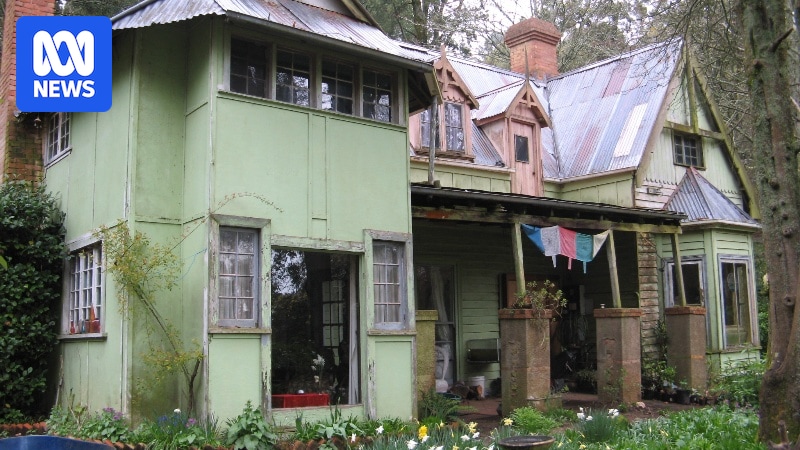
A dispute over the dilapidated former home of Australian impressionist Frederick McCubbin in regional Victoria is playing out in the Supreme Court.
The sprawling 30-room, two-storey timber and fibro residence at Mount Macedon, an hour’s drive north of Melbourne, was the only property McCubbin owned in the early 1900s.
The Supreme Court of Victoria heard claims it was in a dire state with “black mould, evidence of vermin and wheelie bins collecting rainwater”.
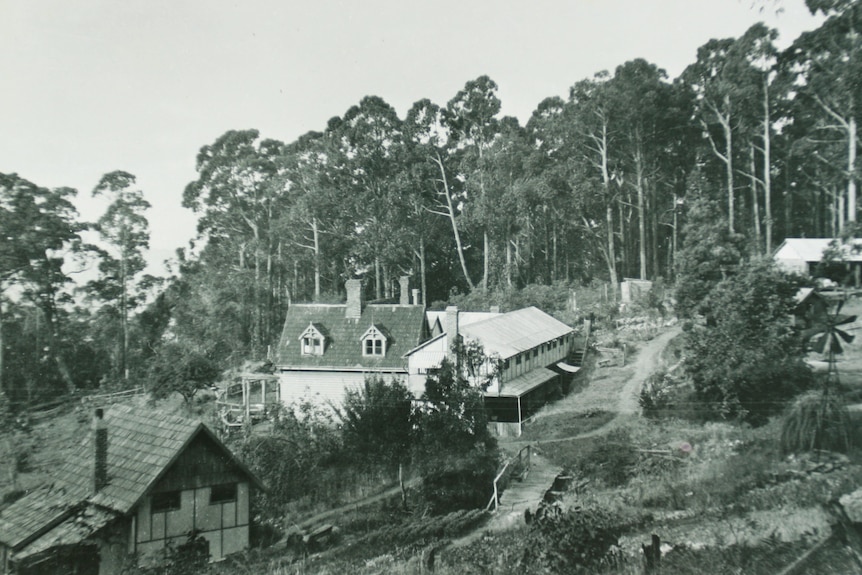
Frederick McCubbin’s former home, known as Fontainebleau at Mount Macedon, circa 1909. (Supplied: Gisborne and Mount Macedon Districts Historical Society)
It is now at the centre of a legal stoush between its owners, who have been ordered by the court to vacate the property, and the man who has been living in and caretaking for the property for 22 years.
The property known as Fontainebleau has been listed on the Victorian Heritage Register since 2010 for its historical and architectural significance to the state.
Adverse possession claim
Fontainebleau is owned by five joint proprietors, including brothers Paul and Mark Cutler.
The Supreme Court heard caretaker Trevor Hoare has lived at Fontainebleau under an agreement with Mark Cutler made in March 2004.
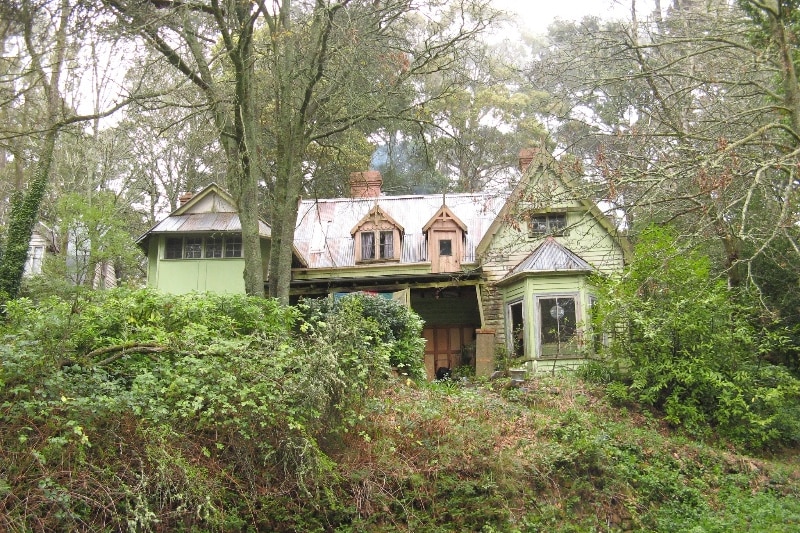
Fontainebleau, pictured in 2009, was the only home Frederick McCubbin owned. (Supplied: Victorian Heritage Register)
Mr Hoare applied for adverse possession of the property, first in November 2025 before it was withdrawn and then again in February this year.
Adverse possession allows a person to claim ownership of land after at least 15 years of uninterrupted, exclusive and unauthorised possession.
Mr Hoare’s lawyer, Kieran Hickey, told the court his client, an elderly pensioner, had contributed his time, labour and money in the upkeep of the property.
“[Mr Hoare] regards it as his home. He has adult children who attend regularly, he has not lived anywhere else except for family and health reasons including last winter,” the lawyer said.
“He doesn’t own any other property.”
Locked out
The court heard that the property’s locks were changed in March at Paul Cutler’s direction, a few weeks after Mr Hoare first put locks on.
Mr Cutler’s lawyer, Timothy Sowden, said his client had messaged Mr Hoare in February after he “got wind” of the adverse possession claim and withdrew permission for the caretaker to be at Fontainebleau.
“It was a tit for tat arrangement,” the lawyer said.
“Neither party covered themselves in glory.”
Associate Justice Ian Irving ordered Mr Cutler provide Mr Hoare possession of the property and hand over all keys, by 4pm on April 8.
Maintaining heritage
The ABC understands Heritage Victoria required the owners to engage a heritage consultant for a condition inspection and schedule of works by February this year, but an extension was granted due to the legal proceedings.
Mr Sowden said the property needed to be made “safe to walk through”, with a biohazard clean estimated to cost $60,000.
Under the court order Mr Hoare is required to allow access for Heritage Victoria to inspect the property and undertake any urgent repairs.
“[Mr Hoare] does not stand in the way of this property being addressed by Heritage Victoria. In fact, it was him who lodged an application for a heritage claim,” Mr Hoare’s lawyer said.
The case is scheduled to return to court in August, while the application for adverse possession is under assessment by Land Use Victoria.
More news from regional VictoriaPreservation of artists’ homes
Anna Gray is the former head of Australian art at the National Gallery of Australia in Canberra.
She said McCubbin and his family moved to the country in 1901 for the fresh air to help his wife Annie’s pneumonia.
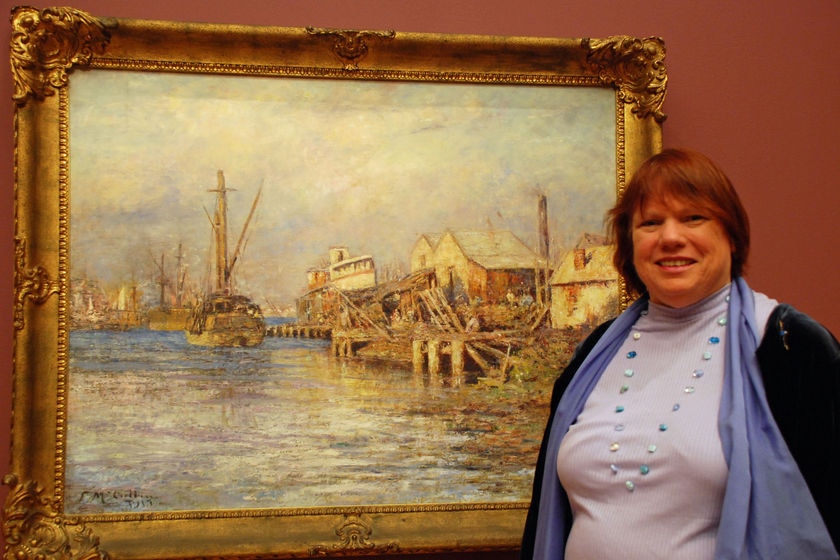
Anna Gray beside Frederick McCubbin’s painting, The Old Slip, Williamstown. (ABC News: Penny McLintock)
McCubbin stayed at Fontainebleau on weekends and holidays but kept up his teaching role in Melbourne at the National Gallery of Victoria School.
“[It’s] where he painted some of his best-known paintings such as The Pioneer and many, many others, all based on that area that he was very fond of,” Dr Gray said.
Dr Gray said she visited the property around 2010 and “loved being there”.
“Australia is very bad at having places where important people lived,” she said.
“It’s very important we can go and visit places where artists have lived and worked and we can understand how they made their art.”
McCubbin’s family continued living at Fontainebleau after his death in 1917, aged 62.
Historical records show it was used as a guest house in the mid-1900s before it became a private residence.
The property’s Victorian Heritage report says it was a “rare example of a typical guest house of the 1920s, the heyday of the guest house in Victoria”.