
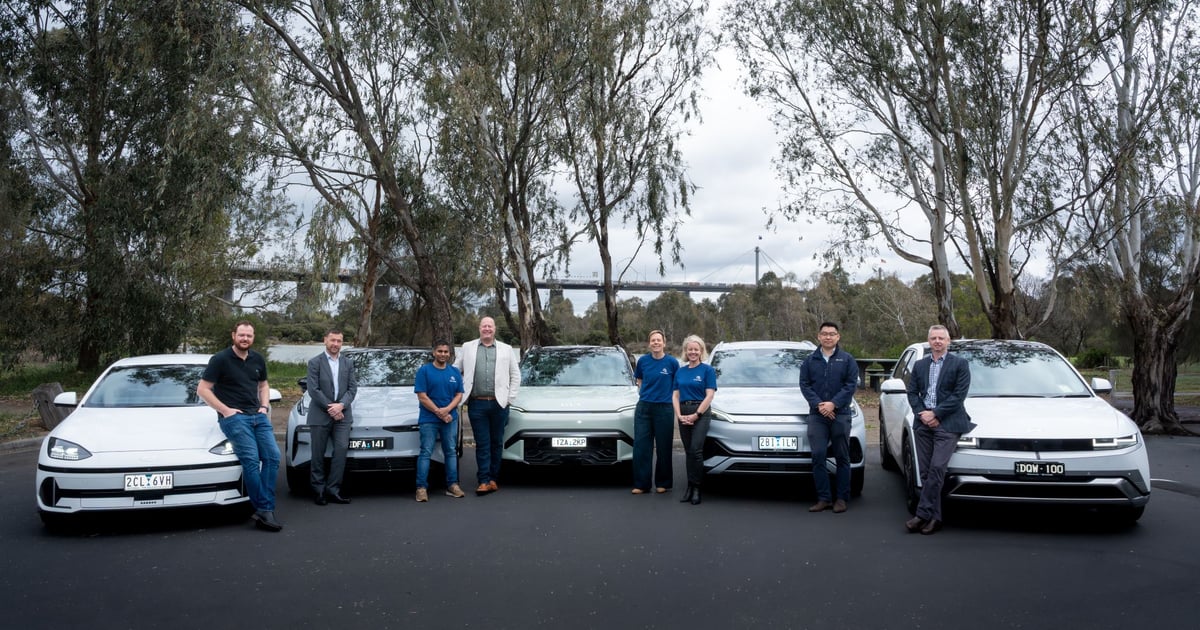
A new report claims that Australia’s electric and hybrid vehicles are already reducing Australia’s exposure to oil price volatility.
The new report, released by the community-funded not-for-profit Climate Council, urges the federal government to accelerate the deployment of renewable energy and storage in the upcoming May budget.
Climate Council’s analysis states that petrol prices have surged nearly 50% since late February, reaching 253.4 cents per litre, while diesel has climbed above AU$3 per litre.
“This is the second major global fuel shock in just four years,” the report states, highlighting how Australia’s dependence on importing more than 90% of its refined fuels creates immediate vulnerability when international supply chains are disrupted.
Indeed, price spikes are flowing through the entire economy, with analysis suggesting prolonged conflict could increase Australian road freight costs by 20-30%, pushing up prices for food and essential goods. Modelling by Griffith University estimates the conflict could add an extra 5% to existing inflation.
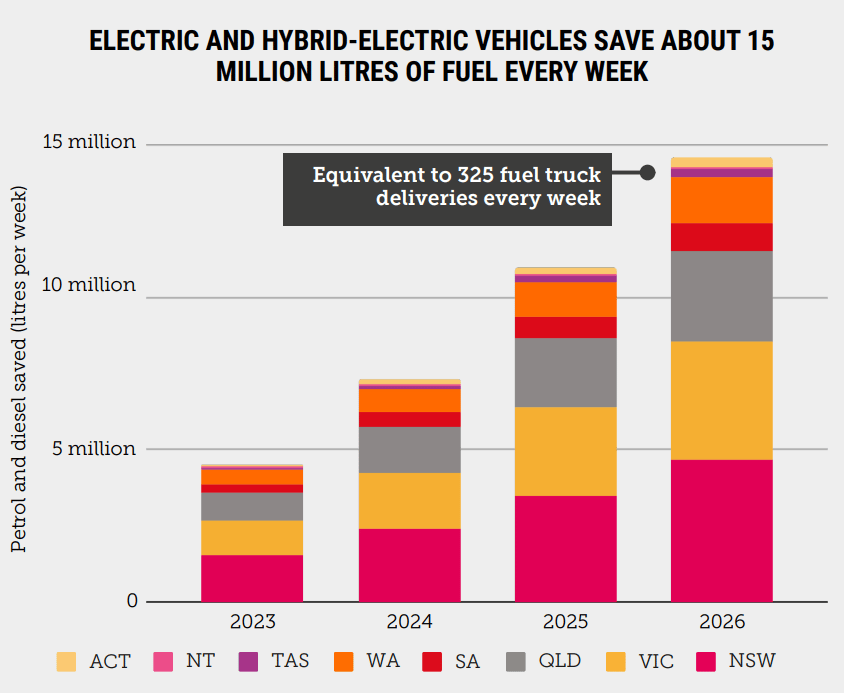
With an estimated 1.3 million fully electric or hybrid EVs now on Australian roads, the country is avoiding almost 15 million litres of petrol and diesel consumption every week, the equivalent of 325 fuel truck deliveries.
This saving has tripled in just three years, demonstrating the accelerating pace of transport electrification.
During March’s fuel price spike, EV and hybrid owners avoided approximately AU$50 million in additional fuel costs, on top of the AU$140 million they typically save during four weeks compared to conventional vehicle owners.
The report notes that EV owners spend 40% less on annual vehicle running costs, saving about AU$1,400 through reduced fuel and maintenance expenses. Interest in EVs has surged amid rising oil prices, with NAB reporting a 100% increase in EV loan applications in March.
These cost reductions associated with owning an EV have led to a boom in terms of adoption rates. As reported by EV Infrastructure News, EV sales in Australia surged in March 2026, with battery-electric vehicles capturing 14.6% of the market.
Significantly, the highest adoption rates for the federal EV tax discount are occurring in outer suburban areas, including Werribee, Hoppers Crossing, and Craigieburn in Victoria; Marsden Park, Kellyville, Baulkham Hills, and Queanbeyan in New South Wales; and Springfield in Queensland.
The Climate Council is calling for the EV fringe benefits tax exemption to continue, while also proposing that similar tax treatment be extended to shared and active transport options, such as public transport fares and e-bike leasing.
To read the full article, please visit Energy-Storage.news.