
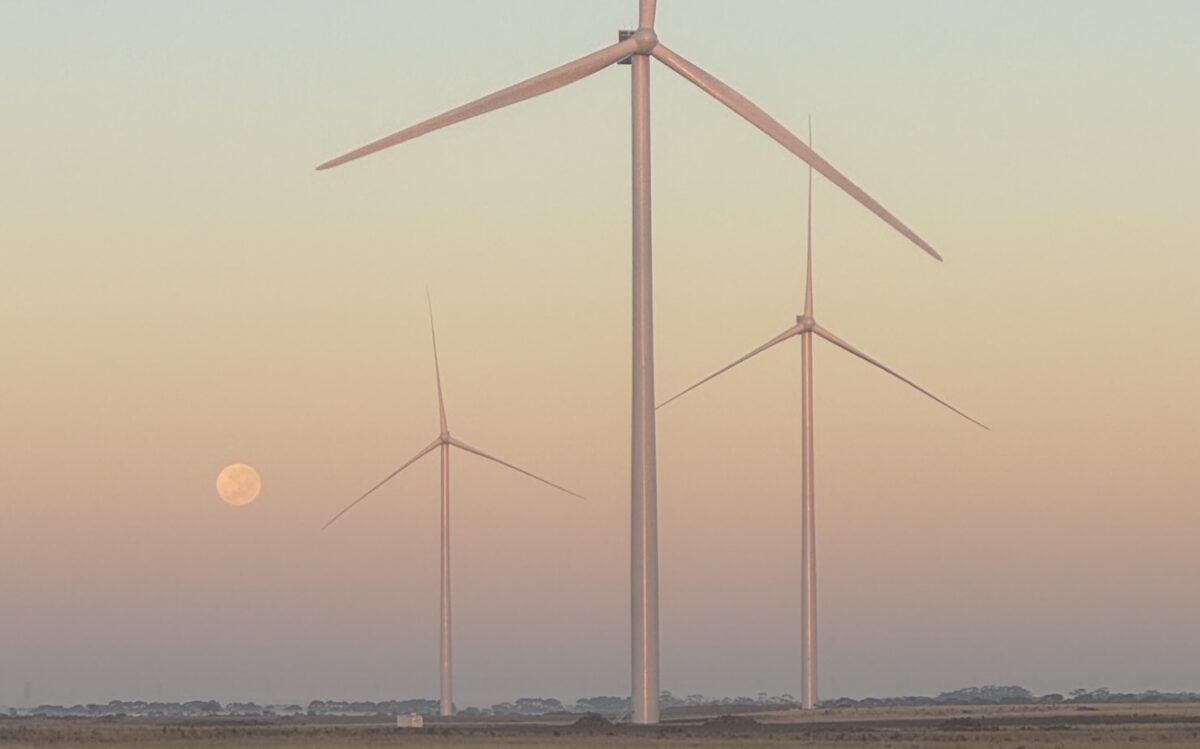
The originator of one of the biggest wind farms in Australia is advancing its plans for a new 50-turbine project, proposed for construction in southern central Queensland, through the federal government’s environmental assessment process.
Westwind Energy this week submitted 1,168 pages of documents to the EPBC for the Bottle Tree Energy Park, a wind farm and possible battery proposed for Queensland’s Maranoa region, around 16 km northeast of Roma.
The document dump includes the preliminary files needed by the federal environment review to check what impact the 400 megawatt (MW) Bottle Tree wind project will have on the landscape.
They cover everything from detailed maps of tree locations to bird and bat surveys.
Locals have three weeks from April 7 to look over the weighty tomes and give their views.
The Bottle Tree project seeks a federal green tick with state approval already under its belt – it was given the all-clear by the former state Labor government in 2023, waiting just two-and-a-half months for an answer.
The EPBC process, which started in late November 2023 and just before the state approval came in, has taken a bit longer with Westwind still at the project assessment stage.
The project is is proposed for construction near the still-beating heart of Queensland’s coal seam gas industry, and lies south and west of a vast tract of land scarred by gas wells.
It’s also the last renewable energy project in a line pushing out westward along the existing power lines directly away from Brisbane.
The draft preliminary documents begin to narrow down the impact the project will actually have on a large range of plants and animals the referral suggested might be in the area.
These cover everything from koalas, to poplar box woodlands and grey snakes.
Follow up work since the EPBC made its decision in July 2024 that Bottle Tree would need federal scrutiny, has ratcheted down the real impact the wind project may have.
What that work found was evidence of koalas using the area around the turbines, and sightings of migratory white-throated needletails and of fork-tailed swifts, and there’s potential for six other endangered or vulnerable mammals or reptiles in the area. There are four important plants and bushland types.
In January, Westwind dropped eight turbines from the proposal and realigned tracks and electrical infrastructure to avoid sensitive vegetation such as habitat trees.
Bottle Tree is one of two wind-battery ventures that Westwind is pursuing in Queensland – the other being the massive 1.5 gigawatt (GW) Cameron Downs Energy Park, proposed for development south of Hughenden in Queensland’s Flinders Shire.
The company cut its teeth in Victoria where it originated one of the largest onshore wind farms currently being developed in Australia – and now majority owned by TagEnergy – the 1.3 gigawatt (GW) Golden Plains project in Victoria.
In 2024, the company also unveiled new plans to build a 1.5 GW wind project with a massive, four-hour battery in south-western New South Wales.
In Queensland, given the state’s change of government since the Bottle Tree project was approved, from renewables-friendly Labor to David Crisafulli’s coal-keeping Liberal administration, the way forward for even approved wind projects has become challenging.
The state government has been issuing call-in notices, a directive requiring projects with planning approvals or not to be scrutinised by the minister to a number of wind and battery projects in the last 18 months.
But these have also been largely in areas with federal senators or MPs, or local and regional councils, which are sceptical or opposed to renewable energy.
If you would like to join more than 29,000 others and get the latest clean energy news delivered straight to your inbox, for free, please click here to subscribe to our free daily newsletter.

Rachel Williamson is a science and business journalist, who focuses on climate change-related health and environmental issues.