
Seventeen months into Armstrong’s gig, ownership announced a move to Arizona State University’s Mullett Arena, a 5,000-seat venue that would easily be the NHL’s smallest venue. The three-year deal, which began for the 2022-23 season, came after the city of Glendale would not renew the Coyotes’ lease at Gila River Arena, the 17,125-seat facility they’d called home since 2003.
The team struggled, missing the playoffs every year since 2020, all the while playing in a college arena which had about 10,000 fewer seats than the next-smallest venue, Canada Life Centre in Winnipeg (15,321).
Those troubling optics aside, they were building the foundation of the roster that is about to represent Utah in the upcoming playoffs. First-round NHL Draft picks Dylan Guenther (No. 9 in 2021 and Logan Cooley (No. 3, 2022) have since evolved into franchise cornerstones in Utah.
Less than a week after the Smiths purchased the team, the players visited Salt Lake City to see what was in store. It was night and day to what they’d been accustomed to.
Upon arriving at the airport, players and coaches were greeted at the airport with chants of “Go Utah Go” by 100 players from youth hockey programs. That same day, April 24, 2024, they were overwhelmed when 12,400 fans packed a pep rally at Delta Center.
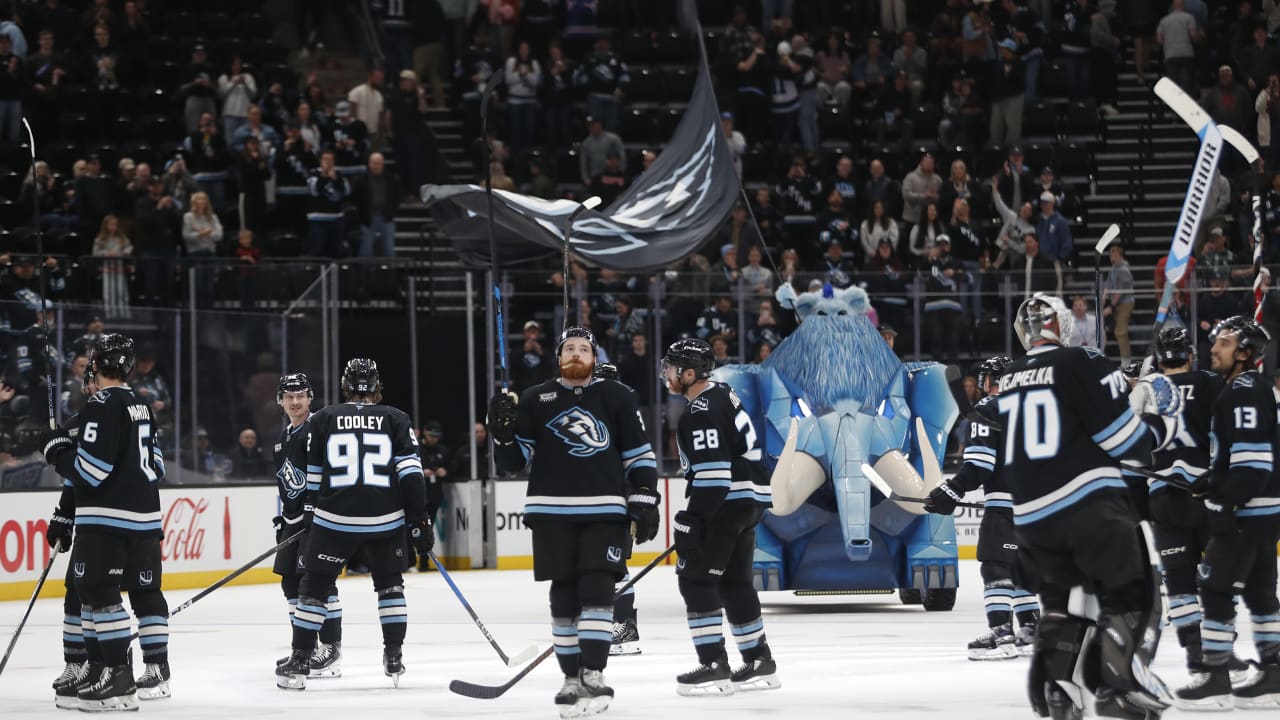
The new franchise did not have a name or proper practice facility and was playing in a basketball arena that had seats in which you could not see the full rink. Since that time, they adopted the name Mammoth, built a state-of-the-art practice rink and made modifications to Delta Center to help suit hockey.
Now they are in the postseason, becoming only the third franchise in 45 years to qualify in their first two seasons, joining the Vegas Golden Knights (2017-18) and Seattle Kraken (2022-23), all while playing in front of what has become one of the more raucous fan bases in the League.
What a journey it’s been.
“It certainly has,” Armstrong said. “I mean, we’ve moved numerous times. We’ve changed rinks. We went from a regulation rink to 4,500 capacity back to an elite setup. And now we’re in the best practice rink and one of the best game rinks in the National Hockey League. In my case, not a lot of GMs can say they survived the start of a rebuild through to its fruition. I feel very fortunate, so it’s been a whirlwind for sure.
“A lot of credit for us making the playoffs goes to our players who bought in and our coaching staff that got our players to do it. And it’s been a full buy-in from our ownership; Ryan and Ashley have taken all the excuses out of the game, from the planes, the hotels, to the training facility. Everything is first-class.
“There’s no excuses in Utah. We’ve been given the best of the best.”
With the 2034 Winter Olympics coming to Salt Lake City, organizing committee president and executive chair Fraser Bullock said Mammoth fever can do nothing but help the buildup to the Games.
“When we got the Mammoth, I thought, ‘Wow, that’s a great step up,’” Bullock told KSL News Radio. “But I had no idea how big it was. Now that it’s happening, now that we’re in the playoffs, it’s far bigger of an impact than I ever anticipated.”
So, how far can the Mammoth (42-32-6) go this spring? They have 90 points and are the first wild card in the Western Conference, with a potential first-round date with either the Vegas Golden Knights, Edmonton Oilers or Anaheim Ducks looming.
“I’ll answer that with what one of my former bosses told me,” Armstrong said. “He always preached that the goal was to just get in. After that, anything can happen.”
For Armstrong and those who accompanied him from Arizona, it pretty much has.