
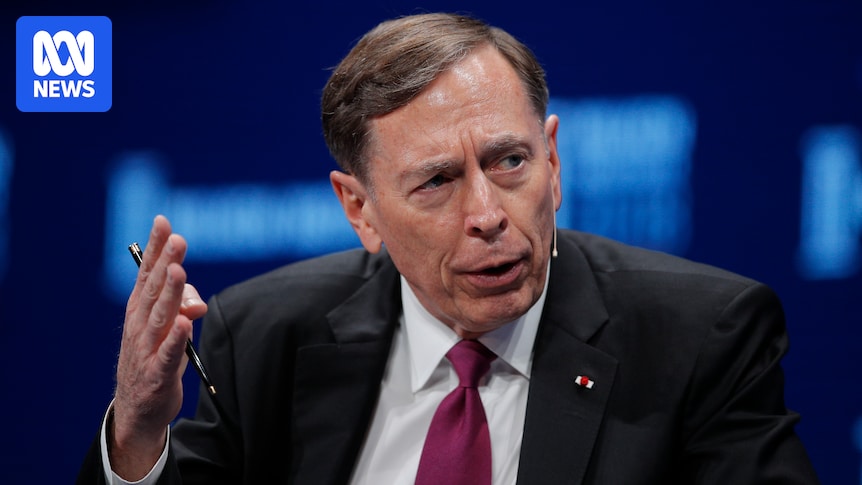
The former head of America’s Central Intelligence Agency (CIA), retired army General David Petraeus, has backed US President Donald Trump’s proposed naval blockade of the Strait of Hormuz but warns it will lead to conflict in the crucial waterway.
“I think there will be confrontation,” General Petraeus told 7.30.
“The question is, can it be contained?”
General Petraeus said that while the ceasefire would likely remain in place, the United States was now compelled to take action to end Iran’s chokehold on the strait.
Iran war live updates: For the latest news on the Middle East crisis, read our blog
“There’s a case that could be made that we should have done this even earlier,” General Petraeus said of the proposed blockade.
“That once Iran started controlling who got the right to pass through the strait and also to charge a toll for it, that we should have said ‘OK, if we can’t go, if other ships can’t go, then no ships can go’.”
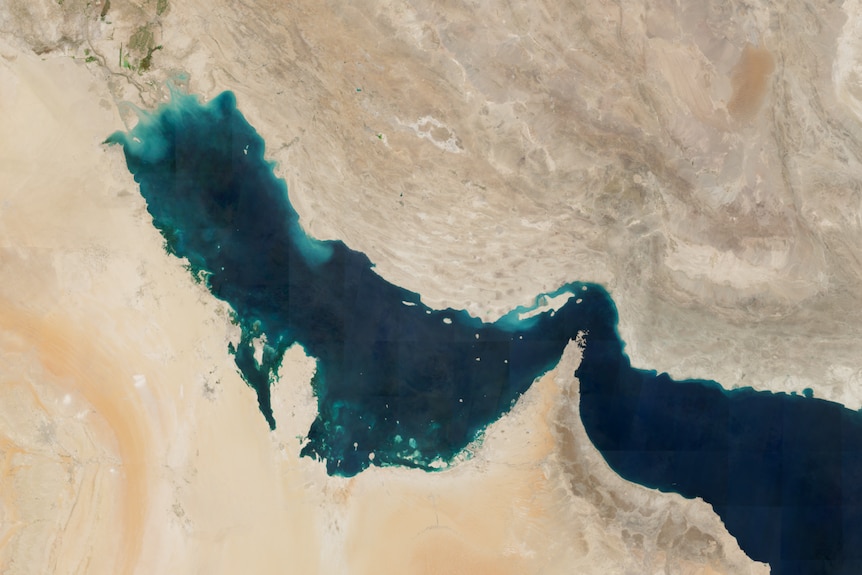
Shipping through the Strait of Hormuz has slowed significantly. (Supplied: Sentinel Hub)
Part of the military action will be efforts by the US to clear Iranian sea mines from the Strait of Hormuz.
The former 4-star US army general and former head of US Central Command said a “Coalition of the Willing” could join US forces to escort ships through the strait but warned it would be a “formidable task”.
“This is a tough mission, a very, very difficult one,” he told 7.30.
“De-mining is very, very laborious, it’s very challenging, it’s very hazardous … and then of course [there is] preventing attacks on ships.”
General Petraeus referred to maritime experts who said the operation would require at least two aircraft carrier task forces at all times so US ships had cover and that “eight to 10 frigates and destroyers” would also be required.
Despite a ceasefire being in place tensions remain high in the strait.
Iran’s Islamic Revolutionary Guard Corps has already issued a threat saying any military vessels approaching the waterway would be dealt with “severely”.
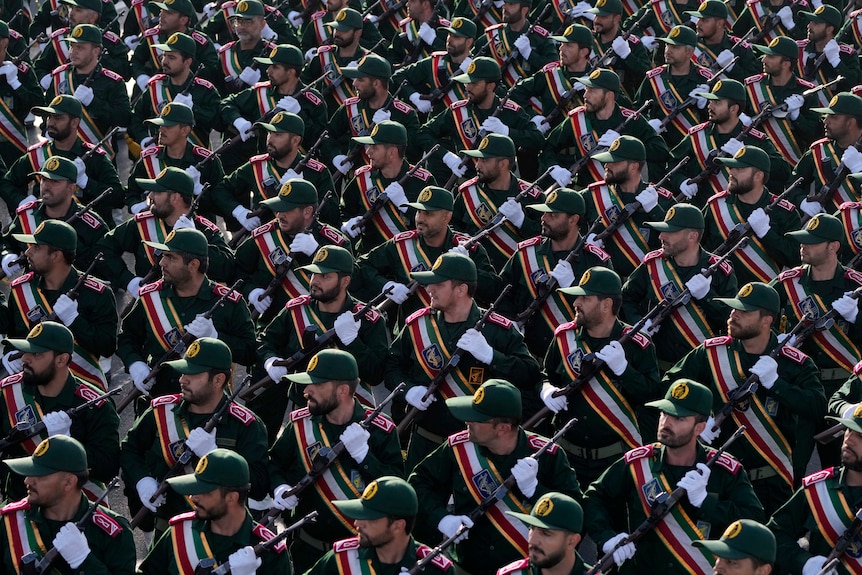
Iran’s Revolutionary Guard have maintained a strong grip on control of the Strait of Hormuz. (AP: Vahid Salemi)
The former CIA boss said protecting ships seeking to traverse the strait would be difficult.
“The problem here is that it only takes an attack every day or two, could be a drone, aerial drone, maritime drone, small boat, a missile,” General Petraeus told 7.30.
Who is willing to be in a US coalition?
While many Western allies of the US have stayed out of the war to this point, the general told 7.30 he would like to see Australia become involved as part of the proposed coalition.
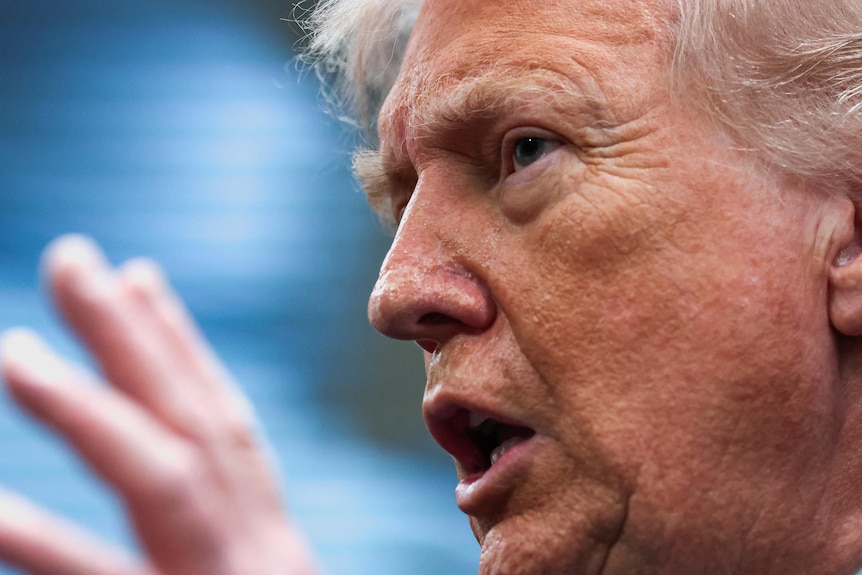
US President Donald Trump has remained bullish on the US role in Iran.
(Reuters: Evelyn Hockstein)
Before the Pakistan talks began, a coalition of 40 countries, led by the UK and France, including Germany, Japan, several Gulf states and Australia had been discussing a joint operation to escort ships through the Strait of Hormuz.
The UK government said in a statement on Sunday that it would not participate in Mr Trump’s planned naval blockade.
“We continue to support freedom of navigation and the opening of the Strait of Hormuz, which is urgently needed to support the global economy and the cost of living back home,” a spokesperson for the UK government told the BBC.
General Petraeus told 7.30 that he hoped US friends and allies would look beyond recently damaged relationships with the US and unite on this issue.
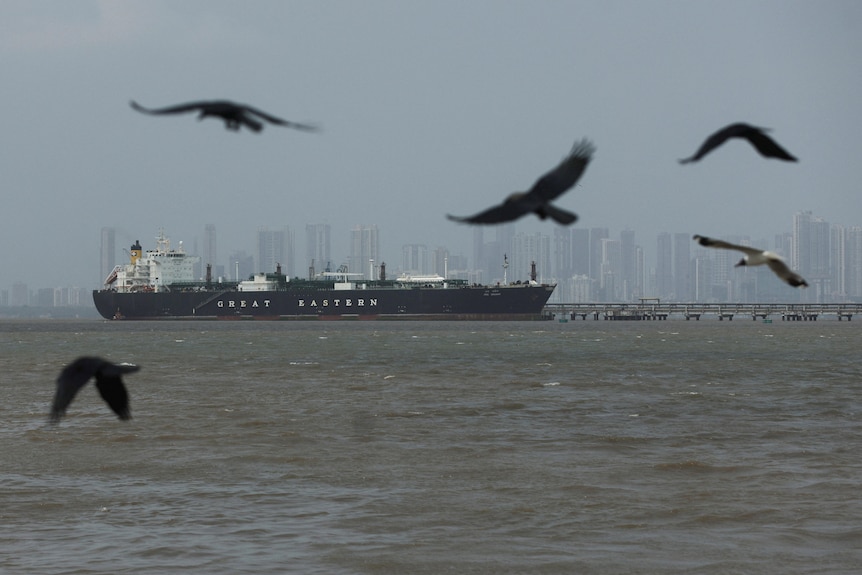
The Jag Vasant vessel transferring LPG at a port after transiting the Strait of Hormuz in early April. (Reuters: Francis Mascarenhas)
“I hope that we will be able to mend some of the fences in this case because it’s really in the interest of the entire world,” he said.
“The UK in particular has some very good countermine capability … and I would hope that the Saudis and the Emiratis and Bahrainis, Kuwaitis and others would also provide what it is that they have.”
Having commanded Australian forces in both the Iraq and Afghanistan wars, the general supported the idea of an Australian contingent.
“We always wanted as many of them in these wars as we could get,” General Petraeus said.
“They’re massive force multipliers, exceedingly competent. They have very good kit, very professional and superb expertise.”
He added that the relationship between the two countries’ militaries and intelligence agencies was “extraordinary,” marked by “enormous mutual respect and admiration”.
However no such formal request has been made to Australia yet, according to Prime Minister Anthony Albanese.
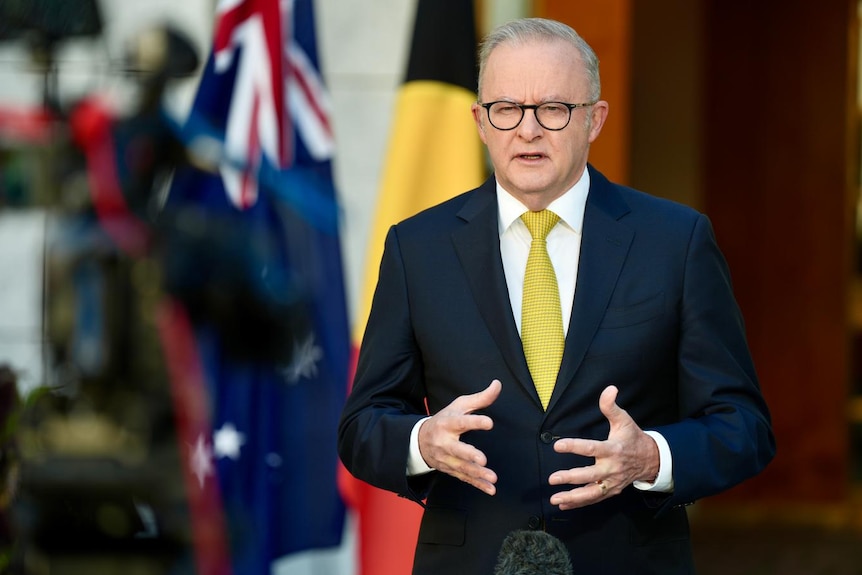
Prime Minister Anthony Albanese says Australia has not received any requests to participate in the blockade. (ABC News: Stuart Carnegie)
“We’ve received no requests and they’ve made this announcement overnight … in a unilateral way. We haven’t been asked to participate,” Mr Albanese told Nine media on Monday.
“This is the US making the decision that they have. What we want is for negotiations to continue.
“We want to see an end to the loss of life and the loss of infrastructure in the Middle East. We want to see trade resume. This is having a massive global economic impact, not just on Australia. Every single country is being impacted.”
Beyond the immediate military challenge, General Petraeus pointed to a more fundamental strategic concern: that Iran, despite suffering immense damage, could yet emerge from the war in a stronger position in other ways.
“It’s possible that Iran could emerge much weaker militarily and with lots of other industrial damage as well, impoverished in various ways, but strategically strengthened if they are able to retain control of the strait,” he said.
“Clearly there’s a recognition in Washington that, that cannot be permitted.
He also argued the response needed to go beyond military means, combining diplomatic, economic, and what he described as “cognitive warfare” tools into a comprehensive approach.
“We cannot allow Iran to control the strait,” he said. “That’s the bottom line.”
Watch 7.30, Mondays to Thursdays 7:30pm on ABC iview and ABC TV
Contact 7.30
Do you know more about this story? Get in touch with 7.30 here.