
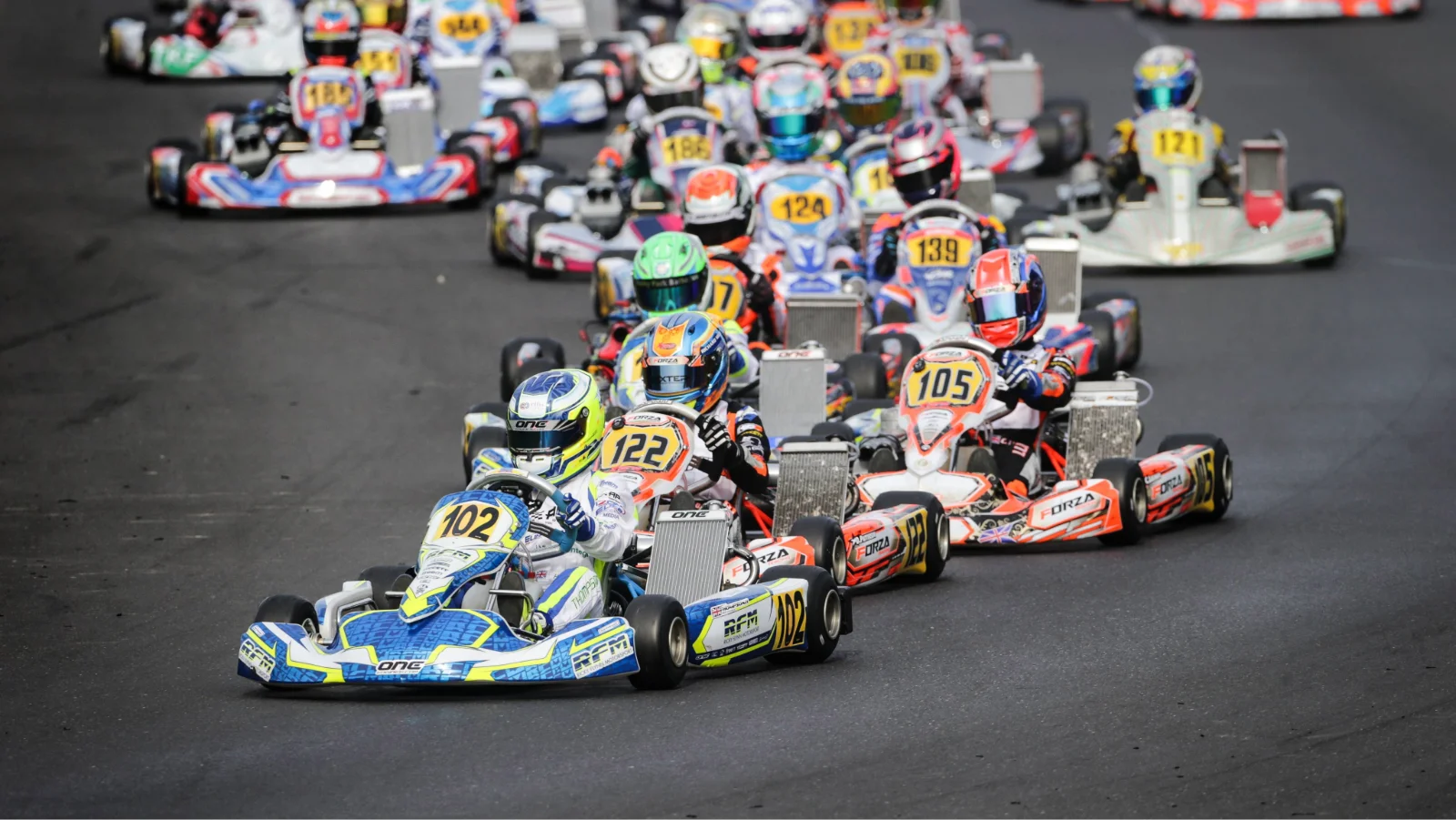
Karting tracks around the world are filled with young drivers all itching for a shot at F1.
The next few years of their lives will be dedicated to refining their skills and making their way through the ranks. All do this in the hopes of potentially claiming the coveted title of ‘F1 driver.’ But the unfortunate reality is that many young talents are pushed out of the system prematurely due to the rising costs of competing in motorsport.
Motorsport as a whole has always been considered one of the most financially demanding and unconventional sports. Unlike sports like football and Rugby, drivers aren’t exactly able to practice their skills for free at their local park. Instead, drivers have to pay for track time to refine their skills.
From buying specialised machinery, to expensive competition entry fees and travelling, it’s not only talent that defines a driver. But also their ability to manage the growing financial burden of their dream in the early stages of their career.
Whilst there is no linear pathway to F1, most drivers begin their journey in Karting at a young age. These competitive karting championships are often viewed as the foundation of single-seater racing, as they enable drivers to learn the basics of their craft. As they progress through the ranks, these skills will continue to develop and improve.
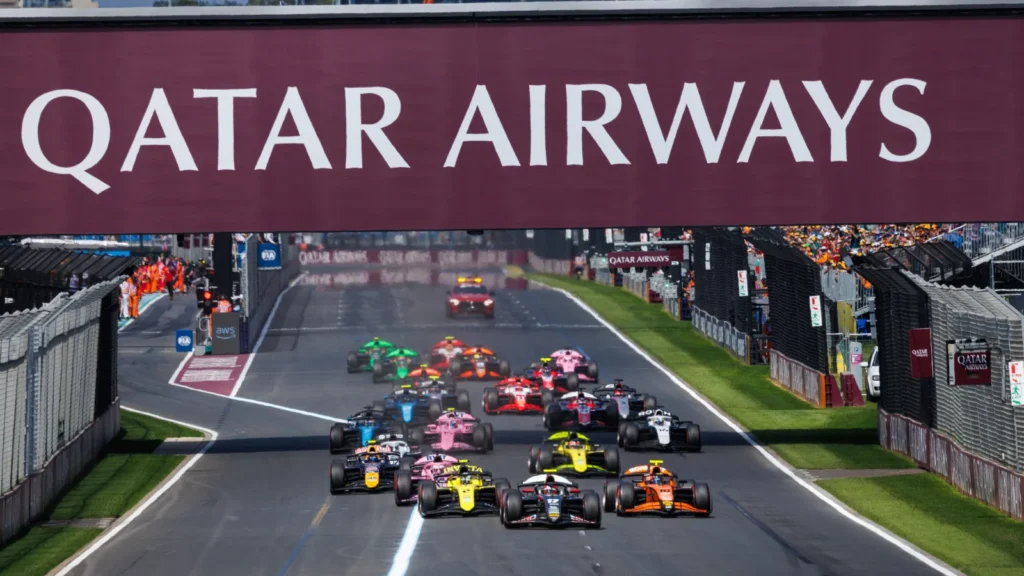 The final stretch to F1 requires a substantial financial backing from drivers
Starting the F1 journey with already substantial costs
Many drivers compete in regional and international championships, gradually building experience and developing the race craft needed to progress in the sport. But alongside these vital competitions comes an expensive price tag. Competing in a season of karting is estimated to set drivers back a whopping £10,000 a year. But for those competing internationally, it is set to be a lot higher.
From karting, many drivers make the jump to junior single-seater categories, such as regional championships like Formula 4 or FRECA. These categories represent the next major step toward F1, but the costs increase dramatically, with spots in these series costing several hundred thousand euros.
If able, drivers then progress to the final steps on the feeder series ladder, Formula 3 and 2. These series are where drivers get the most exposure, as every round of the competition takes place on an F1 weekend across the globe. That is ultimately reflected in the price for drivers. A single season in Formula 3 can cost up to €1 million, whereas F2 is rumoured to be upward of €1 million. Keep in mind, this does not include the cost of travel, just a confirmed seat in the series.
Despite these staggering costs, there are systems in place to help a select few drivers continue their dream. Most notably, the F1 driver academies play a major role for aspiring drivers.
These academies are development programmes that are run by F1 teams, aiming to identify and nurture young talent. Drivers who are selected for these programmes often receive financial backing, amongst a multitude of benefits. While the exact details of each driver academy vary, the goal is to guide talented drivers through the junior series, in the hopes of getting them to F1 in the future.
Academies, including the Ferrari Driver Academy, Red Bull Junior Team and the Williams Racing Driver Academy, have produced most of the drivers on the F1 grid today. The likes of Max Verstappen, Lando Norris and Oscar Piastri were all a part of academies, aiding them in their journey to F1.
Importantly for the drivers who are selected, these programmes can make the difference between continuing their careers and being forced to step away from the sport entirely.
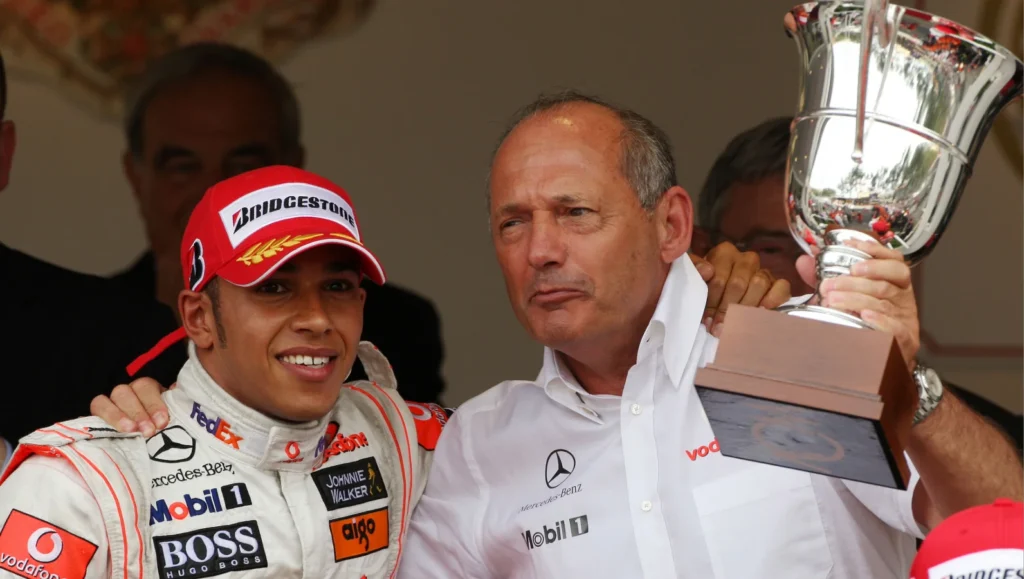 Lewis Hamilton’s bold move landed him a spot in the McLaren
Academy before becoming the most successful driver in F1 history
A famous example from history offering false hope?
Perhaps one of the most well-known cases of this support is Ron Dennis’ signing of Lewis Hamilton in 1998. The now seven-time World Champion came from what he described as a ‘working-class’ background, with his father working multiple jobs to support his dream of making it to F1.
As a young karting driver, Hamilton approached Ron Dennis, the then team principal of the McLaren team, at an awards ceremony and confidently told him that one day he wanted to race for McLaren in F1. Impressed by the young driver’s determination and talent, Dennis eventually signed Hamilton to McLaren’s young driver programme.
With the team’s backing, Hamilton progressed through the junior categories before making his debut in 2007, becoming one of the most successful drivers in the history of the sport.
But stories like Hamilton’s remain an exception. With just 22 seats in F1, and a driver pool that grows by the minute, academies are becoming increasingly selective.
Even drivers who reach the highest levels of the junior ladder are not immune to financial pressures. In fact, it’s at the final hurdle that many drivers fall.
The F2 championship is highly regarded as the final step to F1. In fact, the past three seasons have seen seven drivers graduate from the junior series to F1. However, all seven drivers were a part of driver academies and had significant backing. Meanwhile, drivers who may not have that level of financial backing will struggle to even make it to the season’s end.
A recent example is Zak O’Sullivan, a former member of the Williams Racing Driver Academy who competed in the 2024 F2 season. Despite being regarded as one of the promising talents on the grid, O’Sullivan was forced to withdraw from the championship midseason due to financial concerns.
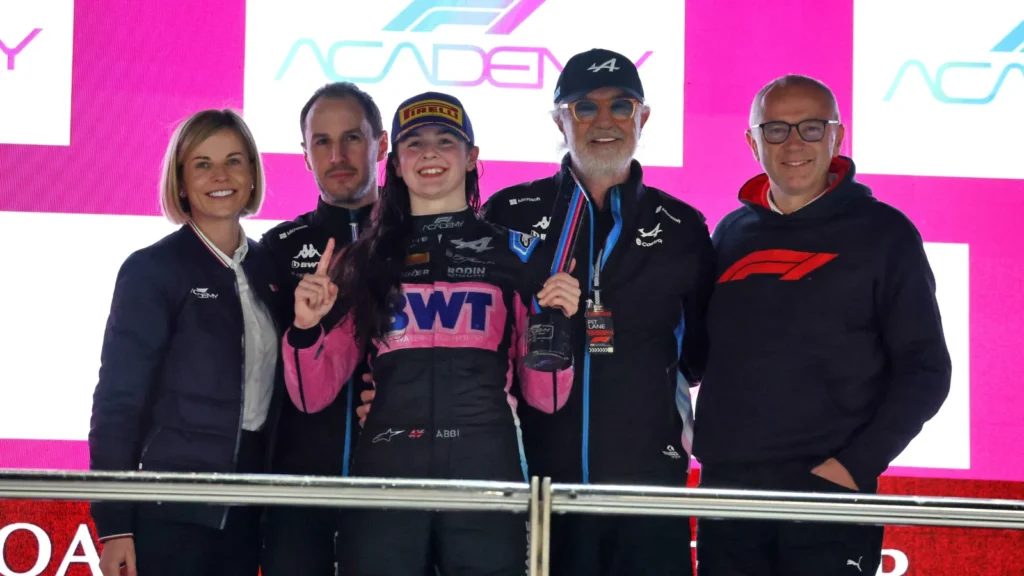 Pulling went on to finish tenth in GB3 in 2025
Underrepresented groups getting a seat the table
There have also been attempts to create a pathway for underrepresented groups in the sport. The introduction of F1 Academy brought forward an exclusive championship where women can make a name for themselves in a male-dominated space.
Managed by Susie Wolff, the championship boasts title sponsors for all 18 drivers on the grid. This ensures that drivers can compete consistently in the series for all rounds, without worrying about financial issues forcing them out prematurely.
Alongside this, in 2024, the winner of the F1 Academy championship received a fully funded GB3 seat with Rodin Motorsport. This prize, awarded to Abbi Pulling, allowed her to compete in a full season of the competition without the anxiety of securing funding or sponsors. This allows her to showcase her talent without fear of running out of money.
Initiatives like these highlight a step in the right direction for many. But it also emphasises the scale of the challenge at hand. Motorsport remains one of the only sports in the world where talent is just as important as funding and sponsorships.
For every rookie that reaches F1, their rivals often fall short. Not necessarily because they lack skill or determination, but because they were simply unable to meet the financial demands of the sport they loved so much.
Yet, as costs continue to grow and the odds get smaller, karting circuits continue to fill with young children with the same dream.
While the journey may be expensive, unpredictable and sometimes unforgiving, it’s never enough to quit on one’s childhood dream.