

Musicians say the future of live music in Tasmanian pubs is under threat as noise complaints and venue closures make it increasingly difficult to find gigs.
Kim Phillips, who has sung for decades in multiple bands based in the state’s south, said the opportunities of the past “just don’t seem to exist” anymore.
“What you have is less venues that are available that are actually hosting live music,” she said.
“I will contact a lot of places these days and just not get a response, whereas in the past you would have gotten more responses and more opportunities.”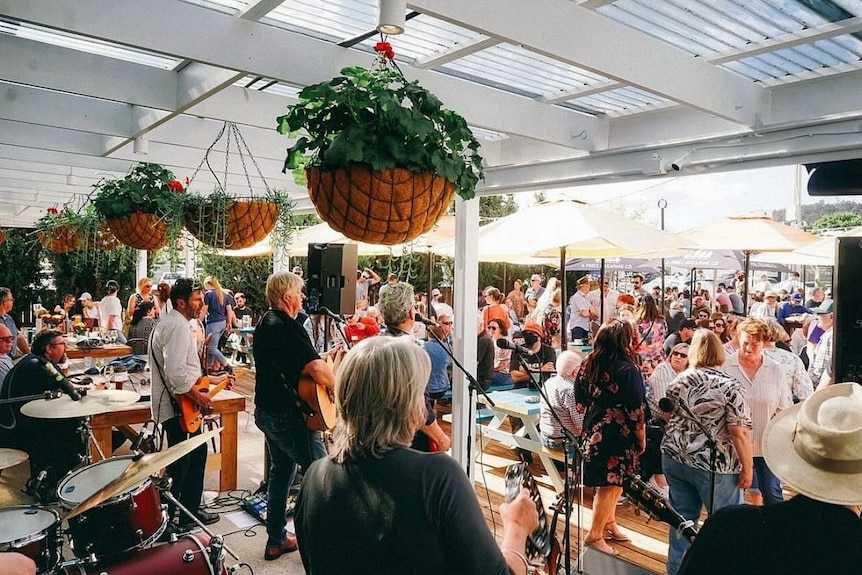
Live music at the Salty Dog, before the stage was moved to point away from residences and towards the beach. (Facebook: The Salty Dog Hotel)
Raymond Blizzard, who has been involved in the Hobart music scene for more than 20 years, said he was concerned for the future of the industry.
“I’m a bit luckier than some in that I’ve been around … but if you’re young and just trying to get into the business, it’s very, very difficult at the moment,” he said.
“If the music scene continues to decline … we will see a generation of young people moving away because they don’t get the opportunity to express themselves here.”
The pair blamed dwindling live music opportunities on multiple key venues closing, as well as the pressure being put on pubs to manage complaints from neighbours.

Bliss n Eso performing at the Uni Bar in Hobart in 2023. The venue has since closed. (Supplied: Zoe Lowry)
Closures scuttle chances for smaller acts
The closure of Uni Bar on the University of Tasmania campus last year due to a redevelopment was described as a “significant blow” for Hobart’s music scene.
The sector was rattled even further when it was announced Hobart Brewing Co would close due to the approval of the $1.13-billion AFL stadium on Macquarie Point.
The brewery’s marketing manager, Nick Devereux, has been running live music venues and playing in bands “for about 20 years”.
He said large venues such as Altar Bar and the Odeon Theatre were doing “amazing things”, but there were very few venues suitable for smaller acts.
“There’s always been the up and down, the ebb and flow of the Hobart music scene,” Mr Devereux said.
“Right now, we’re entering one of those periods where the amount of live music venues that can support these artists is at one of those dips.”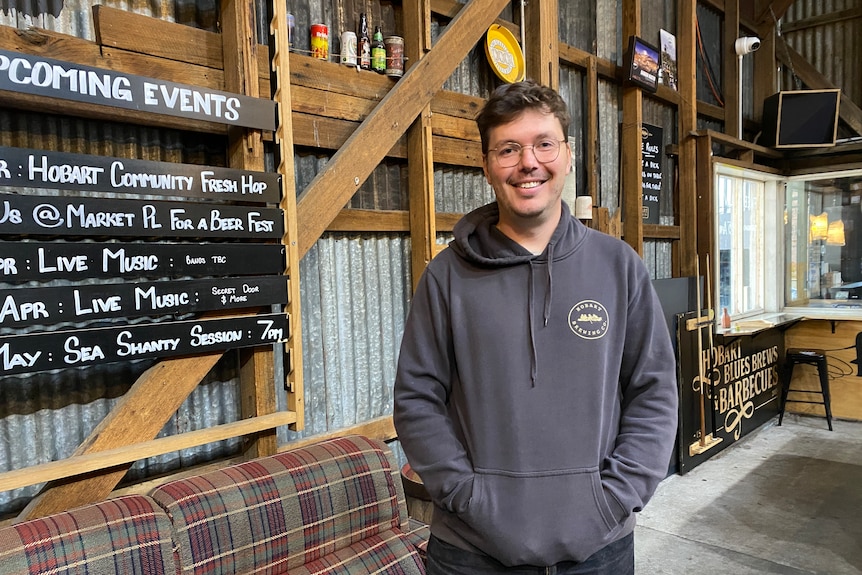
The Hobart Brewing Company’s Nick Devereux says live entertainment feels the pinch when the cost of living is high. (ABC News: Meg Whitfield)
The typical weekend gig at the Hobart Brewing Co cost the venue at least $2,000, which went towards paying the performers and production crew.
Mr Devereux said the costs made it hard for many venues to justify hosting live music.
“They all cost a lot of money and unfortunately … people don’t necessarily have the change in their pocket to fork out and go see local music anymore,” he said.
Another key issue was the challenge of navigating noise complaints from neighbouring households, a debate that reared its head in Hobart over the weekend.

The new roof being installed at The Salty Dog Hotel. (Instagram: The Salty Dog Hotel)
In Tasmania, there are regulations that aim to limit the amount of noise in residential neighbourhoods, including from sound systems and musical instruments.
There are no blanket limits on how loud live music can be played, though it can be deemed unreasonable based on its “volume, intensity, duration” and the circumstances in which it is played.
The regulations are generally enforced by councils and police.
‘Spoilt’ weekends lead to petition
The Salty Dog Hotel is a beachside pub in Kingston, a suburb on the southern outskirts of Hobart, which hosts live music in its beer garden each weekend.
A group of about 40 local residents have presented a petition to the Kingborough Council, calling for formal monitoring to ensure the venue is complying with noise limits.
Loading…
One of those residents is Anneike, who told ABC Breakfast the noise was intrusive and clearly audible within neighbouring homes.
“The weekends are spoilt often on a Sunday afternoon particularly, because the music is at a higher decibel than it should be,” she said.
“It’s about making it reasonable so we can all have our peace and quiet … not listen and be forced to listen to music that often is not our taste.”
A counter-petition launched by the Salty Dog Hotel has received more than 5,500 signatures from people supporting music at the venue.
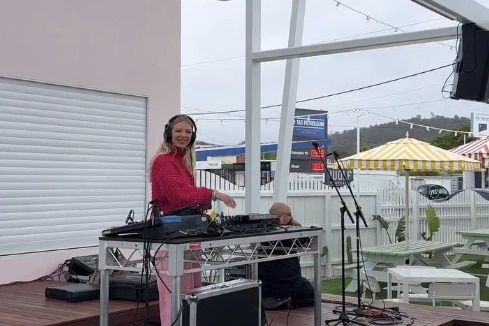
The new stage at the Salty Dog Hotel has a roof overhead. (Instagram: The Salty Dog Hotel)
Another Tasmanian performer, Amy Wiles, said the beachside hotel took its responsibilities seriously.
“I have seen the care they put into reducing the impact on neighbouring residents by enforcing strict cut-off times and regularly checking volume levels,” she said.
Co-owner Adriano Mignanelli said he was disappointed when he saw the petition because his venue worked hard to “be good neighbours”.
The pub only hosts live acts between 5pm and 7pm on Friday and from 3pm to 6pm on Sunday.
“I’m not here to turn this into a nightclub, I just want to have some good music playing on a Sunday afternoon near the beach,” Mr Mignanelli said.
He said the pub would be happy to work with the council to establish better lines of communication and potentially install further noise mitigation measures.
Kingborough Council said it would address the petition regarding noise concerns at the Salty Dog Hotel at one of its future meetings.
‘Frequencies that shake people’s walls’
Mr Devereux said noise complaints could be a challenge for venues to manage and that there should be “a bit of back and forth”.
“Certain types of music can have frequencies that shake people’s walls and rattle their glasses, and that’s not fun for anybody,” he said.
“We don’t want to be the enemy of the community … we want everybody to come in, have a laugh, have a drink, have a boogie, have a smile.”
Mr Devereux said people who chose to live near an established hospitality precinct should not be surprised when there was noise.
“There are going to be things that come along with that, and some of that is noise,” he said.
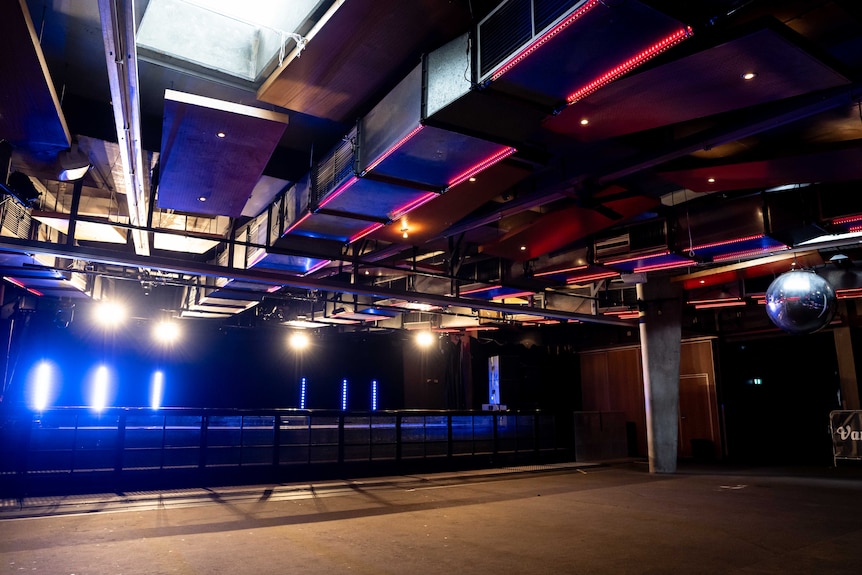
Established in 1976, the Uni Bar hosted many local and international acts before it closed in 2025. (ABC News: Ebony ten Broeke)
Music Tasmania chief executive K. Verell said noise complaints were one of the issues piling stress on the state’s live music venues, as well as high insurance costs.
They said this was likely to become more of an issue as higher-density residential developments were built alongside established live music venues.
“There’s the potential that existing venues are going to be put under stress for noise if we don’t have appropriate policies put in place to protect them,” they said.
They said Tasmania should take inspiration from Brisbane’s Fortitude Valley, where developers building near established venues are required to pay for all soundproofing.