
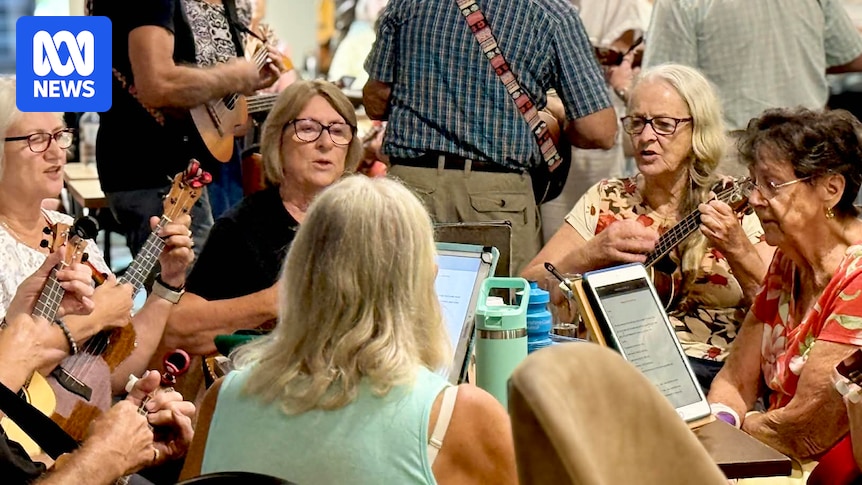
It’s mid-week and mid-morning at this Queensland RSL club — but it might as well be a Saturday night.
The place is packed and rocking.
About 100 people, many with ukuleles in hand, are singing as one.
“I love the connection and I love that people come and watch us and they get a little piece of joy for the week — we all do,” Vanessa Schmidt said.

Vanessa Schmidt says the club brings joy to her week. (ABC Sunshine Coast: Jessica Ross)
Ms Schmidt is part of the Parkbench Ukulele Players.
As the name suggests, the group formed at a park 12 years ago, in Tewantin on the Sunshine Coast.
“Just a few of my friends wanted to learn the ukulele and we were all struggling a bit so we decided to go to the local park and meet once a week,” founding member Lin Nolan said.
“We’ve grown from just five and now we have 600 members.”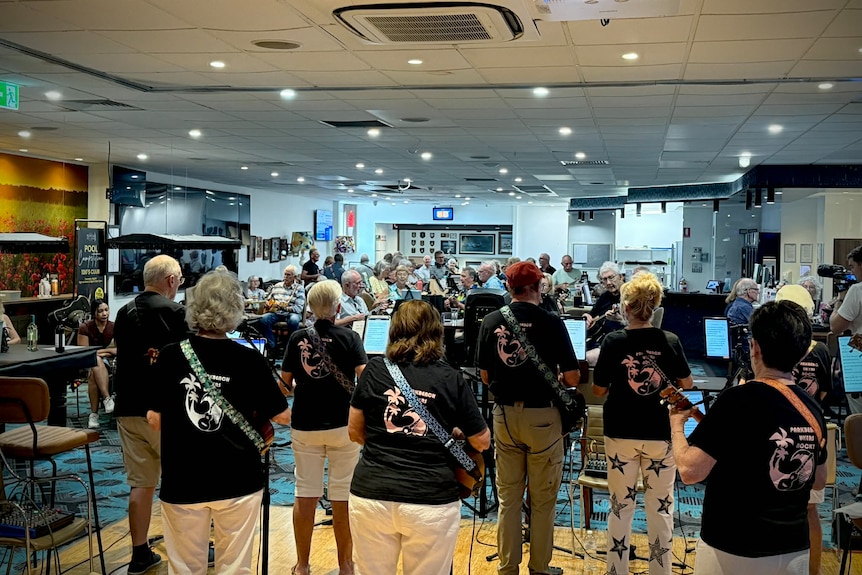
Group members now meet weekly at their local RSL club after outgrowing previous venues. (ABC Sunshine Coast: Jessica Ross)
Ms Nolan’s husband Terry said since then, the group had changed venues and had technology upgrades.
“We started off on paper with the songs and it got to the stage where I’d need a ream of paper every week,” Mr Nolan said.
“I said, ‘No, that’s not going to happen, go and buy yourselves an iPad or a tablet and I’ll give you the music in a format you can put onto it.’
“It just took off from there.”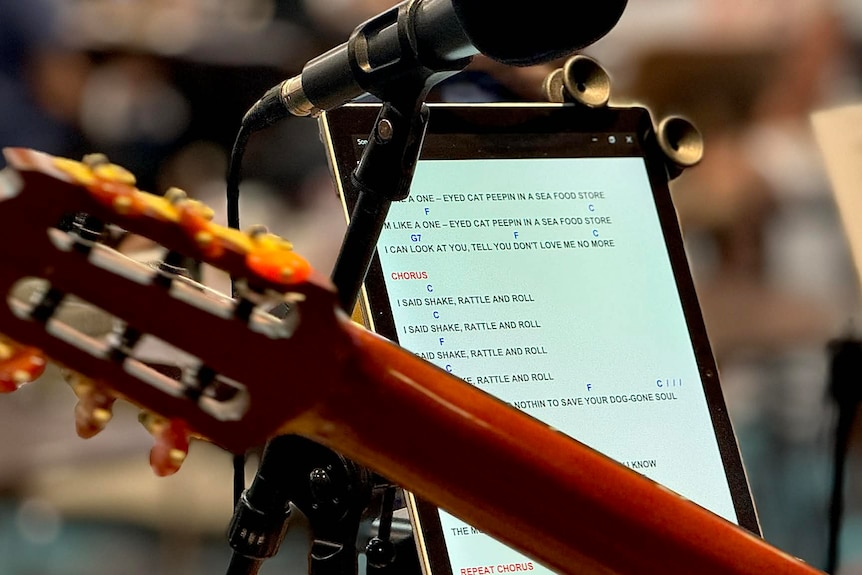
Many of the members now use tablets to follow along with the songs. (ABC Sunshine Coast: Jessica Ross)
Added bonus for the brain
The club plays a wide range of genres, including rockabilly, country, bluegrass and modern rock.
Most of the songs have only three or four chords, making them easier to play.
“It’s a great sense of community and fun — we’re very relaxed about the playing,” Ms Nolan said.
“It’s more about getting together, singing and enjoying music.”
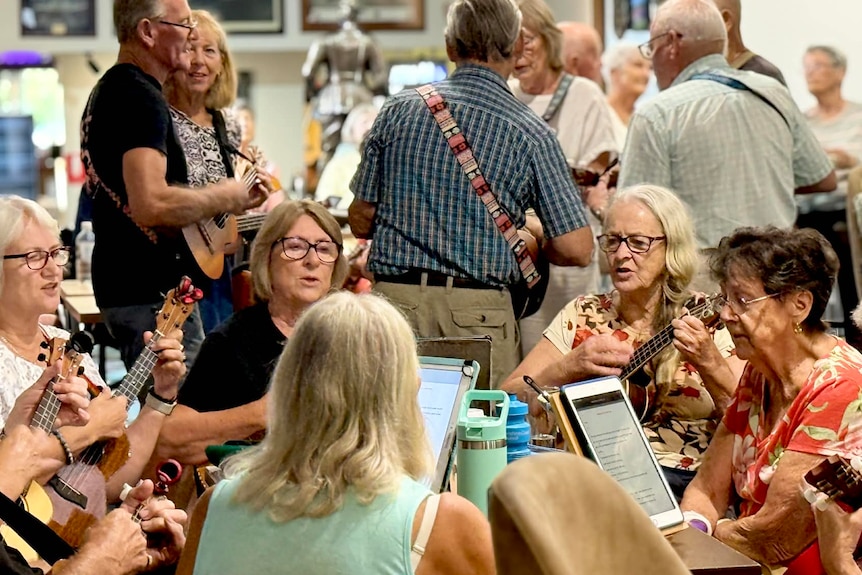
Beginners through to advanced players enjoy getting together each week. (ABC Sunshine Coast: Jessica Ross)
A recent study by Monash University examined the impact of listening to and playing music by following more than 10,000 people aged over 70 across a 10-year period.
The study found those who frequently listened to music had decreased their risk of getting dementia by 39 per cent, compared to those who rarely did.
Playing an instrument was associated with a 35 per cent reduction in risk.
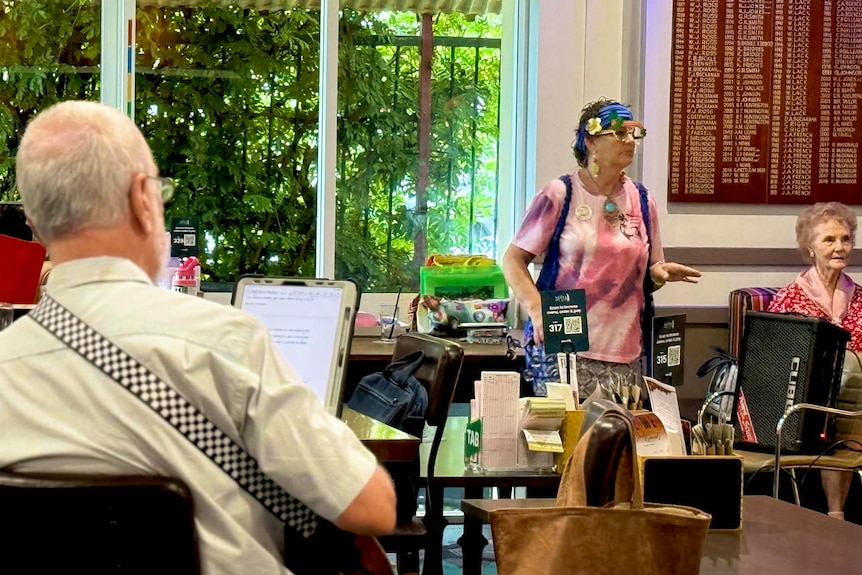
There is no requirement to play an instrument, with people encouraged to come along to listen, sing or dance. (ABC Sunshine Coast: Jessica Ross)
Senior author Joanne Ryan said with no cure for dementia, preventing or delaying its onset was critical.
“We can’t say that if somebody starts listening to music … that will actually stop them developing dementia,” Professor Ryan said.
“But music is like a whole brain workout.
“We know from studies where they’ve taken images of somebody’s brain as they’re listening to music that a whole range of regions are activated.”
The professor said music could also reduce stress and calm the mind.
“It can help reduce things like depression as well. It can also slow your heart rate,” she said.
“It has multiple benefits on different systems in our bodies, and we think that cumulative benefit is what’s helping reduce the risk of dementia.”

Lin and Terry Nolan, pictured right, organise the equipment and songs for the meet-ups. (ABC Sunshine Coast: Jessica Ross)
That rings true for Ms Nolan, now aged 77, who said playing and listening to music helped keep her brain active.
“You have to remember the songs and you have to try and remember the chords,” she said.
“And just getting together, I think, is so important for mental health.”