
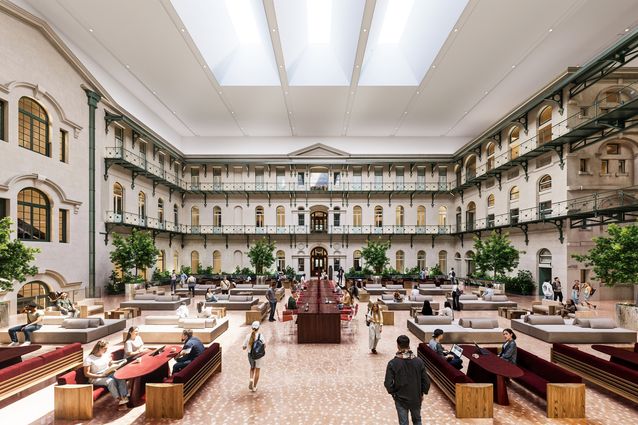
The historic Treasury Building in Brisbane’s CBD has been envisaged as a new campus for Griffith University, designed by Cox Architecture in collaboration with the university, FDC Construction and Fitout and heritage consultant Lovell Chen, which is set to open next year.
According to Griffith University vice chancellor and president professor Carolyn Evans, the expansion “will create a dynamic, cross-river Brisbane City campus” with the university’s existing Southbank creative arts hub.
The transformed Treasury Building will accommodate Griffith’s undergraduate and postgraduate business, IT and law degrees, providing space for around 6,000 students and 200 staff by 2028 – exactly one hundred years after construction of the original building was completed.
View gallery
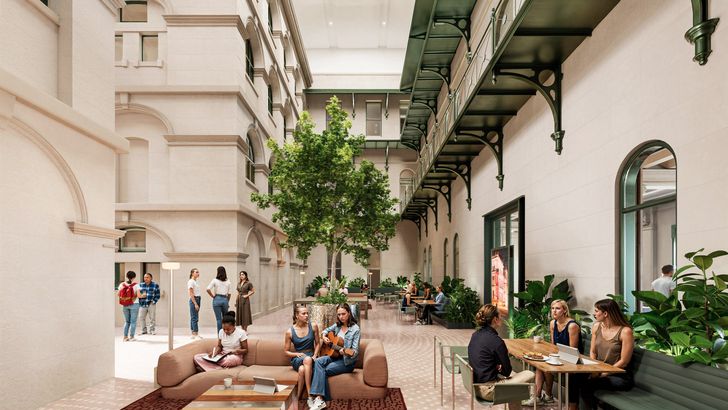
Located on the north bank of the Brisbane River, the Treasury Building’s location was once an important river crossing point and gathering place for First Nations communities, according to Cox. The building itself was designed by architect John James Clark, with on-site supervision from by architect Thomas Pye when it was constructed in three stages between 1886 and 1928. It served as government offices until it was adapted in 1995 into the Treasury Casino, which recently closed with operator Star Entertainment’s 2024 opening of the new Queen’s Wharf Casino.
According to Cox, the casino adaptation involved the enclosure of the building’s central courtyard and opening of existing cellular spaces. Cox’s design, which is intended to be “light touch,” reverses a number of these later alterations and instead proposes to align with the building’s original design principles, retaining the existing structure and reinstating heritage elements that are currently held in archive storage.
View gallery
Director at Cox Kellie Newman said, “In collaboration with Griffith, we found the heritage building became a catalyst – guiding a program shaped by its character, history and potential.”
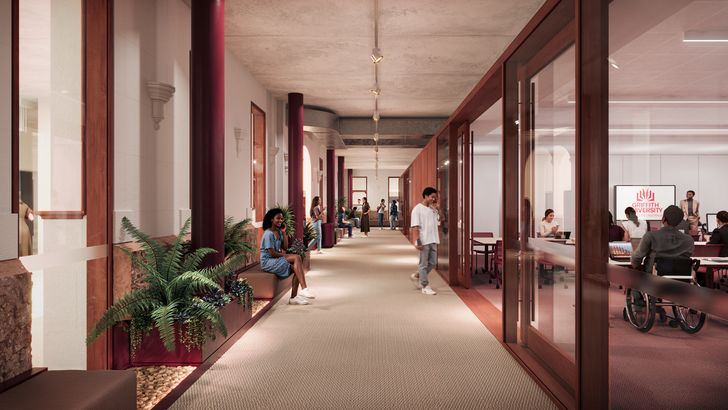
“By rethinking pedagogy, timetabling and spatial scale, we are creating flexible, modular environments that respect the building while allowing the university to adapt and grow,” she said.
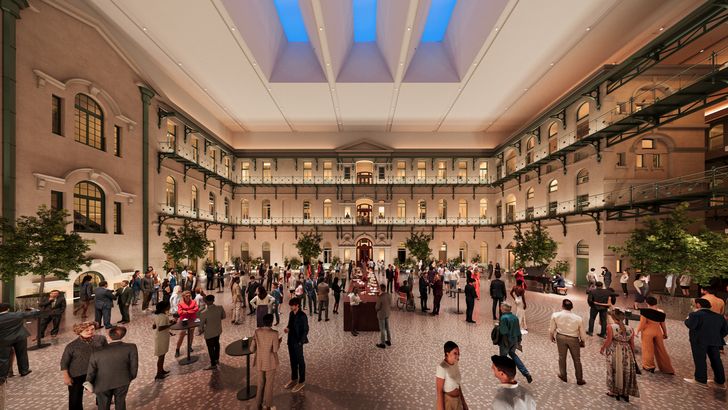
At the centre of the building, the restored central courtyard has been envisaged by Cox as an adaptable place for students’ study as well as for industry engagement and significant events such as graduation ceremonies. Three 12-metre-long skylights proposed above this space are designed to reconnect it to the external environment.
View gallery
Key areas will be reopened to the public, including the ground floor, accessed via the Elizabeth Street entrance and the first floor, accessed via the main Queen Street entrance. A new pedestrian lift that Cox says will be “integrated discreetly” into this main facade will enable equitable access. Restored heritage rooms will also be opened for public tours.
“Enduring craftsmanship shapes a living dialogue between old and new – an enduring envelope paired with considered layers, informed by river, sandstone, red cedar and tuff, and realised through local and reclaimed materials,” Newman commented.
The design also includes flexible furniture systems to allow environments to be reconfigured and to support diverse and collaborative learning experiences throughout the campus. Other parts of the building’s future program include a student library, multiple food outlets, a student hub with kitchen facilities and an end-of-trip facility, as well as a financial trading room for business students, a moot court for law students and cyber range room for IT students.
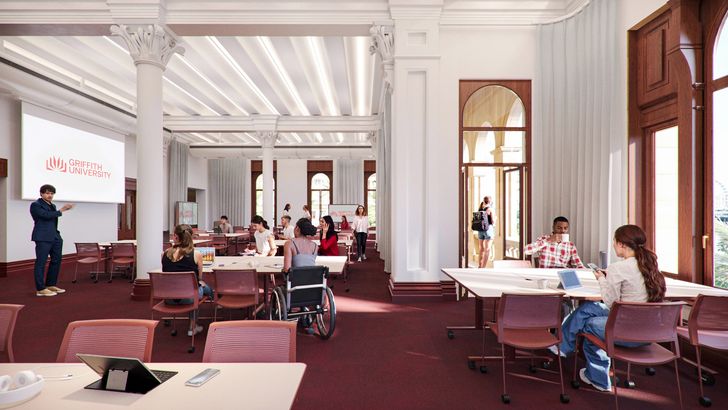
View gallery
Cox’s communique notes that the “transformation goes beyond additional learning space [and is] set to reinvigorate one of Brisbane’s most important heritage buildings and revitalise the city centre.”
“This project is about adding a considered new chapter to a landmark that has long played a civic role in Brisbane’s story,” Newman said.