

April 15, 2026 — 11:26am
Save
You have reached your maximum number of saved items.
Remove items from your saved list to add more.
Save this article for later
Add articles to your saved list and come back to them anytime.
Got it
AAA
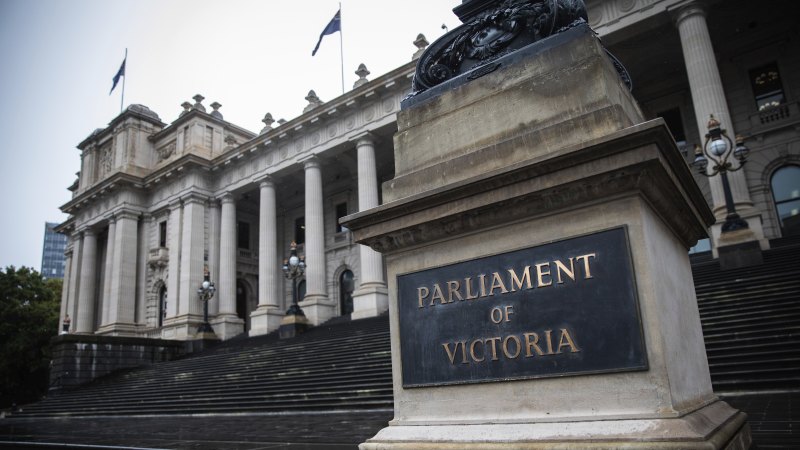
The Victorian election could be a financial free-for-all after the High Court ruled the state’s campaign-funding laws are unconstitutional.
The unanimous decision removes a cap on campaign contributions in place since 2018, levels the financial playing field between the major parties and independents and new parties and opens the door to a big-spending campaign in November.
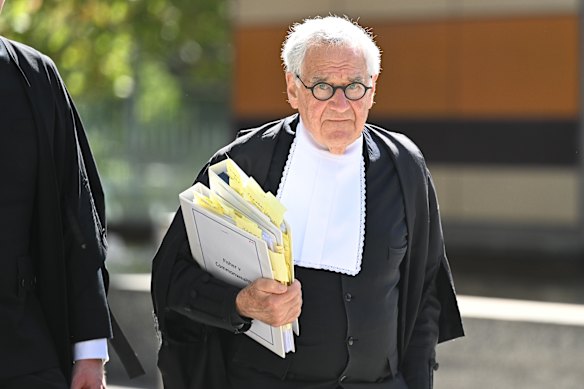 Former judge Ron Merkel, SC, represented the independent candidates in their successful High Court challenge.Joe Armao
The implications are most significant for teal candidates who will be able to access unlimited funds from the cashed-up Climate 200 group for campaign purposes. The judgment also opens the door for One Nation’s financial backer, Australia’s richest woman Gina Rinehart, to have a significant impact on the Victorian election.
The judges’ reasoning will be carefully read by the federal government, which is facing a challenge to its campaign finance laws on similar grounds by former independent MPs Zoe Daniel and Rex Patrick.
All seven judges of the court found that a special carve-out given to nominated entities under the state’s Electoral Act “impermissibly burdens” the Constitution’s implied freedom of political communication.
They ruled that because arrangements for nominated entities were crucial to the laws passing through parliament, the entire section of the Victorian Electoral Act which establishes caps on donations and tighter disclosure requirements was invalid. This went beyond the relief the plaintiffs had asked for.
The Victorian government must now decide whether to try to reinstate some elements of its campaign financing regime or allow unfettered private donations to shape the 2026 election result.
The case was brought by Paul Hopper and Melissa Lowe, two independent candidates who contested the 2022 state election and plan to stand again in November.
 Melissa Lowe is one of the independent candidates who successfully challenged the validity of Victoria’s electoral laws.Eddie Jim
Hopper, the founder of the West Party which intends to field candidates in all electorates in Melbourne’s west, contested the seat of Werribee held by then-treasurer Tim Pallas. Lowe, a teal candidate backed by the Climate 200 movement, ran against former opposition leader John Pesutto in the seat of Hawthorn.
In a joint statement, Lowe and Hopper hailed the court decision.
“This is a victory for all Victorian voters and for the quality of our democracy, ensuring a more level playing field so that they are more likely to have the representative in parliament that they would prefer,” the pair said.
The Centre for Public Integrity welcomed the decision, which it said confirmed long-standing concerns that Victoria’s electoral laws unfairly advantaged the major parties.
It urged the Victorian government to reintroduce campaign funding laws which applied equally to all candidates.
“Today’s judgment makes it clear: governments cannot rig electoral laws in favour of major parties and expect to get away with it,” the centre’s executive director Catherine Williams said. “This is not just a Victorian issue. Any government attempting to entrench political advantage through funding laws is now firmly on notice from the High Court.”
The case centred on an overhaul of Victoria’s electoral laws in 2018. While the new laws were designed to guard against corruption and undue influence in politics by shifting state campaigns away from private donors and towards publicly funded elections, they privileged the financial affairs of the established parties.
 Former independent candidate Paul Hopper.Luis Enrique Ascui
While the law caps campaign donations at $4970, it provides an exemption for funds transferred to registered political parties through their nominated entities.
The only parties with nominated entities registered with the Victorian Electoral Commission are the Liberals, Labor and the National Party. In the first three years of the current electoral cycle, the Liberal Party received a total of $7.07 million from the Cormack Foundation and the ALP $5.38 million from its nominated entity, Labor Services & Holding.
Related Article
Although it is theoretically possible for any registered political party to establish a nominated entity, the laws make it practically impossible for any new party to do so. After July 1, 2020, any seed money donated to nominated entities is also subject to the campaign-donation cap.
The laws came into force in the lead-up to the 2022 state election. Lowe spent $181,000 on her campaign for Hawthorn. She estimates that, if not for the cap on donations, she would have received additional donations of between $50,000 and $200,000 from the Climate 200 group.
Counsel for the independent candidates, Ron Merkel, SC, told the court at a February hearing that the preferential arrangements were an “abuse of incumbency” and that the nominated entity exemption was “solely enacted for the benefit of the three legacy parties”.
The Victorian government, represented by Solicitor-General Alistair Pound, agreed that the July 1, 2020, deadline for creating nominated entities was discriminatory but that, once removed, the laws should be allowed to stand.
The laws were passed with by the government with support of the Greens, but the Greens have since opposed the exemption for nominated entities.
An independent review of the laws commissioned by the government recommended in 2024 for the carve-out to be abolished. The Centre for Public Integrity and Climate 200 have pushed for four years to remove the special exemption.
An attempt by the Victorian government late last year to amend the laws and avoid a High Court challenge failed to gain sufficient support in parliament.
Start the day with a summary of the day’s most important and interesting stories, analysis and insights. Sign up for our Morning Edition newsletter.
CLARIFICATION
An earlier version of this story said the High Court decision would remove an exemption for nominated entities of major political parties from the cap on campaign donations. The story has been adjusted to reflect that the decision removes any cap on campaign donations.
Save
You have reached your maximum number of saved items.
Remove items from your saved list to add more.
 Chip Le Grand leads our state politics reporting team. He previously served as the paper’s chief reporter and is a journalist of 30 years’ experience.Connect via email.From our partners