
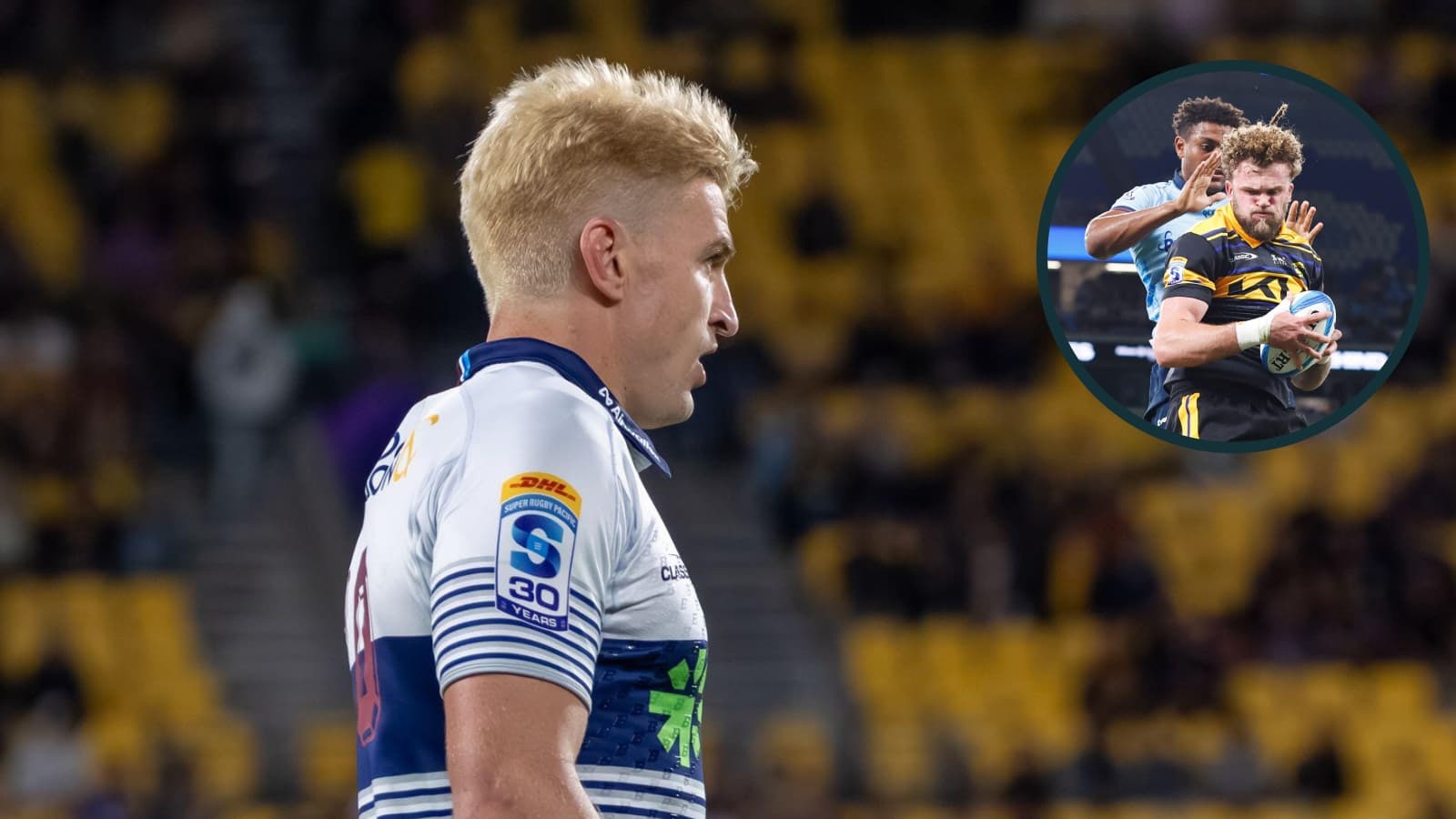
Officials are eager to revitalise Super Rugby Pacific and have tabled several radical ideas to turn around the tournament’s ‘plummeting appeal’.
The demise of Moana Pasifika, which will be disbanded at the end of the 2026 season, has left officials scrambling to reformat the tournament with a double round robin regular season preferred.
Radical changes floated for Super Rugby Pacific after Moana Pasifika’s demise
This is according to a report in The Australian by Planet Rugby columnist Christy Doran, who states that Super Rugby officials have proposed an 18-match season and relaxed player eligibility rules in a bid to revitalise the competition.
Earlier this year, Super Rugby Pacific CEO Jack Mesley said that the tournament organisers had no intention of adding new teams to the competition following the demise of the Melbourne Rebels, with no appetite for the return of teams like the Jaguares, South African franchises, or the Sunwolves.
“We’ve got a job to solidify and really contain and fortify what we have now,” Mesley said.
“So that is where our energy is focused on strengthening our existing clubs, ensuring that the fans understand what Super Rugby Pacific is today, the teams that are involved and the wonderful talent that we have.”
Super Rugby Pacific ‘rates’ better without South Africa as CEO issues blunt verdict on expansion
Having failed to contain and fortify Moana, a 10-team competition now looks set to be the preferred route, but paired with an opening of borders either side of the Tasman Sea to free up the opportunity for New Zealanders to play in Australia and remain available for the All Blacks, and vice versa.
Broadcaster Stan Sport has also tabled the return of a conference system, which would guarantee Australia’s presence in the finals, the report adds.
Rugby Australia and New Zealand Rugby have too much power
It’s hoped that a double round robin regular season would help turn around Super Rugby’s plummeting appeal, with club match ticket sales paling in comparison to Wallabies and All Blacks Tests.
It is further reported that despite Mesley’s appointment as chief executive, concerns remain among Super Rugby officials that their powers are limited, with Rugby Australia and New Zealand Rugby retaining control.
“We don’t think the commission has gone far enough,” one New Zealand Super Rugby CEO said. “More independence is needed. Jack’s been a breath of fresh air, and he’s had a great competition view, but anything that happens with the format is reserved for the national unions.
“Seldom do they talk about what’s of benefit for the Super Rugby competition. They see it as a development competition rather than a top-tier, commercial product. They’re not intentionally being difficult, but they can’t take their All Blacks and Wallabies hats off.”
Furthermore, Super Rugby officials want players to still be eligible for their national teams even if they are playing on the other side of the Tasman but changing the unions’ strict selection policies remains a stumbling block.
Calls to open the borders and change the All Blacks and Wallabies selection policies
New Zealand Rugby retains a hard line of not selecting any players plying their trade outside of New Zealand, unless they are contracted to NZR – like Ardie Savea and Rieko Ioane, who are enjoying playing sabbaticals at Kobe and Leinster respectively.
Rugby Australia’s policy is less clear-cut, as high-performance director Peter Horne last week was reported as saying a maximum of three players could be selected from overseas after stating that Giteau Law was ‘kind of redundant’ last year.
Want more from Planet Rugby? Add us as a preferred source on Google to your favourites list for world-class coverage you can trust.
Both unions believe that players remaining in Australia and New Zealand best prepare them for international rugby, with the renewed calls for change sparked by Beauden Barrett’s comments.
A fixed salary cap for all clubs is another idea that has been floated, but that comes with its own complexities as RA and NZR contract players through national top-up schemes for top Wallabies and All Blacks.
All these topics are set to be widely discussed this month when all the clubs gather in Christchurch for the Super Round.