
While some parts of F1 2026 have been a positive surprise or seen as going above expectations (we’re looking at you, Mercedes), others have been a disappointment so far.
Our team has gathered to offer their choices for this based on the first three races, so let’s take a look.
F1 has snatched disappointment from the jaws of triumph
By Mat Coch
Against a backdrop of fevered interest, we raced into the F1 2026 season hopeful of a bright new tomorrow. New cars, new engines, and new possibilities.
Instead, the opening months have been defined by drivers complaining about the unnatural driving style, fans left confused by the on-track product, and a form of racing that is beginning to feel increasingly unfamiliar to its core audience.
Instead of talking about late braking, daredevil moves and edge-of-your-seat qualifying laps, the conversation has shifted to energy deployment, lift-and-coast and superclipping.
The underlying premise of the 2026 regulations is one I can support. At its core is the idea of difference, creating enough variation between cars to allow them to genuinely compete on track.
More about the F1 2026 regulations
Explained: The 2026 engine regulations set to seriously shake up Formula 1
F1’s complex power unit upgrade system from 2026 onwards
And that distinction is everything. Overtaking and compelling racing emerge when one car, one concept or one driver is stronger than another.
Be that in a corner, on a circuit, over the course of a race or even over a season… in truth, the more the better.
But smooth over those edges through rules that prioritise convergence over innovation, and the result drifts toward procession. That is where we had arrived, with DRS our sticking plaster saving grace.
The 2026 regulations were supposed to reverse that trend, reintroducing natural variation as teams tackled new aerodynamic and kinematic challenges in their own inimitable ways.
Instead, much of that has been overshadowed by the power units and hybrid systems, which now dominate the competitive picture.
What we’re left with is a product caught in a personality crisis. It’s not quite what Formula 1 was and not even close to what it promised to be.
This is the outcome of regulation by committee; the inevitable result of compromises and concessions that prioritised manageability over identity. The end product is difficult to champion with any real conviction.
And that is the most disappointing part. At a time when more fans than ever are tuning in to the sport, Formula 1 has missed the mark by a considerable margin.
Whining drivers should walk
By Michelle Foster
Good Dog, these drivers’ complaints. You are paid millions of millions to do the most awesome job in the world. And you hate it.
Well, you know what? Quit!
There is someone else, potentially even more talented, who would happily take your place.
Yes, you are 100 per cent allowed to have an opinion, to voice said opinion and to complain.
But again and again and again? Move on. These are the regulations, this is F1 for the next year, two, three, even more.
If you don’t like it, walk away.
You travel the world, and often with your family by your side, you are treated like royalty wherever you go, you earn more money in one year than most of us will earn in a lifetime, and you’re upset about super-clipping or battery harvesting.
About not getting to go flat-out for an entire lap? That’s your biggest problem in life?
I’m not downplaying the danger of those situations, and I breathed a huge sigh of relief that Ollie limped away from his Suzuka crash.
But come on. Don’t like it? Leave.
You cannot complain day in and day out about a job that affords you a life the rest of us will never, ever, ever have.
It may not be the best set of regulations, and there are no V8 engines on the track (now there’s a reason to complain), but you are racing around the world for half of the year. And this year, proper wheel-to-wheel racing too.
It may not be the way you wanted to go racing, but as long as teams have individual cars and engines, F1 will always need artificial ways to ensure competition.
You are an F1 driver! Only 21 other people can say that.
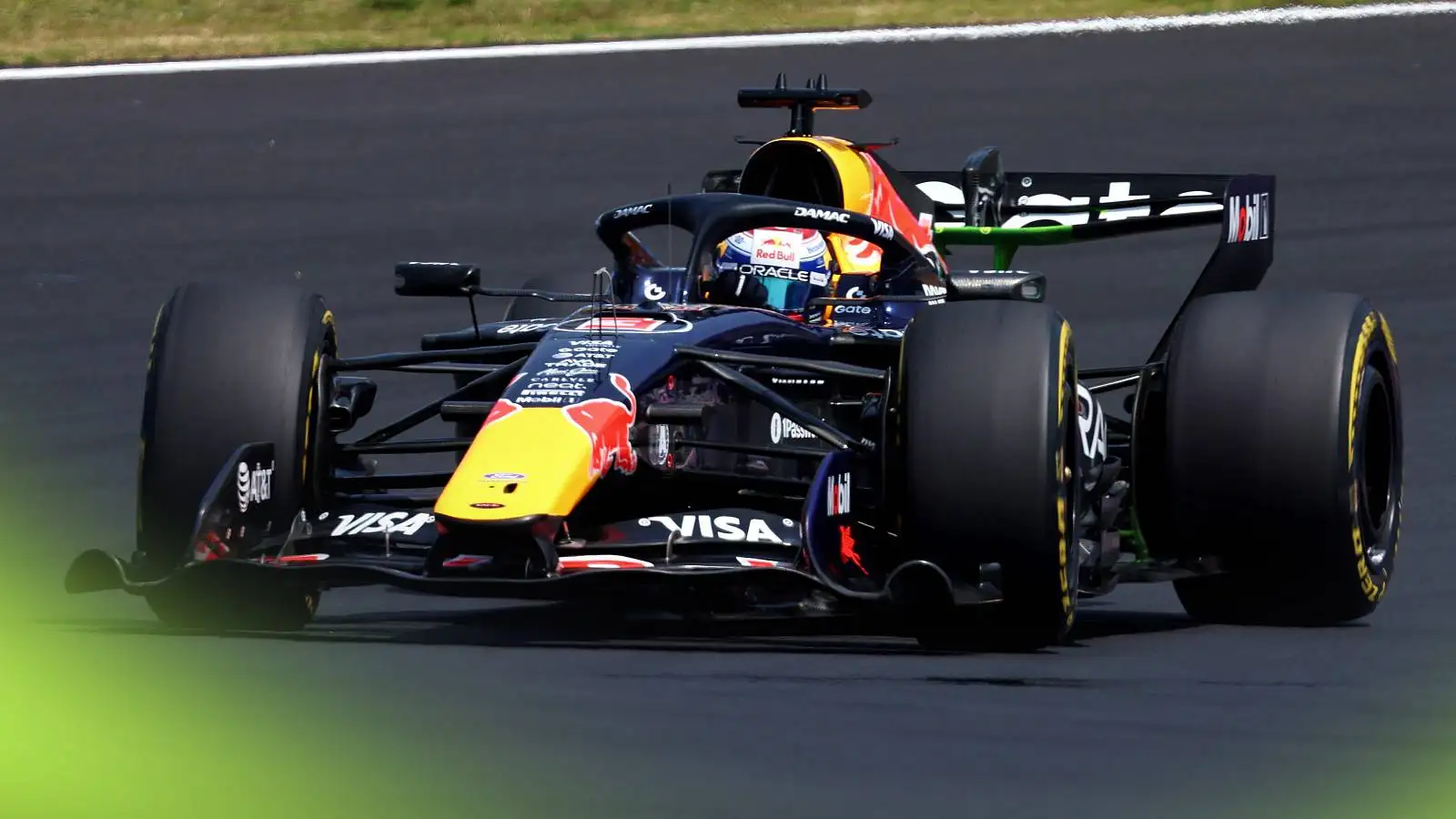
Red Bull’s lacklustre start to new regulations
By Thomas Maher
With some star names having departed Red Bull’s halls since the last regulation reset in 2022, the full impact of those losses now seems to be laid bare as the Milton Keynes-based squad has started the new cycle with a car that, at best, appears only upper-midfield rather than a frontrunner.
Given Max Verstappen’s capabilities, his driving the RB22 appears a fundamental mismatch; even his best efforts appear unlikely to reward him with a podium at this point.
Certainly, the positive surprise is that Red Bull Powertrains has hit the ground running and appears competitive right from the off, but the long-standing issue of an ageing wind tunnel has bit.
Not only has the RB22 started life on the back foot, but technical director Pierre Wache acknowledged in the pre-season that correlation issues, while reduced with the new regs, remain until the new wind tunnel comes online.
After seeing Red Bull contend right at the sharp end, delivering race victories and being the great disrupters of the paddock over the last 15 years, starting off the year as just a face in the crowd is a huge loss to F1’s landscape.
Aston Martin denying Fernando Alonso a final flourish
By Oliver Harden
It has to be Aston Martin.
There was hope that Fernando Alonso’s career would finish with a flourish when the team followed up the capture of Honda in 2023 with the signing of Adrian Newey 12 months later.
The potential of this team remains as high as it ever was. Indeed, it still seems impossible that one of such mighty resource and brainpower could fail.
But a disastrous start to 2026 means the journey to that point will almost certainly take longer than Fernando, 45 in July, has left to give.
A great shame.
Williams’ false start despite high hopes for 2026
By Henry Valantine
I’m overriding the temptation to go for the regulations themselves here, given the discussions over potential tweaks which may iron out some of the issues that we’ve seen so far.
I’ll keep focus on track and, for me, it has to be Williams at this stage.
Having long held 2026 in the distance as what would hopefully be a breakthrough year in its quest to get back to the front, it seems that it still has a long way to go to recover from its stumbling start.
It was the only team to miss the behind-closed-doors shakedown in Barcelona in January and, while it recovered with an impressive lap count in Bahrain, the emergence of a significant weight issue is not helping.
Both Alex Albon and Carlos Sainz have been vocal in what they feel needs addressing with the FW48, and it has been intelligent on the team’s part to conduct a couple of the opening rounds as de facto test sessions, given the team’s overall lack of competitiveness.
That’s not to say that the team can’t come good in the end, but with what appears to be the best power unit, it feels like a big opportunity missed at this stage.
Want to be the first to know exclusive information from the F1 paddock? Join our broadcast channel on WhatsApp to get the scoop on the latest developments from our team of accredited journalists.
You can also subscribe to the PlanetF1 YouTube channel for exclusive features, hear from our paddock journalists with stories from the heart of Formula 1 and much more!
Read next: Adrian Newey faces brutal Aston Martin reality as AMR26 reliability crisis bites early