
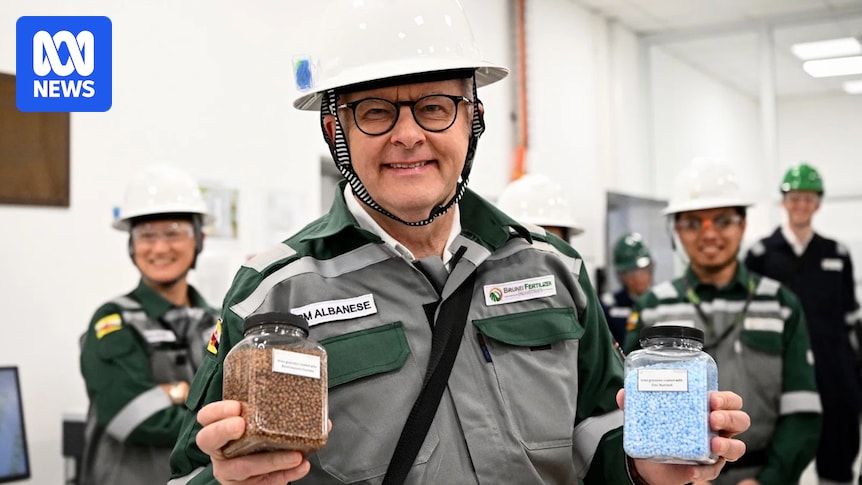
Prime Minister Anthony Albanese flew to a country about double the size of the Australian Capital Territory in a bid to secure an ongoing supply of Australia’s most essential crop fertiliser.
Australia imports more than two-thirds of its nitrogen fertiliser urea from the Middle East but the ongoing conflict and closure of the Strait of Hormuz has disrupted the flow.
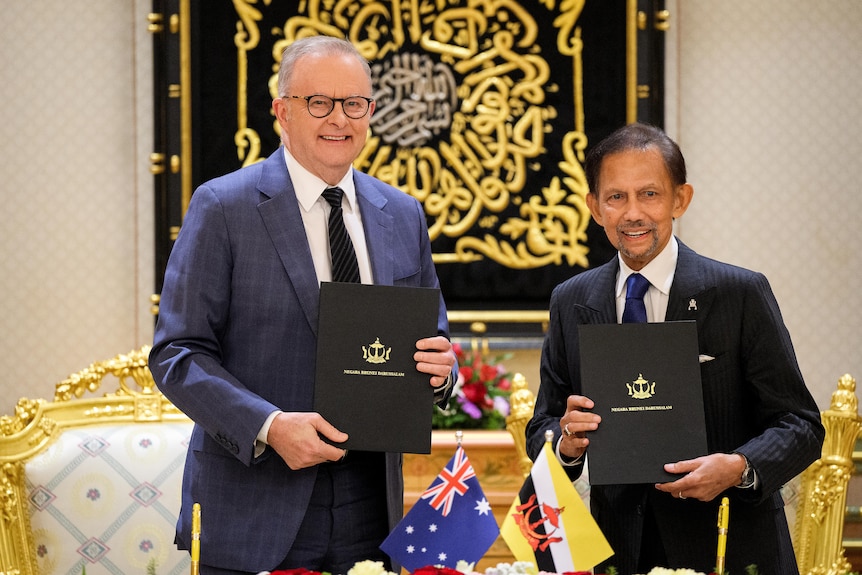
Anthony Albanese and the Sultan of Brunei Darussalam, Haji Hassanal Bolkiah at the south-east Asian nation’s Royal Palace in Bandar Seri Begawan. (AAP: Bianca De Marchi)
Facing the potential threat of a hit to crop yields in the coming months, Mr Albanese set his sights on Brunei.
On Wednesday, the prime minister met with Brunei Darussalam’s Sultan Haji Hassanal Bolkiah and toured a processing plant while discussing the stable exchange of urea for Australian food and agricultural products.
“Brunei Darussalam and Australia share deep concern over the situation in the Middle East and its consequences for our region,” a joint statement issued by the leaders said.
“We reaffirm our commitment to strengthen energy and food security, to support the flow of essential goods between our two countries, including petroleum oils, such as diesel and crude oil, as well as agriculture and agri-food essentials and key agricultural inputs such as urea.”
What is urea?
Urea is the world’s most commonly used nitrogen fertiliser.
The synthetic compound is critical for producing high yields out of many crops grown in Australia, such as wheat, barley and oats.
Andrew Whitelaw, the co-founder of agriculture and food manufacturing market analyst group Episode 3, said urea was essential for Australian farming.
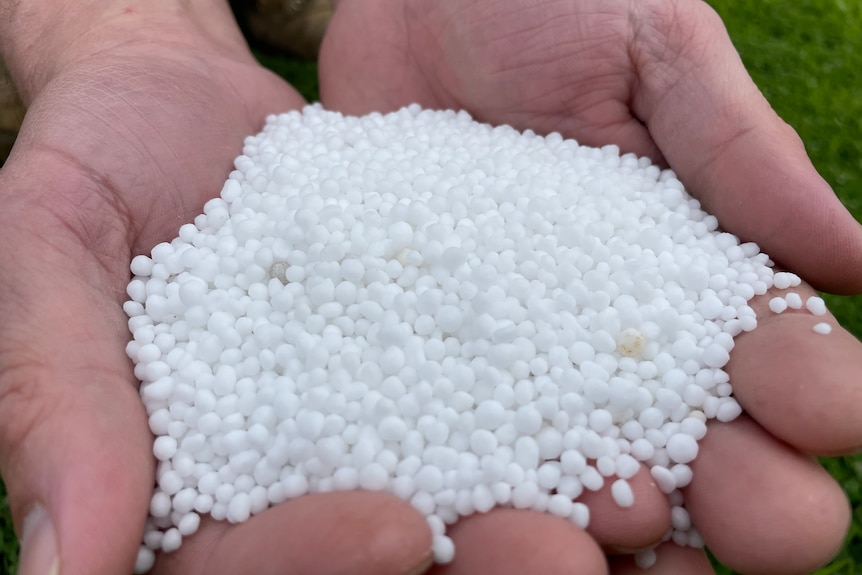
The fertiliser-grade nitrogen compound urea has contributed to record crop harvests in Australia in recent years. (ABC Wimmera: Andrew Kelso)
“Urea is a fertiliser that is the most required in Australia for our grain growing operations and oil seeds,” he said.
“It allows us to get the full potential of a crop. You can still grow a crop without urea, because we have organic farming systems, but you don’t ge the full potential.”
Mr Whitelaw said grains produced without the use of urea tend to yield up to 40 per cent less and had a reduced protein quality than those fertilised with the compound.
Australia’s global sources of urea
Australia imported 65 per cent of its fertiliser-grade urea in 2025 from countries in the Middle East, according to figures provided by the Department of Foreign Affairs and Trade.
The United Arab Emirates, Saudi Arabia and Qatar contributed the largest share of value and volume, accounting for more than 55 per cent of Australia’s imports.
Countries in south-east Asia were Australia’s next-largest sources of urea, the data showed.
Imports of the fertiliser from Brunei Darussalam accounted for 11 per cent of value and volume last year.
The country also provides about nine per cent of Australia’s diesel imports.
Mr Whitelaw said Australia typically imported about 3.5 million tonnes of urea each year.
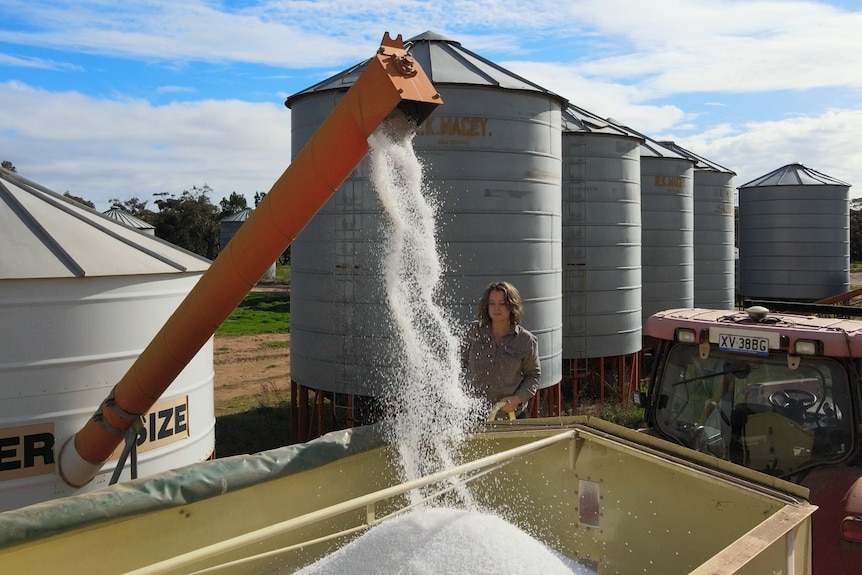
The price of urea jumped from $750 a tonne in 2021 to $1300 in 2022. (ABC Rural: Clint Jasper)
The federal and Western Australian governments have provided a combined $574 million in funding for the creation of a domestic urea processing plant in the Pilbara region, operated by Perdaman Chemicals and Fertilisers.
The plant is expected to open in 2027 and will be the nation’s largest processing site, capable of producing an estimated 2.3 million tonnes of the fertiliser each year.
Why is Brunei important to Australia?
Mr Whitelaw said Australia had imported close to 20 per cent of its annual requirement of urea prior to the conflict in the Middle East.
The majority of Australia’s urea imports come into the country between April and June each year but after the war began the cost to importers more than doubled, he said.
In mid-February, urea cost about $700 per tonne to import into Australia. That has since shot up to more than $1,550 per tonne, according to estimates compiled by Episode 3.
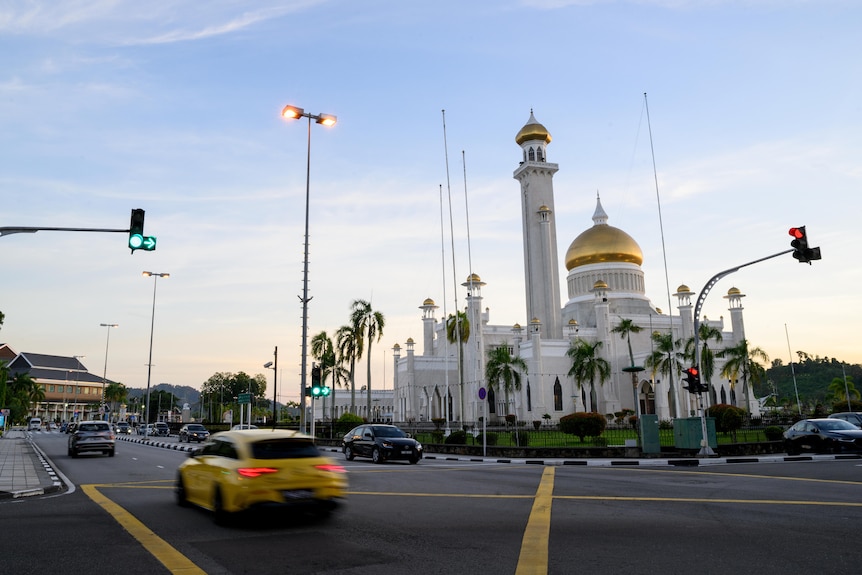
Brunei Darussalam has a population of more than 466,000, which is about the same size as the city of Canberra. (AAP: Bianca De Marchi)
“The Middle East is, for all intents and purposes, shut down,” Mr Whitelaw said.
“Even if it does open up, there’s urea on the ground in storage but producing new urea means that you’ll have to go on a two-week wait list.”
He also said Australia did not have local strategic reserves of the fertiliser for use in the event of a crisis or supply disruptions.
That means Australia’s crop growers need to look to import urea from the next-cheapest, most accessible and closest option: Brunei Darussalam.
Mr Albanese said his visit to the south-east Asian country would look to soften the blow to Australians from the Middle East war.
“Engaging with critical regional partners such as Brunei Darussalam and Malaysia will help ensure Australia’s energy supply remains secure during times of uncertainty,” he said in a statement.
“We are taking every step to reinforce relationships and engage with key partners to keep our fuel supply flowing.”
Mr Whitelaw said in recent weeks Australia’s shipments of urea have dropped considerably.
“We estimate there’s about 300,000 tonnes coming into Australia in April so far. Last April, we imported about 600,000 tonnes,” he said.
“[Of] the volume that’s coming in during April, there’s only one boat coming in from the Middle East and the rest is coming in from Brunei and Indonesia.
“If we start to strip out the Middle East … everyone’s going to be chasing that small amount of volume in Asia because you’ve got places like India, Vietnam [and] Thailand who will be wanting to get access to this Asian volume as well.
“There’s been criticism of Albanese going out to Singapore and going out to Brunei, but I actually think it’s very important that we have a very close relationship with these countries because we are going to be reliant on them for the next foreseeable [future].”
What happens if Australia’s urea imports reduce?
Mr Whitelaw said if Australian farmers needed to resort to growing crops without fertilising them with urea, their overall production output would drop this year.
“It is a major issue because of the fact that it removes a lot of the potential,” he said.
“Australia has been producing record crop after record crop in recent years, despite even having bad weather.
“But that potential is underpinned by the science that we use to produce the crop. Urea is part of that science.”
He also said he expected farmers in countries across the world who rely on urea to potentially scale back crop planting.
“They might say: ‘I’ve got 10,000 hectares, I might only plant 5,000 because it’s a huge risk at the moment’,” he said.
“Australian farmers are obviously a little bit different from a farmer, say, in Bangladesh or India or other parts of the world — our capacity to pay for fertiliser is higher.
“Hopefully this all gets resolved as soon as possible because, we’re talking about Australia now, but it is a global issue.”