
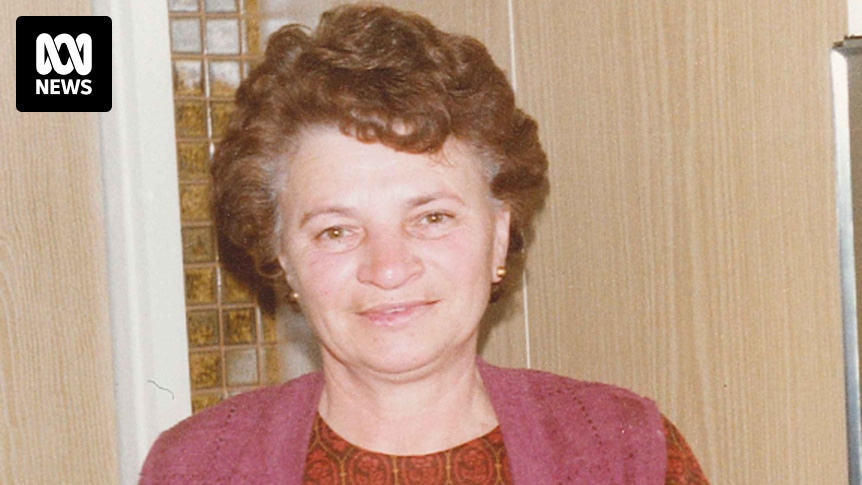
Two Melbourne men have been found guilty of the manslaughter of Canberra woman Irma Palasics during a violent home invasion in 1999.
Irma Palasics died after she was beaten, tied up and gagged, along with her husband Gregor.
Steve Fabriczy and Joseph Vekony were arrested after they were matched to two DNA samples in the couple’s fridge collected more than 20 years before.
They were both charged with murder, and spent weeks on trial, during which the court was presented with 53 witnesses, 14 statements or recordings, and 97 exhibits.
While manslaughter was not mentioned in the indictment, the jury was told it could consider it as the statutory alternative to murder.
After days of deliberations, the jury today returned verdicts of guilty for manslaughter.
The jury also found the pair guilty of a raft of other charges including that they carried an offensive weapon into the house where they confined and robbed the couple.
Vekony was found guilty of an earlier burglary at the Palasics’s home in 1998.
The sound of ‘terrible screams’
Forensic scientists tested items in the fridge after Mr Palasics, the only eye witness, said he’d seen one of the men taking a drink of something.
He told police he saw two men in balaclavas inside the house, one attacking him and the other his wife.
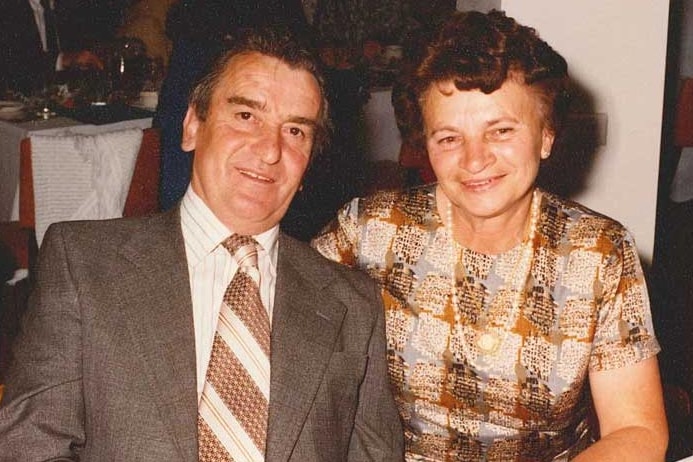
Both Irma and Gregor Palasics were gagged, bound and beaten during the 1999 home invasion. (Supplied: ACT Policing)
One of the men had jumped at him “like a tiger”, Mr Palasics said, adding he was demanding to know where the money was, even though Mr Palasics told him there was no money.
Mr Palasics said he heard his wife’s “terrible screams” for some time before it became quiet.
Mr Palasics has since died and his interview was played to the court.
Forensic images of the house showed it was ransacked, with every drawer and cupboard emptied, until the men found a hidden compartment under the oven in the kitchen.
Cash amounting to $30,000, as well as jewellery, was taken from the hiding spot as the men fled.
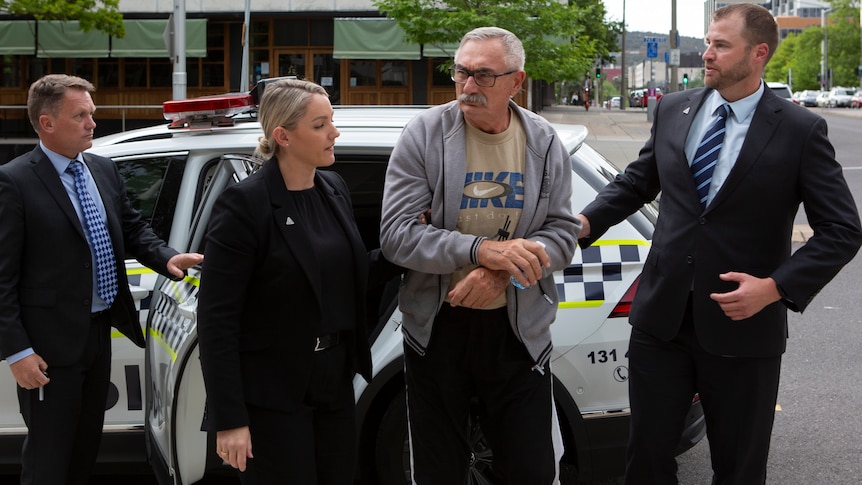
Mr Vekony was also found guilty of an earlier burglary at the Palasics home in 1998. (Supplied: ACT Policing)
Mr Palasics told police he’d been too scared to move, and believed he may have been unconscious for a time, before discovering his wife had died.
A key part of the evidence was an undercover police operation when Fabriczy admitted being there but said he was only the lookout, and only entered the house to help Vekony out of the bathroom window.
He denied any part in the violence.
“Honestly I never murder anybody,” Fabriczy told an undercover police officer, also stating he never knew Mrs Palasics had died.
Fabriczy pleaded guilty to burglary at the beginning of the trial.
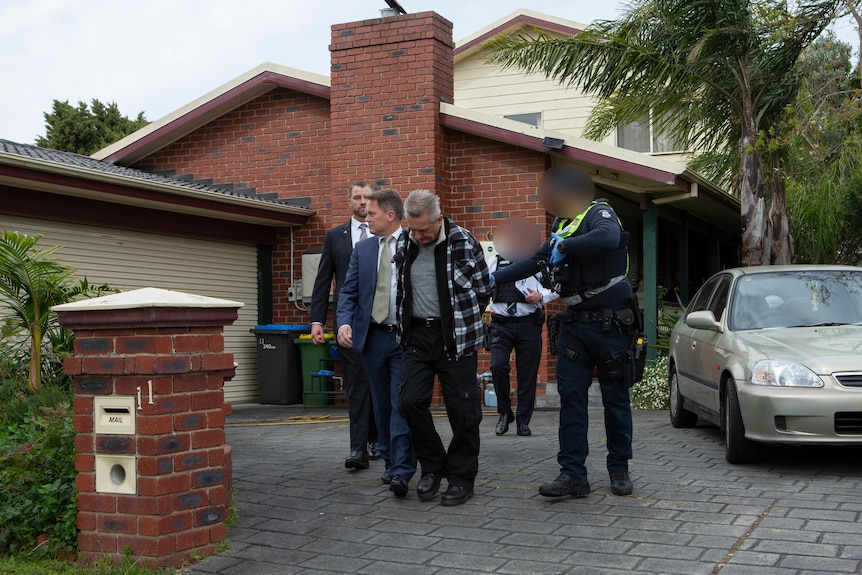
Steve Fabriczy was arrested at his Melbourne home 2023. (Supplied)
Vekony denied ever coming to Canberra.
But today, the jury found he was the man who attacked Irma Palasics at her former house, as she went to the garden to get a lemon in October 1998.
She interrupted two men before being punched in the face by one from whom she pulled a balaclava.
Forensics scientists told the court they found DNA linked to Vekony inside the balaclava.
‘A bashing so brutal’
Outside the court following the verdict today, Irma and Gregor Palasics’s grandson, John Mikita, said his family had waited for justice for “26 long years”.
“Our family is today overwhelmed with grief and gratitude as those responsible have now been held accountable,” Mr Mikita said.
“Irma and Gregor did not deserve what was done to them on that horrific night in November 1999.
“A bashing so brutal and with such devastating consequences.”
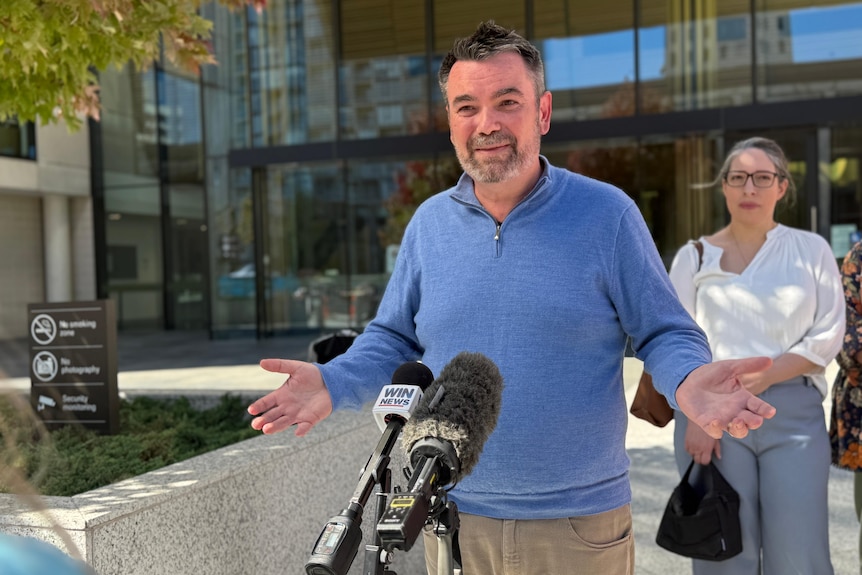
John Mikita said they had never given up in their fight for justice for his grandmother Irma Palasics. (ABC News: Toby Hunt)
Mr Mikita said Mrs Palasics was “so much more than a victim”.
“She was our mum, our grandmother, our sister, and our friend,” he said.
“And Gregor was a gentle, loving husband and a grandfather who cared deeply for his family, for our family.
“But he was forever altered after beloved Irma’s death.”
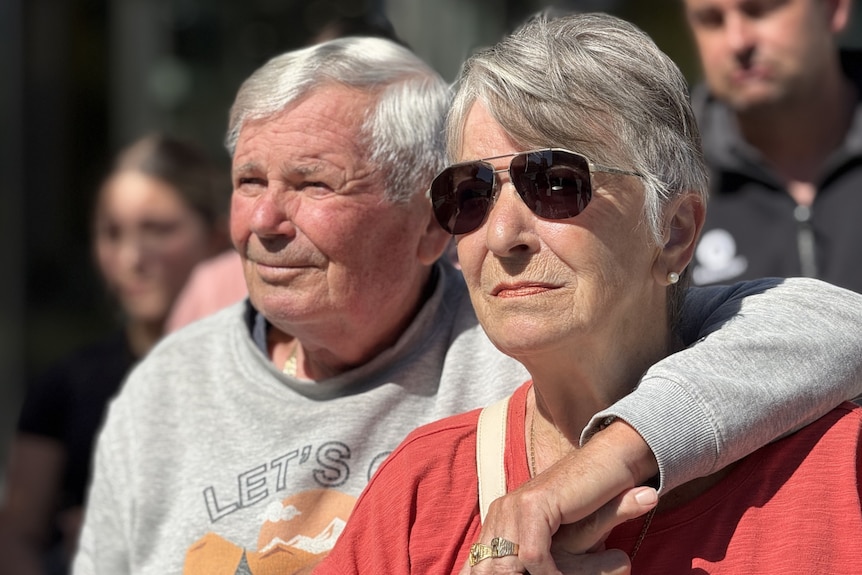
Members of Irma Palasics’s family gathered outside the court after the guilty verdict was handed down. (ABC News: Toby Hunt)
He said the family had feared that “justice might never come”.
“But we could never give up,” he said.
“We want to sincerely thank the police, the investigators and the prosecutors who refused to let Irma and Gregor’s case be forgotten.
“Their determination has finally brought us answers and, most importantly, justice.
“Nothing will ever bring Irma back or undo the pain of that night, but our family can today rest knowing that we now know who killed Irma.”
A confounding case
Mrs Palasics’s death was a case that had stumped police for years.
There were 331 suspects before Fabriczy and Vekony were targeted, all of whom were cleared.
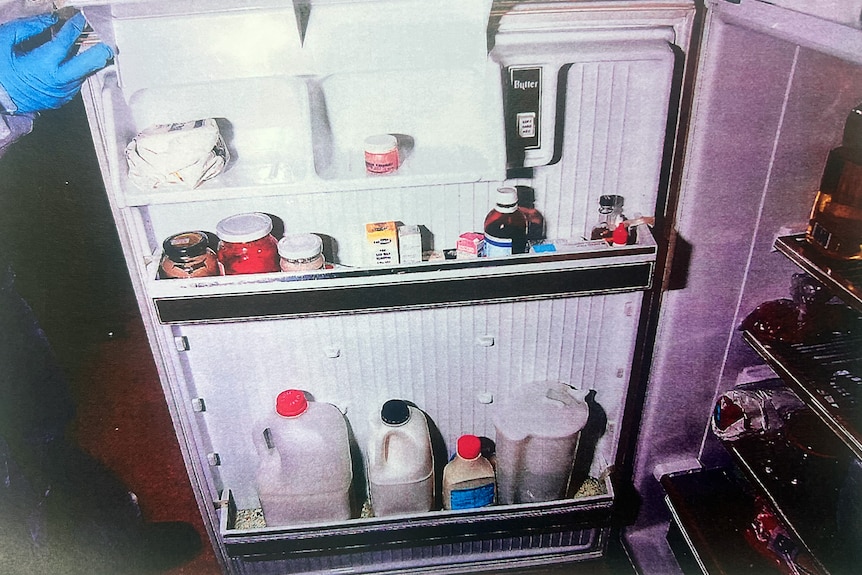
The jury was shown a milk container and water jug containing DNA of the two accused on the final day of evidence in the trial. (ABC News: Supplied: ACT Supreme Court)
Generous rewards for information, and an ongoing campaign of posters around Canberra saying, “Who killed Irma?” yielded nothing.
But in 2020 that all changed when police finally had a match from a milk bottle in the Palasics’s fridge to Fabriczy’s DNA.
But that was only the start.
Police set up a fictitious crime syndicate which offered Fabriczy work, paying him $10,000 for tasks said to be part of the group’s activities.
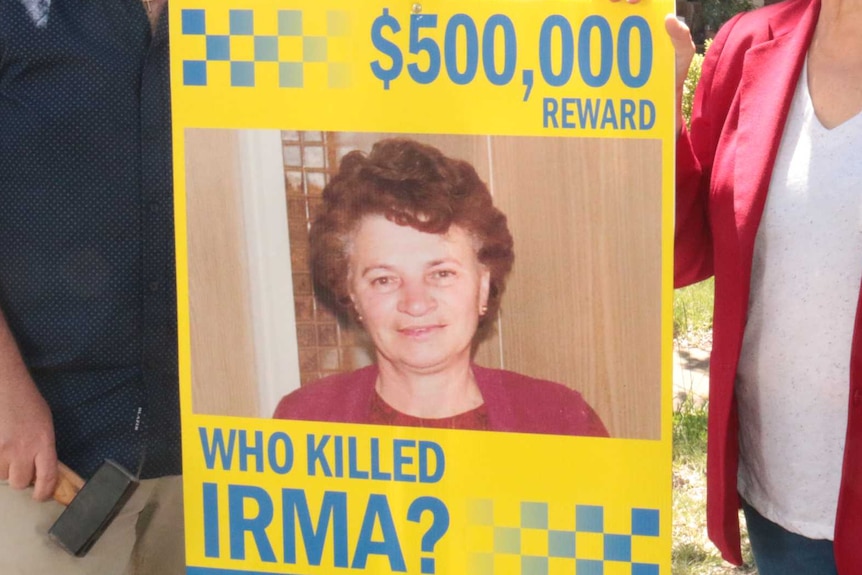
A campaign to identify those responsible for the death of Irma Palasics went on for years. (ABC News)
It was in a meeting with the head of the pretend syndicate that police began to draw out the details, after telling Fabriczy his DNA had been found at a murder scene in Canberra.
He was told if he told the truth the syndicate had a contact who could help, but he had to be honest.
It was then that Fabriczy eventually said he had gone to Canberra to help a man called Joe with the burglary, saying he’d heard the struggle and Mrs Palasics saying: “Please don’t hurt me”.
He also revealed $30,000 was found in the house and Vekony had given him $12,000 of the money, before the pair had driven straight back to Melbourne.
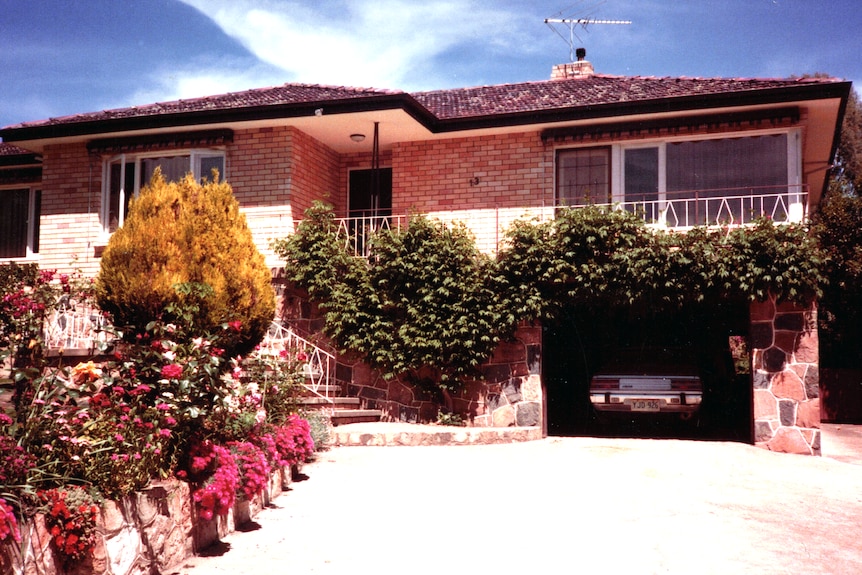
The Palasics’s Red Hill house, the site of a previous burglary before they relocated to McKellar. (Supplied)
Police had never revealed publicly how much money was taken.
Hints about who the second man was led to a second operation, this time on the road to Cape York, when police officers followed Vekony on a driving holiday.
A discarded coffee cup along the way gave police the final clue, when it was matched to the DNA found on the water jug in the Palasics’s fridge.
The defence
The defence barristers, Skye Jerome for Fabriczy and Travis Jackson for Vekony, spent most of the eight-week trial questioning the veracity of the forensic case, questioning the DNA results, suggesting contamination issues at the house and in the laboratory.
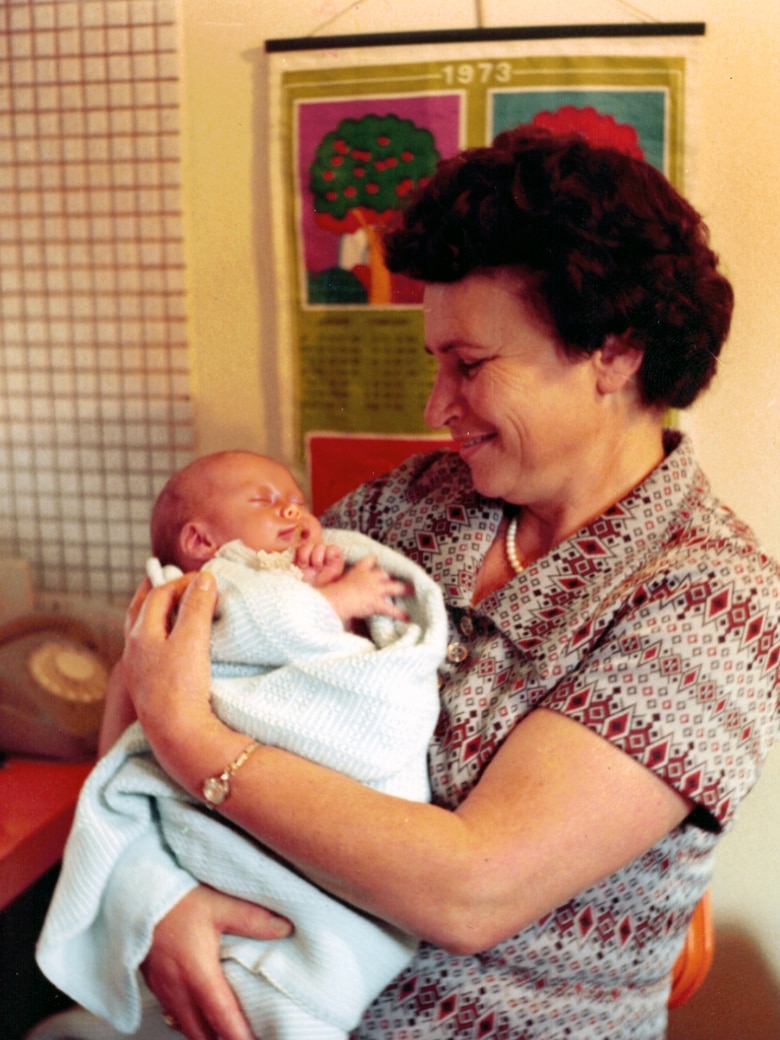
Irma Palasics and her first grandson Warren. (ABC News: Supplied)
The DNA experts called by the prosecution told the jury the pair couldn’t be excluded as the contributors to the samples, and the DNA was at least one billion times more likely to be theirs than anyone else’s.
One told the jury the results are expressed that way because not everyone in the world has been tested and recorded.
Ms Jerome took aim at the processing, suggesting the tests should have compared samples from a number of other people included in the pool of suspects.
The court also heard Mrs Palasics had described a young, blond man with an Australian accent as the one who attacked her in 1998 who the defence team suggested could not have been either of the accused men.
Then there was a man who confessed he’d been there.
At the time the man had been in a mental health ward, where he told staff he had been at the house, but left with his friend before the violence.
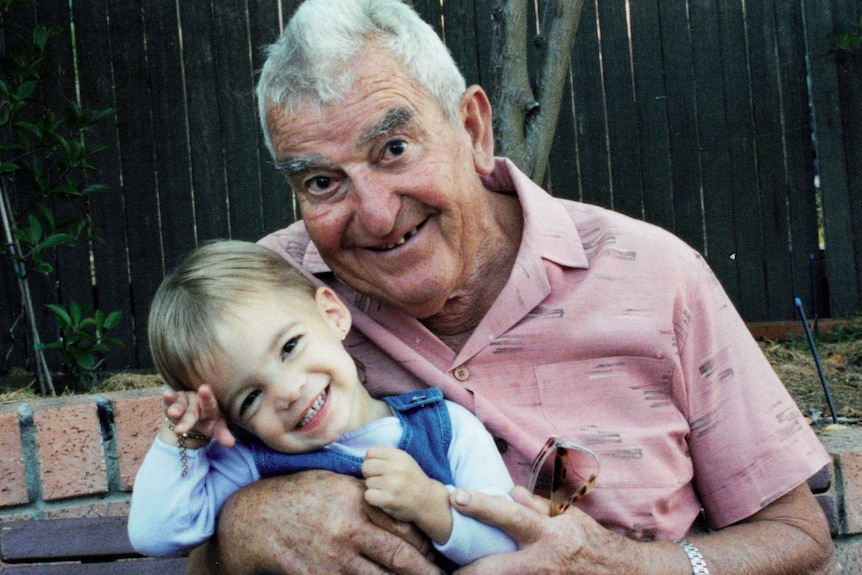
Gregor Palasics, pictured with his great-granddaughter Alyssa, was “forever altered” by what happened on the night of his wife’s death. (ABC News: Supplied)
In later statements to police the story changed, when he said that when he realised there would be violence he and his friend got out of the car they were in at the lights.
Police dismissed him at the time as an attention seeker.
But Ms Jerome and Mr Jackson put a theory to the jury that there was a third person in the house, even listing other suspects.