
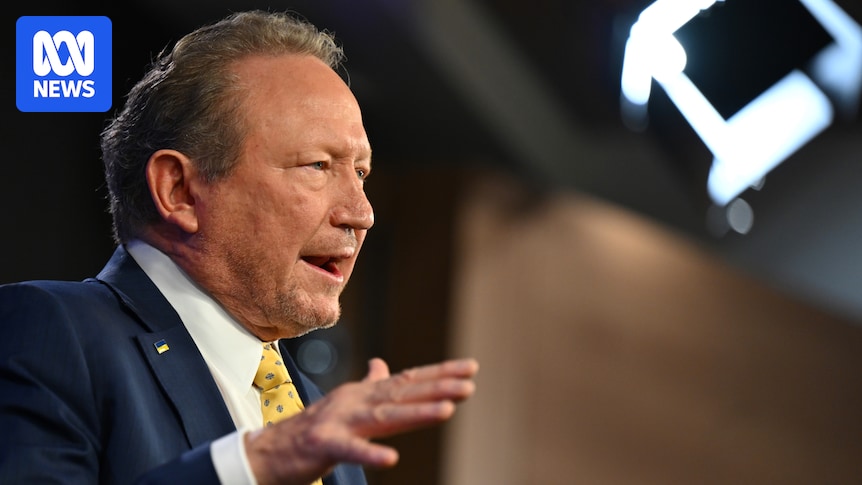
Australian billionaire mining magnate Andrew Forrest is asking a US federal court in Silicon Valley to hold Meta accountable for scam ads using his likeness without permission.
Mr Forrest’s legal team is asking a judge to rule that Meta cannot hide behind Section 230 of the Communications Decency Act, which shields internet firms from being accountable for content posted by users on their platforms.
“This is the first case brought in any court, but in particular in California, where a verdict can resonate that says Facebook was never intended to get the benefit of this immunity for their advertising business,” his attorney, Simon Clarke, said.
A hearing on Thursday focused on whether Meta wrongly ditched evidence, forfeiting its ability to take shelter behind Section 230, according to Mr Clarke.
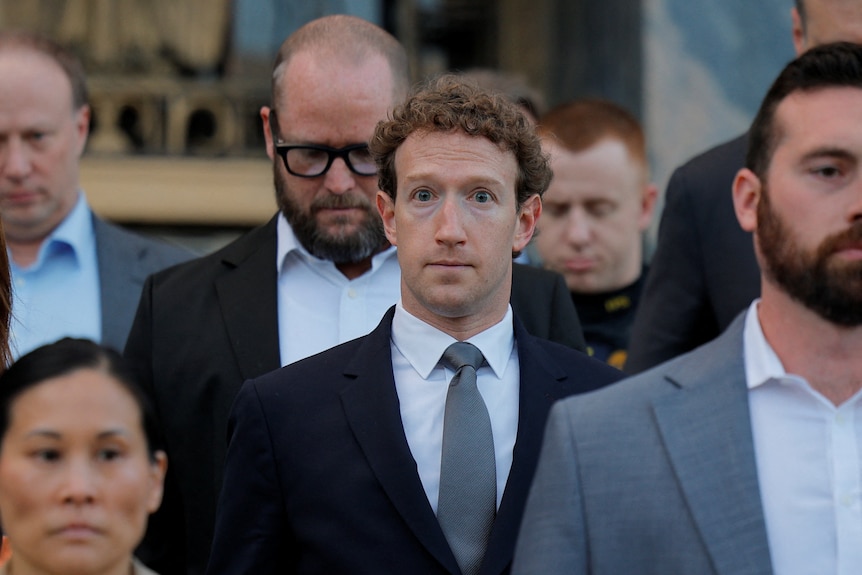
Meta Platforms chief executive Mark Zuckerberg. (Reuters: Mike Blake)
The judge is expected to rule on Mr Forrest’s motion in the coming weeks.
Meta has countered that the offending marketing messages were not its doing, and that it made reasonable efforts to preserve the desired data.
The social media giant is also standing behind Section 230 when it comes to being held to account for what the advertisers post.
Earlier this year, a Los Angeles jury found Meta and YouTube liable for harming a young woman because of the addictive design of their social media platforms rather than just their content.
Inside the scams stealing the identities of celebrities
The jury concluded that Meta and YouTube were negligent in the design and operation of their platforms, and that their negligence was a substantial factor in causing the plaintiff’s harm.
Mr Forrest’s lawyers are using a similar legal tactic to navigate around Section 230, accusing Meta’s ad business and its tools of being complicit in the creation and distribution of the bogus marketing messages.
The complaint filed in US District Court argues Mr Forrest “has been plagued for years by paid ads and sponsored content produced by Meta Ads and run on Meta’s Australian social media platforms”.
“He falsely appears to be promoting fake cryptocurrency and other fraudulent financial schemes,” it adds.
Since 2019, thousands of deceptive advertisements on Facebook have used the likeness of the highly prominent figure in Australia to promote scams, racking up thousands of victims, according to the suit.
The billionaire’s legal team argues that Meta’s artificial intelligence tools optimised and personalised fraudulent ads before distributing them, thereby making Meta an active participant, rather than a mere intermediary.
Mr Forrest had previously launched criminal charges against Meta in 2022 in an Australian court, but they were discontinued in 2024.
AFP