
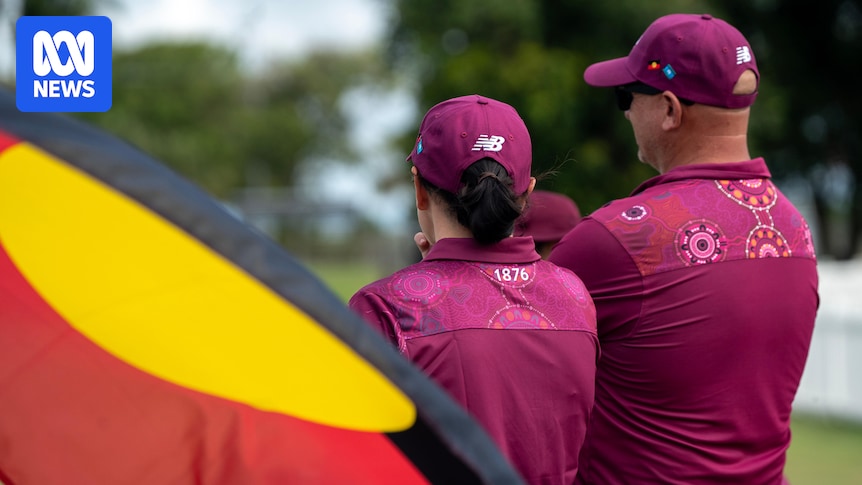
Every week for the past five months, Caitlyn Henry has driven two and a half hours from her home in Mount Garnet in Far North Queensland to play cricket in Cairns.
Since competing in the State Indigenous Challenge in November, she has been training hard in preparation for the National Indigenous Cricket Championships (NICC), being held in Mackay this week.
“It’s been rough,” she laughed.
While she said she did not like travelling so far “that much”, it was worth the opportunity to don the maroon jersey.
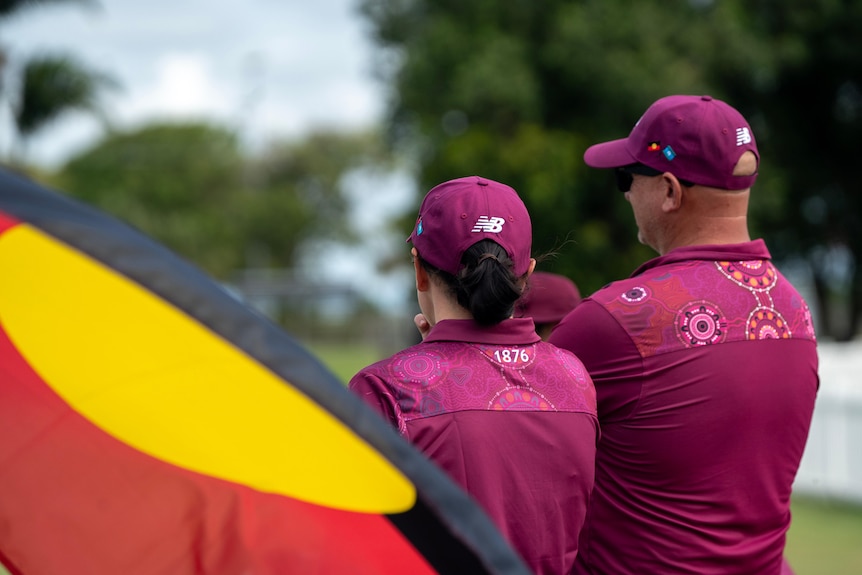
The National Indigenous Cricket Championships began as a Central Australian competition in the 1990s. (ABC Tropical North: Yasmine Wright Gittins)
“[My family] were super excited, really proud of me, now they see me wearing the Queensland shirt,” Ms Henry said.
“I feel like a proud Indigenous woman to be wearing this.”
It is the 10th year of the NICC in its current form and the second year it has been hosted on Yuwibara Country.
The competition features women’s and men’s teams from almost every state.
This year, for the first time, it also includes Papua New Guinea’s national team, the Barramundis.
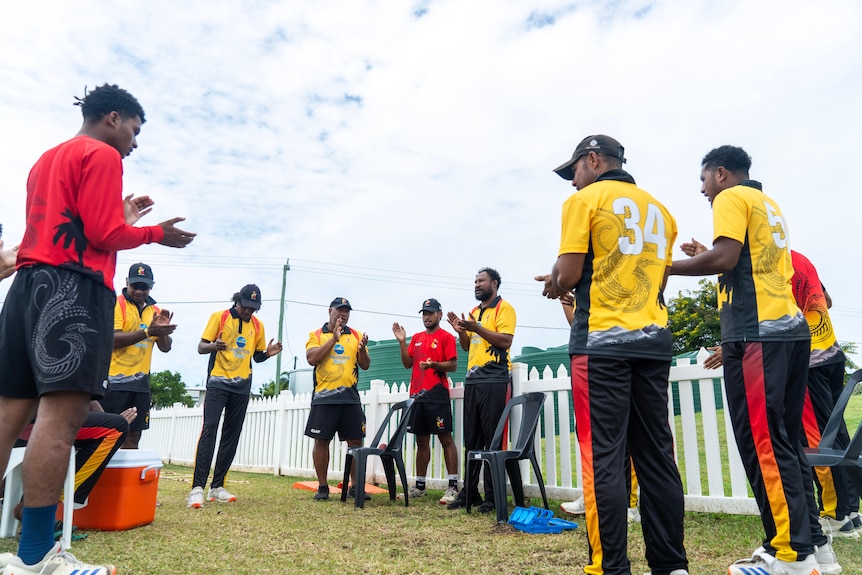
The PNG Barramundis are competing in the competition for the first time. (ABC Tropical North: Yasmine Wright Gittins)
A decade of growth
Queensland women’s team manager and mentor, Tamika Hansen, said the tournament was about more than just cricket.
“The mighty maroon jersey is a very big privilege in our state, no matter what sport,” she said.
“But we are here to represent our families first and foremost. We are playing within not only the spirit of cricket but also as Indigenous people.”
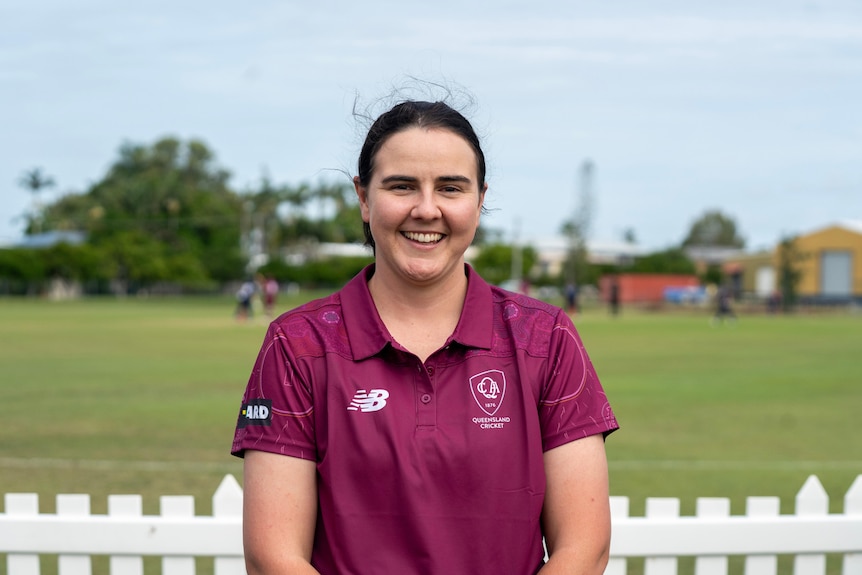
Tamika Hansen has been part of the NICC for more than a decade. (ABC Tropical North: Yasmine Wright Gittins)
The now-mentor has seen the championship evolve over the past decade, which began before Queensland had even secured a women’s team.
She knows just how much the players are putting in.
“Some girls in remote communities have to travel hours, and that’s not just travelling, that’s finding the means of a car and paying for fuel,” she said.
Reflecting on the past 10 years, she was glad to see changes in what opportunities were available to young, Indigenous players.
“It’s been quite incredible to see … the young ones nowadays have a lot of support around them,” Ms Hansen said.
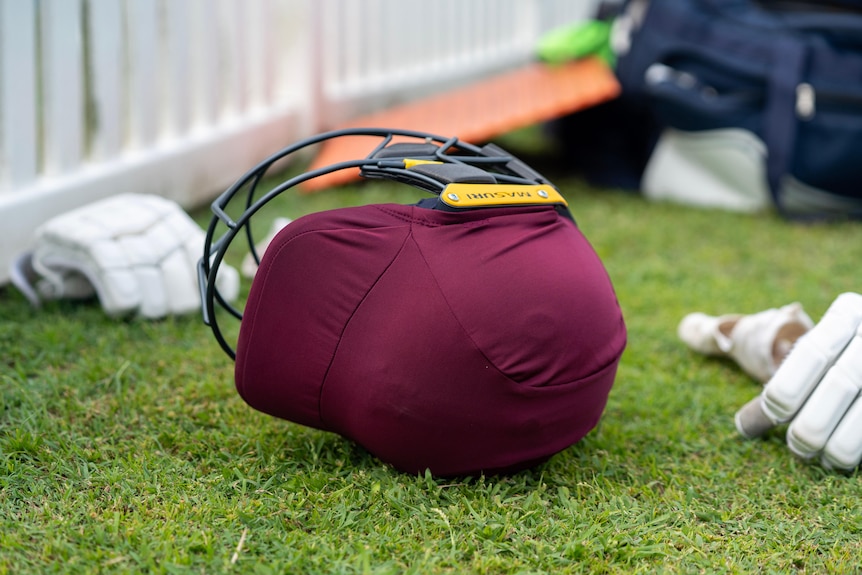
Mackay has secured the competition for 2027 with a two-year hosting deal. (ABC Tropical North: Yasmine Wright Gittins)
“I can’t imagine what the game will be in 10 years’ time.”
While Ms Hansen said it was good to see more efforts to reach Indigenous players in regional and remote areas, change on a broader scale was still needed.
“I think we can always do more as a society, and in sport, with stamping out racism and providing better culturally appropriate pathways for Indigenous people,” she said.
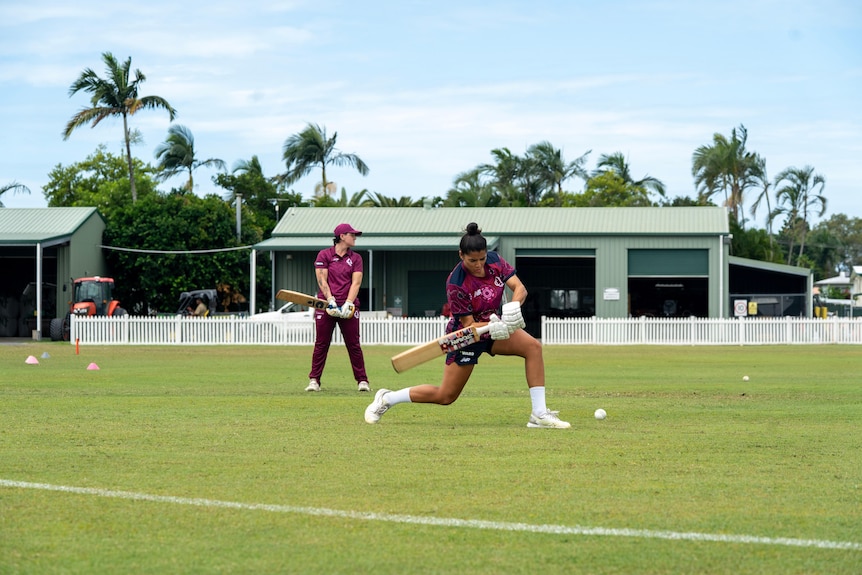
The high-performance program has helped cricketers rise to the BBL and national teams. (ABC Tropical North: Yasmine Wright Gittins)
An essential pathway
The National Indigenous Cricket Championships has its roots in a cricket match between Alice Springs and Tennant Creek in the 1990s.
Cricket Australia took over running the competition in 2001 and made it a national tournament.
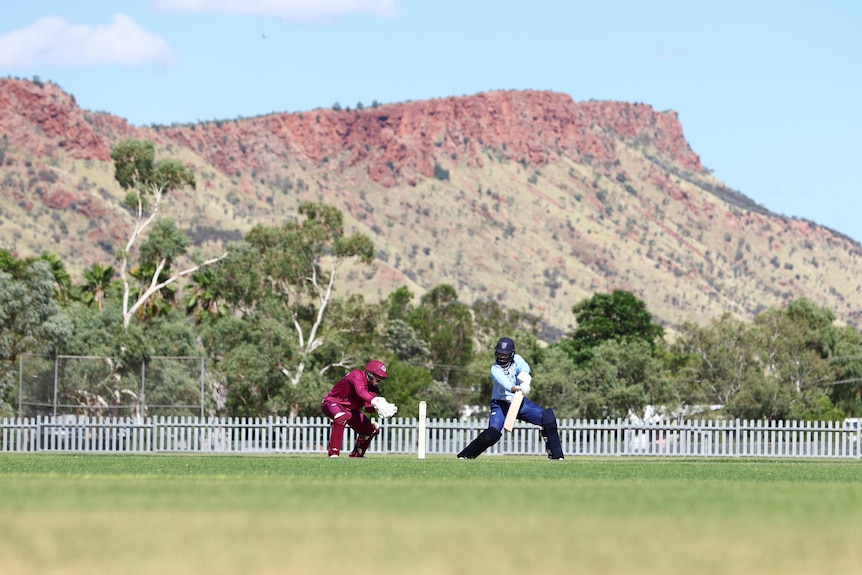
The championships were previously held in Alice Springs. (Supplied: Cricket Australia)
The championships are an opportunity for younger players to meet and compete against big names in Australia cricket.
NSW player and coach, Patrick Rosser, said the tournament was part of Cricket Australia’s high-performance pathways program and opened doors for talented young cricketers like the National Indigenous under-23 side.
“Being picked up by other premier clubs is another opportunity,” he said.
“In previous years, we’ve seen particularly some of our women players go through and play in the WBBL and to play for Australia.”
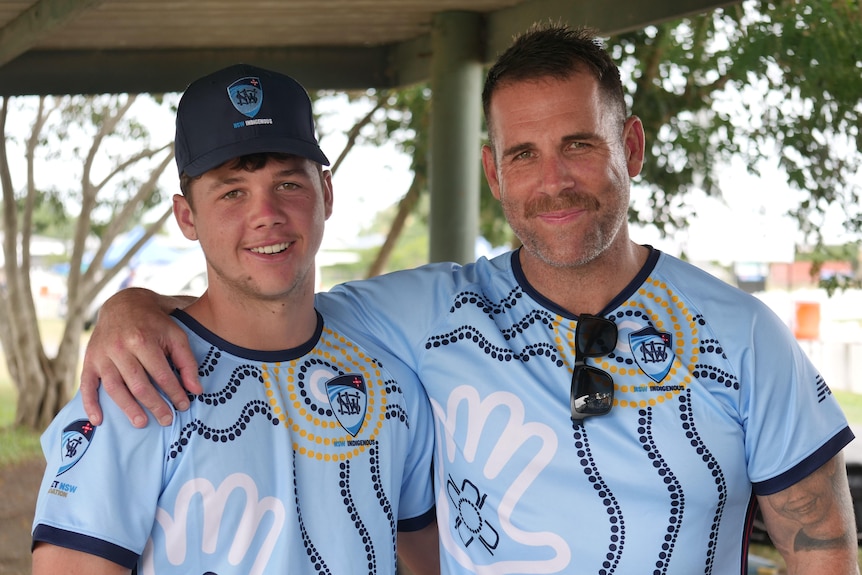
Pat and James Rosser, the father-son duo playing for NSW. (ABC Tropical North: Liam O’Connell)
Mr Rosser said this year was particularly special, with his son James playing in the NSW side as well.
James said he had made the trip to Mackay last year but had not pictured himself picking up the bat so soon.
“I thought I’d maybe get a chance to do it a bit later on, but not at 16,” he said.
Northern Territory squad member Bradley Ilott said the tournament marked a “full-circle moment” for him, after spending much of his childhood in Mackay.
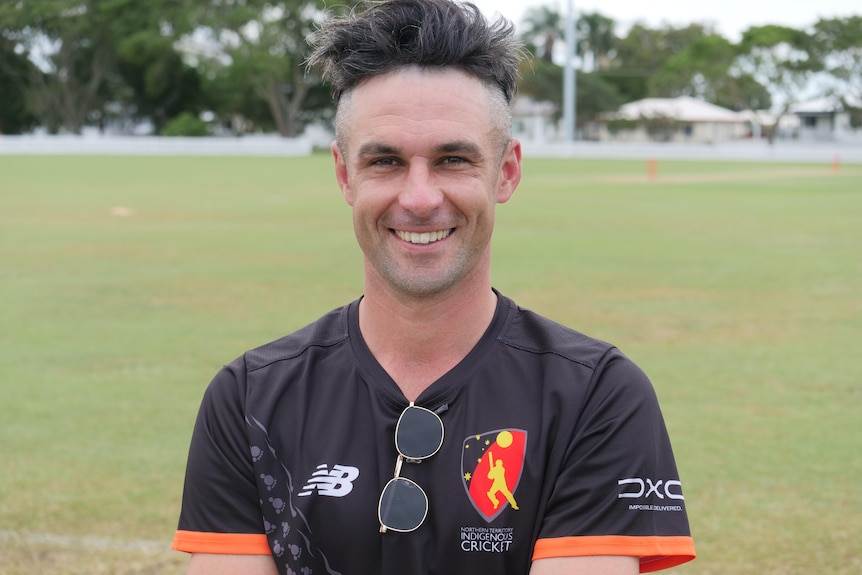
Bradley Ilott says the NICC in Mackay is like a “full-circle” moment. (ABC Tropical North: Liam O’Connell)
“With cricket being played during the dry season [in the NT], it just gives you that unique experience you don’t get in most of the southern states,” he said.
He said the week in Mackay included several cultural-engagement sessions where teams talked about the championships and how they’d like to see the competition progress.
“It’s all one large brotherhood or sisterhood up here,” Mr Ilot said.
“We’re all proud to be out here, not just [for] our state but our people back home, our mobs.”The next generation
For Ms Henry, the championships are also an opportunity to show young, aspiring cricketers in her hometown that there are viable pathways.
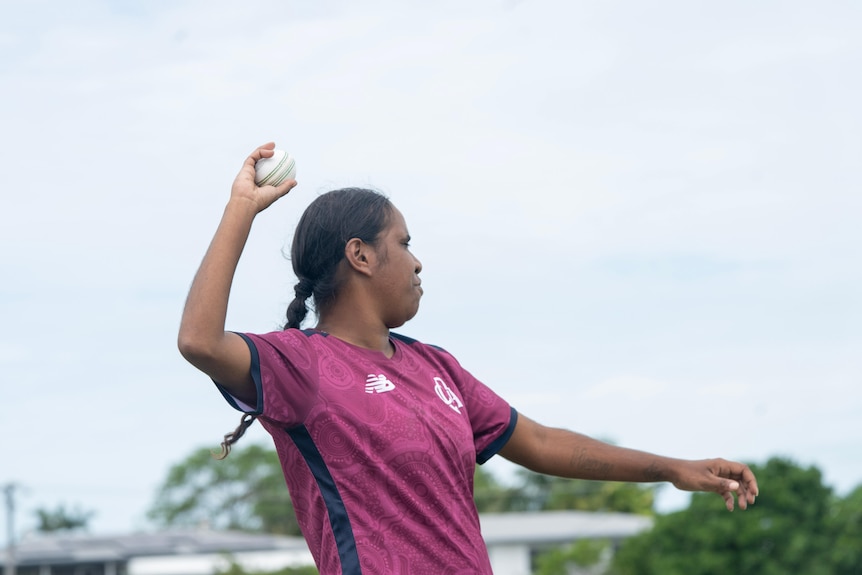
Caitlyn Henry says her family was “super excited” to see her wear the maroon jersey. (ABC Tropical North: Yasmine Wright Gittins)
“Some younger people from home are getting into cricket, they love it as well, they want to go far,” she said.
“It would be pretty good seeing them if they come as far as I am.”