
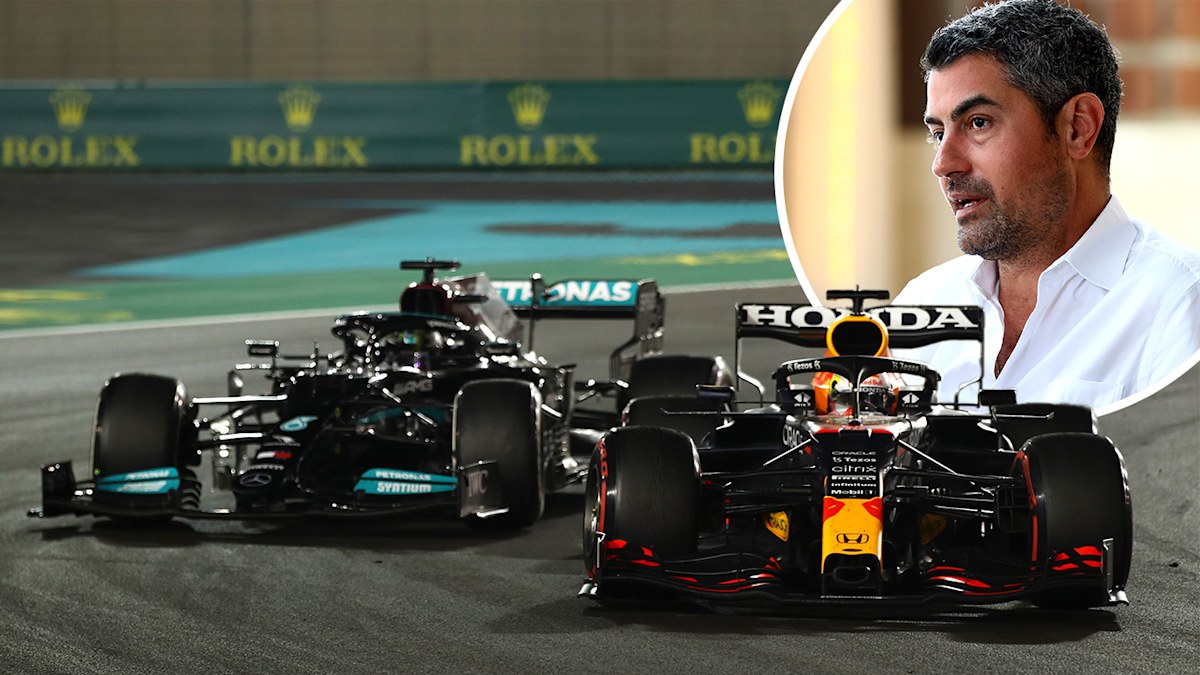
Aussie former F1 race director Michael Masi was used as a “scapegoat” following the controversial 2021 Abu Dhabi Grand Prix, according to his successor Neils Wittich.
Masi was at the centre of one of the most controversial moments in the sport’s history that eventually allowed Max Verstappen to claim his maiden world championship with a last-lap pass on Lewis Hamilton.
Masi allowed a handful, but not all lapped cars to pass the safety car, before ordering it into the pits to allow a one-lap dash at the end of the race to decide the title.
READ MORE: Verstappen cops fresh blow as sneaky engine trick banned
READ MORE: Gout Gout breezes through 100m, rips American ‘haters’
READ MORE: Johns urges Dragons to get deal done with $1m ‘bargain’
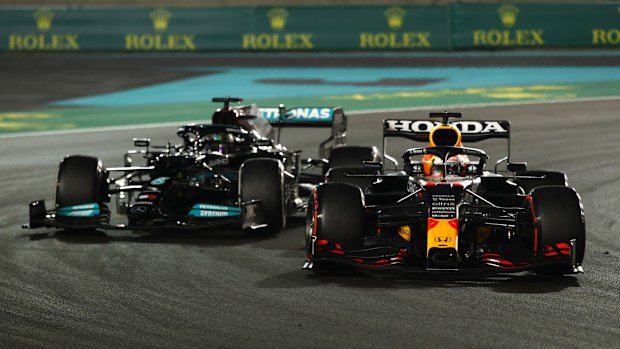
Max Verstappen put a last-lap move on Lewis Hamilton for victory in the 2021 Abu Dhabi Grand Prix, which won him the world championship. Formula 1 via Getty Images
Hamilton and Verstappen entered the race tied on points, meaning whoever finished in front would take the title. Hamilton dominated the race and was 11 seconds ahead of Verstappen when Nicholas Latifi famously crashed with a handful of laps remaining.
It meant what should have been a record-breaking eighth world championship for Hamilton ended in heartbreak.
The fallout was massive. The FIA attributed the incident to “human error”, and Masi suffered a wave of abuse from furious fans, including death threats.
Following an investigation, he was eventually sacked from the race director position. He has since moved back to Australia, but kept a relatively low profile.
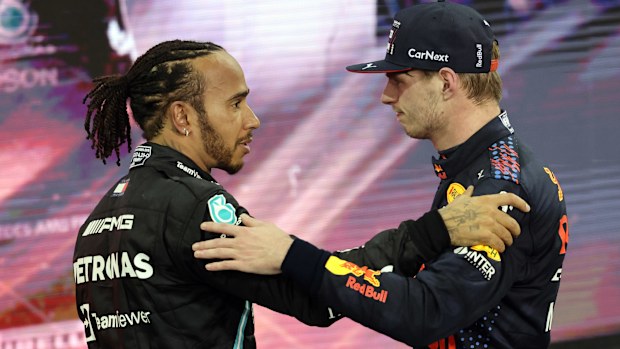
Hamilton and Verstappen after the race. Getty
“After the investigation following Abu Dhabi, the conclusion seemed to be that Michael had to go – essentially finding a scapegoat,” Masi’s successor Neils Wittich told Formel1.de.
“What was really disappointing – for me and many colleagues – was the lack of support from the FIA for Michael. That’s something that needs to be clearly criticised. Everyone knew that in extreme situations, you’d be left on your own.
“In the past, under Charlie Whiting, there was always backing from FIA leadership – Max Mosley stood firmly behind him. That support wasn’t there anymore. It still isn’t. That’s one of the reasons I’m no longer a race director in Formula 1.
“Whatever happened, there was no proper discussion, no backing for employees. And that’s the worst takeaway from that whole situation.”
Wittich said Masi did nothing wrong in making the calls he did, and was following a season-long agreement he’d made with the teams, the FIA and Formula 1 itself.
“The regulations didn’t strictly define everything. What he did was within his authority. He had a certain level of discretion in how to deploy the safety car,” Wittich, who was race director from 2022-2024, said.
“One key factor was that teams, FIA, and Formula 1 had all agreed – over many meetings – that races should, if possible, finish under green flag conditions. Nobody wanted a race ending behind the safety car.
“In Abu Dhabi, the situation was such that any intervention would have disadvantaged someone. You could have red-flagged the race – but that requires specific conditions like danger to personnel or a blocked track. That wasn’t the case. So red flag wasn’t really an option.
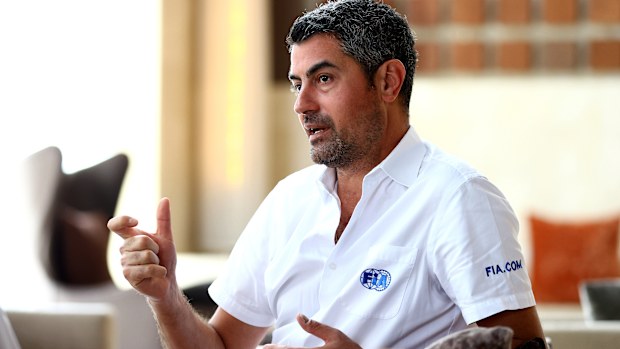
Then-F1 race director Michael Masi ahead of the 2021 Abu Dhabi Grand Prix. Getty
“Then came the lapped cars question. Initially, he said they wouldn’t unlap themselves, then he allowed it – but modified the usual procedure by not waiting an extra lap. That was within his authority under the regulations at the time.
“He essentially did what everyone had agreed upon: create one final racing lap. It produced a spectacular finish, an overtake, a winner and a runner-up. It could have gone the other way just as easily. That’s sport.
“A late safety car is always controversial. Fans don’t like it if it decides the race – but that applies everywhere. Whether it’s lap one or the final laps, someone gains, someone loses. That’s part of the sport.”
The 2021 season was one of the most tightly contested in recent memory, with Verstappen and Hamilton clashing in several high-profile incidents, including a monster crash for Verstappen at Silverstone, and then a bizarre clash at Monza where Verstappen’s car mounted Hamilton’s at the first chicane. That clash allowed Daniel Ricciardo to take a sensational victory.
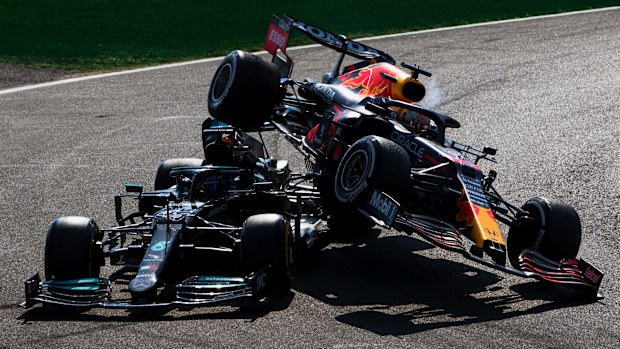
Verstappen and Hamilton clashed at the 2021 Italian Grand Prix. Getty
Wittich pointed out the race had been “dull” and “quite uneventful” until Latifi’s crash, and suggested fans would have been critical of a dull finale that was not fitting of the season as a whole.
“But because of the incident and the intervention, it suddenly became decisive – and that upset one group of fans or the other,” he said.
“People later said, ‘You could have red-flagged it, you could have done this or that’. Yes, you could – but those would have been inconsistent decisions compared to earlier races. And consistency is key.
“A championship isn’t decided in one race alone. Points lost earlier in the season matter just as much. Both Hamilton and Verstappen had chances to secure the title earlier.”