
Summary:
G20 sees Middle East conflict as key driver of global economic outlook – Ueda
Japan flags oil-driven deterioration in terms of trade and growth drag
Supply shock complicates policy, with inflation and growth effects pulling in opposite directions
BoJ maintains highly accommodative stance, keeps data-dependent approach
G7 sees limited direct damage but highlights need to support vulnerable economies
Bank of Japan Governor Kazuo Ueda signalled growing concern among global policymakers over the economic implications of the Middle East conflict, while highlighting the complex policy trade-offs facing Japan as higher oil prices feed through the economy.
Speaking after G20 and G7 discussions, Ueda said there was broad agreement among policymakers that the conflict has become a key factor shaping the global economic outlook, with uncertainty remaining elevated. While direct economic damage to major advanced economies appears limited so far, Japanese Finance Minister Satsuki Katayama noted that policymakers are increasingly focused on mitigating spillovers to more vulnerable countries.
For Japan, the impact of rising energy prices is more acute. Ueda warned that higher crude oil costs are worsening the country’s terms of trade, effectively transferring income abroad and weighing on domestic growth. This negative income effect is expected to act as a drag on activity, even as government stimulus measures and solid corporate profits provide some offset.
The inflation picture is more nuanced. Ueda acknowledged that rising oil prices will push up underlying inflation, but emphasised that a slowdown in growth would act in the opposite direction, dampening broader price pressures over time. This reflects the challenge of dealing with supply-driven inflation, which differs fundamentally from demand-led price increases and is more difficult for central banks to manage.
Against this backdrop, Ueda reiterated that Japan’s monetary conditions remain highly accommodative, with real interest rates still low. This suggests the Bank of Japan retains flexibility but is not under immediate pressure to tighten policy aggressively.
He declined to comment on market expectations for a near-term rate hike, instead stressing that policy decisions will be made on a meeting-by-meeting basis, taking into account incoming data, the likelihood of forecasts being realised, and the balance of risks.
More broadly, Ueda underscored that the appropriate policy response will depend on the duration of the shock and the broader economic environment. The central bank remains focused on achieving its inflation target sustainably, suggesting a cautious and flexible approach as it navigates the competing forces of higher energy prices and growth headwinds.
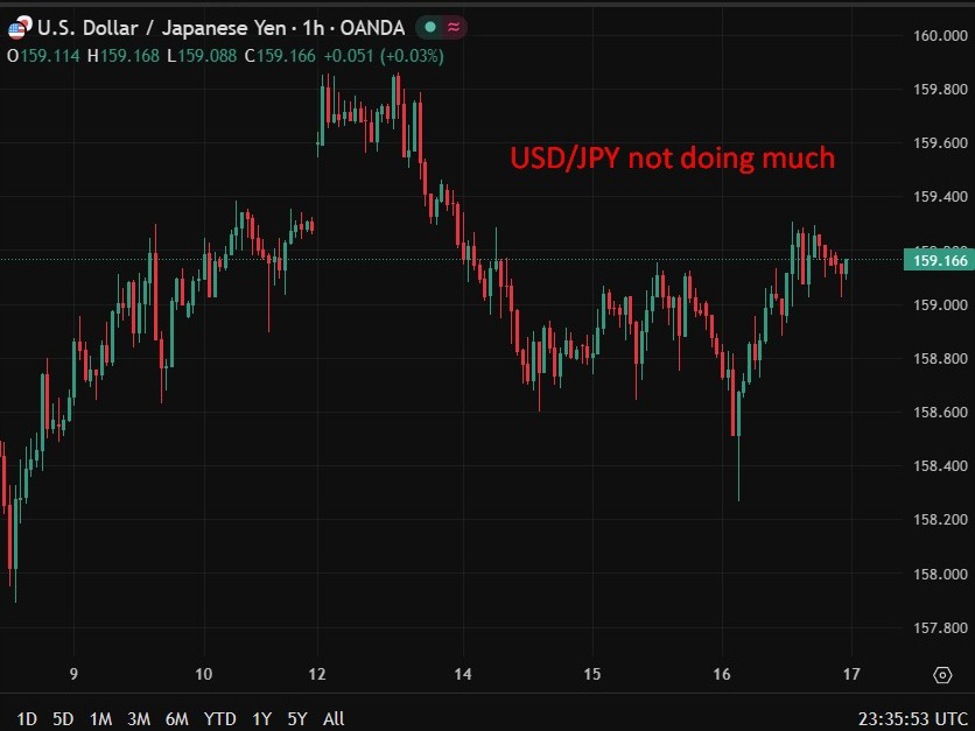
Reinforces a cautious BoJ path, with oil-driven inflation unlikely to trigger aggressive tightening. Growth headwinds and accommodative conditions may keep policy gradual, limiting upside in yields and supporting yen sensitivity to energy prices.