

NDIS Minister Mark Butler’s plan to save more than $6 billion a year in National Disability Insurance Scheme spending by 2036 is expected to include a crackdown on unregistered providers, in an effort to preserve the $50 billion scheme’s “social licence”.
Mr Butler last year expressed amazement that 15 out of 16 NDIS providers are unregistered, a sharp contrast to aged care, where every provider is regulated, and leaving gaps in quality, oversight and even pricing rules where participants manage their own plans.
Ahead of his return to the National Press Club on Wednesday to detail how the government will further slow cost growth from its current rate of 9.4 per cent a year, Mr Butler has flagged that correcting that unregulated market is at the “top” of the government’s priority list.
The government will not kick off a new round of lengthy reviews for its second pass at NDIS reforms intended to rein in costs growing from their untenable peak of 22 per cent a year a few years ago to 5 or 6 per cent a year by 2030.
Instead, it will lean on the substantial body of work already completed through previous reviews, particularly the NDIS Review led by Professor Bruce Bonyhady and Lisa Paul that was the foundation for reforms introduced by former minister Bill Shorten last term.
The two words quietly shaping NDIS reform
That landmark review, developed in consultation with the disability community over two years, has several recommendations that remain incomplete or were never adopted, but which Mr Butler has said “remain a crucial guide for our government”.
Among them was a recommendation for all providers to be regulated under a tiered, risk-based registration model to be introduced over several stages.
Under a potential model developed by the Health Department, nearly all supports would be registered through a four-tiered system, with light-touch registration that could actually reduce burdens for some already-registered providers offering services dubbed low risk, a medium risk registration scheme, and an advanced scheme for high-risk support requiring “in-depth” assessments.
A fourth tier for mainstream retailers or other providers not dubbed an ‘NDIS Provider’ would exempt them from registration, while enhancements to payments would ensure purchase visibility.
The former Coalition government considered mandatory registration of providers a decade ago, but then-minister Christian Porter decided against it, concerned it could cause an emerging market of NDIS providers to dry up, or limit choices for participants.
But Mr Butler has said there is now a “drumbeat” of stories about “shonks and fraudsters” ripping off taxpayers in a new market that is distorting the entire care economy.
Australian Services Union secretary Angus McFarland said the unregistered provider model had been “tried and failed”.
“I think we can see that experiment has failed. [Are] services significantly safer and of higher quality … than it was 10 years ago? I don’t think people could say that,” Mr McFarland said.
“There have been substantive recommendations from the Royal Commission and NDIS Review about better regulation, better oversight, and that is for protecting and safeguarding people with disability, it’s for stopping rorts and rip-offs, it’s for greater system integrity.”
He added that better regulations for the workforce could reduce the massive churn in the sector.
The union says a quarter of the sector’s 325,000 workers leave each year, and with employers estimating a cost of about $3,000 to $4,000 for every new recruit, that churn is adding about $300 million a year to operator costs.
The Coalition has signalled its willingness to support the rules being tightened for NDIS providers, who Shadow NDIS Minister Melissa McIntosh noted sometimes do not require even the most basic safeguards.
“There are no compliance or audit requirements and no standards that are applied to the quality of services being delivered. This includes no mandatory requirement for providers or support workers to have a Working With Vulnerable People Check,” she said.
“This is madness — we don’t allow it in aged care, child care or in our schools. Providers are supporting some of the most vulnerable people in our community; it is essential that we have safeguards in place to protect our most vulnerable citizens.”
Pricing reforms to iron out market ‘distortions’
The federal government has also been working on reforms that could shift pricing powers to the Independent Health and Aged Care Pricing Authority, which already sets price rules for large parts of the care economy.
Mr Butler says that the government wants to prevent “distortions” in the broader health and social care ecosystem being caused by how NDIS providers were charging for services, and aligning pricing across health, aged care and disability would also maximise efficiency in services.
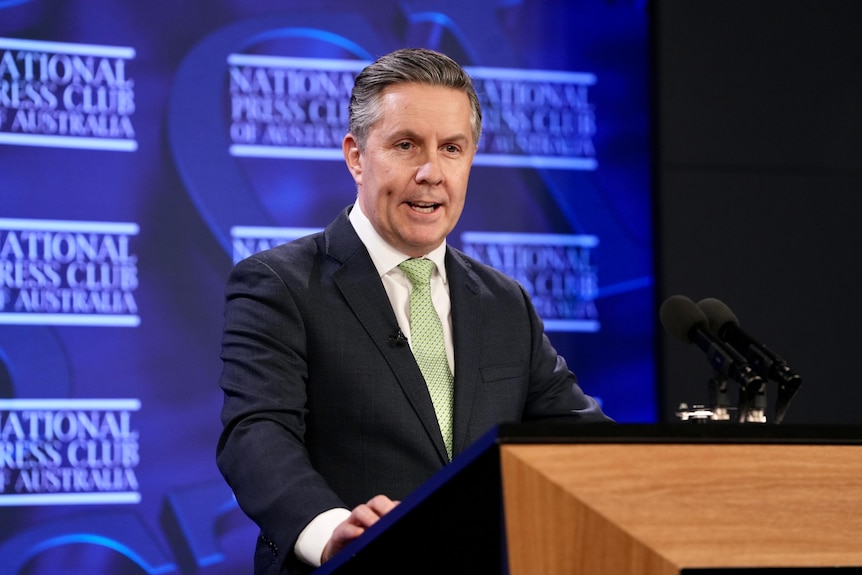
Health, Ageing and NDIS Minister Mark Butler has said the largely unregistered NDIS provider market would not be accepted in any other part of the care economy. (ABC News: Tobias Hunt)
The minister has pointed to settings in other “mature” social services, such as the aged care sector which also recently underwent significant reform under Mr Butler, as models for how NDIS costs could be stabilised.
In aged care, for example, providers separately invoice direct and indirect services (such as report writing), ensuring more accurate pricing, while under current NDIS arrangements all providers are able to charge the same maximum price regardless of whether they also undertook ‘unpriced’ activities, such as compliance activities.
A pricing review commissioned by former minister Bill Shorten concluded last year that a single price for each support failed to reflect the full range of services offered under that price schedule, and a flexible, tiered pricing scheme could recognise higher prices for higher value services.
It would also allow for more efficient and accurate pricing that prevented services drifting towards inefficient ‘overpriced’ support items, as price caps were often treated as the standard market price, rather than a price ceiling.
The Coalition has indicated it would also support more sophisticated pricing measures.
“There is an inequity when it comes to the amount paid to providers of daily support services versus fully qualified and registered health care professionals. We need to ensure that the amount paid to service providers reflects the quality, experience and level of service being provided,” Ms McIntosh said.
“We need a real plan to fix the NDIS, no more smoke and mirrors, no more tinkering at the edges — and it must put quality care and participant safety first. The Coalition is willing to work with the Government to get this right.”
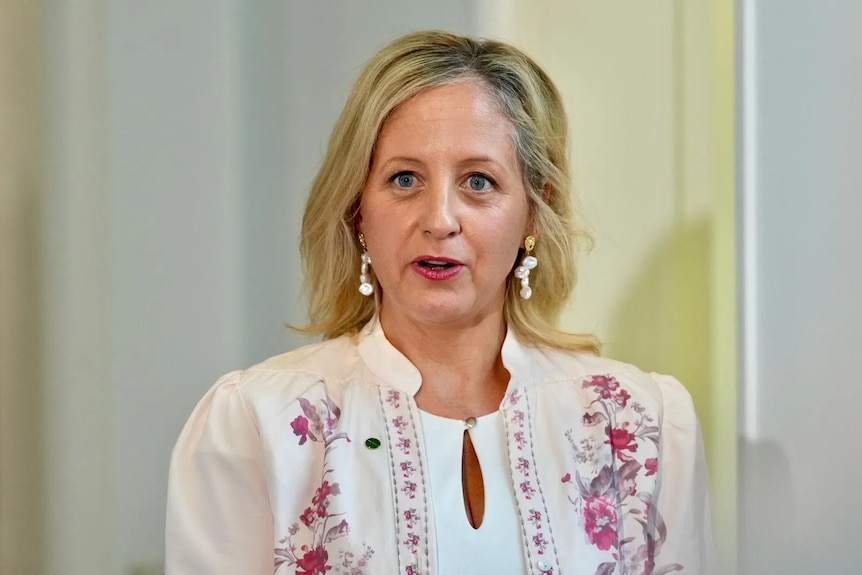
Shadow Disability Minister Melissa McIntosh has signalled the Coalition’s support for a broader NDIS registration scheme. (ABC News: Callum Flinn)
Participant plans vs restricting entry to NDIS
The minister says the government has been considering savings pathways that constrain how many people are on the NDIS, pathways to constrain the cost of plan budgets or combinations of the two.
But the NDIS Actuary has spelled out that there are more gains to be made in constraining participant budget’s growth than further reducing NDIS eligibility, if the government wants to prevent the scheme ballooning to $100 billion by 2035.
Payments to individuals are the fastest-growing expense inside the NDIS, making up 4.4 per cent of scheme growth, while new entrants to the scheme make up 2 per cent of growth and inflation and wage growth make up the remaining 3 per cent.
Pressure from new entrants is also expected to moderate once children with autism or developmental delay, who currently make up three quarters of all new entrants, are mostly diverted to the planned Thriving Kids scheme to be run by the states.
The actuary has modelled that to save $6 billion a year by 2035 the government would have to remove one in five new entrants to the scheme beyond the reductions from Thriving Kids — but reducing the growth in payments to participants by just 1 per cent would save about $9 to $10 billion a year by 2035.
“Sustained high levels of additional growth in payments remains one of the most critical sustainability pressures for the Scheme,” the actuary wrote in his sustainability report.
In particular, supported independent living (SIL) funding is driving the growing cost of payments to NDIS participants, with about 5 per cent of participants in SIL arrangements, but those making up a third of total scheme costs.
The average payments to participants in supported independent living arrangements are nearly ten times greater than for those non in supported living, and the actuary says a small change to the number of participants in supported independent living would significantly shift the scheme’s expenses.
But the government has been tight-lipped about the pathway it will ultimately take, and Mr Butler said earlier this month he was keeping his options open.
“There’s not one pathway to deliver that moderation in growth. There are a range of different options and we’re going through the pros and the cons or the benefits and the downsides to each of those,” Mr Butler said.