
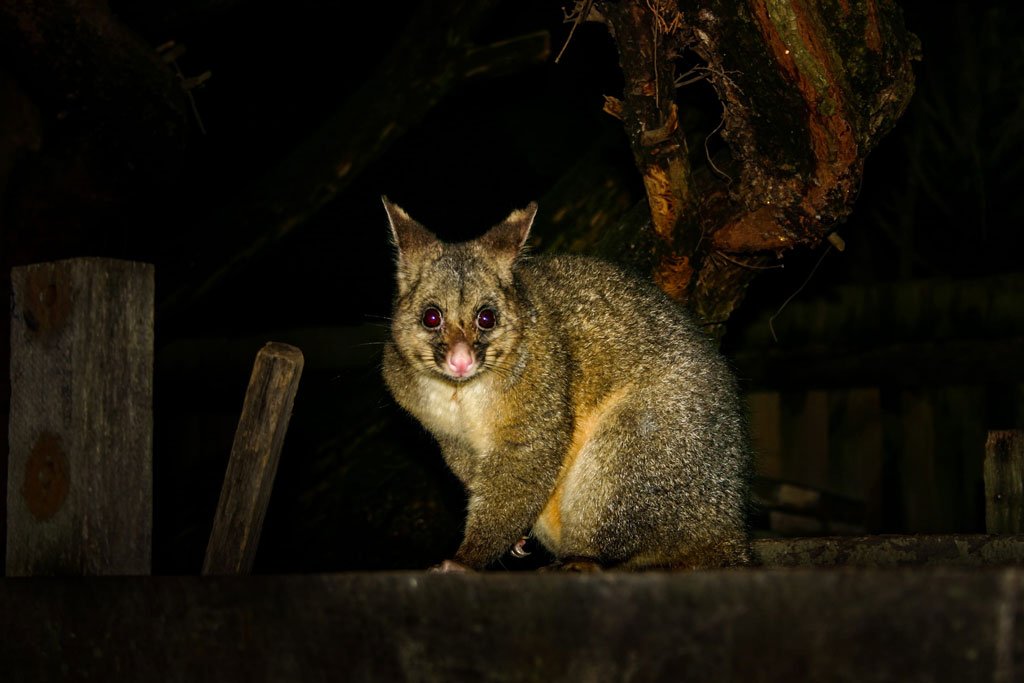
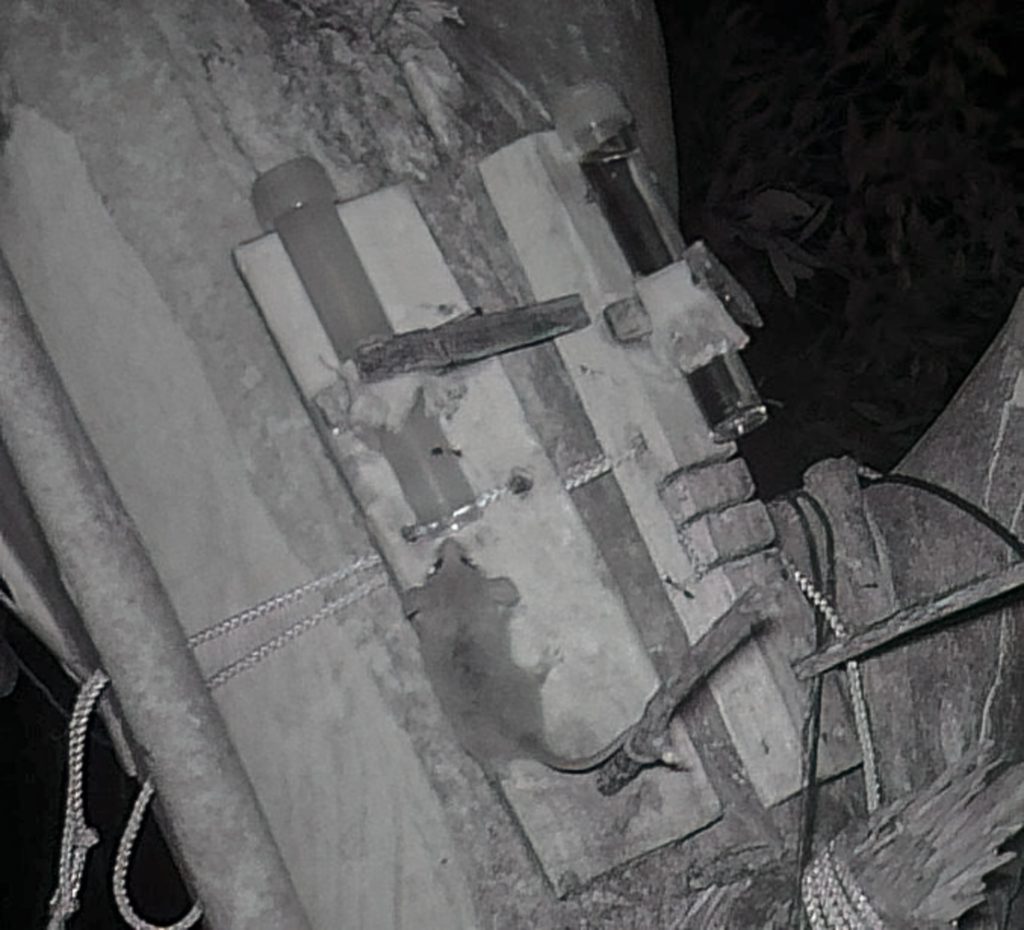
 Photo: Feasting from the feeder.
Adelaide University and Kangaroo Island Research Station researchers have developed a simple, low-cost way to help wildlife survive in the critical days and weeks after bushfires, by delivering artificial nectar to animals struggling to find food.
The study—published in the Australian Journal of Zoology—provides a proof of concept showing that a wide range of native animals will readily use specially designed nectar feeders following a bushfire.
The research was inspired by the devastating 2019/2020 Black Summer fires which burnt nearly half of Kangaroo Island and wiped out up to 88 per cent of the habitat of the threatened little pygmy-possum.
“After fires, flowering plants can take years to recover, leaving nectar-feeding animals without a vital food source,” lead author A/Prof Sophie (Topa) Petit said.
“We wanted to know whether we could provide an emergency energy source to help wildlife survive during that period.”
The team designed a simple device known as the Stonor feeder (after Kangaroo Island colleague Bernard Stonor), made from recycled bottles and small vials with tiny openings that release nectar when animals feed. The feeders are cheap, easy to assemble, and can be rapidly deployed in emergency situations.
Field trials showed the feeders were used by a surprising diversity of species, including western pygmy-possums, birds such as honeyeaters and even marbled geckos—an animal not previously known to feed on nectar.
“It was encouraging to see how many species were willing to use the feeders, including pygmy-possums,” Dr Petit said.
The researchers found that simple sugar solutions were most readily accepted by animals, although more nutritional formulas are needed for long-term support. Honey can also help attract animals to feeders and encourage them to learn how to use them.
However, the study also highlights important risks and challenges. Larger animals such as brushtail possums can dominate feeders, while aggressive birds may exclude other species. Predators could also be drawn to feeding sites, increasing danger for vulnerable wildlife.
“Supplementary feeding is not a silver bullet,” Dr Petit said. “It needs to be carefully planned, scientifically monitored, and targeted to the right species at the right time.”
“This research aims to inform preparation,” Dr Petit said.
“With the right planning, tools like these feeders could become part of a coordinated strategy to support wildlife in specific circumstances.”