
Longevity is rare in the pharmaceutical industry. Yet for Japan-based biopharmaceutical company Takeda Pharmaceutical Company Limited, a 245-year history is not just a marker of endurance, it reflects a philosophy rooted in long-term responsibility to patients and healthcare systems.
Founded in 1781 in Osaka, Takeda has grown into a global biopharmaceutical company. But despite important advances in medical science over the centuries, its core mission has remained unchanged.
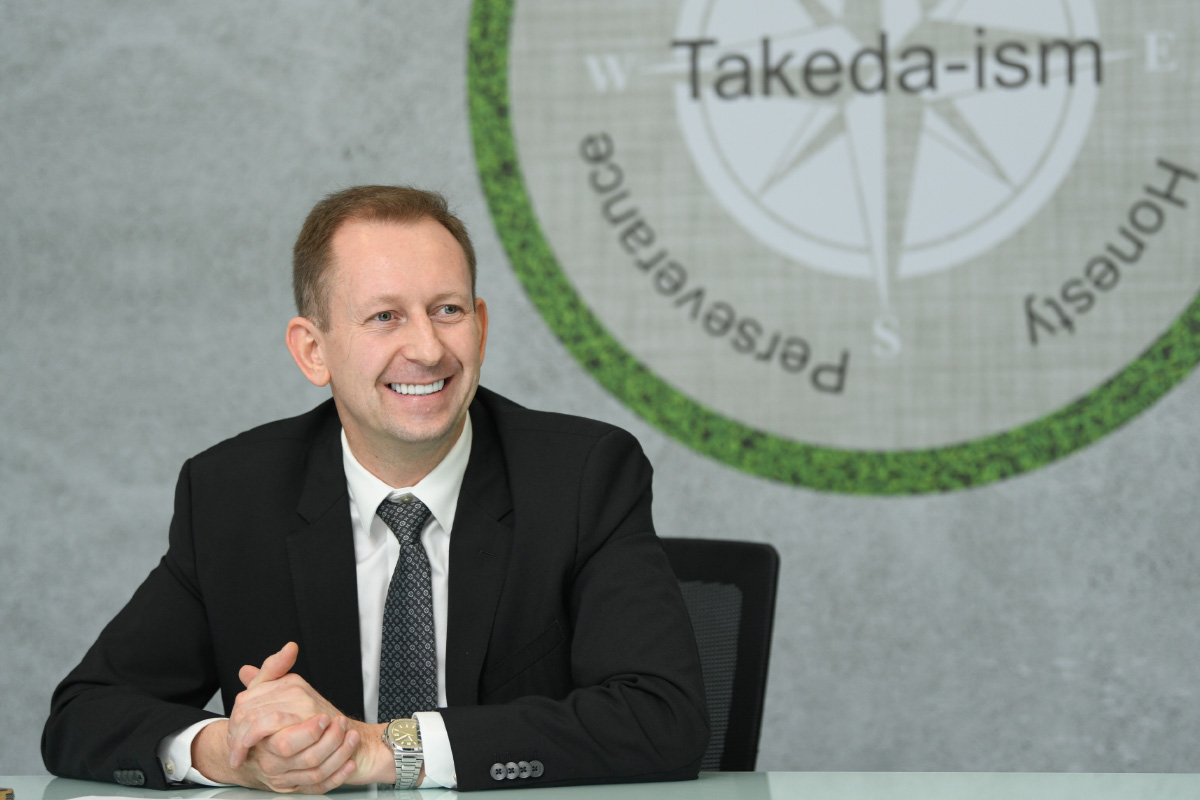
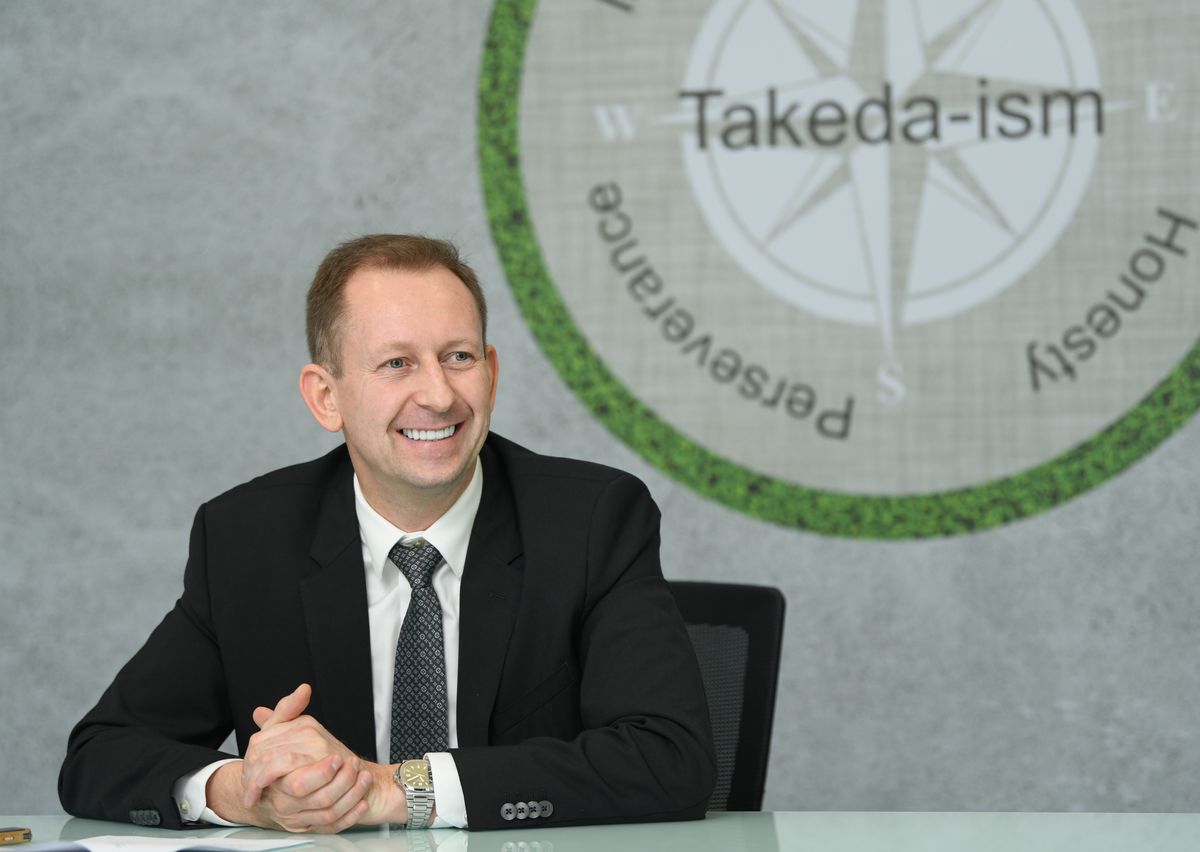
“Our purpose is to serve patients, and that has remained constant throughout our history,” says Dr. Simon Gallagher, General Manager of Takeda Malaysia and Singapore. “Our vision is to discover and deliver life-transforming treatments, guided by our commitment to patients.”
That philosophy continues to shape Takeda’s operations in Malaysia, where the company has been present for the past 22 years. While relatively young compared with its global legacy, Malaysia forms part of Takeda’s broader footprint spanning more than 80 countries.
In the country, the company positions itself not merely as a pharmaceutical supplier but as a long-term healthcare partner focused on strengthening the ecosystem around diagnosis, treatment and prevention.
A philosophy built on patient-first principles
Takeda’s culture is grounded in an enduring commitment to who they are – putting patients at the center, collaborating respectfully and leading with their values.
A corporate philosophy encompassing purpose, vision and values, known internally as Takeda-ism guides the organization. It is anchored in four core values: Integrity, Fairness, Honesty and Perseverance, with Integrity at the core.
These values are brought to life through action-based framework known as PTRB – Patient, Trust, Reputation and Business, in that order.
“Every decision begins with the patient,” Gallagher explains. “Then we build trust and reinforce reputation, ensuring we act ethically and responsibly. Thereafter, we look at developing a sustainable business.”
Such a model reflects the unique nature of pharmaceutical innovation. Developing a new treatment is a long and complex process, typically taking around a decade from initial discovery to regulatory approval.
“From a patient perspective, it’s about supporting them through every step of their journey,” Gallagher says. “Ensuring they get the right medicine, at the right time, in the right way.”

Access remains one of the biggest challenges.
“You can have the best medicine the world has ever seen, but if patients can’t access it, it means very little,” he adds.
For Takeda, maintaining trust within the healthcare community is therefore just as important as scientific innovation.
The same approach has also shaped the company’s internal culture. Takeda Malaysia was recently recognised as a Great Place to Work® 2026, a distinction the company sees as validation that its values are lived by employees as much as they are stated in strategy.
“If we take care of our people with the same integrity and purpose, they are empowered to better serve patients and communities,” Gallagher says.
Addressing chronic, complex and critical diseases
In Malaysia, Takeda focuses on therapeutic areas where patient needs are often long-term and scientifically complex.
These include gastroenterology, oncology, haematology, rare diseases, and vaccines.
Such conditions often fall into three broad categories: chronic diseases, complex disorders and critical illnesses.
Chronic diseases such as gastrointestinal and immunodeficient conditions require life-long management. Complex disorders, including many rare diseases, can take years to diagnose due to their varied symptoms.
“Globally, patients with rare diseases can spend eight to ten years before receiving a confirmed diagnosis 1,” Gallagher says. “During that time, they may see multiple specialists without knowing what is actually wrong.”
Critical conditions, meanwhile, are acute and potentially life-threatening, such as severe infectious diseases, including dengue.
Malaysia faces all three challenges simultaneously, driven by an ageing population, rising healthcare costs and continued infectious disease risks.
For Takeda, the response lies not only in developing medicines but also in strengthening the broader healthcare ecosystem that supports patient care.
“It’s not just about delivering products,” Gallagher says. “It’s about how that product fits within the ecosystem and how we strengthen that journey from diagnosis to treatment.”

Tackling dengue through vaccines and partnerships
One of Takeda’s meaningful contributions in Malaysia has been in addressing dengue, a persistent public health threat in tropical regions.
The company supports broader dengue prevention efforts in Malaysia, aligned with the government’s goal of achieving zero dengue deaths by 2030.
“Dengue prevention requires an integrated approach,” Gallagher says. “Measures such as mosquito control, environmental management, community awareness and vaccination all play a role in reducing risk when implemented together.”
To support this effort, Takeda collaborates with stakeholders, including medical expert groups such as Dengue Prevention Advocacy Malaysia (DPAM), to advocate for stronger, whole-of-society approaches to dengue prevention.
Several public education initiatives such as the End Dengue Deaths by DPAM, Act Against Dengue campaign and the Know Dengue digital as well as social platforms by Takeda are some of the many efforts aimed at increasing awareness on dengue risk and prevention.
Strengthening diagnosis and clinical practice
Beyond vaccines, Takeda has also contributed to improving diagnosis and disease management across several therapeutic areas in Malaysia.
In gastroenterology, a long-standing focus area globally, the company supported the development of a national consensus on the diagnosis and treatment of Helicobacter pylori, published in 2023.2 The initiative helped standardise clinical practices and elevate the management of H. pylori infections in Malaysia.
Takeda has also supported programmes to strengthen endoscopy capabilities, enabling earlier and more accurate diagnosis of gastrointestinal conditions including inflammatory bowel disease.
In haematology and rare diseases, the company has worked with healthcare stakeholders to enhance diagnostic pathways for conditions such as haemophilia and other blood disorders.
This includes contributing to a white paper on haemophilia A treatment and patient needs, aimed at informing policy shaping discussions, facilitated treatment landscape and improving standards of care.
“These are areas where patient needs are often long-term,” Gallagher notes. “Improving diagnosis and treatment requires sustained collaboration across the healthcare community.”
Innovation grounded in science
At the centre of Takeda’s strategy is a commitment to patient-first innovation.
The process begins with identifying unmet medical needs, areas where existing treatments remain limited or inadequate.
Research and development then move through a series of clinical trials involving diverse patient populations to demonstrate a treatment’s safety, efficacy and quality.
“The decisions we take are grounded in robust clinical data,” Gallagher says. “But registration is not the end of the journey.”
Once a product reaches the market, Takeda continues to collect real-world evidence to understand how the therapy performs across broader patient populations.
“We continue our scientific journey even after launch,” he explains. “That’s how innovation translates into meaningful patient outcomes.”
The company also collaborates with biotechnology startups and research institutions globally to accelerate scientific discovery.
“We don’t compete on volume or visibility,” Gallagher says. “We compete on credibility, quality and the science of innovation.”
Creating collaborations that matter
For Takeda, partnerships are essential to building what it describes as future-ready healthcare system.
This means working closely with policymakers, healthcare professionals, advocacy groups and other industry stakeholders to strengthen patient care.
“Future-ready healthcare can’t be built in silos,” Gallagher says. “Co-creation means working across many facets of the healthcare ecosystem.”
In practice, this involves value-based partnerships, medical education programmes and knowledge sharing with doctors to ensure new treatments are understood and used effectively in clinical practice.
When innovative therapies are introduced, physicians must understand both their scientific rationale and how they fit into treatment pathways.
“It’s our duty of care to help doctors understand how best to use new treatments and solutions,” Gallagher says.
Looking ahead
Takeda’s presence in Malaysia is expected to grow further as its global research pipeline progresses.
The company plans to launch up to nine new products in Malaysia over the next five years, in the space of oncology, inflammation and neuroscience, with potential therapies targeting conditions such as sleep disorders and attention deficit hyperactivity disorder.
While new products are important, Gallagher says the company’s broader goal remains unchanged.
“Ultimately, our impact is measured by whether patients can access the right medicine at the right time,” he says.
After nearly two and a half centuries, the company believes the same principle that guided its founder still applies today: deal with medicines as though the patients being treated were your own children.3
In a healthcare landscape growing more complex by the year, that patient-first philosophy may prove to be its most enduring competitive advantage.
Siegel IJ et al. (2023). Presented at the NORD Rare Diseases & Orphan Products Breakthrough Summit 2023.
Goh KL, Lee YY, Leow AHR, et al. (2023). A Malaysian consensus report on the diagnosis and treatment of Helicobacter pylori infection. JGH Open, 7(4), 261–271. https://doi.org/10.1002/jgh3.12886
Takeda Pharmaceutical Company Limited. (n.d.). Our history. Retrieved from https://www.takeda.com/about/our-company/history/