
GOLFERS all over Australia have begun asking the question midway through their round of golf: “What’s with the blue tree?”
And that in itself suggests the idea is a winner.
Hawks Nest Golf Club, a hidden gem located an hour north of Newcastle, is the latest to add a blue tree to their golf course.
And for those still wondering what it is all about, quite simply it is named the Blue Tree Project.
It’s a global mental health charity that uses painted blue trees as a symbol to spark conversations about mental health and suicide prevention.
It’s a collaboration made even more meaningful with the recent formation of the R We Ok group.
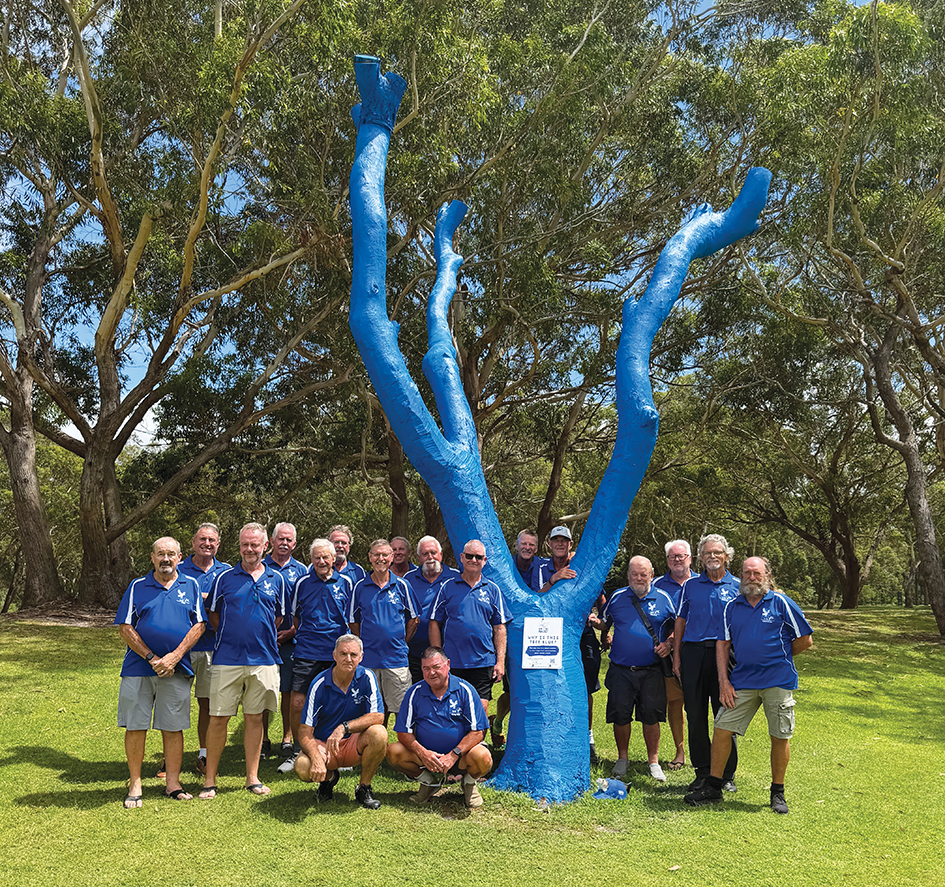
R We Ok has partnered with the Blue Tree Project at the Hawks Nest Golf Club, further strengthening its commitment to mental health awareness and meaningful dialogue.
The club is home to the Hawks Nest Golf Club Social Club, whose members meet weekly for golf, fishing and even darts.
Social Club President Phil Jones first discovered the Blue Tree Project during a golf trip to Tasmania.
Jones admits he was moved by its mission and powerful message:
“Seeing the blue trees in Tasmania really struck a chord with me,” said Jones.
“They’re a simple but powerful reminder to check in with your mates.
“If painting a tree blue helps start even one conversation that could make a difference, then it’s absolutely worth doing.”
So, Jones approached the Hawks Nest GC board of directors and found they were immediately supportive of bringing the initiative to Hawks Nest.
The Blue Tree Project is a charity dedicated to breaking the silence and reducing the stigma surrounding mental health and suicide.
What began as a grassroots movement in Western Australia has grown into a global initiative, sparking conversations and inspiring communities worldwide.
In 2025, Hawks Nest Golf Club members proudly launched their own community initiative, R We Ok.
Founded by long-term member Ray Tisdell, the group was created to encourage men to come together on the last.
Friday of each month in a relaxed, non-judgmental, and enjoyable environment.
“Sometimes blokes just need a place where they can sit down, have a chat and know they’re not alone,” said Tisdell.
“R We Ok is about mates looking out for mates and creating the kind of environment where people feel comfortable opening up if they want to.”
What started as a small gathering of eight mates has now grown to around 30 regular participants, highlighting the strong community need for connection and conversation.
Now R We Ok has partnered with the Blue Tree Project, further strengthening its commitment to mental health awareness and meaningful dialogue.
Together, they aim to foster connection, reduce stigma, and remind men that it’s okay not to be okay – and that support is always close by.
Hawks Nest Golf Club President Bill Hart said the club was proud to support initiatives that strengthened the wellbeing of not only its members but also the wider community.
“As a club, we’re about far more than just golf,” said Hart.
“Programs like R We Ok and the Blue Tree Project show the strength of our community.
“If we can help create a space where people feel supported and comfortable talking about mental health, then we’re doing something truly worthwhile.”
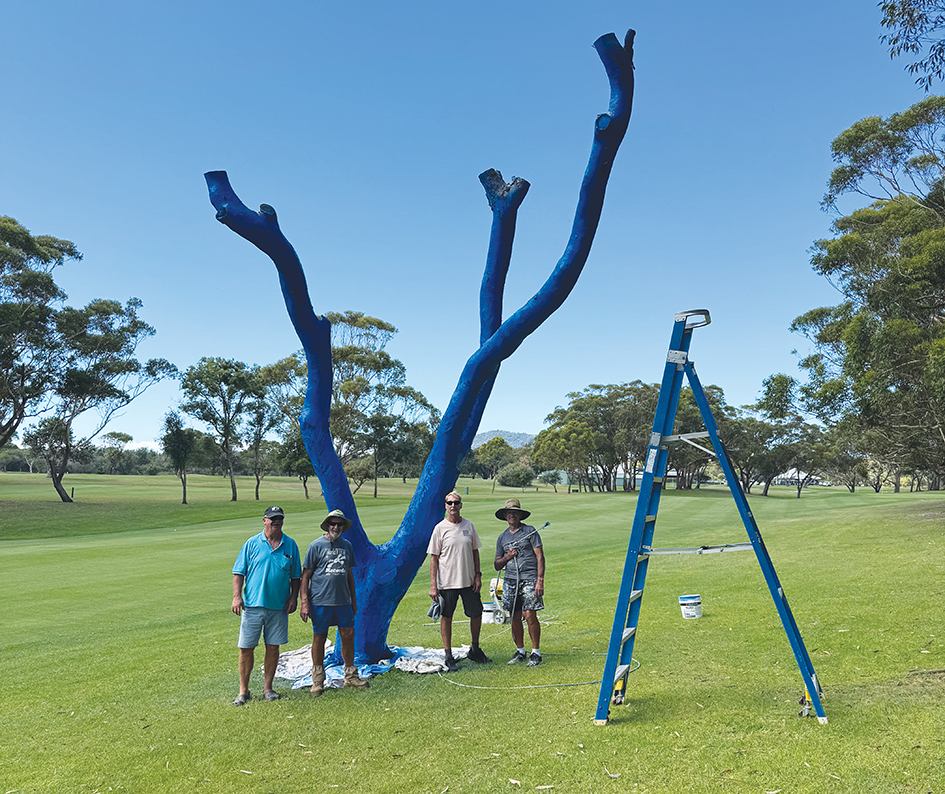
The Blue Tree Project is a global mental health charity that uses painted blue trees as a symbol to spark conversations about mental health and suicide prevention.
Through mateship, community spirit, and open conversation, Hawks Nest Golf Club continues to show that sometimes the most important moments happen well beyond the fairways.
For the record, the Blue Tree project was founded in 2019 by Kendall Whyte in memory of her brother Jayden Whyte, who tragically died by suicide in 2018.
The idea of the blue tree originated from a tree that Jayden secretly painted on his family’s farm in 2014 to surprise his father.
After his death, friends and family created the Blue Tree Project to honour his memory and raise awareness for mental health support.
The blue colour symbolises hope and serves as a conversation starter and encourages people to reach out to those who may be struggling.
Since it began, more than 1100 trees have been painted across Australia and in other locations in the UK, Germany, the US and even Antarctica.
We’re talking about, so it must be working.