
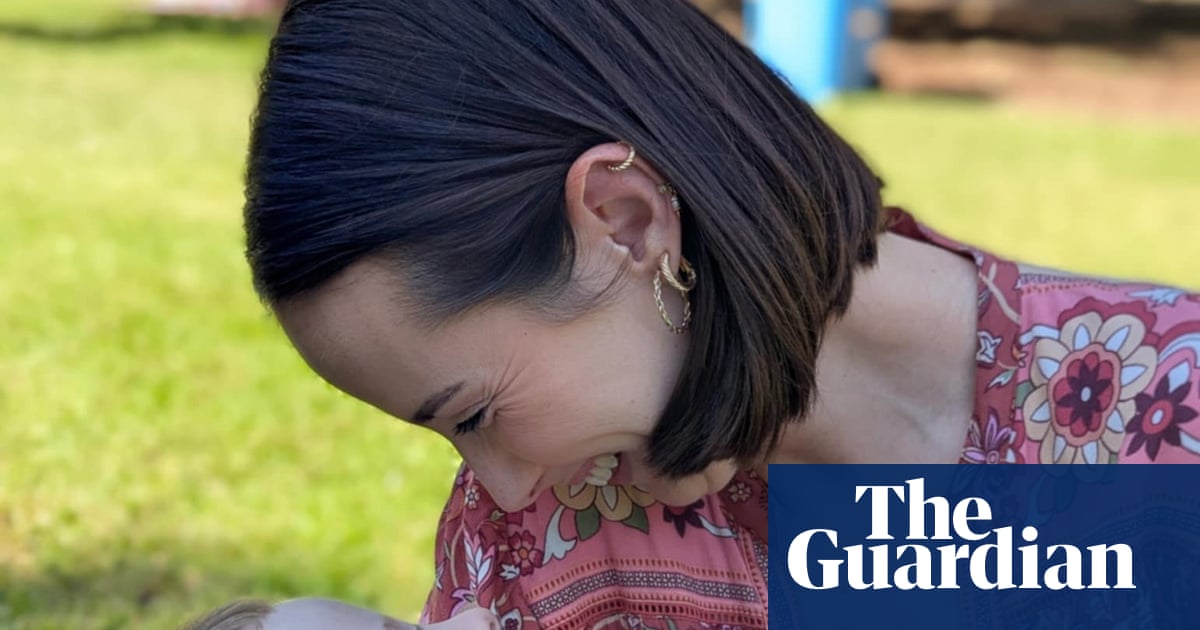
Hollie-Ann Newman’s four-year-old son has level two autism. Each day he needs substantial support from the NDIS – an occupational therapist for emotional regulation, a speech therapist for communication, and a behavioural support worker.
“A neurotypical child of his age would be able to dress themselves, feed themselves, dry themselves, clothe themselves, all those things,” Newman said.
“But he requires substantial support to do all those things. Toileting as well, he needs assistance to go to sleep.
And although he can do year-two maths, going anywhere with him is a challenge.
“Whenever we need to go somewhere, he needs verbal and visual warnings before any environment or situation is about to change.”
Sitting in her home in Albury, Newman, a disability advocate with autism herself, runs the questions around. Her voice is soft.
“What would it mean for the complete removal of our son?” She pauses.
“It would mean that we’d be on our own. We have no informal supports. It would mean $30-$40,000 that we would have to find to support him out of pocket, or private providers.”
‘Confusion’ over new system
That is the reality the Newmans could be facing. On Wednesday, health minister Mark Butler announced that around 160,000 people are expected to be removed from the national disability insurance scheme by 2030.
The $50bn scheme’s growth rate will be brought down to just 2% every year until 2030 in an effort to curb annual plan inflation and produce billions in savings. To get there, eligibility rules will be tightened, especially for children under 18.
“We don’t know what this means,” Newman said.
This is true for a lot of participants. There’s confusion over what the new system will look like, who’ll be eligible, and how it will work for kids, for adults with autism, for people in rural communities.
“They haven’t specified what the decision will be based on… they haven’t mentioned other disabilities or support needs within those disabilities. Nothing has been detailed whatsoever.”
Newman said it is “disappointing but not surprising” that the federal government is not taking responsibility for the scheme, but instead has made the mess, and now wants to push the issue on to the states.
“That’s so many people they’re removing from the system,” she said.
People who no longer meet the new, unannounced eligibility requirements for the NDIS will be redirected to a foundational support program, like the previously announced Thriving Kids program, co-run by the states and territories. Thriving Kids is designed to remove children with mild autism and other developmental conditions from the scheme, and is expected to be fully set up by 2028.
Last week, a report from the Grattan Institute into how to make the NDIS affordable without hurting the people who rely on it, said that while the NDIS should be reserved for children with permanent and significant disability, the Thriving Kids initiative “does not go nearly far enough”.
The report said that the gap can be closed without spending any more public money – by redirecting some NDIS funds to ensure Australians can get help whether they are in the scheme or not, and no matter where they live.
Services are ‘patchy and underfunded’
Currently, children with developmental delay or autism make up almost half of the NDIS’s 760,000 participants, and about 170,000 of those received early intervention support from the scheme in 2025, the report said.
“If you have psychosocial needs but you’ve been deemed ineligible for the NDIS, your access to support is a postcode lottery,” lead author and Grattan Institute disability program director Sam Bennett said.
“The services you can get to give you the best chance of a better life are patchy and underfunded – or nonexistent. Rebalancing the system so there are stronger recovery-oriented supports available inside and outside the NDIS would transform the lives of Australians with psychosocial disability and make better use of existing funds.”
Niti Prakash runs a disability consultancy in Queensland and is worried her own daughter, 12, who has bilateral hearing loss, ADHD and dysgenesis of corpus callosum, causing developmental delays, will also be affected.
She says the NDIS “changed her life”, allowing her daughter to walk and talk. However, she thinks it should be means-tested and points to figures which show, for example, that the wealthy northern Sydney area has one of the highest average NDIS payments per participant. Prakash said while “disability affects the rich too,” she would prefer to see a means test implemented rather than cutting people off.
“My daughter’s needs, alas, wouldn’t be considered severe on current criteria,“ she said.
In Ipswich, 21-year-old Gemma Jensen saw Butler make his announcement and immediately realised that it could impact the help she gets for her autism. She said that although the NDIS is not perfect, it is worth fighting for.
“It’s important to me that we don’t fail people with disabilities in Australia,” Jensen said.
The NDIS pays for her therapy and a support person. She lives with her parents and is studying full-time, but hopes that with the right support, she can move out and get a job. To her, the NDIS is her best hope at living independently.
“I can only do that if I have support in other areas that help me to work,” she said.
“I worry what my future will be. Will I be stuck in my parents’ house for the rest of my life? Because it’s not like I don’t have the capacity to eventually go off, live my life and have a career of my own.
“But I feel like myself and other people with autism and ADHD are being punished for needing extra help in things.”
Speaking at the National Press Club in Canberra ahead of the 12 May federal budget, Butler said he was making “hard decisions”.
“The NDIS costs too much and is growing too fast, put alongside any comparable government program,” Butler said.
“And unless we take action to make it sustainable, it simply will not be there in the future for the Australians who need it most.”
Guardian Australia revealed earlier this month Labor had established a razor gang to drive budget savings in the NDIS. Led by former Treasury official Anthea Long, the taskforce in the health department was launched after the 30 January national cabinet meeting.