
These are exciting and important updates each year, as they mark the first time we’ve had regular season performance and feedback with which to adjust our rankings. However, it can be tricky to parse signal from noise for top performers across the minors this time of year. The first month of the season can make mirages and hot streaks look like legitimate breakouts, so it’s important to view early-season production with a skeptical eye. However, impressive data shouldn’t be dismissed entirely.
With that in mind, here are some ascending players whose April performances suggest a rise up 2026 rankings is coming.
Franklin Arias, SS, Red Sox
No player garnered more debate in our internal Top 100 meetings than Arias. Some are huge advocates of Arias, pointing to his advanced hit tool and power potential. Others—including myself—are on the other side, skeptical of a hit tool-driven prospect without speed or impact.
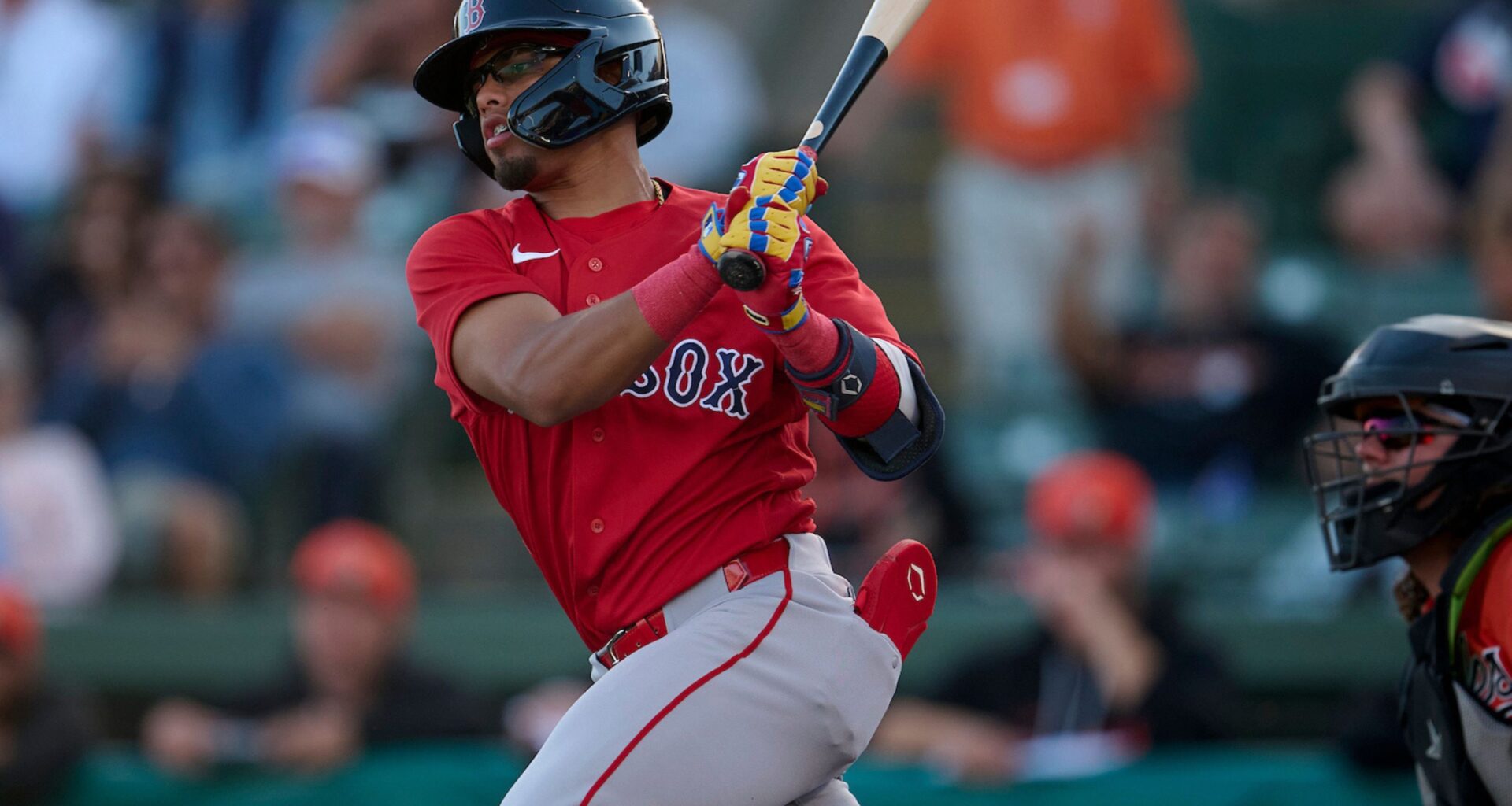
So far, Arias has silenced his skeptics, as he’s shown real impact. The 20-year-old shortstop has six home runs over the last seven games, and it’s come with a real jump in exit velocity data:
2025 average EV: 89.1 mph
2026 average EV: 95.4 mph
Alongside his exit velocity jump, Arias has seen a dramatic improvement in launch angle, as well, going from an average of 9.6 degrees last year to 19.4 so far this season. Arias seems to be putting it all together, as he hasn’t sacrificed any of his bat-to-ball skills or approach to get into his power more consistently.
Look for Arias to make a sizeable jump in the May Top 100 Prospects update.
Pedro Ramirez, 2B/3B, Cubs
Entering the season, Ramirez was viewed positively as a potential second-division regular with above-average hitting ability, baserunning and defense. The biggest limiting factor in his skillset was his below-average power. Perhaps report inspired Ramirez to swing for the fences, because his power in the first month of 2026 hints at a multi-grade jump in impact and contact quality. Here’s how his 90th percentile exit velocity data has trended the last three years:
2024: 103.2 mph
2025: 103.1 mph
2026: 107.1 mph
That’s a 4 mph jump year-over-year for Ramirez, and it’s taken his game to another level. Over 22 games, he’s hitting .333/.400/.667 with seven home runs and seven steals. So far, Ramirez has gone from a borderline replacement-level projection to a prospect who’s trending toward becoming an everyday regular.
Braylon Payne, OF, Brewers
Last season, Payne was one of the many exciting prospects on a loaded Low-A Brewers squad, joining the likes of Jesús Made, Luis Peña and Eric Bitonti. Among that star-studded lineup, Payne showed flashes of brilliance, demonstrating loud tools and plenty of projection. He was too passive at times, however, which led to lots of inconsistency.
Early in 2026, Payne has found a better balance of patience and aggression at High-A Wisconsin, where he’s slashing .350/.500/.675 with four homers in 12 games. He’s swung a little less and chased a little less while being more aggressive on pitches over the heart of the plate. This discerning approach has helped him improve his quality of contact, as he’s attacked the right pitches with greater frequency. Payne always boasted strong exit velocity data, but now he’s showing better launch angles on hard-hit balls and making a greater rate of contact, too.
With tools for days and remaining physical projection, Payne looks like a player who could explode in 2026.
Taitn Gray, 1B, Rays
One of the best athletic testers in the 2025 high school class, Gray was a divisive prospect among front office personnel. Everyone acknowledged the tools that Gray possesses, but many questioned his ability to hit, as there’s an extremely limited track record of Iowa prep performance translating to pro ball right out of the draft.
Gray has so far silenced critics with his impressive performance in the early weeks of the season with Low-A Charleston, hitting .327/.444/.527 with five extra-base hits and more walks than strikeouts over his first dozen games. That production is backed by outstanding under-the-hood data and exit velocity numbers that jump off the page, including a 94 mph average EV. His power is buoyed also by strong underlying plate skills, resulting in a 10% swinging-strike rate and a 25% chase rate.
And with a crowded outfield in Charleston, Gray might be the rare high school first baseman with the ability to climb the defensive spectrum.
Eric Hartman, OF, Braves
A 20th-round high school draft pick out of Canada in 2024, Hartman slid under the radar in his first pro season, hitting .240/.341/.358 with five home runs and 48 stolen bases. We tabbed Hartman as a potential breakout before the season, and so far, he’s making good on that prediction by showing a significant jump in power. That’s been especially so lately, as he’s hit four of his seven home runs in the past week, highlighted by a three-homer game.
Those homers are backed by a noticeable jump in exit velocity data. Last season, Hartman’s average EV was 85.1 mph, and this season it’s jumped to 91.6. His max exit velocity of 105.3 mph from last year is up to 109.1 so far this season.
In concert with the harder-hit balls, Hartman has also found more loft, as his average launch angle is up 10 ticks to 21.7 degrees. He’s fairly aggressive in his approach but rarely misses a pitch over the heart of the plate and is showing fringe-average/average bat-to-ball skills.