
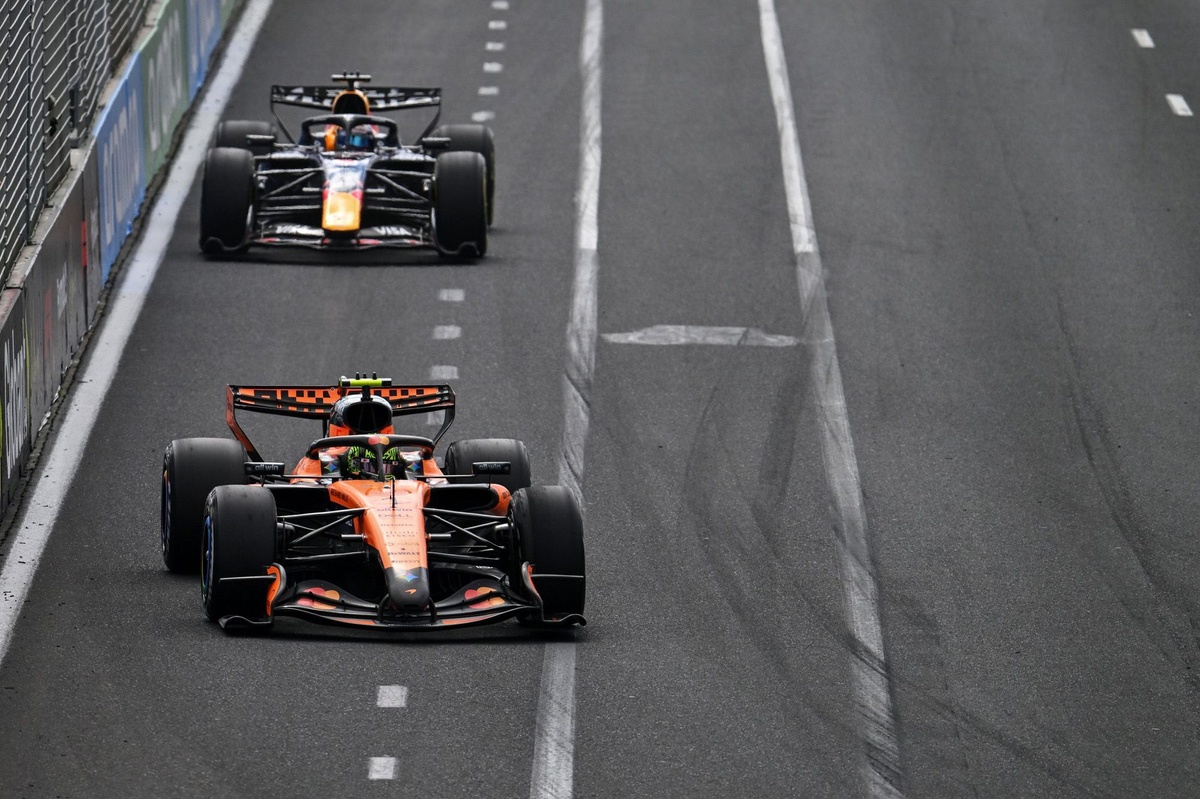
It’s a particularly well-worn cliche that a week is a long time in politics. Even within the goldfish bowl that is the F1 political scene, two years is positively Mesolithic in span.
How else to account for McLaren’s Zak Brown bringing up the question of ‘B-teams’ in F1 again, while seemingly parking his long-standing objections to Red Bull owning two outfits?
“No other sport to my knowledge allows co-ownership of two teams that compete against each other,” Brown said during a press conference at the second pre-season Bahrain test in 2024.
“So I think the sport, as we’re now in the budget cap era, has moved on to where we’re trying to have 10 [now 11] independent teams from a sporting, from a political, from a technical point of view. I think they [Red Bull] are very much playing by the rules.
“I have an issue with the rules – and believe the FIA needs to address this.”
That much was clear then. But this is now – and, during a session for select media at the McLaren factory in Woking this week, the mood music was subtly different.
Not massively so – Brown was explicit that his position on the principle hasn’t changed – but what it amounted to was a new arrangement of a familiar tune, incorporating a few additional notes. The upshot, not that he named Mercedes or Alpine, was that while he’s prepared to live with the Red Bull situation, albeit from a position of eternal vigilance, new alliances would be a “mistake”.
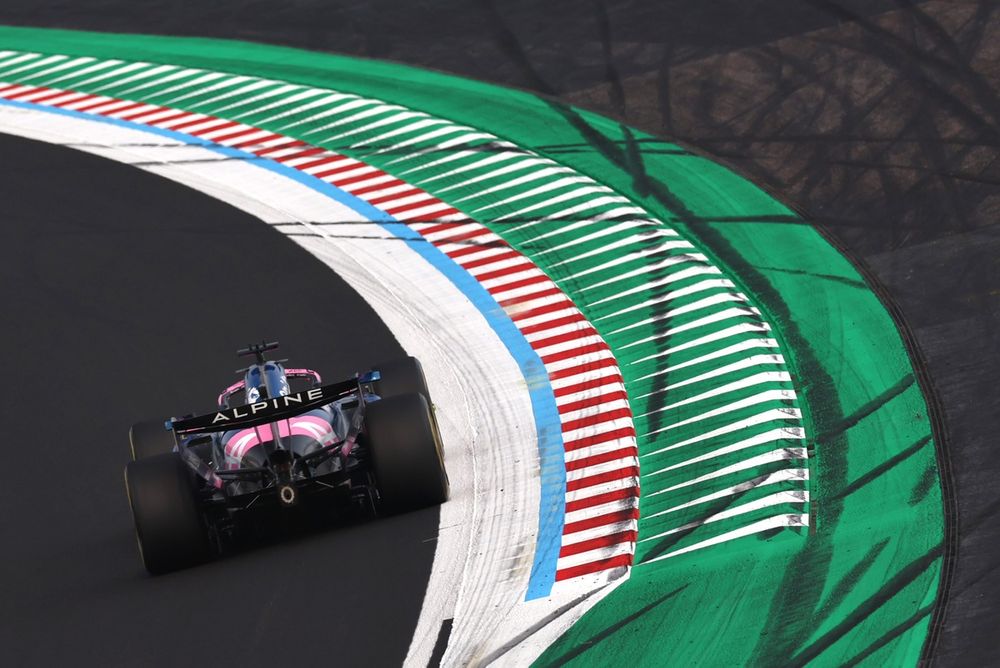
A 24% stake in Alpine currently owned by US-based investors is known to be up for sale – and Mercedes is among the potential buyers.
Photo by: Alastair Staley / LAT Images via Getty Images
This is a clear reference to the interest Mercedes has shown in acquiring the 24% stake in Alpine currently owned by Otro capital, an investment entity backed by celebrities including actors Michael B Jordan and Ryan Reynolds (and which, parenthetically, employs a bothersome PR agency to demand an immediate correction from media outlets failing to spell ‘capital’ with a capital ‘c’).
“It hasn’t changed at all,” said Brown when asked where he stands on team ‘alliances’. “I think I’ve been consistent. This is now my ninth season or my 10th season [as McLaren CEO].
“I think A-B teams, we need to get away from as much as possible, as quickly as possible. I think co-ownership – which we have with one group now and I understand how that came about, why it came about – in today’s day and age that’s not permitted in almost, if not all, major forms of sport.
“I think it runs a real high risk of compromising the integrity of sporting fairness, which is coming back to the earlier question: what would turn fans off as if they don’t feel like there’s 11 independent racing teams?
“Can you imagine a Premier League game when you’ve got two teams owned by the same group? One’s going to get relegated if they lose. The other can afford to lose. And that’s what we run the risk of” Zak Brown
“I’ve been vocal about it from day one. We’ve seen it play out on track in a sporting way. Daniel Ricciardo taking the fastest lap point away from us to help the other team [Red Bull, during the 2024 world championship run-in].
“We’ve seen IP violations on the Racing Point brake ducts [during 2020’s ‘clone car’ imbroglio, where the team now racing as Aston Martin ran a copy of the previous year’s Mercedes]. We’ve seen employees move overnight, where we either have to wait and sometimes make financial deals, which then impacts us on the cost cap.
“That’s an unfair financial advantage, that’s an unfair sporting advantage. We’ve seen Ferrari and Haas move people back and forth. We know IP is a lot in your head.
“So, you put that all together, can you imagine a Premier League game when you’ve got two teams owned by the same group? One’s going to get relegated if they lose. The other can afford to lose. And that’s what we run the risk of.
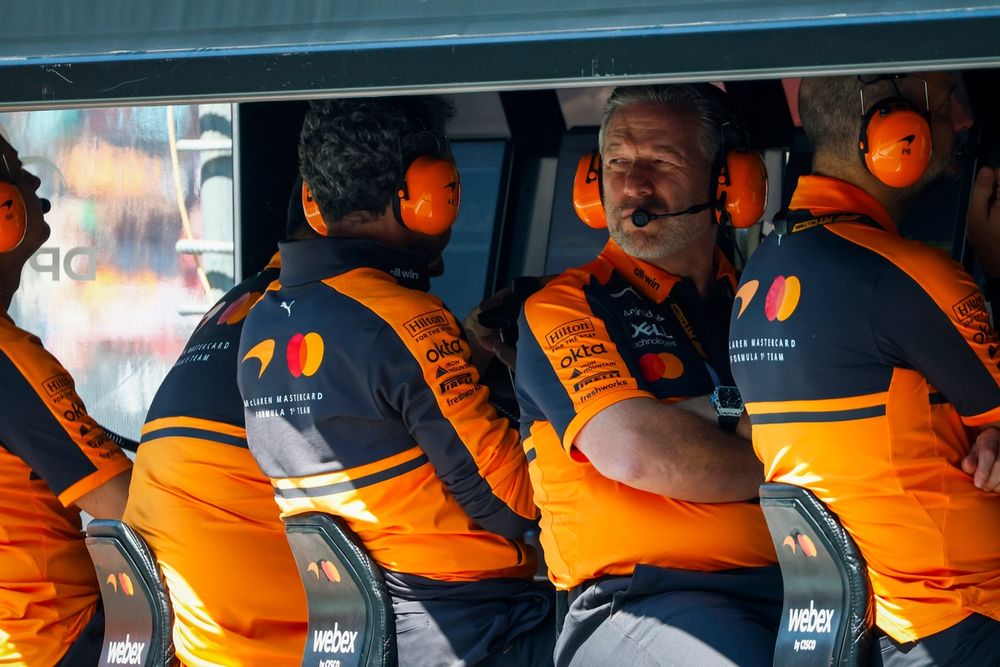
Brown says he is constantly on the lookout for A-B team chicanery
Photo by: Sam Bloxham / LAT Images via Getty Images
“So, I think having power unit suppliers is as far as it should go. And then in my view, all 11 teams should be absolutely as independent as possible because I think it has a high risk – and we have seen it compromise the integrity of the sport. And that will be what turns fans off quicker than anything else.”
It was an fascinating peroration, not just for what it said but what it didn’t say – and it felt, if not quite meticulously rehearsed, certainly not very extemporaneous, as if the point was to toss a little red meat into the water and encourage the attendant sharks to take a nibble. Which, of course, they did, prompting another slingshot orbit of Red Bull before dropping another reference to the real point of contention.
“It was a big discussion in the last Concorde,” said Brown. “I wrote to the FIA and Formula 1 last year on the topic because we see things happen all the time and we flag them. I think there’s a higher level of awareness and watching by the FIA.
“I’m glad to see quite frankly that the Racing Bulls and the Red Bull don’t look like the same race car. I think I’ve had these conversations with Laurent [Mekies, Red Bull team principal], I’m not picking on him in particular but he’s the only one who’s got two teams – and he’s been very open and transparent, ‘Hey, if you see something that you don’t like, let’s just chat about it.’
“So, I think they recognise it and don’t want to push the envelope. There were discussions in the Concorde Agreement about, should over time one of the teams be divested.
“But also, I have a huge appreciation for what they’ve done for the sport and how that was done a long time ago. So I think as long as it’s managed, watched – but certainly adding to it I think would be a mistake for the sport.”
When pressed on whether this final sentence referred to the Mercedes and Alpine situation, he said, “It applies to anybody and everybody. A-B teams, co-ownership. Regardless of who it is. I don’t think it’s healthy for the sport, so it’s not personal or towards any one team or individual.”
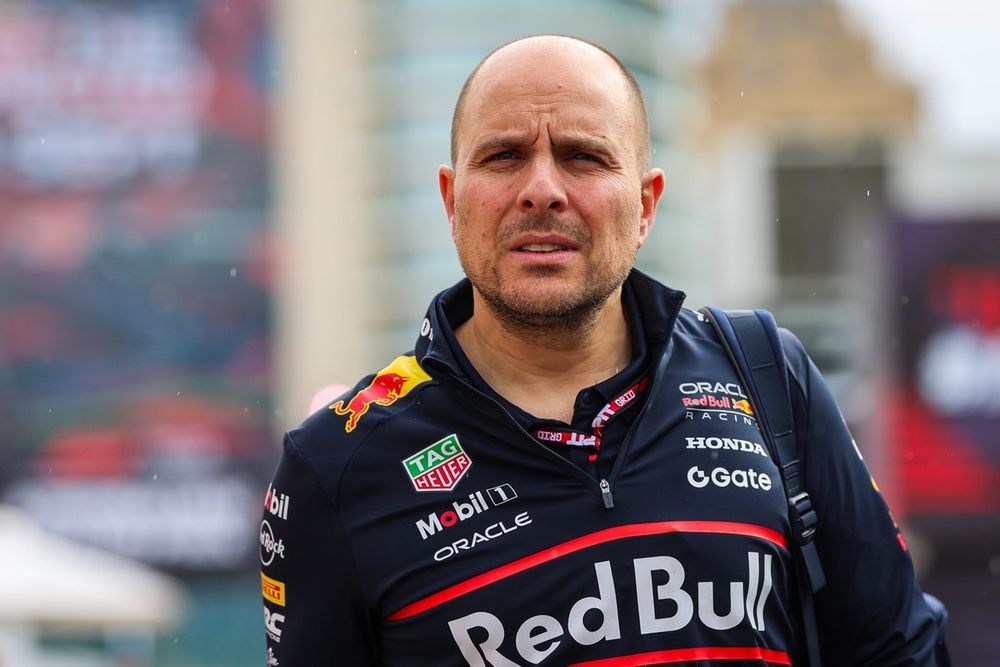
McLaren is clearly keen to maintain diplomatic relations with Red Bull, despite that team’s determination to keep Gianpiero Lambiase to his contract
Photo by: Kym Illman / Getty Images
There are delicate diplomatic manoeuvrings at play here since McLaren has been keen to distance itself from suggestions earlier in the season that Mercedes had withheld performance information about its latest power unit from customers. So, much as Brown emphasises this is not some personal beef, Mercedes is clearly the object of this discussion since it is the only entity currently seeking a stake in another team.
McLaren is recruiting highly regarded engineer Gianpiero Lambiase from Red Bull, and that team is holding him to his contract so he cannot move until 2028. But this matter was rather brushed over in service of painting the relationship between McLaren and Red Bull as a broadly amicable one.
So how likely is it that the putative acquisition of the Alpine stake, if it were to go through, would yield meaningful influence? Mercedes insists it is purely a financial investment, and one which it is making as an organisation, rather than a personal one by co-owner and team principal Toto Wolff.
There are those who claim Mercedes pitched in largely to thwart former Red Bull team principal and long-time Wolff nemesis Christian Horner’s attempt to secure the stake. If so, this would be a supreme act of executive-floor pettiness, but not outwith the bounds of possibility
It would not be a controlling stake, but that picture could change if Alpine’s owner, the Renault Group, decides to divest further. There are those who claim Mercedes pitched in largely to thwart former Red Bull team principal and long-time Wolff nemesis Christian Horner’s attempt to secure the stake. If so, this would be a supreme act of executive-floor pettiness, but not outside the bounds of possibility.
But the potential for Alpine to become an allied or client team to Mercedes exists in the heads of many in the F1 paddock, and there are compelling reasons to shut it off. If, as Brown says, the matter of Red Bull divesting itself of Racing Bulls has been discussed during top-level meetings, this introduces the possibility of another team coming onto the market in full or in part. What, then, would be to stop Mercedes inserting a corporate digit into that pie, too?
Even if there were no clear and obvious influence between teams in that scenario, this would not prevent some element of competitive paranoia. Beyond the recent examples of suspected inter-team collusion Brown cited, there are stories going back decades.
Take one example: 10 years or so after the fact, Norberto Fontana, a Sauber driver in 1997, gave an interview in which he claimed he was ordered to hold up Williams’ Jacques Villeneuve to benefit Ferrari’s Michael Schumacher in the championship decider at Jerez. Ferrari was at that time Sauber’s engine supplier.
During the mid-2000s Red Bull acquired Jaguar Racing and Minardi within a year of each other, rescuing both from closure. The Jaguar deal was for a nominal £1 if Red Bull also took on the team’s debts.
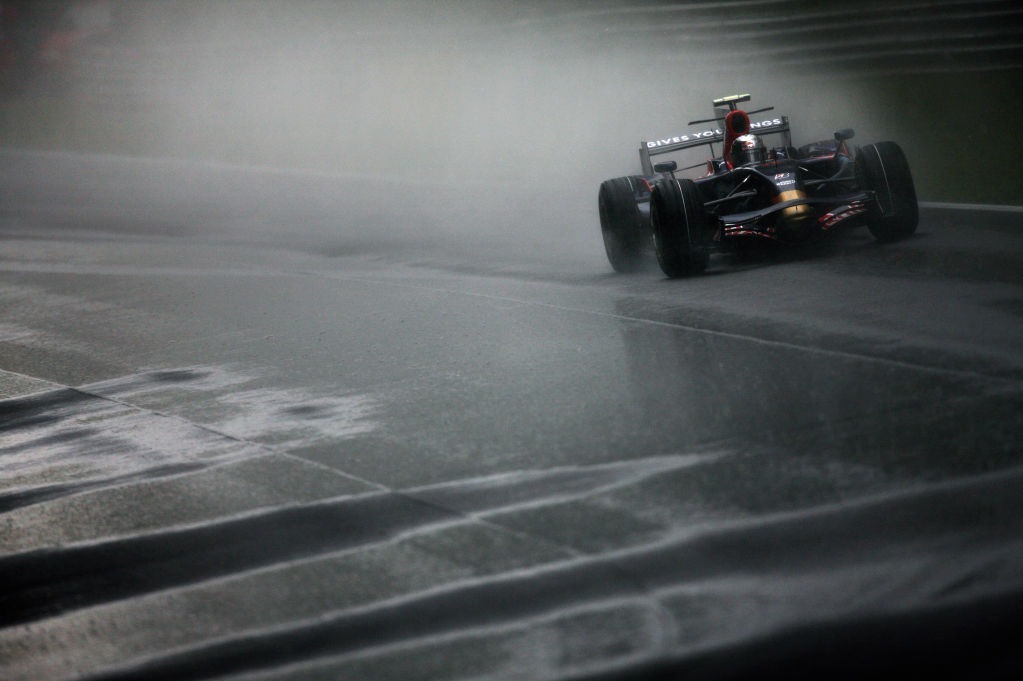
Sebastian Vettel won the 2008 Italian Grand Prix in a Scuderia Toro Rosso car which was identical to its Red Bull Racing equivalent apart from the powertrain
Photo by: Getty Images
Red Bull magnate Dietrich Mateschitz’s vision was to use the ex-Minardi team as an incubator for young driving talent and to run it as cheaply as possible, effectively buying the chassis from the senior team rather than researching and building its own. This prompted widespread disgruntlement and protest from the other competitors, requiring some relocation of the goalposts in the short term, wherein Red Bull established a notionally separate design and build facility which then supplied both teams.
Eventually so-called ‘customer car’ arrangements were banned, and Red Bull’s second team had to become a constructor in its own right. But not before rivals decided that if you can’t beat them, join them.
In mid-2007 the FIA published an entry list for the following year in which it confirmed that Prodrive, a company with broad interests in racing and rallying, would join the grid in 2008. This ultimately didn’t happen – but if it had, Prodrive would have fielded engines and chassis made by other entities.
Who were they? Mercedes and, er, McLaren…
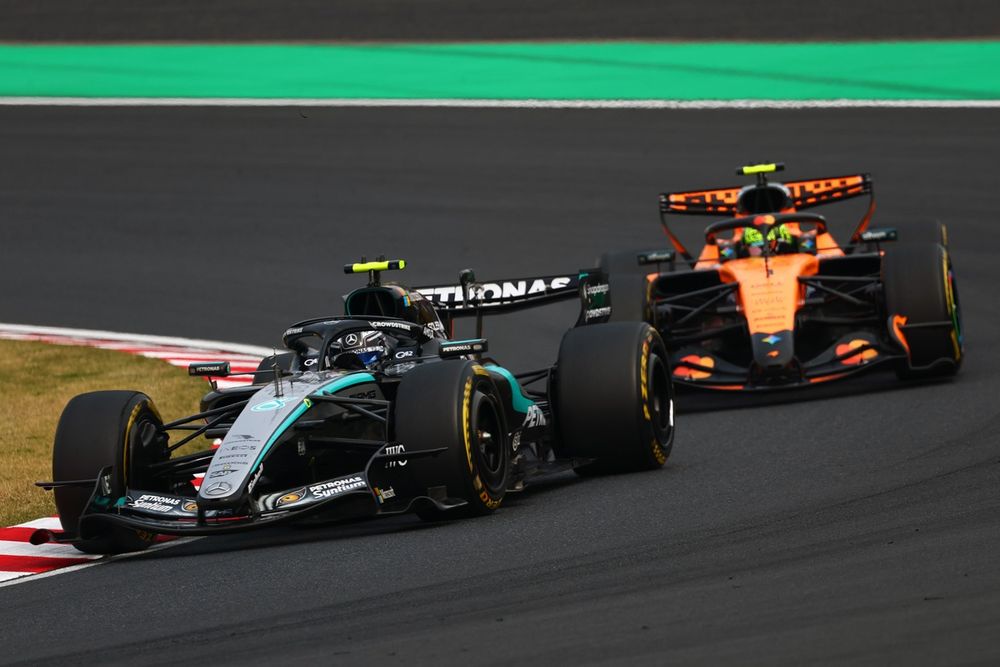
The complex issue of customer teams in F1 has been a long-running saga
Photo by: Clive Rose / Formula 1 via Getty Images
We want to hear from you!
Let us know what you would like to see from us in the future.
– The Autosport.com Team