
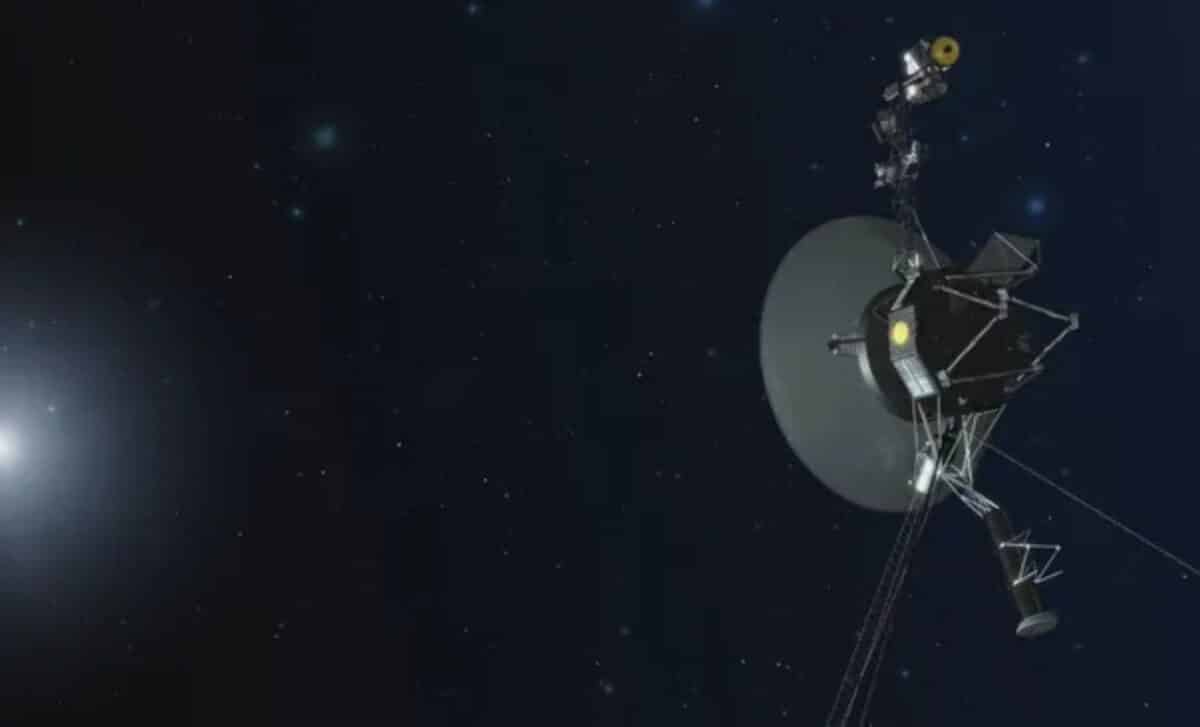
In November 2026, NASA’s Voyager 1 spacecraft will become the first human-made object to travel a full light-day from Earth. Nearly 50 years after its launch, this milestone highlights the vastness of space and the incredible distances left to explore as humanity ventures beyond our Solar System.
Launched in 1977, Voyager 1’s mission was to explore the outer planets, but it has since ventured far beyond its original goals. The spacecraft is now heading into interstellar space, and reaching one light-day away from Earth is a new milestone that demonstrates how vast the cosmos truly is.
A Journey Like No Other
Voyager 1 was part of NASA’s ambitious Voyager program, which aimed to study distant planets like Jupiter and Saturn. After completing its flybys, the spacecraft was sent on a course that would eventually take it out of the Solar System. Today, as the NASA said that the spacecraft is over 166 Astronomical Units (AU) away from Earth. To put this into perspective, one AU is the average distance from Earth to the Sun.
At its current speed of around 61,195 km/h (38,025 miles/h), Voyager 1 will take over a year to reach the full distance of one light-day, or roughly 25.9 billion kilometers (16 billion miles).
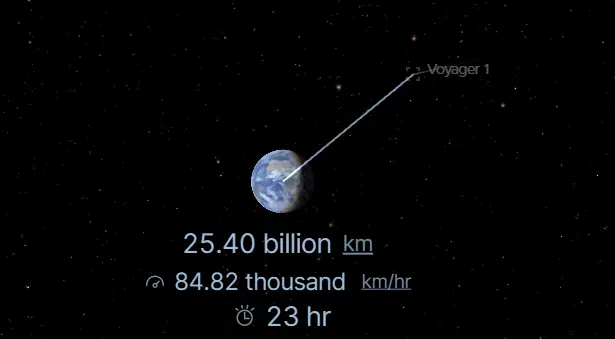 Voyager 1’s current distance from Earth. Credit: NASA
Currently, it takes more than 23 hours for a signal from Earth to reach the spacecraft, showcasing just how far it has traveled.
What is a Light-Day?
A light-day is the distance that light travels in 24 hours, amounting to approximately 25.9 billion kilometers. According to the U.S Space Agency, Voyager 1 is expected to reach this distance on November 15, 2026, with the full one light-day milestone occurring on January 28, 2027.
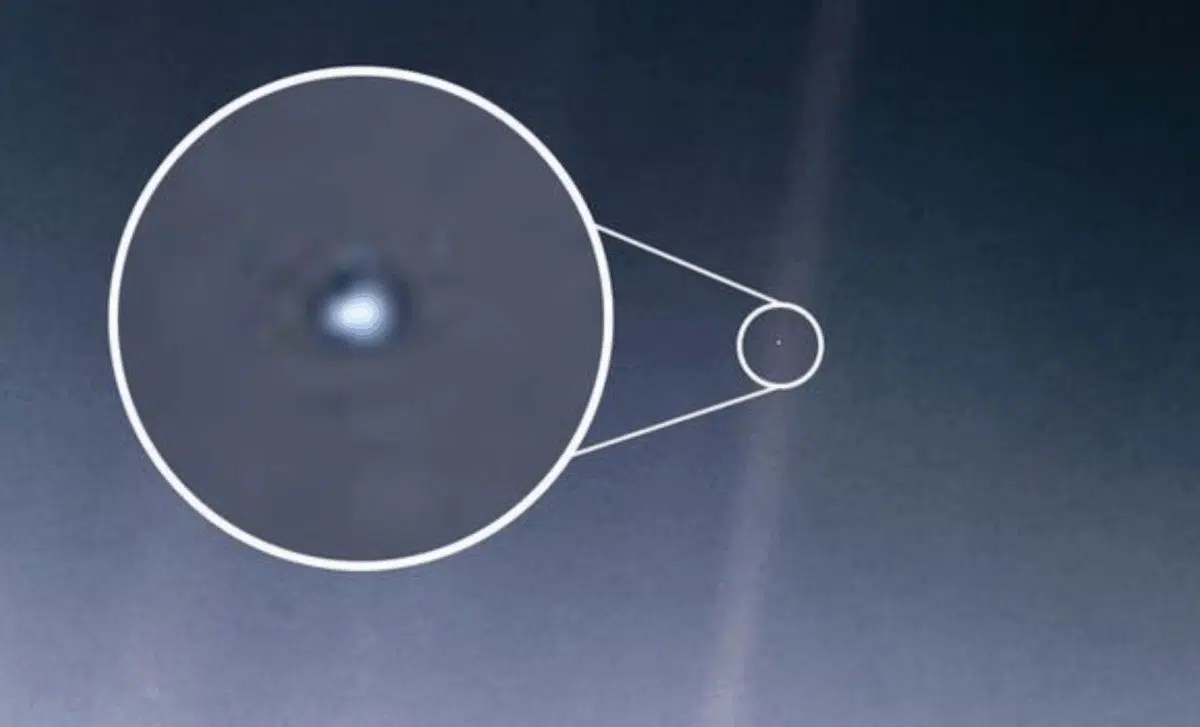 The farthest photo ever taken of our planet. Credit: NASA/JPL-Caltech
While light can travel this distance in a single day, Voyager 1 has taken nearly 50 years to reach this point. Despite the slow pace of its journey, the achievement of reaching a light-day from Earth is a significant one in space exploration.
” Traveling at speeds of over 35,000 miles per hour, it will take the Voyagers nearly 40,000 years, and they will have traveled a distance of about two light years to reach this rather indistinct boundary,” explained NASA in a statement.
A Never-Ending Expedition Into Deep Space
While Voyager 1 will soon reach the light-day milestone, its power will eventually run out. NASA estimates that it will continue to send data back to Earth until the early 2030s, at which point communication will stop. However, it will keep traveling through interstellar space, with no clear endpoint in sight.
Once it loses power, the will have traveled farther than any other human-made object in history. As reported by the NASA:
“One opinion is that the boundary is where the Sun’s gravity no longer dominates – a point beyond the planets and beyond the Oort Cloud. This boundary is roughly about halfway to the nearest star, Proxima Centauri.”
Even without communication, it will remain a historical marker of humanity’s first interstellar exploration.